Fabric weaving mills · Digital marketing
Choose the few online channels that reach buyers of grey and finished cloth.
Digital marketing for a weaving mill means choosing and running the online channels that bring the right cloth buyers to you, from your own site to marketplaces, trade groups and email. A mill has limited hands, so choice matters more than volume. GullySales plans the mix from your own enquiries and then builds the pieces.
Scope, fee, reporting and term are agreed in writing after we have read your brief and spoken to you.
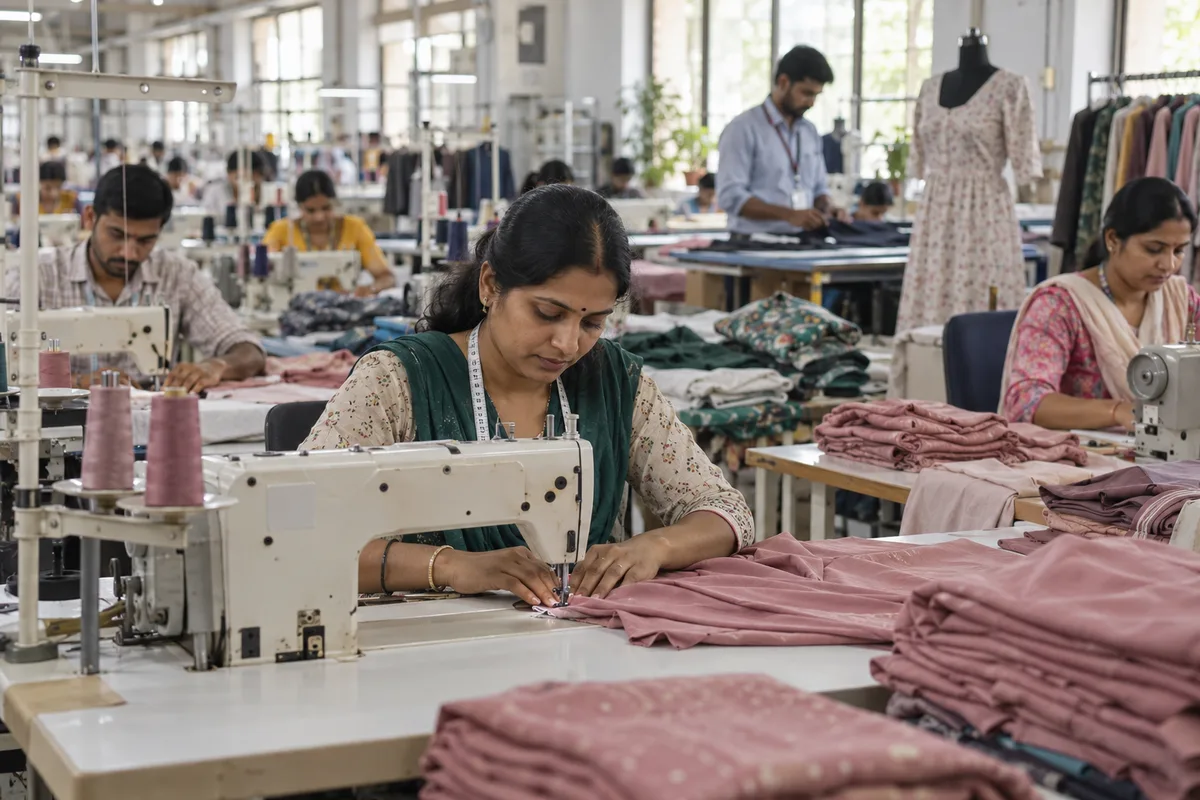
What digital marketing means
Digital marketing is the combined work of search, social media, advertising and website channels running together rather than as separate projects with separate people. GullySales runs these as one connected system so a change in one channel, such as a new offer, is reflected everywhere at once.
Last updated 14 Nov 2026.
For fabric weaving mills
Where it usually goes wrong, and what we would do.
“Where the enquiries come from decides where to spend”
Some mills get cuttings from marketplace listings, others from a broker's introduction or a trade group. Before adding a channel, count where the last enquiries began.
“Standard cloth and premium designs need different channels”
Standard grey and finished cloth sells through marketplace listings and a catalogue. Premium dobby and jacquard designs sell better by direct message to named buyers.
“Paid ads suit few weaving mills”
A paid campaign needs a buyer who searches and orders online. Weaving buyers mostly enquire, ask for a cutting and then decide, so effort goes better into pages and follow-up than into broad advertising.
“Channels without a record teach nothing”
If enquiries from different channels are not logged by source, the mill cannot tell which one filled looms. A source field on every enquiry fixes this.
What we do
What we deliver for fabric weaving mills.
The work available for this need. We agree the deliverables and responsibilities for your engagement in writing.
Channel plan
A plan naming which channels to use for standard cloth, premium designs and job-work, with the reason for each.
Result: A one-page plan your team can follow.
Marketplace listing set-up
Listings for standard cloth with construction, width, weight and minimum lot, plus a reply routine.
Result: Listings that carry the details buyers compare.
Mill website
A site with cloth pages, a sample card request and a clear contact route.
Result: A site buyers can use to ask for a cutting.
Enquiry source tracking
A source field and a simple report on where enquiries begin and which become lots.
Result: A count of enquiries and lots against each channel.
Email and message routine
A short routine for sending new designs and updates to the buyer lists you approve.
Result: Updates go to the right buyers, not to everyone.
How the result is measured
- Enquiries across channels
- Cost per enquiry overall
- Channel mix by contribution
Recorded as a baseline before work starts, so every later report has an honest comparison.
Searches your buyers type
What cloth buyers search and the mill asset that answers each.
- weaving mill for grey cloth
- The mill website's cloth family pages, each stating construction, width and weight, since this buyer reads before calling.
- buy shirting fabric from the mill directly
- A shirting page with a cutting request, aimed at the garment maker who would like a source beyond the market broker.
- fabric manufacturers on a trade marketplace
- The marketplace listing, written with the same constructions as the site and a link back to the mill's own pages.
- job work weaving unit with looms available
- A job-work page and enquiry sheet showing the loom types and widths, kept apart from the cloth pages.
- dobby and jacquard furnishing fabric
- A design page for furnishing buyers with a current design card, since this is the buyer whose old sample book needs replacing.
Who it is for
This is written for these fabric weaving mills.
- Powerloom units weaving grey cotton and polyester cloth
- Shuttleless and rapier loom units for shirting and suiting
- Dobby and jacquard weavers for furnishing and ethnic wear
- Handloom weaver groups and cooperatives
- Job-work weavers who weave on supplied yarn
- Mills weaving denim and heavy cotton fabrics
- Units weaving technical and industrial cloth
- Weaving units that also sell finished cloth after processing
Before you decide
When this may not be the right fit.
- The mill sells only through brokers and no enquiry arrives online, so a channel plan would have nothing to measure.
- The mill has no one to send a cutting when it is asked for, so an online enquiry would wait longer than the buyer will.
- Nobody keeps the enquiry source, so no channel could be judged after the work.
Before you decide
Agree the work. Know how to judge it.
Digital marketing for weaving mills: use these checks to prepare, choose the scope, and review what changes.
Bring the right evidence
Bring a recent won order and an enquiry that went nowhere. Trace how each buyer found you, what they asked, and who handled the next step. A channel list alone will not explain the difference.
Make the scope clear
Choose one offer and one buyer group first. Agree which part needs attention: being found, getting a useful enquiry, or turning an enquiry into an order. Separate recommendations from the work required to carry them out.
Check the work in use
A useful plan names the first change, its owner, the evidence behind it, and the number that will show whether it worked. Ask what has deliberately been left out and why.
Know when to change course
If your team cannot answer the enquiries it already receives, improve that handover before buying more traffic. If the offer itself is unclear, test it with buyers before adding channels.
These are discussion points, not a fixed package. GullySales confirms the deliverables, responsibilities, fee, and term in writing after reading your brief and speaking with you.
Before we start
What to have ready before the work starts.
The records, access and decisions this work needs from fabric weaving mills. Anything missing is noted in the written scope, with who will supply it.
- The order book for the last season
- We use it to trace where buyers came from. Even a rough book with sources guessed is enough, provided your sales person and accounts person agree on the guess, since each remembers different buyers. Without it, the plan rests on opinion and favours the channel that the loudest voice prefers.
- Your marketplace and directory logins
- Provide access to each listing you hold, or the email used to register. We need to check what is shown and fix it. Missing logins mean we create fresh listings and the old ones keep carrying outdated details, such as a closed unit's address or a loom count from years ago, which a buyer will find first.
- A decision on advertising spend
- Say whether any paid promotion is allowed, and the ceiling you are comfortable with, in your own terms. We do not assume it. Without a decision we plan only unpaid channels, and we say so in the plan, so no one later supposes paid promotion was considered and refused.
- A list of buyers for the email routine
- Bring the names and addresses of buyers who know you and have agreed to hear from you. Without this list the email part is left out, and the plan relies on search and listings alone.
- One person to take enquiries from every channel
- Name who answers a message, a form or a call from any source and writes it into the record. If three people share it, we agree a rota first. Enquiries without an owner are the quickest way to waste a channel.
How it works
How the digital marketing work runs
The work itself, in order. How an engagement starts, from your brief to a written scope, is set out on our method page.
- 1
Count where last year's lots came from
We start with your order book and ask your sales person where each large buyer first heard of you: a broker, a trade fair, the marketplace, a phone call. You help us fill the gaps. The count shows which channel has earned its effort, and which only seems busy.
- 2
Decide who owns each online channel
For each channel we shortlist, such as the site, marketplace pages, a trade group or email, you name the person who will keep it up. A channel with no owner is not started. This keeps the plan sized to the hands you actually have.
- 3
Write the offer each channel will carry
We draft the one thing each channel asks a buyer to do, such as request a cutting or download the sample card, in the same words everywhere. You approve the offer and the cost of a cutting to the buyer. Channels that carry conflicting offers confuse the enquiry record, and a buyer who sees one price of a cutting on the marketplace and another on a message loses trust in both.
- 4
Build the listing, site pages and email routine
We set up the marketplace listing, the construction pages and a short email routine for known buyers, using your approved cloth details. You check every technical line. Each piece carries a way to record its source, so an enquiry can be traced to where it began.
- 5
Test the paths a buyer would take
We act as a buyer, going from a search or message to a cutting request on a phone, and note what fails: a number that does not open the dialler, a form that hides the width field, a page that loads slowly on a market connection. Your sales person does the same, calling the number printed on each page to confirm that it is answered by someone who knows the cloth. Broken forms, missing numbers and unclear steps are fixed before any channel is made public.
- 6
Reconcile enquiries with orders and sources
We open the enquiry record beside the order book and match each lot to the channel that brought the buyer. You decide which channel to widen and which to stop, and whether the email routine to known buyers is worth continuing alongside the listing and the site. A source with a long enquiry list and no orders is shown as such, not counted as a gain.
Where this fits
Three pieces of sales work, in this order.
This work sits inside sales process design, at stage 0, foundation. The audit comes before it, and sales management keeps it running.
Step 1
Sales audit
Find where deals are being lost and what to fix first.
Start here if you cannot say where orders are lost.
Step 2 · you are here
Sales process design
One written way to sell, from first enquiry to repeat order.
Start here if every salesperson sells differently.
Step 3
Sales management
A target, a review routine and someone who owns the number.
Start here if the team has targets and no routine.
FAQ
Questions owners ask before they call.
Not here? More answers, or ask on WhatsApp.
Where should a small mill start?
Do we need to run ads?
What do we look at to judge the plan for the mill?
Should a mill list on a trade marketplace as well as its own site?
Is a marketplace listing enough without our own site?
How do we compare two channels fairly?
How much does it cost?
How long is the contract?
How soon will we see results?
Who will actually do the work?
More for fabric weaving mills
Related work to consider.
Closest to this: strategy and research
Also for fabric weaving mills
Or start from the overview: sales and marketing for fabric weaving mills.
Your next practical step
Tell us what you are trying to grow, and we will read it before we call.
Eight short steps, mostly taps. Skip anything you would rather answer on the call.