Fashion accessory manufacturers · Buyer persona
Know who buys accessories and what each one needs to hear.
A buyer persona for an accessory factory describes the kind of buyer who orders, what they check and what makes them reorder. GullySales builds personas from your own order history and calls, so each buyer type gets a reply that matches its needs.
Scope, fee, reporting and term are agreed in writing after we have read your brief and spoken to you.
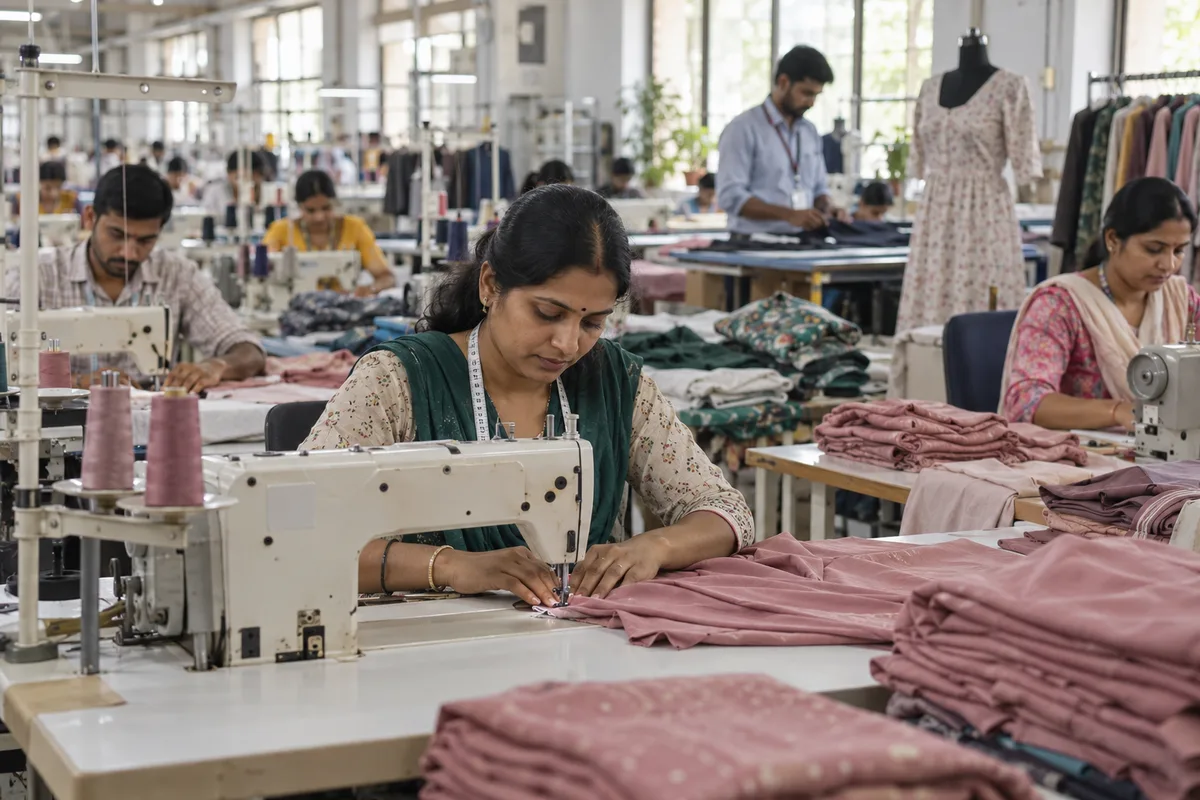
What buyer persona means
A buyer persona is a plain description of the kind of customer who actually buys from you. It includes what they search, what worries them and who else they ask before deciding. GullySales builds this from real enquiries and past sales rather than a generic template, then uses it to write every page and advert.
Also for fashion accessory manufacturers
- Digital marketing for fashion accessory manufacturers
- Lead generation for fashion accessory makers
- SEO for fashion accessory manufacturers
- Social media marketing for accessory manufacturers
- Content marketing for accessory manufacturers
- CRM for fashion accessory manufacturers
- Follow-up systems for accessory manufacturers
- WhatsApp marketing for accessory manufacturers
Sales and marketing for fashion accessory manufacturers, the overview.
Last updated 14 Nov 2026.
For fashion accessory manufacturers
Where it usually goes wrong, and what we would do.
“The chain buyer wants a plan and a calendar”
A chain buyer holds a stock plan and compares suppliers against a delivery date. They want line sheets, consistent quality across lots and one person who answers. Talking about the lowest rate misses what they weigh.
“The boutique owner wants novelty in small quantities”
A boutique owner picks a few designs that look different from the next shop. They want small minimums and a look at what is new. A large-carton price list sends them to a supplier with smaller lots.
“The wholesaler buys what moved last time”
A wholesaler orders the designs that cleared at their own counter. They remember rates by the carton and compare by the piece. What they respond to is a reminder of their own best sellers and a note of new additions.
“The online seller needs images and a low first order”
A seller on a marketplace or Instagram needs listing-ready pictures and a first order they can afford. They become regular buyers if the first experience is easy, and they leave if replies take effort.
What we do
What we deliver for fashion accessory manufacturers.
The work available for this need. We agree the deliverables and responsibilities for your engagement in writing.
Persona sheet for each buyer type
A one-page summary for chain buyers, boutiques, wholesalers, online sellers and event planners, covering what they check and what they ask.
Result: The team knows what each buyer type needs before the call.
Question list per persona
The questions each buyer type asks first, with the written answer attached.
Result: A reply to any buyer type starts from the right answer.
Message set by persona
Opening messages and follow-ups written for each buyer type rather than one broadcast.
Result: A boutique owner and a chain buyer receive different messages.
Order-history review
A review of past orders to see which buyer types reordered and which designs they took.
Result: The personas rest on your own orders, not on assumption.
How the result is measured
- Enquiry match to persona
- Conversion rate by persona
- Content aligned to persona
Recorded as a baseline before work starts, so every later report has an honest comparison.
Who is asking
The buyers who order accessories, and what each wants to hear before ordering.
- Chain store buyer
- Wants a range plan, a calendar, the packing standard and who answers a delivery problem. A single missed festival costs the buyer more than a cheaper rate saves.
- Boutique owner
- Wants new designs in small quantities and a mix across colours. They compare you with the nearest wholesaler and the online sellers.
- Wholesaler in a trade market
- Wants what moved last time and a price that leaves room for their margin. They order again if the lot arrives as shown.
- Online seller
- Wants clean images and a low first lot. They may repost your photographs, so agree what is allowed at the start.
- Gifting buyer
- A planner for events, schools or firms who wants matched sets in counted quantities. The packing and the date matter more than the design.
Who it is for
This is written for these fashion accessory manufacturers.
- Belt, wallet and strap manufacturers
- Scarf, stole and dupatta accessory makers
- Hair accessory manufacturers, from clips to bands
- Cap, hat and headwear makers
- Sunglass case, pouch and eyewear accessory makers
- Costume and fashion jewellery accessory producers
- Kids' fashion accessory manufacturers
- Gifting and return-gift accessory suppliers
Before you decide
When this may not be the right fit.
- You have fewer than a handful of order histories, so any sheet would be a guess about buyers you have not yet met.
- You hope a sheet will replace calling buyers. Their reasons for ordering again come from conversations.
- You make only one kind of item for one kind of buyer, in which case a single page of notes is enough.
Before you decide
Agree the work. Know how to judge it.
Buyer personas for fashion accessory makers: use these checks to prepare, choose the scope, and review what changes.
Bring the right evidence
Write the decision the research must support, such as entering a market or choosing a buyer group. Separate what you know from sales records from what the team currently assumes.
Make the scope clear
Agree which buyers to speak to, which sources to review, and what access you can provide. Include lost enquiries and people who chose another supplier, where they are willing to take part.
Check the work in use
Look for source dates, sample limitations, and evidence that disagrees with the preferred answer. A recommendation should show how it follows from the findings.
Know when to change course
Do not treat a few positive conversations as proof of demand. Test the proposed offer with an actual buying decision before committing to a wider launch.
These are discussion points, not a fixed package. GullySales confirms the deliverables, responsibilities, fee, and term in writing after reading your brief and speaking with you.
Before we start
What to have ready before the work starts.
The records, access and decisions this work needs from fashion accessory manufacturers. Anything missing is noted in the written scope, with who will supply it.
- The order history for two seasons
- The personas are drawn from what buyers did. A billing export or ledger is acceptable. If the history is thin, we mark the personas as based on a small record. Include the lot size and the month of each order, since the sheet records when a buyer buys as well as what.
- An introduction to four buyers
- One buyer of each type should agree to a short call. You make the introduction. Where nobody agrees, the sheet is built from the order record alone and marked unconfirmed. Choose buyers who know the factory well enough to speak plainly, and tell them the call is about improving replies, not about renegotiating a rate.
- Your view of the buyer you lost
- Tell us about a buyer who stopped ordering and why you think so. That gives us the fear behind a persona. Without it, the sheets describe only buyers who stayed. Include what the buyer said when leaving, if you know it, or the last design they asked about, because a persona that ignores departures flatters the factory.
- The salesperson who knows each account
- The person who talks to the buyers must sit with us once. Their memory of habits is the richest source. If they are unavailable, the personas lose detail. Ask them to bring the account notes or the phone, so that the habits of each buyer are described from the record and not from a general impression.
- A decision on buyers you do not want
- If you choose not to serve very small sellers or certain regions, say so. The sheets then leave them out. Name the minimum or region that sets the limit, so the replies written for each sheet do not invite an order the factory would later decline.
How it works
How the buyer persona work runs
The work itself, in order. How an engagement starts, from your brief to a written scope, is set out on our method page.
- 1
Pull the biggest buyers from the order book
We start with the order book and mark the buyers who ordered repeatedly or in the largest lots, and the ones who ordered once and disappeared. You tell us who each is, in your own words. This gives us the real buyers the personas are drawn from, not an imagined shopper, and it shows how little of the book is carried by a few accounts.
- 2
Read what each buyer ordered across seasons
For each buyer we list the designs, the quantities and the timing across seasons. You add what you remember of how they negotiated. We write down patterns such as a boutique that buys small in several colours or a wholesaler that reorders only the best seller.
- 3
Speak to a chain buyer and a boutique owner
With your introduction, we hold short calls with a chain buyer, a boutique owner, a wholesaler and an online seller. We ask what made them choose the factory and what nearly made them leave, and we write down their words exactly, without tidying them into the factory's own language.
- 4
Write a sheet for each buyer type
Each sheet states who the buyer is, what they check, what they fear and what makes them reorder. You read it and correct it against the people you know. A sheet you do not recognise is rewritten. We keep each sheet to one page, so that a salesperson can read it before a call.
- 5
Decide the replies each persona deserves
We set the first reply, the sample offer and the follow-up for each type. You approve them. A chain buyer receives a calendar and a lot plan, and an online seller receives images and a low first order.
- 6
Check new orders against the sheets
After a season we compare who actually ordered with the personas, and what each type asked. You tell us which persona was wrong. We revise that sheet from the new orders.
Where this fits
Three pieces of sales work, in this order.
This work sits inside sales process design, at stage 0, foundation. The audit comes before it, and sales management keeps it running.
Step 1
Sales audit
Find where deals are being lost and what to fix first.
Start here if you cannot say where orders are lost.
Step 2 · you are here
Sales process design
One written way to sell, from first enquiry to repeat order.
Start here if every salesperson sells differently.
Step 3
Sales management
A target, a review routine and someone who owns the number.
Start here if the team has targets and no routine.
FAQ
Questions owners ask before they call.
Not here? More answers, or ask on WhatsApp.
Can a buyer persona be built from order records alone, with no survey?
Do we need a persona for every buyer type?
What does the order history show that surveys do not?
Should one persona cover wholesalers and online sellers?
Do we need a persona for a buyer we have never had?
Will the personas change how we price?
How long is the contract?
How soon will we see results?
Who will actually do the work?
What do you need from us?
More for fashion accessory manufacturers
Related work to consider.
Closest to this: strategy and research
Also for fashion accessory manufacturers
Or start from the overview: sales and marketing for fashion accessory manufacturers.
Your next practical step
Tell us what you are trying to grow, and we will read it before we call.
Eight short steps, mostly taps. Skip anything you would rather answer on the call.