FMCG and beverage brands · Sales strategy
Decide which districts, packs and channels to win before adding distributors.
A sales strategy for an FMCG or beverage brand decides where to sell first, which packs to push, which channels to open and what to stop, using your own billing and outlet records. GullySales works it out with the owner and the sales head, and writes it down so sales officers and distributors work to the same plan.
Scope, fee, reporting and term are agreed in writing after we have read your brief and spoken to you.

What sales strategy means
Sales strategy is deciding which customers to chase, through which channel and at what price, instead of every salesperson working their own way. GullySales sets this plan against your actual pipeline and the deals you have won and lost so far.
Also for FMCG and beverage brands
- Sales management for FMCG and beverage brands
- SEO for FMCG and beverage brands
- Social media marketing for FMCG and beverage brands
- Influencer marketing for FMCG and beverage brands
- Digital marketing for FMCG and beverage brands
- Branding for FMCG and beverage brands
- Content marketing for FMCG and beverage brands
- Lead generation for FMCG and beverage brands
Sales and marketing for FMCG and beverage brands, the overview.
Last updated 6 Oct 2026. Rules for this trade differ by state and professional body, and they change. We describe restrictions in general terms, so check the current position with your own council or adviser before you publish anything.
For FMCG and beverage brands
Where it usually goes wrong, and what we would do.
“Too many districts, too thin”
A brand with a distributor in every district of the state and real coverage in none spends the summer chasing stock-outs and claims.
“Every new flavour crowds the van”
Each SKU added gives the salesman one more thing to pitch and the distributor one more thing to hold, and the best seller gets less attention.
“Canteen and event volume is left to chance”
Canteens and caterers could carry the plant through the rains, but nobody owns them, so they are served only when they ring.
What we do
What we deliver for FMCG and beverage brands.
Every deliverable, what it covers for you, and the result it is there to produce. Nothing here is an extra.
A district priority list
Districts ranked by outlets billed, reorders and distributor strength, with the ones to deepen, the ones to enter and the ones to leave alone written down.
Result: Effort goes to districts that can carry the brand.
A pack and SKU plan
The packs that go on every beat, the ones kept for specific channels and the SKUs to drop, decided from outlet sales.
Result: Salesmen carry fewer packs and sell more of each.
Channel roles agreed
General trade, modern trade, quick commerce, canteens, events and private label, each with a named owner and a limit on what it may cost.
Result: New channels add volume without starving the beat.
A season plan with the slow months in it
Summer loading, the wedding months, the cleaning weeks and the monsoon, with what each channel does in each.
Result: The plant runs through the rains on planned orders.
A written plan checked against results
The strategy in a short document, checked against outlets, sell-through and claims, and changed when the records say so.
Result: The plan moves with the records, not with the loudest distributor.
How the result is measured
- Win rate
- Average deal size
- Pipeline coverage against target
Recorded as a baseline before work starts, so every later report has an honest comparison.
Choices a sales strategy makes
Settle these from your own billing, outlet lists and claims register before the next season.
- Which districts to deepen before entering new ones
- Sort districts by unique outlets billed and repeat outlets. Deepen where the distributor is strong and outlets reorder, and enter a new district only next to one that already works.
- Which packs to lead with
- Rank SKUs by how many outlets reorder them. Lead every beat with the top few, and keep the rest for the channels that ask, such as canteens or quick commerce.
- How a new outlet becomes a regular
- Write the steps: a first bill with a scheme, a second visit with a display, a third bill without a scheme. Check in the DMS how many outlets reach the third step.
- Who sells to canteens, caterers and chains
- Give each to a named person, not the beat salesman. Look in your records for bulk enquiries that never got a reply, and size the role from that.
- What to say no to
- Turn down distributors without a godown or a vehicle, chains whose listing terms eat the whole margin, and private label work that blocks your line in peak season.
- What to stop
- Drop SKUs no outlet has reordered in a full season, and schemes that only loaded distributors. Move that money to the beats and packs that sell.
Who it is for
This is written for these FMCG and beverage brands.
- Packaged drinking water and 20-litre can brands
- Regional soft drink, soda and goli soda bottlers
- Juice, fruit drink and nectar brands
- Energy, sports and electrolyte drink brands
- Packaged tea and coffee powder brands
- Flavoured milk, buttermilk and lassi brands
- Home care brands: detergent, dishwash, floor cleaner and phenyl
- Personal care and pooja brands: soap, hair oil and agarbatti
Not for
It is not the right fit if.
- You want a guaranteed Google ranking or a guaranteed number of leads. Nobody honest can promise either.
- You need enquiries by next week and have nobody to answer them.
- You want posts and reach reported, not enquiries and orders.
How it works
From your first message to the first report.
No open-ended retainer. Every step gives you something in writing.
First
Your brief
You tell us what you need in a few short steps: your business, what you want, where enquiries come from and how they are handled.
After the brief
A conversation and a written scope
We read it, then talk with whoever handles your enquiries. If you want our help, the scope, the fee and the reporting come in writing, and nothing starts before you have read them.
Before work starts
Baseline recorded
Enquiries by source, reply time, conversion and cost per order, written down so every later report has an honest comparison.
After the baseline
The first fix goes live
The fix we agreed to start with is put in place and measured against the baseline, whether that is reply time, a follow-up sequence, the page buyers land on or the handover between marketing and sales.
As agreed
Report against the baseline
What moved, what did not, and what changes next, in plain words. How often you get it is set in writing before work starts.
At renewal
Renew on the numbers
The term ends and you decide whether to continue from the results. The length is agreed in writing before anything starts.
How the sales strategy work runs
- 1
Review the current approach
We study how the business currently targets customers, sells and prices its offer.
- 2
Assess the market
Segments, channels and competitors are reviewed against where genuine opportunity sits.
- 3
Develop the strategy
Clear direction is set on where to focus and how to reach it.
- 4
Document and present
The strategy is written up and presented, with a plain explanation of the reasoning.
- 5
Plan implementation
A practical roadmap for the first steps is agreed before the engagement closes.
Why us
Why owners pick GullySales over an agency.
Marketing and sales, as one job
Most agencies stop at the enquiry. We also fix what happens after it: the reply, the follow-up, the quote and the CRM.
The person on the first call does the work
No account managers in between. You are never handed to someone you have not met.
A baseline before anything starts
Your numbers are written down on day one, so every later report compares against something honest.
The fee in writing, split three ways
Our time, your media spend and production on separate lines. You always see what goes to us.
No guarantees we cannot keep
The term is agreed in writing and never a default twelve months. We never promise a ranking or a lead count, because nobody controls those.
One office, and we say so
Nagarbhavi, Bengaluru. We work across India by call and WhatsApp and travel when a session needs to be in person.
#257, 3rd floor, Sri Nanjundeshwara Complex, Nagarbhavi 8th Block, Outer Ring Road. How we work.
Your brief
Tell us what you need, and we will read it before we call.
Eight short steps about your business, what you want and who decides. Most questions are a tap, and you can skip any you would rather answer on the call.
FAQ
Questions owners ask before they call.
Not here? More answers, or ask on WhatsApp.
How often should we revisit the sales strategy?
We are a small team. Can we still have a strategy?
The owner still signs every distributor. When should that change?
When should we add a sales officer?
Should we give coolers to retailers?
How do we stop distributors loading up in March and returning stock later?
How much does it cost?
How long is the contract?
How soon will we see results?
Who will actually do the work?
From the blog
Further reading for FMCG and beverage brands.
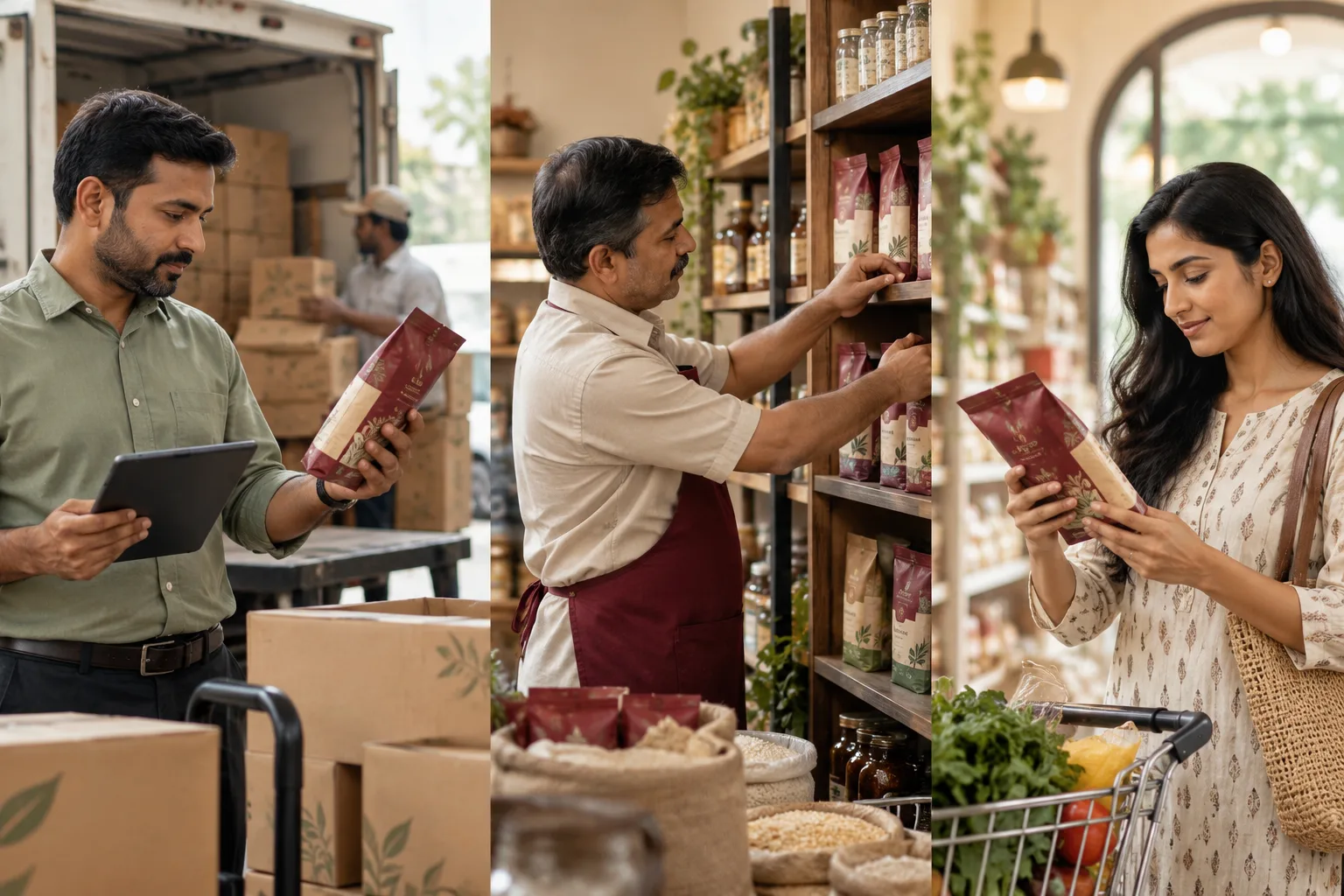 5 min read · 6 Oct 2026How food brands win the trade and the shopperA packed food or household brand is chosen twice: by the distributor, retailer or kitchen that stocks it, then by the shopper who picks it up. Here is what each buyer checks and where brands lose both.
 6 min read · 6 Oct 2026How beverage brands check summer loading against sell-throughA distributor's invoice shows what you pushed into the godown, not what reached shops. Here is how a beverage brand compares summer loading with sell-through before the monsoon arrives.
More for FMCG and beverage brands
Everything else we would do for you.
Closest to this: sales craft
Also for FMCG and beverage brands
- SEO for FMCG and beverage brands
- Social media marketing for FMCG and beverage brands
- Influencer marketing for FMCG and beverage brands
- Digital marketing for FMCG and beverage brands
- Branding for FMCG and beverage brands
- Content marketing for FMCG and beverage brands
- Lead generation for FMCG and beverage brands
- Outdoor advertising for FMCG and beverage brands
Or start from the overview: sales and marketing for FMCG and beverage brands.
Your next practical step
Tell us what you are trying to grow, and we will read it before we call.
Eight short steps, mostly taps. Skip anything you would rather answer on the call.