FMCG and beverage brands · CRM
Keep distributors, outlets and institutional buyers in one record you can search.
A CRM for an FMCG or beverage brand is a shared record of every distributor, wholesaler, outlet and bulk buyer, with the conversations, schemes, claims and orders attached to each. It replaces the notebook of the sales officer and the sheet on the owner's laptop. GullySales sets up the record around your beats and your billing, and works on getting the sales team to fill it.
Scope, fee, reporting and term are agreed in writing after we have read your brief and spoken to you.
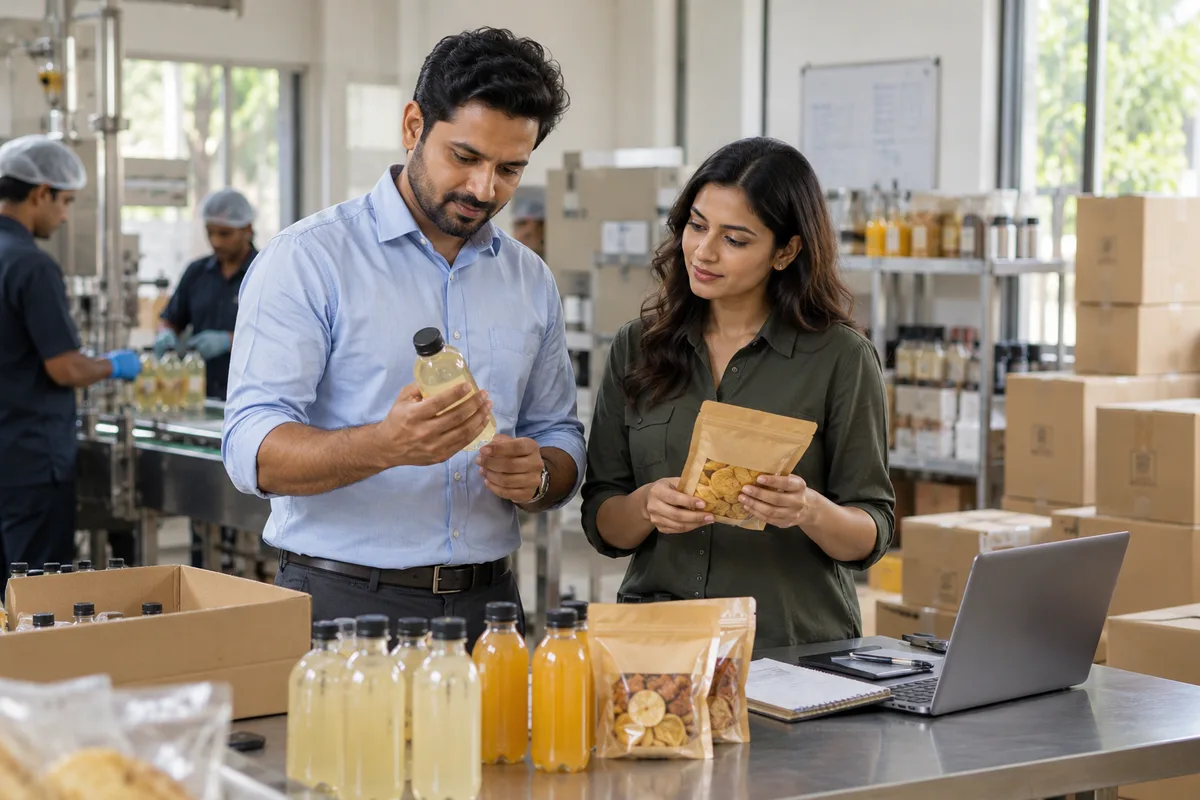
What CRM means
A CRM is the record where every enquiry, call and quote is kept against a customer, replacing separate notebooks, spreadsheets and memory. GullySales sets up or cleans an existing CRM and reports from it by enquiry outcome rather than by activity logged.
Also for FMCG and beverage brands
- Lead generation for FMCG and beverage brands
- Follow-up systems for FMCG and beverage brands
- SEO for FMCG and beverage brands
- Social media marketing for FMCG and beverage brands
- Influencer marketing for FMCG and beverage brands
- Digital marketing for FMCG and beverage brands
- Branding for FMCG and beverage brands
- Content marketing for FMCG and beverage brands
Sales and marketing for FMCG and beverage brands, the overview.
Last updated 6 Oct 2026. Rules for this trade differ by state and professional body, and they change. We describe restrictions in general terms, so check the current position with your own council or adviser before you publish anything.
For FMCG and beverage brands
Where it usually goes wrong, and what we would do.
“The relationship sits in the sales officer's phone”
When a sales officer leaves, the knowledge of which distributor is unhappy about a pending claim leaves too. A record kept by the company holds the history of each distributor and each key outlet, and the next person starts from it.
“A distributor's invoice is not an outlet”
The brand knows what it billed a distributor. It does not know which shops bought from the distributor, which bought once, and which cooler outlets went quiet. The record needs a row for the outlet, not only for the distributor, or repeat buying stays invisible.
“Claims and schemes need a home beside the account”
Scheme, damage and display claims sit in emails and on paper. When the same list is open beside the distributor's record, the person who calls the distributor knows what is pending before saying hello, and the longest wait is dealt with first.
“Leads from events and enquiries get lost between seasons”
A caterer asks for a case rate in the wedding months, a canteen contractor asks for a sample, a distributor from another district enquires. Without a place to log them, the enquiry that came in May is forgotten by October.
What we do
What we deliver for FMCG and beverage brands.
Every deliverable, what it covers for you, and the result it is there to produce. Nothing here is an extra.
Account structure
Super-stockist, distributor, sub-stockist, wholesaler, outlet and institutional buyer set up as linked records, with the beat and the salesman attached.
Result: Any outlet can be traced to its distributor and its beat.
Fields that match your trade
Cooler or rack placed, SKUs taken, scheme enrolled, last order date, claims pending and credit terms, kept short enough that the field team fills them.
Result: The record shows what an outlet buys, not just who it is.
Claims and scheme log
A list of scheme, damage and display claims per distributor, with the date raised and the status.
Result: The oldest claim is visible before the distributor raises it.
Pipeline for new distributors and bulk buyers
Stages for district distributors, modern trade, canteens and event buyers, with the next step and the owner of each.
Result: No enquiry sits unanswered because nobody owned it.
Tool choice and field adoption
A comparison of a distributor management system, a sales app and a plain shared sheet against your size, and a simple routine for the sales team to update the record.
Result: You use a tool the salesmen and distributor staff will open.
How the result is measured
- Enquiries logged in the CRM
- Data completeness
- Reports generated from CRM data
Recorded as a baseline before work starts, so every later report has an honest comparison.
Fields worth keeping
The fields that matter when your customers are distributors and outlets.
- Distributor and super-stockist link
- Filled by the sales officer at setup. It lets you trace any outlet back to the distributor who serves it, and see who is affected when one leaves.
- Cooler or rack placed
- Filled by the salesman on the beat. It tells you which outlets hold your branded space and which are due for a check.
- SKUs taken in the last order
- Pulled from distributor billing where available. It shows which outlets never took the new flavour and who to pitch it to.
- Scheme enrolled
- Filled by the sales officer. It lets you match a claim to the scheme that was agreed, so a dispute starts from a record.
- Claims pending with date raised
- Filled by the accounts clerk. It flags the distributors waiting longest before a sales officer pushes a new scheme on them.
- Credit terms agreed
- Filled by the owner or sales head. It stops a salesman promising cash terms the company has not approved.
Who it is for
This is written for these FMCG and beverage brands.
- Packaged drinking water and 20-litre can brands
- Regional soft drink, soda and goli soda bottlers
- Juice, fruit drink and nectar brands
- Energy, sports and electrolyte drink brands
- Packaged tea and coffee powder brands
- Flavoured milk, buttermilk and lassi brands
- Home care brands: detergent, dishwash, floor cleaner and phenyl
- Personal care and pooja brands: soap, hair oil and agarbatti
Not for
It is not the right fit if.
- Your distributors will not share outlet billing, so the record would hold distributor totals and show no outlet detail.
- Your salesmen work on feature phones with no data, so a mobile entry system would be left empty.
- No one will own the claims log, so the record would drift out of date within one scheme.
How it works
How the CRM work runs
The work itself, in order. How an engagement starts, from your brief to a written scope, is set out on our method page.
- 1
Map the sales process
We sit with the people who sell and write down how a deal moves from enquiry to payment, including where it stalls.
- 2
Agree stages, fields and owners
Each stage gets a name your team already uses and a proof that the deal has left it. We agree which fields are required at which stage, and who may change what.
- 3
Build on a copy
Pipeline, fields and views are built on a trial copy where the CRM offers one, or in a separate pipeline where the plan allows. Live work stays untouched.
- 4
Connect channels, then switch on automations
Channels are connected first. Each automation is then switched on separately, so a misfiring rule is easy to find.
- 5
Test with real deals
The people who will use the CRM run open deals through it. Gaps are fixed before the whole team switches over.
- 6
Switch over and trim
Once real use shows which fields stay empty and which stages nobody uses, those are cut and the handover record is updated.
Where this fits
Three pieces of sales work, in this order.
This work sits inside sales management. A target, a review routine and someone who owns the number.
Step 1
Sales audit
Find where deals are being lost and what to fix first.
Start here if you cannot say where orders are lost.
Step 2
Sales process design
One written way to sell, from first enquiry to repeat order.
Start here if every salesperson sells differently.
Step 3 · you are here
Sales management
A target, a review routine and someone who owns the number.
Start here if the team has targets and no routine.
FAQ
Questions owners ask before they call.
Not here? More answers, or ask on WhatsApp.
Is a spreadsheet enough to begin?
How do we get salesmen to fill it in?
Whose data is the outlet data, ours or the distributor's?
Can the CRM hold distributor data that the distributor owns?
How much does it cost?
How long is the contract?
How soon will we see results?
Who will actually do the work?
What do you need from us?
What if we are not happy with the work?
From the blog
Further reading for FMCG and beverage brands.
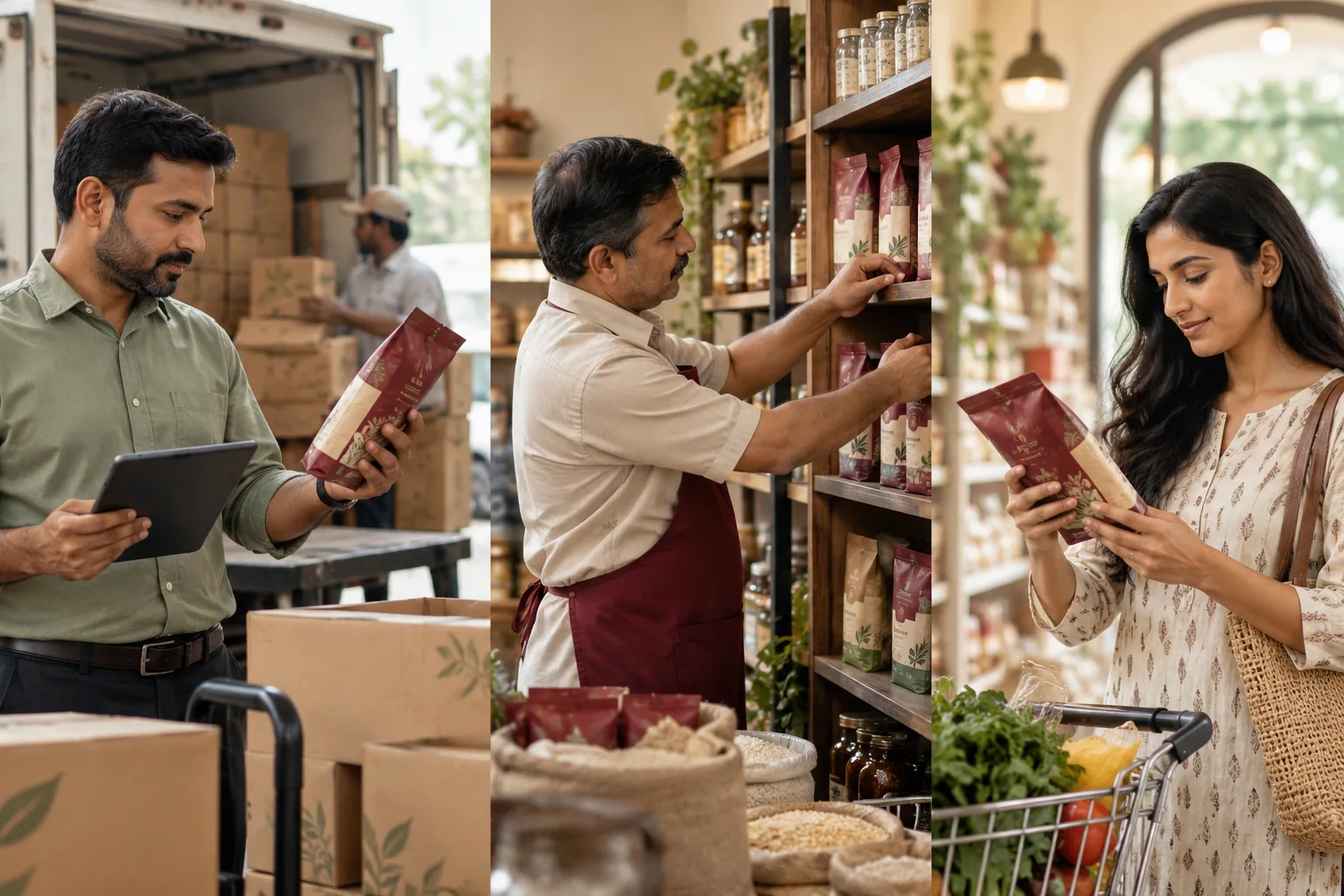 5 min read · 6 Oct 2026How food brands win the trade and the shopperA packed food or household brand is chosen twice: by the distributor, retailer or kitchen that stocks it, then by the shopper who picks it up. Here is what each buyer checks and where brands lose both.
 6 min read · 6 Oct 2026How beverage brands check summer loading against sell-throughA distributor's invoice shows what you pushed into the godown, not what reached shops. Here is how a beverage brand compares summer loading with sell-through before the monsoon arrives.
More for FMCG and beverage brands
Everything else we would do for you.
Closest to this: leads and follow-up
Also for FMCG and beverage brands
Or start from the overview: sales and marketing for FMCG and beverage brands.
Your next practical step
Tell us what you are trying to grow, and we will read it before we call.
Eight short steps, mostly taps. Skip anything you would rather answer on the call.