Food product manufacturers · Email marketing
Keep the distributor and the chef hearing from you monthly.
Email and WhatsApp for a food manufacturer is how price revisions, new packs, schemes and festive booking dates reach distributors, retailers, chefs and bulk buyers. GullySales builds the lists from your billing records and times each send to the trade calendar.
Scope, fee, reporting and term are agreed in writing after we have read your brief and spoken to you.
What email marketing means
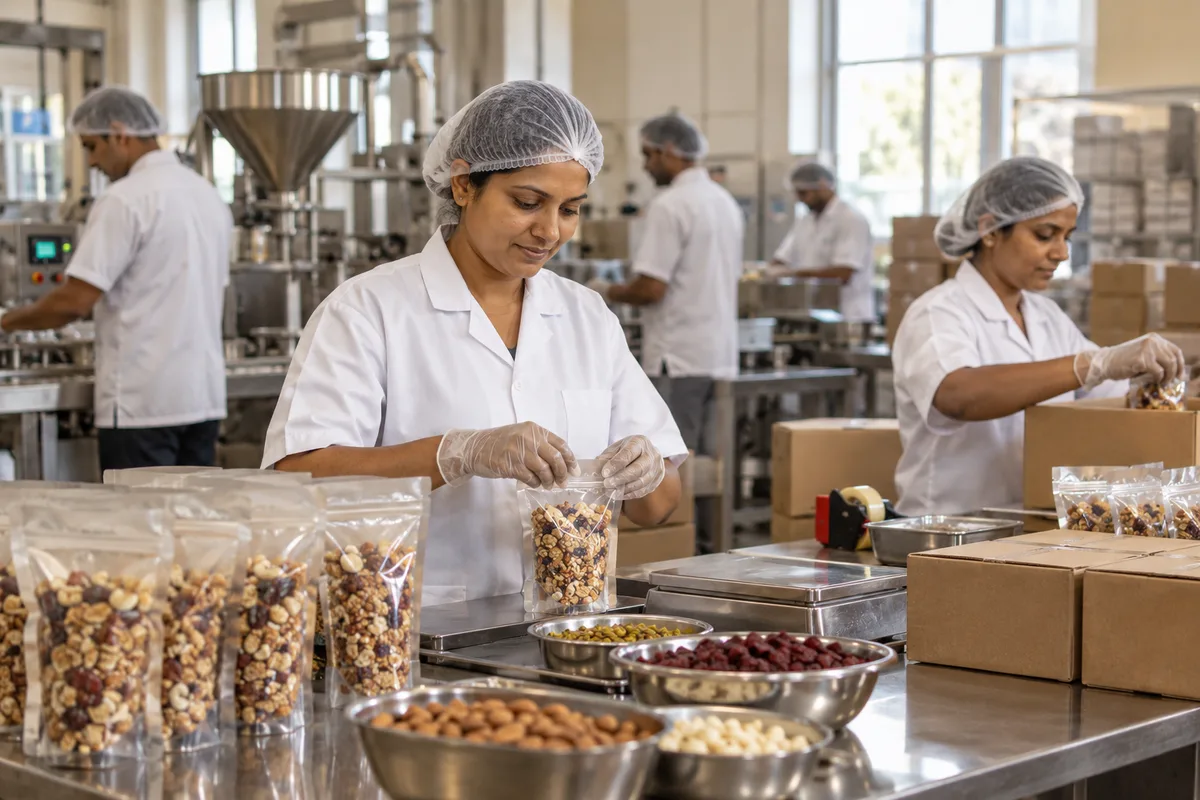
Email marketing is sending planned messages to a list of past and prospective customers who have agreed to hear from you. It suits offers, updates and staying in touch with someone who is not ready to buy yet. GullySales writes and schedules these emails and tracks who opens, clicks and enquires.
Also for food product manufacturers
- SEO for food product manufacturers
- PPC ads for food product manufacturers
- Lead generation for food product manufacturers
- Digital marketing for food product manufacturers
- Local SEO for food product manufacturers
- Social media marketing for food product manufacturers
- Content marketing for food product manufacturers
Sales and marketing for food product manufacturers, the overview.
Last updated 5 Oct 2026. Rules for this trade differ by state and professional body, and they change. We describe restrictions in general terms, so check the current position with your own council or adviser before you publish anything.
For food product manufacturers
Where it usually goes wrong, and what we would do.
“Your billing record is the list”
Every distributor, retailer and HoReCa buyer you have invoiced can be written to, and most makers never do.
“Festive booking closes earlier than you think”
Gift pack orders are placed weeks before Diwali, so the note has to go while the buyer still has budget.
“A price revision is better read than argued”
Sending the new rates with the reason and the date, in writing, saves a fortnight of phone calls.
What we do
What we deliver for food product manufacturers.
Every deliverable, what it covers for you, and the result it is there to produce. Nothing here is an extra.
Lists built from your billing records
Distributors, retailers, HoReCa buyers and exporters split into lists with the district, the categories they take and the season they take them in.
Result: Each send reaches people who already buy.
A festive booking note by category
Gift pack and seasonal range notes sent before the booking window closes, carrying dates, pack options and the order cut-off.
Result: Orders arrive while the buyer still has money.
A price revision note in writing
The new rates, the reason and the date they apply, sent to everybody at once rather than explained over the phone forty times.
Result: Your office stops having the same argument all week.
A note to the HoReCa list
One bulk pack, one price and one usage idea for chefs and purchase managers, short enough to read in a kitchen.
Result: Institutional buyers remember you exist.
A scheme announcement the field team can quote
The scheme, the outlets it applies to and the dates, sent to distributors and retailers and copied to your salesmen.
Result: Nobody in the field explains a scheme wrongly.
A reactivation note for outlets that stopped
Two messages to retailers who have not reordered in three months, the first asking why and the second carrying an offer.
Result: A dropped outlet is recovered before the beat forgets it.
How the result is measured
- Open rate
- Click rate
- Enquiries from email
Recorded as a baseline before work starts, so every later report has an honest comparison.
What must be in place first
What a food manufacturer needs in place before it emails the trade.
- A trade list from your billing records
- Take distributors, retailers, chefs and bulk buyers from your invoices, with the contact, the city and the products they buy. Note the source against each name.
- Licence details on every send
- Food rules in India require your FSSAI licence number on packs and trade material. Include your licence number and registered address in the footer, and keep all product claims within what your licence and labelling allow.
- A price list that is dated and clear
- Attach the current rate card with the pack size, MRP, trade price, GST and minimum order. Mark the effective date. A distributor who sees an undated price will ring to ask whether it is still valid.
- Distributors, retailers and chefs on separate lists
- A distributor wants margin and scheme terms. A chef wants bulk packs and consistency. A retailer wants display and fast-moving packs. One mail to all of them serves none.
- Festive booking dates in a calendar
- Write down when each festival booking opens for your category, such as Diwali sweets and namkeen or Ugadi and Eid specialities. Mail the trade before the booking window so they can plan stock.
Who it is for
This is written for these food product manufacturers.
- Spice, masala and blended powder makers
- Pickle, chutney and preserve manufacturers
- Namkeen, snack and savoury makers
- Sweets and traditional confectionery producers
- Ready-to-cook and instant mix brands
- Millet, health food and organic brands
- Flour mills and grain processors
- Beverage, juice and syrup makers
- Private label and contract food manufacturers
- Food exporters and merchant exporters
Not for
It is not the right fit if.
- You want a guaranteed Google ranking or a guaranteed number of leads. Nobody honest can promise either.
- You need enquiries by next week and have nobody to answer them.
- You want posts and reach reported, not enquiries and orders.
How it works
From your first message to the first report.
No open-ended retainer. Every step gives you something in writing.
First
Your brief
You tell us what you need in a few short steps: your business, what you want, where enquiries come from and how they are handled.
After the brief
A conversation and a written scope
We read it, then talk with whoever handles your enquiries. If you want our help, the scope, the fee and the reporting come in writing, and nothing starts before you have read them.
Before work starts
Baseline recorded
Enquiries by source, reply time, conversion and cost per order, written down so every later report has an honest comparison.
After the baseline
The first fix goes live
The fix we agreed to start with is put in place and measured against the baseline, whether that is reply time, a follow-up sequence, the page buyers land on or the handover between marketing and sales.
As agreed
Report against the baseline
What moved, what did not, and what changes next, in plain words. How often you get it is set in writing before work starts.
At renewal
Renew on the numbers
The term ends and you decide whether to continue from the results. The length is agreed in writing before anything starts.
How the email marketing work runs
- 1
Understand your list
We review who is on the list, how they got there, and how long it has been since they last heard from you.
- 2
Audit past sends
We check open and click rates from past emails to see what has and has not worked.
- 3
Segment and plan
The list is split into meaningful groups and a sending calendar is agreed.
- 4
Implement content and automation
Emails are written, scheduled and, where useful, set to trigger automatically based on behaviour.
- 5
Measure and optimise
We track performance and adjust subject lines, timing and content based on what the list responds to.
Why us
Why owners pick GullySales over an agency.
Marketing and sales, as one job
Most agencies stop at the enquiry. We also fix what happens after it: the reply, the follow-up, the quote and the CRM.
The person on the first call does the work
No account managers in between. You are never handed to someone you have not met.
A baseline before anything starts
Your numbers are written down on day one, so every later report compares against something honest.
The fee in writing, split three ways
Our time, your media spend and production on separate lines. You always see what goes to us.
No guarantees we cannot keep
The term is agreed in writing and never a default twelve months. We never promise a ranking or a lead count, because nobody controls those.
One office, and we say so
Nagarbhavi, Bengaluru. We work across India by call and WhatsApp and travel when a session needs to be in person.
#257, 3rd floor, Sri Nanjundeshwara Complex, Nagarbhavi 8th Block, Outer Ring Road. How we work.
Your brief
Tell us what you need, and we will read it before we call.
Eight short steps about your business, what you want and who decides. Most questions are a tap, and you can skip any you would rather answer on the call.
FAQ
Questions owners ask before they call.
Not here? More answers, or ask on WhatsApp.
Is WhatsApp better than email for the trade?
What do we send between seasons?
Can we email a retailer we met once at a trade fair?
Should health claims about millet packs go in a trade email?
Should we sell on quick commerce apps?
How do we stop distributors dumping our stock?
How much does it cost?
How long is the contract?
How soon will we see results?
Who will actually do the work?
From the blog
Further reading for food product manufacturers.
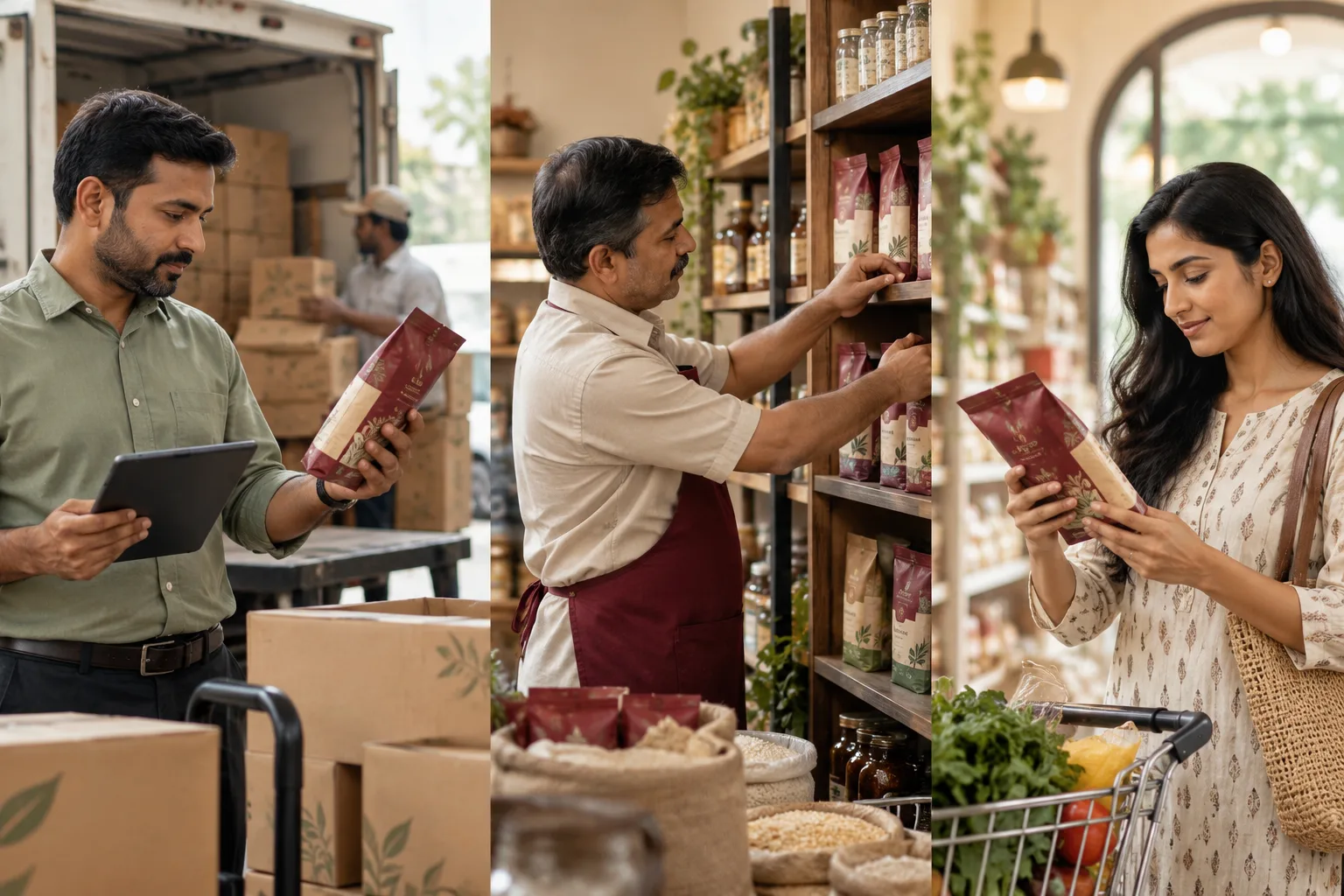 5 min read · 6 Oct 2026How food brands win the trade and the shopperA packed food or household brand is chosen twice: by the distributor, retailer or kitchen that stocks it, then by the shopper who picks it up. Here is what each buyer checks and where brands lose both.
 6 min read · 21 Sept 2026TV advertising vs OTT advertising: what are you actually buying?Television sells slots against ratings and prices the wastage in. OTT sells impressions to chosen people and charges for the choosing. Same film, two shops.
 8 min read · 21 Sept 2026How to advertise to distributorsA distributor is deciding whether to put working capital into your stock. Advertising that hides the investment, the margin and the territory brings you hundreds of enquiries and no distributor.
More for food product manufacturers
Everything else we would do for you.
- SEO for food product manufacturers
- PPC ads for food product manufacturers
- Lead generation for food product manufacturers
- Digital marketing for food product manufacturers
- Local SEO for food product manufacturers
- Social media marketing for food product manufacturers
- Content marketing for food product manufacturers
Or start from the overview: sales and marketing for food product manufacturers.
Your next practical step
Tell us what you are trying to grow, and we will read it before we call.
Eight short steps, mostly taps. Skip anything you would rather answer on the call.