Food product manufacturers · Search engine optimisation
Be found by the distributor and the buyer, not only the shopper.
SEO for a food manufacturer means being found by the people who buy in cases, such as a distributor looking for a masala brand for his district or a chain buyer sourcing private label. GullySales builds a page for each product and each kind of buyer.
Scope, fee, reporting and term are agreed in writing after we have read your brief and spoken to you.
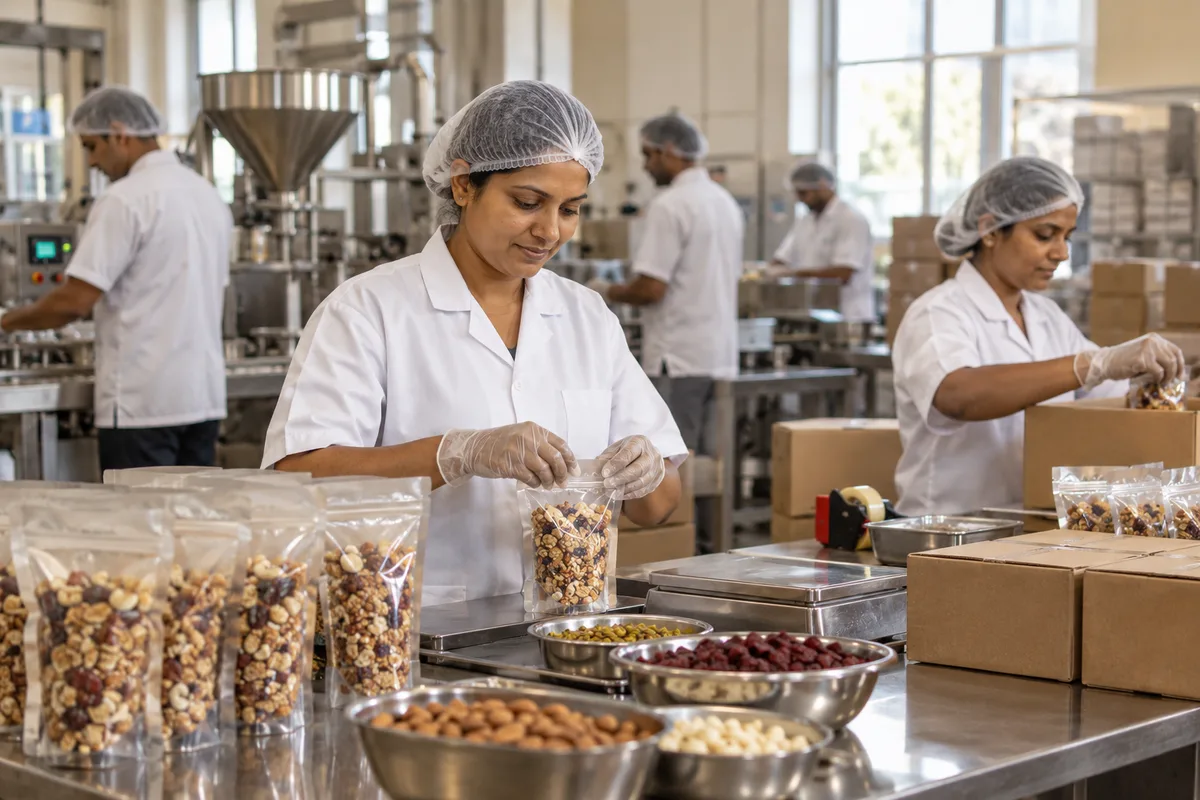
What search engine optimisation means
Search engine optimisation (SEO) is the work of getting your website to appear when a buyer searches Google for what you sell. GullySales builds pages around real search terms, fixes technical issues that block ranking, and tracks which searches actually bring enquiries.
Also for food product manufacturers
- Local SEO for food product manufacturers
- PPC ads for food product manufacturers
- Lead generation for food product manufacturers
- Digital marketing for food product manufacturers
- Social media marketing for food product manufacturers
- Content marketing for food product manufacturers
- Email marketing for food product manufacturers
Sales and marketing for food product manufacturers, the overview.
Last updated 5 Oct 2026. Rules for this trade differ by state and professional body, and they change. We describe restrictions in general terms, so check the current position with your own council or adviser before you publish anything.
For food product manufacturers
Where it usually goes wrong, and what we would do.
“Your product ranks on Amazon, your company nowhere”
A distributor searching for a pickle manufacturer in Karnataka finds traders and marketplaces, and never reaches your site.
“Private label enquiries start as a search”
A brand looking for a contract packer types the category and the state, then reads the certificates before writing.
“Recipe searches bring shoppers, not orders”
A recipe page draws people who will never buy a case, so keep it away from the pages built for trade buyers.
What we do
What we deliver for food product manufacturers.
Every deliverable, what it covers for you, and the result it is there to produce. Nothing here is an extra.
A page for each product and pack size
Separate pages for the masala, the pickle and the ready mix, each carrying pack sizes, case configuration, shelf life and the FSSAI details.
Result: A buyer finds the product instead of a company profile.
A distributor page that answers his questions first
One page setting out the districts still open, the margin structure, the credit period and the launch support you give a new appointment.
Result: A distributor reaches the call already half decided.
A private label page carrying your certifications
Plant capacity, categories, minimum order, certifications and lead time on one page, for a brand searching for a contract manufacturer.
Result: Bulk enquiries stop depending on IndiaMART alone.
Trade pages kept apart from recipe pages
Consumer content in its own section, so a distributor search never lands on a recipe and a shopper never lands on a rate enquiry form.
Result: Each visitor gets the page written for them.
The catalogue as pages, not a PDF
Every product readable on a phone, with photographs and specifications written out, rather than a brochure a buyer has to download first.
Result: Search engines and buyers can both read the range.
Reporting by product and by buyer type
Visits and enquiries for each product page and each trade page, against the baseline recorded before work starts.
Result: You know which product page brought the distributor.
How the result is measured
- Ranking positions
- Organic traffic
- Enquiries from organic search
Recorded as a baseline before work starts, so every later report has an honest comparison.
Searches your buyers type
What a distributor or a chain buyer types when sourcing packaged food, and the page that answers it.
- masala powder manufacturer distributorship
- A distributor page. List the districts that are open, the pack sizes, how a distributor's margin and schemes are agreed, and a short form for a trade enquiry.
- private label pickle manufacturer
- A private label page. State the minimum batch, packaging options, your FSSAI licence as printed on the certificate, and the audit certificates you hold.
- namkeen supplier for retail chain
- A chain-buyer page. Give pack sizes, carton quantity, the shelf life as printed on your pack, and barcode details, so a category buyer can compare you with others.
- ragi flour wholesale supplier
- A bulk page. State the sack and pack sizes, how dispatch is arranged and how a buyer asks for a sample before a first order.
- [your brand] masala where to buy
- A store-finder page. List the cities and retailers that stock the brand, so a shopper who read about it can find a shelf instead of going to Amazon.
- ready to cook mix exporter
- An export page. Name the markets you ship to, how labels are adapted for each, and the documents you handle, such as the export code and licences.
Who it is for
This is written for these food product manufacturers.
- Spice, masala and blended powder makers
- Pickle, chutney and preserve manufacturers
- Namkeen, snack and savoury makers
- Sweets and traditional confectionery producers
- Ready-to-cook and instant mix brands
- Millet, health food and organic brands
- Flour mills and grain processors
- Beverage, juice and syrup makers
- Private label and contract food manufacturers
- Food exporters and merchant exporters
Not for
It is not the right fit if.
- You want a guaranteed Google ranking or a guaranteed number of leads. Nobody honest can promise either.
- You need enquiries by next week and have nobody to answer them.
- You want posts and reach reported, not enquiries and orders.
How it works
From your first message to the first report.
No open-ended retainer. Every step gives you something in writing.
First
Your brief
You tell us what you need in a few short steps: your business, what you want, where enquiries come from and how they are handled.
After the brief
A conversation and a written scope
We read it, then talk with whoever handles your enquiries. If you want our help, the scope, the fee and the reporting come in writing, and nothing starts before you have read them.
Before work starts
Baseline recorded
Enquiries by source, reply time, conversion and cost per order, written down so every later report has an honest comparison.
After the baseline
The first fix goes live
The fix we agreed to start with is put in place and measured against the baseline, whether that is reply time, a follow-up sequence, the page buyers land on or the handover between marketing and sales.
As agreed
Report against the baseline
What moved, what did not, and what changes next, in plain words. How often you get it is set in writing before work starts.
At renewal
Renew on the numbers
The term ends and you decide whether to continue from the results. The length is agreed in writing before anything starts.
How the search engine optimisation work runs
- 1
Audit and baseline
We record where the site stands today: positions, traffic, technical faults and the enquiries search currently produces. Nothing starts until this number is written down.
- 2
Decide what to rank for
We map the searches your buyers use, in your words and theirs, and pick the ones worth the effort for your margin and your capacity.
- 3
Fix the foundations
Technical faults first, because the cheapest gains are usually there. Then the Business Profile and directory consistency.
- 4
Build the pages
A page for each thing you do, written to answer the question it is searched for, with a clear next step at the end.
- 5
Publish and earn mentions
Content goes out on the calendar. Links and mentions are earned from real relationships, not bought.
- 6
Measure, report, adjust
At the interval agreed at the start we report what moved and what did not, and change the plan when the numbers say so.
Why us
Why owners pick GullySales over an agency.
Marketing and sales, as one job
Most agencies stop at the enquiry. We also fix what happens after it: the reply, the follow-up, the quote and the CRM.
The person on the first call does the work
No account managers in between. You are never handed to someone you have not met.
A baseline before anything starts
Your numbers are written down on day one, so every later report compares against something honest.
The fee in writing, split three ways
Our time, your media spend and production on separate lines. You always see what goes to us.
No guarantees we cannot keep
The term is agreed in writing and never a default twelve months. We never promise a ranking or a lead count, because nobody controls those.
One office, and we say so
Nagarbhavi, Bengaluru. We work across India by call and WhatsApp and travel when a session needs to be in person.
#257, 3rd floor, Sri Nanjundeshwara Complex, Nagarbhavi 8th Block, Outer Ring Road. How we work.
Your brief
Tell us what you need, and we will read it before we call.
Eight short steps about your business, what you want and who decides. Most questions are a tap, and you can skip any you would rather answer on the call.
FAQ
Questions owners ask before they call.
Not here? More answers, or ask on WhatsApp.
Do we need a website when we sell through distributors?
Should we publish our price list?
Can we say no preservatives or healthy on the product page?
Do we need a separate page for each pack size?
Should we sell on quick commerce apps?
How do we stop distributors dumping our stock?
How long is the contract?
How soon will we see results?
Who will actually do the work?
What do you need from us?
From the blog
Further reading for food product manufacturers.
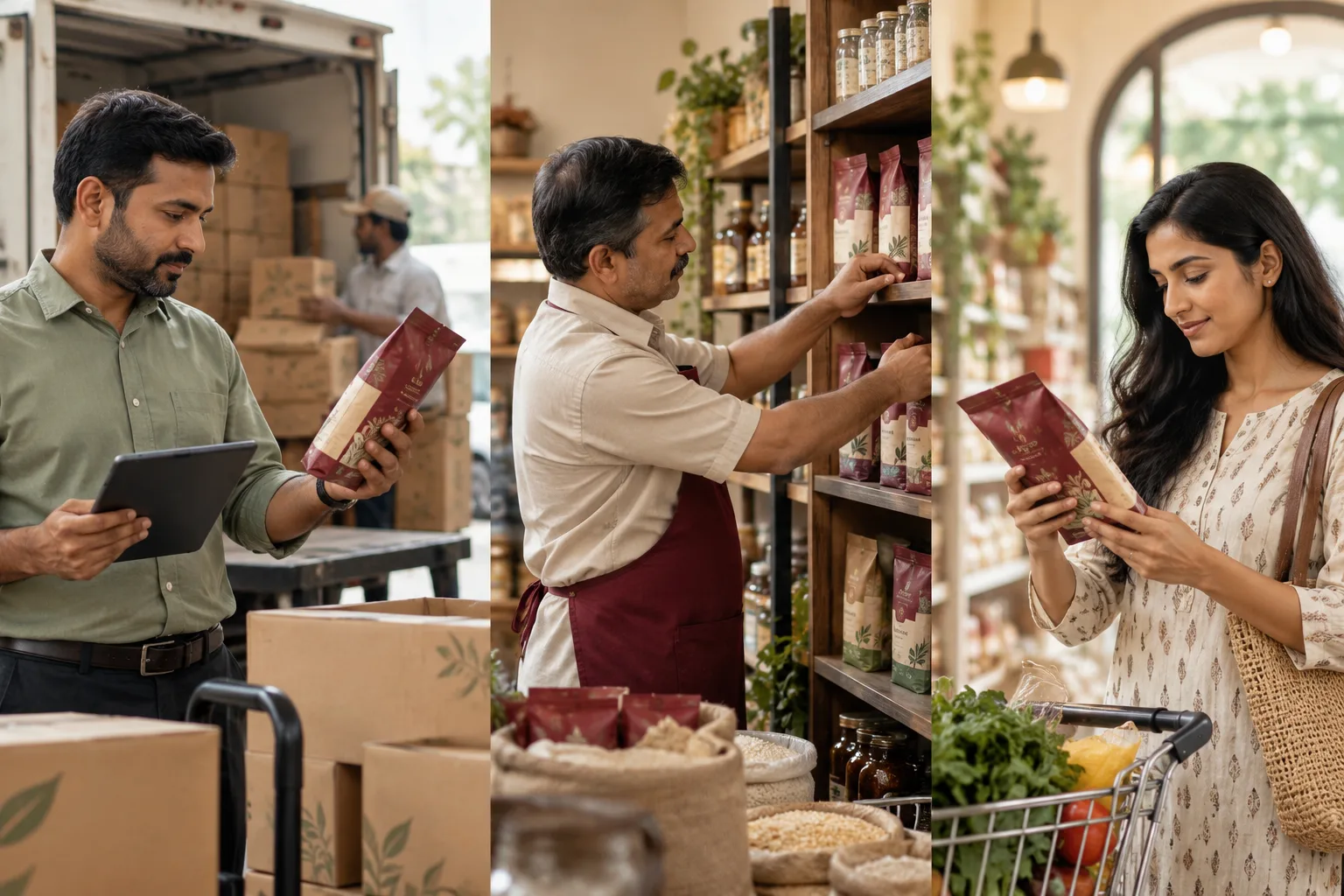 5 min read · 6 Oct 2026How food brands win the trade and the shopperA packed food or household brand is chosen twice: by the distributor, retailer or kitchen that stocks it, then by the shopper who picks it up. Here is what each buyer checks and where brands lose both.
 6 min read · 21 Sept 2026TV advertising vs OTT advertising: what are you actually buying?Television sells slots against ratings and prices the wastage in. OTT sells impressions to chosen people and charges for the choosing. Same film, two shops.
 8 min read · 21 Sept 2026How to advertise to distributorsA distributor is deciding whether to put working capital into your stock. Advertising that hides the investment, the margin and the territory brings you hundreds of enquiries and no distributor.
More for food product manufacturers
Everything else we would do for you.
Closest to this: search and visibility
Also for food product manufacturers
Or start from the overview: sales and marketing for food product manufacturers.
Your next practical step
Tell us what you are trying to grow, and we will read it before we call.
Eight short steps, mostly taps. Skip anything you would rather answer on the call.