Heavy equipment and forklift dealers · Branding
Every dealer on the road sells the same iron, so be known for uptime.
Branding for an equipment dealership is what a contractor believes about your service before the need arises. It is the lettered field truck, the technician who answers, and the trade-in number that held up. GullySales settles how the dealership presents itself within the manufacturer rules and puts it on what buyers meet.
Scope, fee, reporting and term are agreed in writing after we have read your brief and spoken to you.
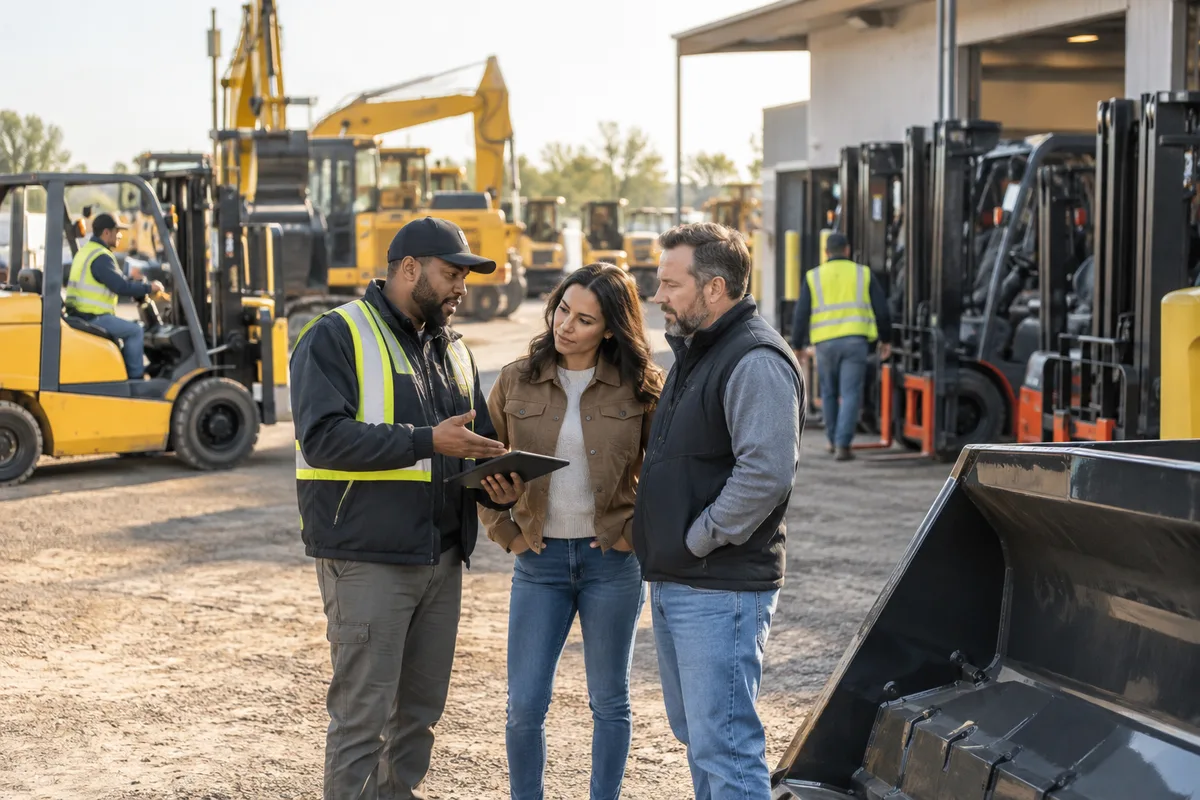
What branding means
Branding is what a customer remembers about your business beyond the product, including your name, colours, tone of voice and what you are known for locally. GullySales sets or corrects this once and applies it consistently across your website, signage and adverts so the business looks like one company everywhere.
Also for heavy equipment and forklift dealers
- SEO for heavy equipment dealers
- PPC ads for heavy equipment dealers
- Lead generation for heavy equipment dealers
- Digital marketing for heavy equipment dealers
- Reputation management for heavy equipment dealers
- Local SEO for heavy equipment dealers
- Social media for heavy equipment dealers
- Content marketing for heavy equipment dealers
Sales and marketing for heavy equipment and forklift dealers, the overview.
Last updated 14 Nov 2026.
For heavy equipment and forklift dealers
Where it usually goes wrong, and what we would do.
“The manufacturer owns half your identity”
Signage, colours and logo use are set by the dealer agreement and checked when you claim co-op. What is left is the part buyers remember.
“A field service truck parks on a jobsite all day”
A crew watches it for eight hours. Lettering, a tidy deck and a technician in a shirt with a name on it does more in your territory than any advertisement.
“The appraisal number is a promise”
A trade-in figure that stands up at inspection is why a contractor calls you for the next machine. A number pulled out of the air ends the relationship at delivery.
What we do
What we deliver for heavy equipment and forklift dealers.
The work available for this need. We agree the deliverables and responsibilities for your engagement in writing.
A presentation standard for trucks, shop and staff
Vehicle lettering, shirts, identity cards and a rule for how the yard and service bays look before a customer walks in, written down once.
Result: Every contact with the dealership looks like the same company.
The manufacturer brand rules on one sheet
What your programme allows on logo use, model naming and claims, kept where whoever builds an advertisement will read it.
Result: Nothing goes out that has to be redone or gets a co-op claim refused.
A used equipment condition standard
One way of stating hours, wear, service history and known faults on every unit, used on the lot, the listings and the invoice.
Result: Buyers learn that your description matches the machine.
A trade-in appraisal document
The inspection points, the photographs taken and the reasoning behind the number, handed to the customer instead of a figure over the phone.
Result: The trade conversation stops being an argument.
An uptime commitment written in plain words
What happens when a machine goes down, who answers, what the field response arrangement is and what it is not.
Result: The thing you sell on is finally written down.
One delivery and quote pack
The quote, the finance sheet, the warranty summary and the delivery folder produced as one set rather than assembled by each salesman.
Result: A buyer takes home something that looks like a dealership.
How the result is measured
- Recognition in customer feedback
- Consistency across channels
- Repeat enquiries by name
Recorded as a baseline before work starts, so every later report has an honest comparison.
Positioning in one sentence
Fill this sentence in for the dealership, and the yard, the service van and the quote will say the same thing.
- Who it is for, as a contractor or an operator
- Name the buyer and the machine: a road contractor buying a backhoe loader, a warehouse buying forklifts, a farmer buying a compact tractor. Each buyer compares different things.
- What you sell and service, by make and type
- List the makes you are authorised for, new or used, and the service and spares you handle. Use the names buyers use, such as backhoe loader, telehandler, 3-tonne diesel forklift.
- What a buyer gets that the other dealer does not
- Choose one that is true: a service truck on the road, parts in stock for a model, a rental unit while theirs is repaired. It must be something your yard can show, not a promise of uptime.
- The proof you can show
- Show your authorisation letter, photographs of machines with hour readings, service records of machines you sold, and customers who will take a reference call. Be honest about used machine history.
- Words every dealer uses
- Best price, genuine parts and complete support appear on every hoarding. Replace them with the stock of parts you hold, the service area and the makes you serve.
- The name and tagline test
- Check how the dealership name sits beside the maker's name on a board. The maker's rules may decide size and place; your own name still needs to be readable and match your registration.
Who it is for
This is written for these heavy equipment and forklift dealers.
- Full-line construction equipment dealers for a single manufacturer
- Independent used equipment dealers and brokers
- Forklift and material handling dealers running a service fleet
- Compact tractor and agricultural equipment dealers
- Crane, telehandler and aerial lift specialists
- Attachment, tyre and wear parts suppliers
- Dealers running a rental fleet alongside sales
- Single-location dealers competing with a multi-state group
Before you decide
When this may not be the right fit.
- You have not read the manufacturer's brand rules, and a new logo or sign could break what your dealer agreement allows.
- The service trucks, yard and shop are the real face of the dealership and are not fit to photograph, which a new identity would not fix.
- You want a new name to solve a problem that sits in slow callbacks and unreturned quotes.
Before you decide
Agree the work. Know how to judge it.
Branding for heavy equipment dealers: use these checks to prepare, choose the scope, and review what changes.
Bring the right evidence
Collect the sales presentation, website, quotations, and other material buyers actually see. Mark where the description of the business changes or where a claim has no supporting evidence.
Make the scope clear
Agree whether the work concerns the offer, the words, the visual identity, or all of them. List the formats that need updating and who owns the final approval.
Check the work in use
Test the proposed direction on a real sales page or proposal. A buyer should be able to tell who the offer is for, what is different, and what evidence supports it.
Know when to change course
A new identity will not fix an unresolved service problem. Put the delivery issue right before making a stronger public promise about it.
These are discussion points, not a fixed package. GullySales confirms the deliverables, responsibilities, fee, and term in writing after reading your brief and speaking with you.
Before we start
What to have ready before the work starts.
The records, access and decisions this work needs from heavy equipment and forklift dealers. Anything missing is noted in the written scope, with who will supply it.
- The manufacturer's identity manual
- The current dealer brand guide shows what is fixed. A PDF from the portal is the best form. Without it we cannot separate required from optional, and the standard avoids touching anything that looks like the maker's own marks.
- Three recent quote and invoice forms
- A quote, an invoice and a work order as they leave the building. Scans are fine. They show how the dealership speaks on paper, and without them the delivery and quote pack starts from a blank page instead of from the forms you already trust.
- A contractor willing to talk for twenty minutes
- A customer who has bought more than once and would give an honest view. The owner makes the introduction. If none is available, the identity rests on the sales and service desks alone, and it is more likely to describe the dealership as you see it than as a buyer does.
- Your current trade-in appraisal practice
- How a used machine is inspected, valued and offered back to the customer, in whatever form it exists. Even a checklist on the back of an envelope counts. Without it we write the document from the desk's description, and the owner must confirm it matches what actually happens.
- A decision on who approves identity changes
- One person must say yes to a truck lettering change or a revised form. That is the owner or general manager. If it is shared, approvals stall, and each store drifts to its own version again.
How it works
How the branding work runs
The work itself, in order. How an engagement starts, from your brief to a written scope, is set out on our method page.
- 1
Photograph the trucks, shop and signs as they are
We go round the yard and note the lettering on field trucks, the shop signs, the invoice and quote forms, the website and the staff clothing. You walk with us for the first stretch and tell us which are required by the manufacturer. The photographs show where the dealership looks like one business and where it looks like several.
- 2
Read the manufacturer's brand rules together
Your dealer manager hands over the maker's identity manual, and we mark what must be used as written and what is open to you. You tell us which rules the area representative actually checks. The rules go onto one sheet, so no one has to find the manual to settle a question.
- 3
Interview a contractor who has bought twice
We ask a customer who has returned for a second machine what made them choose you, what they check on a used unit and what they said to others. You introduce the customer. What they say, not our preference, decides which promises the dealership makes in plain words.
- 4
Write the standard for trucks, shop and staff
We set out how a field truck is lettered and kept, how technicians present themselves and how the counter looks. You agree what is enforced. A used machine condition standard and an appraisal document follow, so a buyer sees the same description whoever writes it.
- 5
Draft the uptime commitment with the service manager
In plain sentences we write what the dealership will do when a machine stops: who is called, what is said and what the customer is told about parts. The service manager rejects any sentence the shop cannot keep. You decide whether it goes on the website and the quote pack.
- 6
Check the rollout against what buyers say
When the standard is on the trucks, forms and pages, we ask the sales desk and a few customers whether they noticed and whether it changed the conversation. We set that against the notes taken at the start. You decide what is added or dropped as vehicles and forms are replaced.
Where this fits
Three pieces of sales work, in this order.
This work sits inside sales process design, at stage 1, prospecting and lead generation. The audit comes before it, and sales management keeps it running.
Step 1
Sales audit
Find where deals are being lost and what to fix first.
Start here if you cannot say where orders are lost.
Step 2 · you are here
Sales process design
One written way to sell, from first enquiry to repeat order.
Start here if every salesperson sells differently.
Step 3
Sales management
A target, a review routine and someone who owns the number.
Start here if the team has targets and no routine.
FAQ
Questions owners ask before they call.
Not here? More answers, or ask on WhatsApp.
Can we use the manufacturer logo in our own advertising?
Do we need a new logo?
Should a used machine business carry a different name from the new dealership?
Can we use a maker's photographs and specification sheets?
Is a new logo part of this work?
How much does it cost?
How long is the contract?
How soon will we see results?
Who will actually do the work?
What do you need from us?
More for heavy equipment and forklift dealers
Related work to consider.
Or start from the overview: sales and marketing for heavy equipment and forklift dealers.
Your next practical step
Tell us what you are trying to grow, and we will read it before we call.
Eight short steps, mostly taps. Skip anything you would rather answer on the call.