Heavy equipment and forklift dealers · Content marketing
Write down the answers your salesmen give forty times a week.
Content for an equipment dealership is the plain answer to what a buyer asks before committing. How many hours is too many, what the machine costs to run, whether the attachment fits. GullySales gets those answers out of your service and sales desks and puts them where the searching happens.
Scope, fee, reporting and term are agreed in writing after we have read your brief and spoken to you.
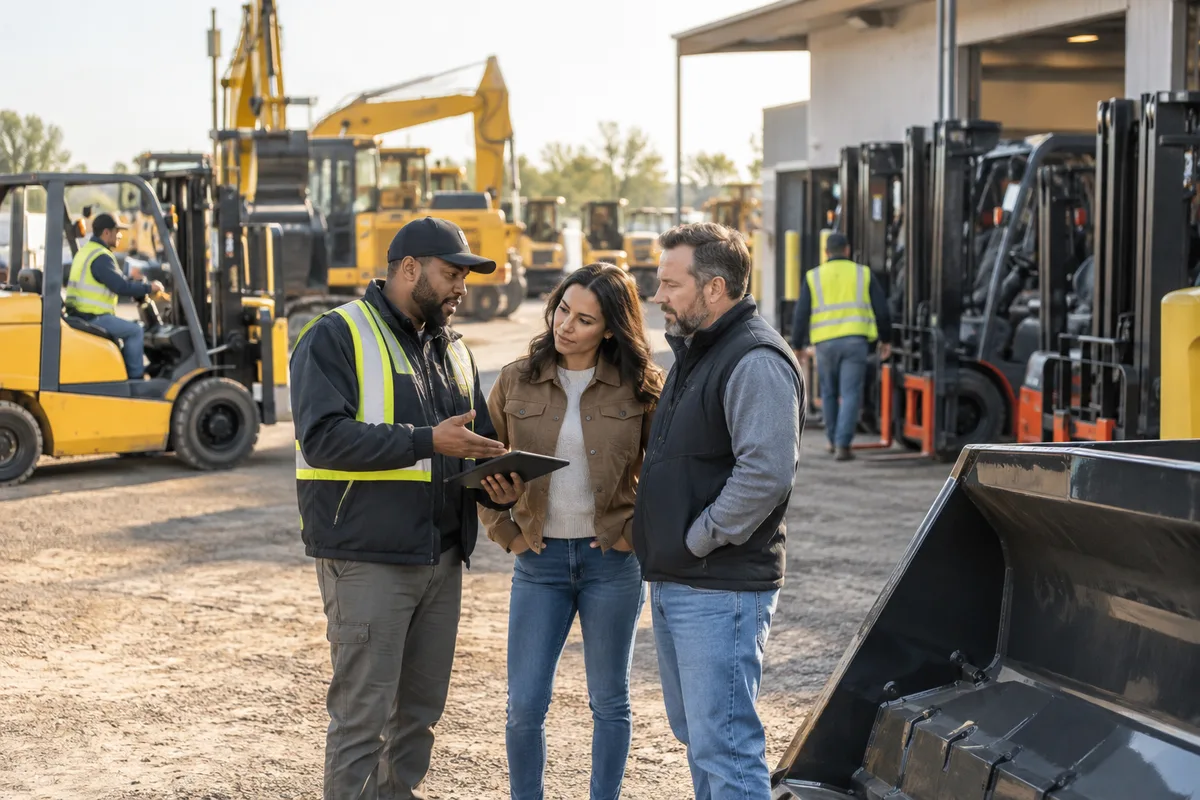
What content marketing means
Content marketing is writing articles, guides and pages that answer the questions buyers search before they are ready to enquire. This makes your business visible and trusted before the first call. GullySales plans this content from the first conversation onward, choosing topics that match real search demand rather than guesses.
Also for heavy equipment and forklift dealers
- Social media for heavy equipment dealers
- SEO for heavy equipment dealers
- PPC ads for heavy equipment dealers
- Lead generation for heavy equipment dealers
- Digital marketing for heavy equipment dealers
- Reputation management for heavy equipment dealers
- Local SEO for heavy equipment dealers
- Branding for heavy equipment dealers
Sales and marketing for heavy equipment and forklift dealers, the overview.
Last updated 14 Nov 2026.
For heavy equipment and forklift dealers
Where it usually goes wrong, and what we would do.
“Hours are the question behind every used enquiry”
A contractor wants to know what 4,000 hours on that model means for that kind of work and what the undercarriage has left. Your service manager answers it daily and nobody wrote it down.
“Attachment fit has one right answer”
A grapple suits one coupler and not another, and the buyer searching for that combination is ready to order. A page per machine and coupler brings orders from outside your radius.
“Transport decides which machine gets bought”
Width, weight and whether a permit is needed change the choice between two models, and the manufacturer brochure never mentions it.
What we do
What we deliver for heavy equipment and forklift dealers.
The work available for this need. We agree the deliverables and responsibilities for your engagement in writing.
A question list taken from the desks
Two sittings with the sales floor and the service writers, collecting what buyers ask on the phone, ranked from the most asked to the least.
Result: The writing starts from real questions rather than keyword tools.
Model pages written for the jobs in your territory
Operating weight, attachment fit, running cost and the work that model actually does in your counties, in plain words rather than copied specification.
Result: Your page answers what the spec sheet leaves out.
Attachment and coupler fit guides
A guide for each compact machine class listing what fits, what needs an adapter and what a used attachment is worth checking for.
Result: Parts and attachment enquiries arrive already specified.
A transport and permit note per machine class
Transport width, weight and the permit question for each size of machine you sell, with what your yard can arrange.
Result: A buyer stops discovering the problem after signing.
Walkaround videos published with the write-up
The video filmed at check-in placed on the machine page and the model page, with the condition notes written beside it.
Result: One filming session feeds the listing, the page and the feed.
A year-end deduction explainer
A page setting out Section 179 in general terms, what a dealer can and cannot tell a buyer, and a plain instruction to confirm it with an accountant.
Result: The fourth quarter question is answered without giving tax advice.
Content reported against parts orders and quotes
Which pages brought enquiries, parts orders and quotes, reported against the baseline recorded before work starts.
Result: Writing stops being an act of faith.
How the result is measured
- Pages published
- Organic traffic
- Enquiries from content pages
Recorded as a baseline before work starts, so every later report has an honest comparison.
Questions buyers ask first
The questions a contractor asks before calling about a machine, and the page that answers each.
- How many hours is too many on a used excavator?
- A guide by machine class: what hours mean, what else to look at (undercarriage, pins, service records), and what you inspect and photograph before listing. Hours alone mislead.
- Will this attachment fit my machine?
- A fit guide per model: coupler type, pin size, hydraulic flow and the machine's rated capacity. Ask the buyer for the serial number before quoting.
- What will it cost to run each hour?
- A running cost page: fuel, wear parts, service intervals, tyres or tracks. Use your own service desk's figures and say what changes them.
- How do I get it to my site?
- A transport note per machine class: weight, trailer type, width and permit questions. State that rules vary by state and that you can arrange delivery.
- Can I finance or lease it?
- A finance page: the documents needed, the lenders you work with, and the rental-purchase option. Point the reader to the next step.
- What service and parts will I get after I buy?
- A support page: parts stock, the area your service van covers, planned maintenance agreements, and what voids the warranty. Contractors buy from the dealer they can reach on a breakdown day.
Who it is for
This is written for these heavy equipment and forklift dealers.
- Full-line construction equipment dealers for a single manufacturer
- Independent used equipment dealers and brokers
- Forklift and material handling dealers running a service fleet
- Compact tractor and agricultural equipment dealers
- Crane, telehandler and aerial lift specialists
- Attachment, tyre and wear parts suppliers
- Dealers running a rental fleet alongside sales
- Single-location dealers competing with a multi-state group
Before you decide
When this may not be the right fit.
- Salesmen have not written down the answers they give on hours, attachments and transport, so there is nothing true to publish from.
- No one can check an attachment fit or a hitch rating before it goes on a page, and a wrong answer in print is worse than none.
- Nobody is named to answer the calls a guide produces, and each one would meet an unreturned message.
Before you decide
Agree the work. Know how to judge it.
Content marketing for heavy equipment dealers: use these checks to prepare, choose the scope, and review what changes.
Bring the right evidence
Bring questions from sales calls and examples of objections that delay a decision. Choose a subject expert who can check the substance, and identify evidence that can be published.
Make the scope clear
Agree the reader, buying question, format, and distribution route for each piece. Set the approval process and distinguish new research from rewriting material you already have.
Check the work in use
Ask a colleague to use the draft in a real buyer conversation. It should answer the question, support its claims, and make the next step clear without requiring a sales pitch to explain it.
Know when to change course
If the same unanswered question appears in several articles, improve the strongest page before commissioning another. More words are not a substitute for missing evidence.
These are discussion points, not a fixed package. GullySales confirms the deliverables, responsibilities, fee, and term in writing after reading your brief and speaking with you.
Before we start
What to have ready before the work starts.
The records, access and decisions this work needs from heavy equipment and forklift dealers. Anything missing is noted in the written scope, with who will supply it.
- The last twenty customer questions, as asked
- Notes from the parts counter, service desk or sales inbox with the real words customers used. Photographs of a notepad are fine. Without them we write from the manufacturer's catalogue, and the pages answer questions nobody has put to you.
- An hour of a technician's time per machine class
- One technician who knows the class talking through faults and running costs. It can be done on the shop floor. Without it, pages repeat specifications, and a contractor can find those on the maker's own site.
- Your view on what you will say about condition
- The owner decides how plainly the dealership describes wear, leaks and repairs on used units. A short statement of policy is enough. Without it, we write cautiously and the walkaround content loses its main attraction, which is honesty.
- Fit lists for your top attachments
- Which couplers and attachments suit which machines you sell. A page from the parts manager is enough. Missing this, we leave fit guides out and the pages that answer the practical question are not written.
- A named approver for technical claims
- One person, the service manager or owner, who signs off each page before it goes live. Their decision is needed every time. If it is left to whoever is free, errors get through, and a wrong claim about fit or transport costs more than a gap.
How it works
How the content marketing work runs
The work itself, in order. How an engagement starts, from your brief to a written scope, is set out on our method page.
- 1
Collect the questions from both desks
We sit with the parts counter, the service writers and the sales desk and list what customers ask before they commit: hour meter limits, running costs, attachment fit, transport. You review the list and mark which questions you would answer for a buyer in person. Those become the topics, ranked by closeness to a sale.
- 2
Choose the models and jobs to write about
From your territory and past quotes we pick the machine classes and work they are bought for, such as trenching, loading or pallet handling. You confirm which are worth a page. This keeps the writing on machines you sell to customers you meet, rather than on every model the maker lists.
- 3
Interview the technician on one machine
A technician who services the machine tells us what fails, what costs money to keep running and what a buyer should check. We record and write it up. You, or the service manager, read it for accuracy. The page then carries a view of the machine that a manufacturer sheet does not.
- 4
Check attachment and coupler fit with the shop
Fit questions have one correct answer, and a wrong one costs a customer a day. The shop confirms each pairing we list, and where unsure, the page says to ring the parts counter. You decide which pairings are published. Transport and permit notes follow the same check.
- 5
Publish with the walkaround and tell the desks
Each write-up goes live with its video where one exists, and the sales and parts desks are told what it says so they answer in line with it. You approve the final text. The page links to the quote or parts form, and we track which pages bring those requests.
- 6
Read pages against quotes and parts orders
We set each page's visits, calls and form requests against the baseline recorded at the start, and the desks tell us which enquiries mentioned it. You choose which pages are revised, joined or left, and which question comes next from the desks' list.
Where this fits
Three pieces of sales work, in this order.
This work sits inside sales process design, at stage 0, foundation. The audit comes before it, and sales management keeps it running.
Step 1
Sales audit
Find where deals are being lost and what to fix first.
Start here if you cannot say where orders are lost.
Step 2 · you are here
Sales process design
One written way to sell, from first enquiry to repeat order.
Start here if every salesperson sells differently.
Step 3
Sales management
A target, a review routine and someone who owns the number.
Start here if the team has targets and no routine.
FAQ
Questions owners ask before they call.
Not here? More answers, or ask on WhatsApp.
Where would we find the time to write this?
Does any of this sell machines?
Should walkaround videos show a machine's faults?
How do we stop a sold machine's page misleading buyers?
Do we have to write any of it ourselves?
How much does it cost?
How long is the contract?
How soon will we see results?
Who will actually do the work?
What do you need from us?
More for heavy equipment and forklift dealers
Related work to consider.
Closest to this: content and social
Also for heavy equipment and forklift dealers
Or start from the overview: sales and marketing for heavy equipment and forklift dealers.
Your next practical step
Tell us what you are trying to grow, and we will read it before we call.
Eight short steps, mostly taps. Skip anything you would rather answer on the call.