Household products brands · Follow up systems
Call the housekeeping head back on the day the sample runs out.
A follow-up system for a household products brand is the set of calls, visits and messages that happen after a sample, a first order or a scheme, written down so each has an owner and a date. GullySales designs these routines for distributors, shops and institutions and checks they are being kept.
Scope, fee, reporting and term are agreed in writing after we have read your brief and spoken to you.

What follow up systems means
A follow-up system is the set routine for calling, messaging or emailing an enquiry more than once, since most buyers do not decide on the first conversation. GullySales sets the number and timing of follow-ups so an undecided buyer keeps hearing from you until they decide either way.
Also for household products brands
- Lead generation for household products brands
- CRM for household products brands
- SEO for household products brands
- Social media marketing for household products brands
- Digital marketing for household products brands
- Content marketing for household products brands
- Branding for household products brands
- Sales management for household products brands
Sales and marketing for household products brands, the overview.
Last updated 6 Oct 2026.
For household products brands
Where it usually goes wrong, and what we would do.
“The sample ends before the call begins”
A hostel trial can finish on a Tuesday and the first call come three weeks later, when the old supplier has already refilled the store. The call belongs on the day the can runs low, which needs the date to be written.
“A first order is the start of a relationship, not its end”
A kirana shop that took two cartons has not yet decided on your brand. The next visit decides it: did the pack sell, did anything leak, does the shopkeeper want a demo bottle for the counter.
“Festival schemes need a follow-up after the festival”
Loading before Diwali is easy to celebrate. The harder call is in December, asking each distributor what sold through, what is left and what claims are open. Skipping it is how January godowns fill with unsold bars.
“Complaints deserve an answer before the next order”
A leaking cap reported to the salesman and never answered becomes a reason to drop the brand. A routine that closes each complaint, with a name beside it, protects the next reorder.
What we do
What we deliver for household products brands.
Every deliverable, what it covers for you, and the result it is there to produce. Nothing here is an extra.
Follow-up calendar by account type
For distributors, shops and institutions, a list of what is done after the first order, after a sample and after a scheme, and who does it.
Result: Every account has a next step and an owner.
Trial-to-order routine for institutions
A sequence for hostels, hotels and hospitals from the dilution card on delivery to the call when the can runs low and the order request.
Result: A trial ends in a decision, not in silence.
Post-festival review script
A short set of questions for each distributor on sell-through, returns and open claims.
Result: The sales head knows what the festival really sold.
Complaint closure routine
A way to log, answer and close each complaint about leaks, fragrance or delivery, with the response noted.
Result: No complaint stays open without a name against it.
Lapsed shop and account reactivation list
A list drawn from your records of shops and institutions that stopped ordering, with a question to ask each.
Result: The team reaches quiet accounts before a rival does.
How the result is measured
- Follow-up completion rate
- Average number of follow-ups before close
- Enquiries closed after repeat follow-up
Recorded as a baseline before work starts, so every later report has an honest comparison.
Moments to follow up
The points at which a shop, a hostel or a distributor needs a call from you.
- Sample can finished
- Note the date it was handed over and the dilution advised. Call the housekeeping head then, while the floor result is fresh, and ask for a small trial order.
- First order delivered
- Check that the cartons arrived undamaged and the shopkeeper knows the reorder number. A leaking pack found now is easier to fix than one found at the next order.
- Festival stock cleared or returned
- Record what the wholesaler sold and what came back. The call after the festival decides the scheme for the next one.
- Complaint answered
- Log the batch and what was replaced. Call back before the next order so the buyer hears that the problem was closed.
- Shop silent for a long time
- Mark shops that stopped ordering and let the salesman ask why on the next visit. A lost shelf slot is a common unspoken reason.
Who it is for
This is written for these household products brands.
- Detergent powder, bar and liquid brands
- Dishwash gel, liquid and bar makers
- Floor, toilet and glass cleaner brands
- Phenyl, disinfectant and bleach makers
- Mosquito repellent and air freshener brands
- Scrubber, sponge, wipe, mop and broom makers
- Garbage bag, foil, tissue and kitchen roll brands
- Institutional and housekeeping chemical suppliers
Not for
It is not the right fit if.
- Nobody has the time to make the calls, so a calendar of follow-ups would only show a list of missed ones.
- You have not yet delivered a first order to the account, so there is nothing to follow up except the sales pitch itself.
- Your complaints are not answered at all today, so a follow-up routine would call buyers before their last problem is closed.
How it works
How the follow up systems work runs
The work itself, in order. How an engagement starts, from your brief to a written scope, is set out on our method page.
- 1
Measure today's reply time
From your recent enquiries, we set the time each arrived against its first reply, using the call log, chats, form entries and portal panel. We also count the follow-ups each one got.
- 2
Agree targets and the sequence
We set reply targets and the follow-up sequence with your team, based on its real hours and workload.
- 3
Write the templates and first-call questions
The first reply, the quote follow-up and the last attempt are written in your voice and loaded as quick replies. The first-call questions are agreed with your best salesperson.
- 4
Set ownership, tasks and alerts
Named owners, cover for leave and CRM or sheet tasks go live. App alerts, such as IndiaMART's, are switched on for the right phones.
- 5
Track and adjust
Reply time and follow-up completion are reported against the baseline, and the routine is changed where it is not kept. How often you are reported to is agreed in writing.
Where this fits
Three pieces of sales work, in this order.
This work sits inside sales process design, at stage 2, qualification. The audit comes before it, and sales management keeps it running.
Step 1
Sales audit
Find where deals are being lost and what to fix first.
Start here if you cannot say where orders are lost.
Step 2 · you are here
Sales process design
One written way to sell, from first enquiry to repeat order.
Start here if every salesperson sells differently.
Step 3
Sales management
A target, a review routine and someone who owns the number.
Start here if the team has targets and no routine.
FAQ
Questions owners ask before they call.
Not here? More answers, or ask on WhatsApp.
Who should own follow-up, the salesman or the office?
How do we follow up with a hundred shops on a beat?
Should follow-up be a phone call or a message?
What if the shop says call me later and does not pick up?
How much does it cost?
How long is the contract?
How soon will we see results?
Who will actually do the work?
What do you need from us?
What if we are not happy with the work?
From the blog
Further reading for household products brands.
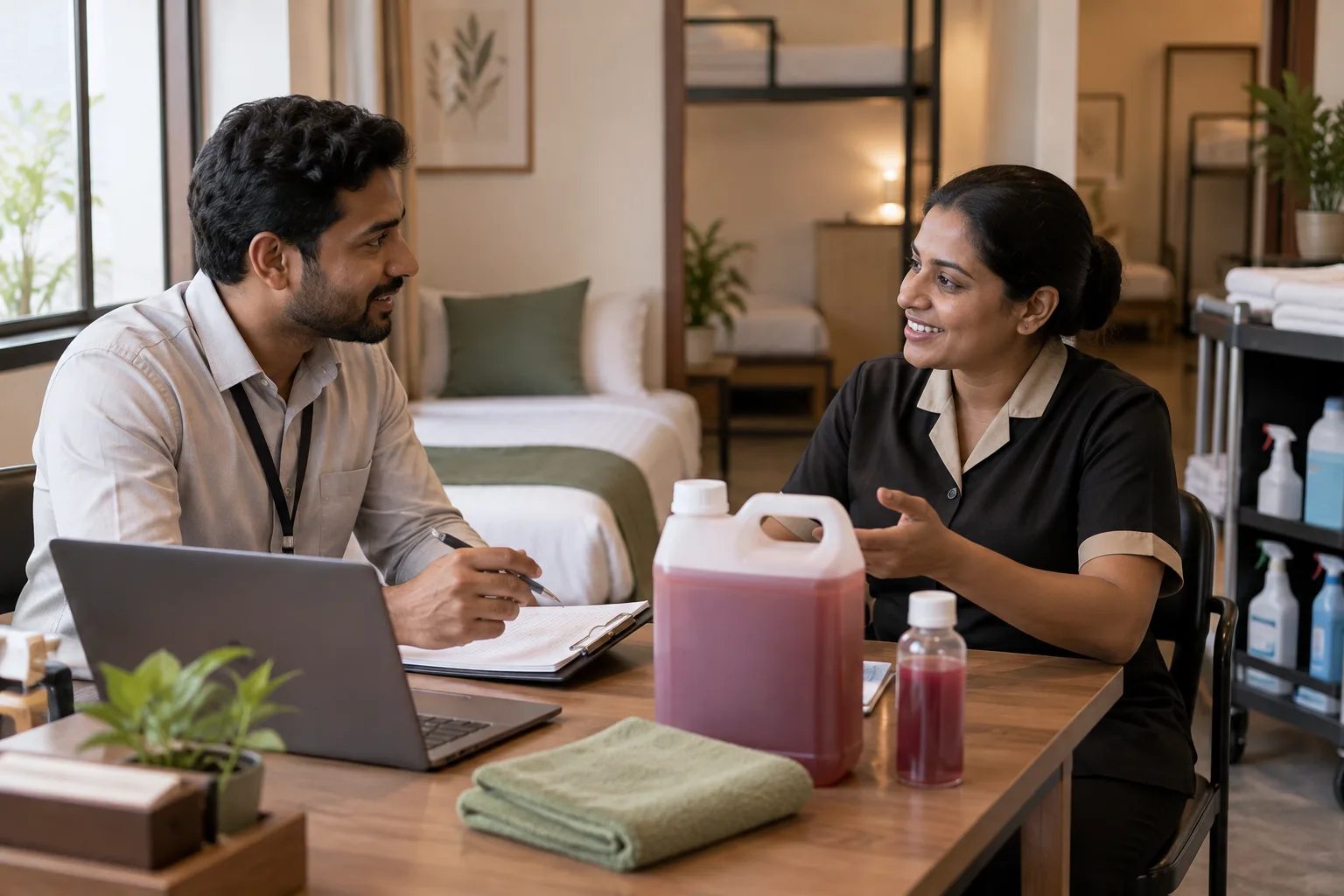 6 min read · 6 Oct 2026Why hostels try your cleaner once and never reorderHostels, PGs and hotels sample a cleaner once and drift to another supplier because nobody asked how the trial went. Here is the follow-up that turns a sample can into a standing order.
 5 min read · 6 Oct 2026How food brands win the trade and the shopperA packed food or household brand is chosen twice: by the distributor, retailer or kitchen that stocks it, then by the shopper who picks it up. Here is what each buyer checks and where brands lose both.
More for household products brands
Everything else we would do for you.
Closest to this: leads and follow-up
Also for household products brands
Or start from the overview: sales and marketing for household products brands.
Your next practical step
Tell us what you are trying to grow, and we will read it before we call.
Eight short steps, mostly taps. Skip anything you would rather answer on the call.