Household products brands · Digital marketing
Spend online only where the pack already sits on a shelf near the buyer.
Digital marketing for a household products brand is the set of online channels, from Google Maps to quick commerce, that make a cleaner easy to find, easy to trust and easy to buy. GullySales picks the order, names who runs each channel and reads results against what shops and institutions actually bill.
Scope, fee, reporting and term are agreed in writing after we have read your brief and spoken to you.

What digital marketing means
Digital marketing is the combined work of search, social media, advertising and website channels running together rather than as separate projects with separate people. GullySales runs these as one connected system so a change in one channel, such as a new offer, is reflected everywhere at once.
Also for household products brands
- Buyer personas for household products brands
- SEO for household products brands
- Social media marketing for household products brands
- Content marketing for household products brands
- Branding for household products brands
- Lead generation for household products brands
- Sales management for household products brands
- Outdoor advertising for household products brands
Sales and marketing for household products brands, the overview.
Last updated 6 Oct 2026.
For household products brands
Where it usually goes wrong, and what we would do.
“Ads run in cities with no stock”
A reel promotes a floor cleaner to a whole state while it is stocked in four districts, and the clicks land on a page that cannot say where to buy.
“The marketplace page is the only online presence”
A hotel buyer who looks you up after seeing a listing finds five photographs and nothing about the plant or the cans.
“Price per wash loses on a marketplace page”
A litre of your liquid sits beside five others sorted by price. Without a line on cost per use, the dearer bottle looks like the weaker one.
What we do
What we deliver for household products brands.
Every deliverable, what it covers for you, and the result it is there to produce. Nothing here is an extra.
A first-channels order
A written order of work for this trade, starting with the profile and the pages and leaving ads and creators for later, with a named owner for each channel.
Result: Nobody spends on ads before the basics can take the traffic.
A Business Profile for the plant and each depot
Categories, products, hours and a phone that is answered, so a hotel or a distributor who searches the area finds you on Maps.
Result: Calls from nearby buyers reach someone.
A marketplace and quick commerce listing set
Titles, pack photographs, usage lines and a price-per-use line for your best sellers, matched to the label.
Result: A shopper has a reason to choose your bottle.
An enquiry route for institutions
A form and a WhatsApp number for sample requests that reach one person, with the details a housekeeping head is asked for.
Result: A sample request does not sit in an inbox.
Ads in stocked pin codes only
Search ads for bulk and distributorship terms, and social ads limited to areas where outlets hold the pack.
Result: Paid reach follows the shelf.
Enquiries counted by source
Each channel given its own number or code, with the enquiries and the orders each one produced compared with the starting figures.
Result: You can say which channel sold what.
How the result is measured
- Enquiries across channels
- Cost per enquiry overall
- Channel mix by contribution
Recorded as a baseline before work starts, so every later report has an honest comparison.
Where to start for this trade
The first online jobs for a cleaner or home care maker, in the order to do them.
- Business Profile for the plant, godown and depots
- List each place a buyer can call or collect from, with products and hours. Note calls and direction requests before the profile is filled in and after.
- A page for each product and for institutions
- Write the pack sizes, uses and precautions as on the label, and a second page for bulk buyers. Record enquiries by page and what each became.
- A WhatsApp list for retailers and housekeeping heads
- Build it from your salesmen's phones and sample requests, with each person's consent. Its first job is a scheme notice. Record the cartons ordered in reply.
- Marketplace and quick commerce listings
- Start with two best sellers in one city. Match the title, image and pack to the label, add a cost-per-use line, and track orders and leak returns by pack.
- Search and social ads in stocked pin codes
- Bid for bulk and distributorship searches, and run social ads only where outlets hold stock. Compare billing in those areas with similar areas that saw no ads.
- What to leave until later
- A state-wide brand film, creators in other languages and an app of your own. Wait until distributors cover the area and shops reorder without a scheme.
Who it is for
This is written for these household products brands.
- Detergent powder, bar and liquid brands
- Dishwash gel, liquid and bar makers
- Floor, toilet and glass cleaner brands
- Phenyl, disinfectant and bleach makers
- Mosquito repellent and air freshener brands
- Scrubber, sponge, wipe, mop and broom makers
- Garbage bag, foil, tissue and kitchen roll brands
- Institutional and housekeeping chemical suppliers
Not for
It is not the right fit if.
- Your packs are not yet stocked in any shop or marketplace near the buyer, so paid reach would send people to a bottle they cannot find.
- Nobody records where an institutional enquiry came from, so you could not tell which channel brought the order and which only brought clicks.
- The sales team has not agreed who answers an online enquiry from a distributor, so spending on reach would add to the unanswered pile.
How it works
How the digital marketing work runs
The work itself, in order. How an engagement starts, from your brief to a written scope, is set out on our method page.
- 1
Agree the one aim
We settle what the campaign must achieve, such as enquiries for a launch or footfall for an event, and the date it must be live.
- 2
Check what is ready
We list the channels you already run, who runs them, and what each can produce in the time available. Anything that cannot be done properly is left out.
- 3
Write the idea and the message sheet
We draft the one-sentence idea, test it against each planned format, and fix the wording that all channels will copy.
- 4
Brief every channel from the same sheet
Your agency, freelancer or in-house person receives the message sheet and calendar. Their work is checked against the sheet before it goes out.
- 5
Run on the shared calendar
Channels go live together. If the offer changes, every channel is changed on the same day from the same sheet.
- 6
Measure as one campaign
Enquiries and orders are read against the baseline. The reporting schedule is agreed in writing with the scope.
Where this fits
Three pieces of sales work, in this order.
This work sits inside sales process design, at stage 0, foundation. The audit comes before it, and sales management keeps it running.
Step 1
Sales audit
Find where deals are being lost and what to fix first.
Start here if you cannot say where orders are lost.
Step 2 · you are here
Sales process design
One written way to sell, from first enquiry to repeat order.
Start here if every salesperson sells differently.
Step 3
Sales management
A target, a review routine and someone who owns the number.
Start here if the team has targets and no routine.
FAQ
Questions owners ask before they call.
Not here? More answers, or ask on WhatsApp.
Can one person in our office run this?
Which channel first when the budget is small?
How do we tell whether ads or shop boards sold more?
Do paid ads and organic posts work against each other?
How long is the contract?
How soon will we see results?
Who will actually do the work?
What do you need from us?
What if we are not happy with the work?
From the blog
Further reading for household products brands.
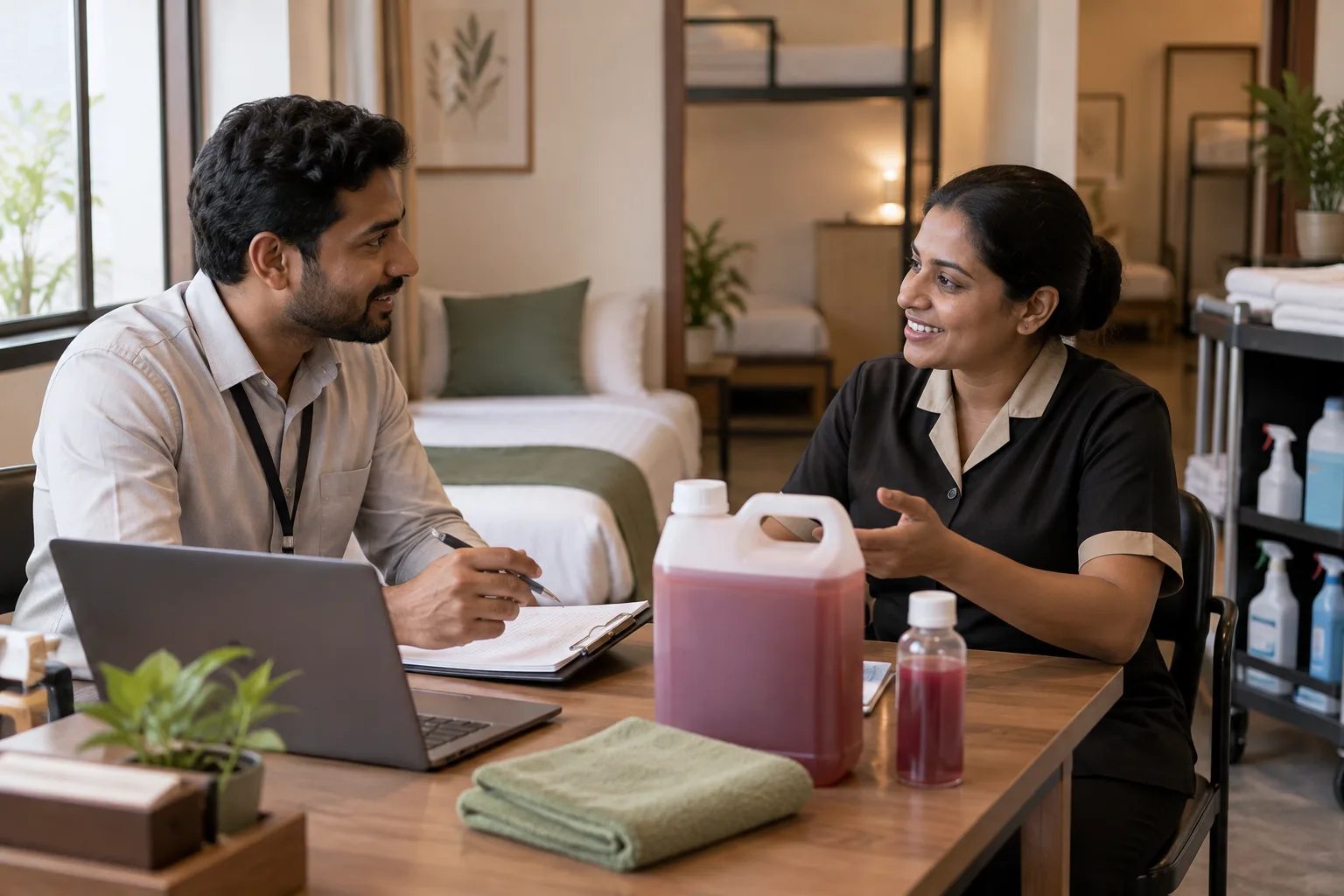 6 min read · 6 Oct 2026Why hostels try your cleaner once and never reorderHostels, PGs and hotels sample a cleaner once and drift to another supplier because nobody asked how the trial went. Here is the follow-up that turns a sample can into a standing order.
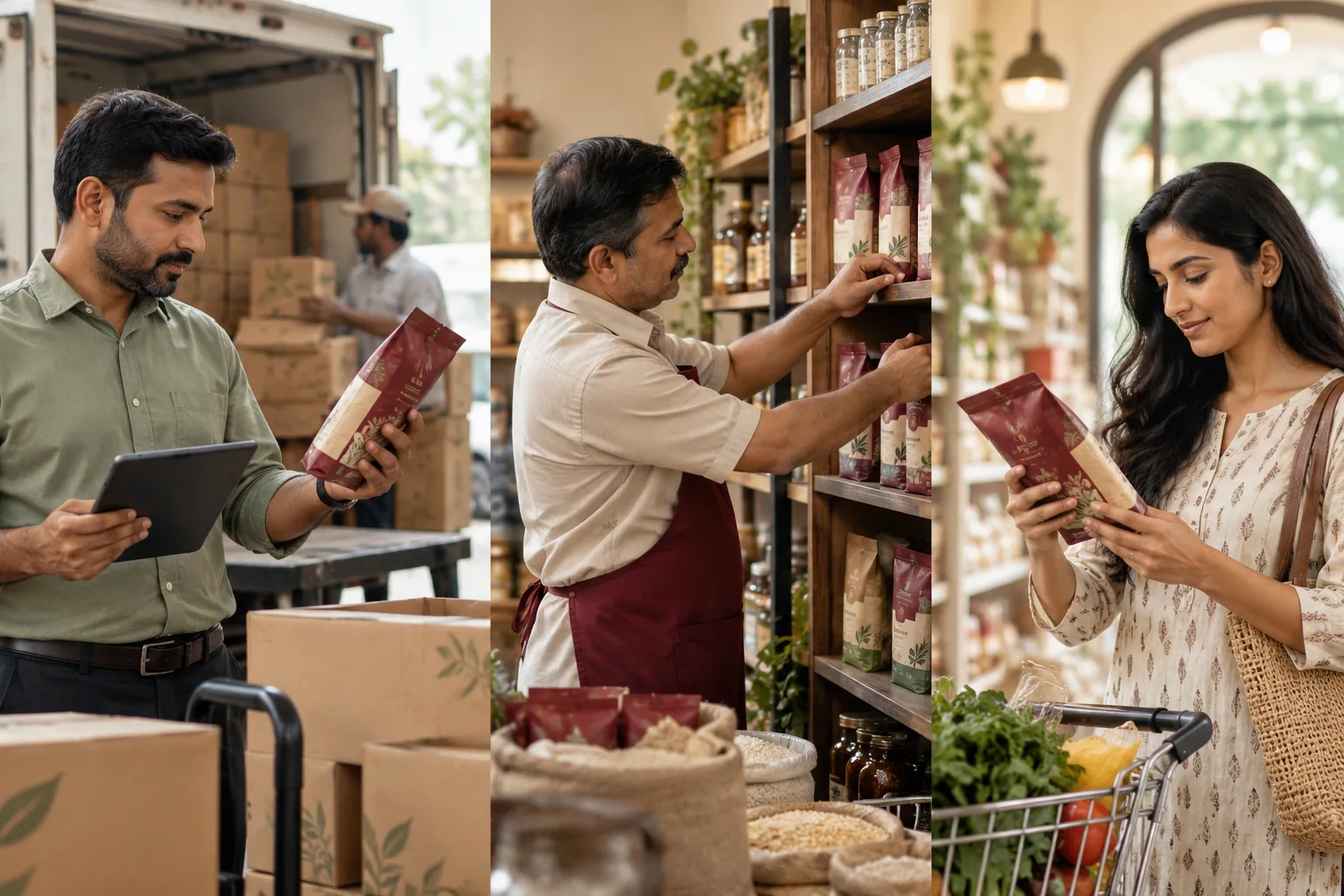 5 min read · 6 Oct 2026How food brands win the trade and the shopperA packed food or household brand is chosen twice: by the distributor, retailer or kitchen that stocks it, then by the shopper who picks it up. Here is what each buyer checks and where brands lose both.
More for household products brands
Everything else we would do for you.
Closest to this: strategy and research
Also for household products brands
Or start from the overview: sales and marketing for household products brands.
Your next practical step
Tell us what you are trying to grow, and we will read it before we call.
Eight short steps, mostly taps. Skip anything you would rather answer on the call.