Institutional food suppliers · CRM
Keep each kitchen's buyer, items, rates and dues in one record that survives a change of purchase manager.
A CRM for an institutional food supplier is the record of every kitchen you quote and supply: who orders, who decides, who pays, the items, the rates agreed, the credit given and what went wrong. GullySales sets up the fields and the routine, starting with a shared sheet if that is what fits, so the account does not leave with a salesman or a buyer.
Scope, fee, reporting and term are agreed in writing after we have read your brief and spoken to you.
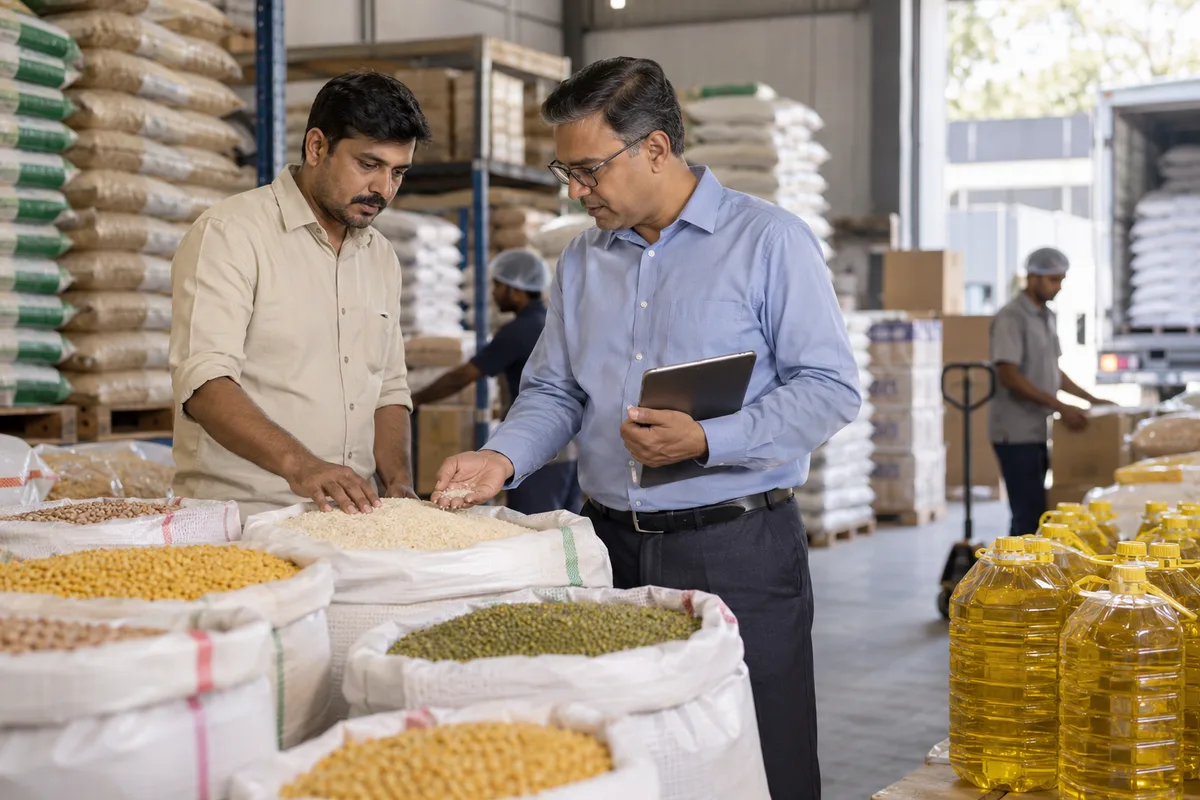
What CRM means
A CRM is the record where every enquiry, call and quote is kept against a customer, replacing separate notebooks, spreadsheets and memory. GullySales sets up or cleans an existing CRM and reports from it by enquiry outcome rather than by activity logged.
Also for institutional food suppliers
- Lead generation for institutional food suppliers
- Follow-up systems for institutional food suppliers
- SEO for institutional food suppliers
- Email marketing for institutional food suppliers
- WhatsApp marketing for institutional food suppliers
- Sales process for institutional food suppliers
- Sales management for institutional food suppliers
- Referral marketing for institutional food suppliers
Sales and marketing for institutional food suppliers, the overview.
Last updated 6 Oct 2026.
For institutional food suppliers
Where it usually goes wrong, and what we would do.
“The account is a salesman's phone book”
The kitchen managers, the wardens and the chefs sit in one person's contacts. When that person leaves, so does the relationship.
“Rates differ by kitchen and change”
A hostel gets one rate and a hotel another, and vegetable rates move. If the rate last quoted is not written down, the argument is won by whoever is louder.
“Orders, invoices and dues sit in different books”
Orders come on WhatsApp, invoices are in the billing software and dues are in the owner's head. A kitchen that is overdue gets quoted for a new supply by someone who does not know.
What we do
What we deliver for institutional food suppliers.
Every deliverable, what it covers for you, and the result it is there to produce. Nothing here is an extra.
A kitchen record with orderer, decider and payer
The kitchen manager, the purchase head and the accounts person named separately, with the meals cooked and the delivery hour.
Result: Any member of staff can pick up the account.
A rate history for each kitchen
Every rate, the date it was agreed, how long it holds and who agreed it.
Result: A rate dispute is settled from the record.
A delivery and rejection log
Each late van, short count, rejected bag and replacement, with the reason, linked to the kitchen and the item.
Result: A pattern shows before the kitchen leaves.
Dues on the same record
Credit terms agreed, invoices unpaid and the last payment received, visible to whoever takes the next order.
Result: A new order is never quoted blind to a late payment.
Renewal and tender dates
The end of each rate contract or standing arrangement, with a named owner for the renewal conversation.
Result: The next quotation is yours.
A rule for who updates what
The salesman, the driver, the billing clerk and the owner each have one thing to write, in one place.
Result: The record stays current without a big effort.
How the result is measured
- Enquiries logged in the CRM
- Data completeness
- Reports generated from CRM data
Recorded as a baseline before work starts, so every later report has an honest comparison.
What to record, and when
What a bulk food supplier should record about each kitchen, and whether software is needed yet.
- Who orders, who decides, who pays
- Name the kitchen manager, the purchase head and the accounts person separately. The chef who orders is rarely the person who releases the payment.
- Meals cooked and the delivery hour
- Record the head count the kitchen cooks for and the hour the van must arrive. Rice for a hostel and vegetables for a canteen are sized from these two lines.
- Items, rates and the date each was agreed
- Write every quoted rate with the date and how long it holds. A rate dispute is settled by the record, not by who remembers.
- Rejections and shortfalls
- Log each rejected bag, short crate or late van with the reason and what you replaced. Repeat entries for one kitchen mean the owner visits.
- Credit terms and what is overdue
- Keep the agreed credit period and the unpaid invoices on the same record. Whoever takes the next order sees whether the last one was paid.
- Do you need software yet?
- A supplier to a handful of kitchens can run on a shared sheet. Once several people quote, deliver and collect across many kitchens, a CRM linked to invoices stops the accounts living in one phone.
Who it is for
This is written for these institutional food suppliers.
- Rice, dal and grain suppliers for hostels and canteens
- Fresh vegetable and fruit suppliers
- Dairy, paneer and egg suppliers
- Meat, poultry and fish suppliers
- Edible oil, spice and grocery wholesalers
- Frozen and processed food suppliers for hotels and restaurants
- Suppliers to school meal and government hostel kitchens
- One-stop suppliers who deliver a kitchen's full list
Not for
It is not the right fit if.
- Salesmen keep their own notebooks and will not enter records, so a CRM would be filled by the office from memory.
- You supply a handful of kitchens and the owner knows every order, so a billing sheet with a notes column still serves you.
How it works
How the CRM work runs
The work itself, in order. How an engagement starts, from your brief to a written scope, is set out on our method page.
- 1
Map the sales process
We sit with the people who sell and write down how a deal moves from enquiry to payment, including where it stalls.
- 2
Agree stages, fields and owners
Each stage gets a name your team already uses and a proof that the deal has left it. We agree which fields are required at which stage, and who may change what.
- 3
Build on a copy
Pipeline, fields and views are built on a trial copy where the CRM offers one, or in a separate pipeline where the plan allows. Live work stays untouched.
- 4
Connect channels, then switch on automations
Channels are connected first. Each automation is then switched on separately, so a misfiring rule is easy to find.
- 5
Test with real deals
The people who will use the CRM run open deals through it. Gaps are fixed before the whole team switches over.
- 6
Switch over and trim
Once real use shows which fields stay empty and which stages nobody uses, those are cut and the handover record is updated.
Where this fits
Three pieces of sales work, in this order.
This work sits inside sales management. A target, a review routine and someone who owns the number.
Step 1
Sales audit
Find where deals are being lost and what to fix first.
Start here if you cannot say where orders are lost.
Step 2
Sales process design
One written way to sell, from first enquiry to repeat order.
Start here if every salesperson sells differently.
Step 3 · you are here
Sales management
A target, a review routine and someone who owns the number.
Start here if the team has targets and no routine.
FAQ
Questions owners ask before they call.
Not here? More answers, or ask on WhatsApp.
Our kitchens order on WhatsApp. How does that get into the record?
Our salesman will not fill it in. What works?
Can our billing software do this job?
Who owns the kitchen contacts if a salesman leaves?
How much does it cost?
How long is the contract?
How soon will we see results?
Who will actually do the work?
What do you need from us?
What if we are not happy with the work?
From the blog
Further reading for institutional food suppliers.
 6 min read · 6 Oct 2026How suppliers win a standing order after a trialA kitchen watches the first few mornings of a trial delivery before it gives a standing order. This is what the kitchen manager, the purchase head and the signing authority each check.
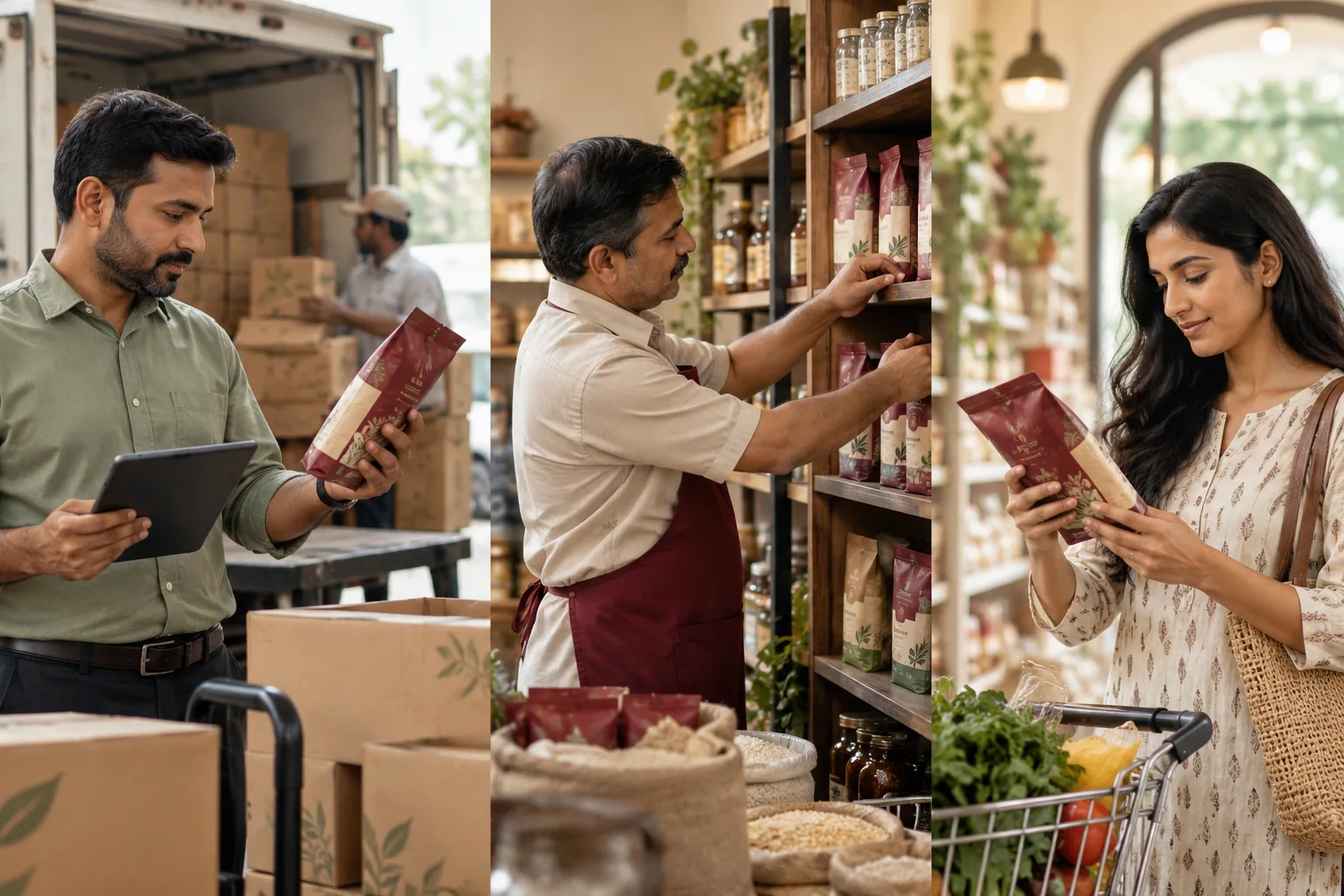 5 min read · 6 Oct 2026How food brands win the trade and the shopperA packed food or household brand is chosen twice: by the distributor, retailer or kitchen that stocks it, then by the shopper who picks it up. Here is what each buyer checks and where brands lose both.
More for institutional food suppliers
Everything else we would do for you.
Closest to this: leads and follow-up
Also for institutional food suppliers
Or start from the overview: sales and marketing for institutional food suppliers.
Your next practical step
Tell us what you are trying to grow, and we will read it before we call.
Eight short steps, mostly taps. Skip anything you would rather answer on the call.