Institutional food suppliers · Search engine optimisation
Be found by the warden or canteen head who types an item, a town and the word supplier.
SEO for an institutional food supplier means being found by the person who buys for a kitchen, such as a hostel warden, a canteen contractor, a chef or a purchase manager searching for bulk rice, vegetables or paneer in their area. GullySales builds a page for each product line and each kind of kitchen you supply, so a search lands on the page that answers it.
Scope, fee, reporting and term are agreed in writing after we have read your brief and spoken to you.
What search engine optimisation means
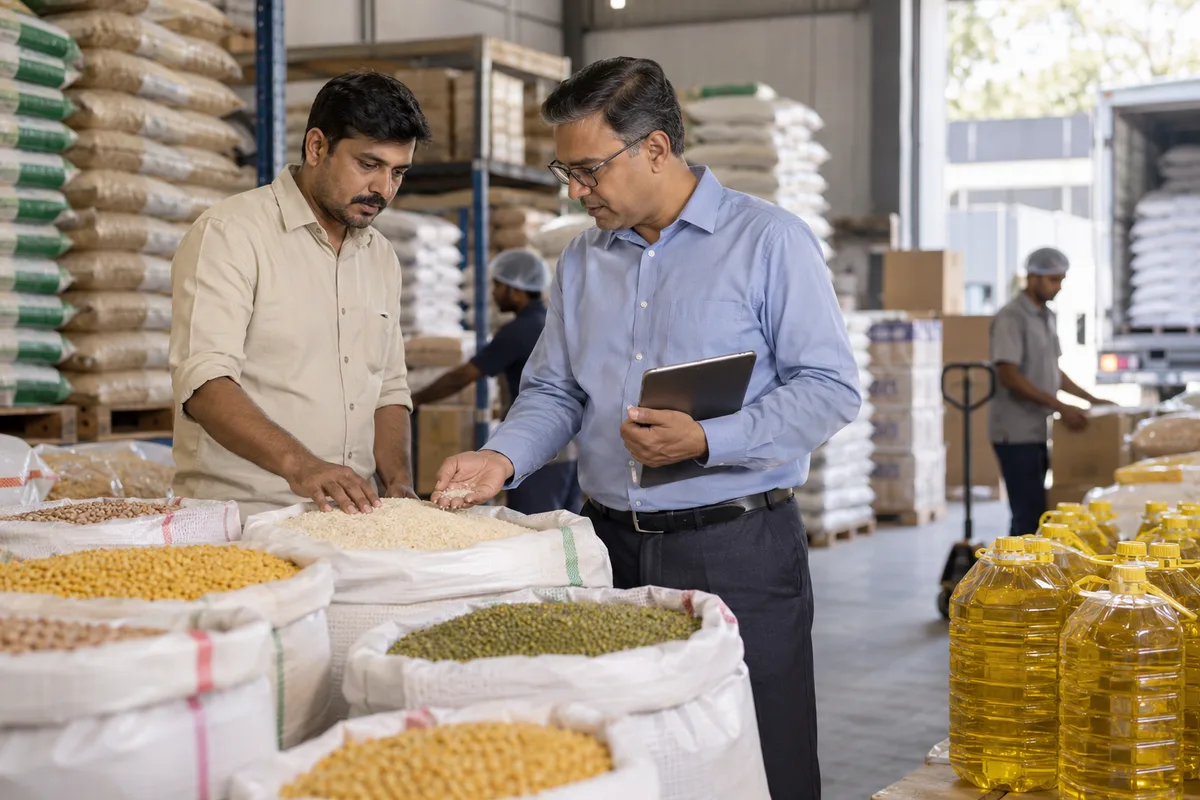
Search engine optimisation (SEO) is the work of getting your website to appear when a buyer searches Google for what you sell. GullySales builds pages around real search terms, fixes technical issues that block ranking, and tracks which searches actually bring enquiries.
Also for institutional food suppliers
- Website for institutional food suppliers
- Local SEO for institutional food suppliers
- Lead generation for institutional food suppliers
- Email marketing for institutional food suppliers
- CRM for institutional food suppliers
- WhatsApp marketing for institutional food suppliers
- Sales process for institutional food suppliers
- Sales management for institutional food suppliers
Sales and marketing for institutional food suppliers, the overview.
Last updated 6 Oct 2026.
For institutional food suppliers
Where it usually goes wrong, and what we would do.
“Buyers search the item and the town”
A purchase manager types bulk toor dal supplier in Mysuru, not your company name. A home page listing everything gives search nothing to match.
“IndiaMART ranks you and your own site does not”
A buyer finds your listing, then looks for your site to check the licence and the vehicles. With none, the next supplier looks steadier.
“Pages written for households pull the wrong enquiries”
A page of the kind a grocery shopper reads brings requests for one kilo. Keep bulk and kitchen pages apart from anything meant for homes.
What we do
What we deliver for institutional food suppliers.
Every deliverable, what it covers for you, and the result it is there to produce. Nothing here is an extra.
A page for each product line
Vegetables, rice and pulses, dairy, eggs, meat, oils and groceries, each with grades, pack sizes, the source and the delivery slot.
Result: A buyer finds the item they came for, not a general profile.
A page for each kind of kitchen
Hostels, canteens, hospitals, caterers and hotels, each describing how you supply that kind of kitchen and what it checks first.
Result: A warden and a hotel chef both see their own kitchen on the page.
Pages for the areas your vans reach
One page per city or cluster of localities you deliver to, stating the order cut-off and the delivery hour, and nothing you do not serve.
Result: Local searches reach a page that is true of that route.
Licence and vehicle details as text
FSSAI licence as printed on the certificate, GST registration, vehicles, cold room and packing area, written out so a buyer and a search engine can both read them.
Result: A purchase manager can vet you before the first call.
Google Business Profile for the godown or yard
Address, hours, product categories, photographs of the loading bay and vans, and a way to ask for a rate.
Result: A kitchen searching nearby finds a real place with a phone number.
Reporting by product and kitchen type
Visits and enquiries for each product page and each kitchen page, against the baseline recorded when work starts.
Result: You know which page brought the hostel and which brought the caterer.
How the result is measured
- Ranking positions
- Organic traffic
- Enquiries from organic search
Recorded as a baseline before work starts, so every later report has an honest comparison.
Searches kitchens type
What a warden, chef or purchase manager types when looking for a bulk food supplier, and the page that answers it.
- vegetable supplier for hostel near me
- A kitchen page for hostels. State the vegetable list you carry, the early delivery slot, the cut-off the night before and what happens when a delivery is missed.
- sona masoori rice wholesale for canteen
- A product page. Give the variety, bag sizes, the mill or source, how a sample is sent and the smallest quantity for a standing order.
- paneer and curd supplier for hotels
- A chilled goods page. Show the vehicle and cold storage you actually use, the delivery hour and the shelf life as printed on the pack.
- grocery supplier for canteen contractor in Peenya
- A page for contractors who run kitchens at several sites. Say whether you give one rate sheet for all sites and whether invoices go site by site or together.
- chicken supplier for caterers and functions
- A page for meat and poultry. Give the licensed source, the cuts and how a caterer books a large order against a function date.
- food supplier tender documents for hostels
- A credentials page with the licences and supply letters you may share. Name an institution only with its written permission.
Who it is for
This is written for these institutional food suppliers.
- Rice, dal and grain suppliers for hostels and canteens
- Fresh vegetable and fruit suppliers
- Dairy, paneer and egg suppliers
- Meat, poultry and fish suppliers
- Edible oil, spice and grocery wholesalers
- Frozen and processed food suppliers for hotels and restaurants
- Suppliers to school meal and government hostel kitchens
- One-stop suppliers who deliver a kitchen's full list
Not for
It is not the right fit if.
- Your delivery area is not settled, so pages naming localities would invite enquiries from kitchens you cannot reach.
- Nobody replies to directory and site enquiries the same day, so better search would only send kitchens to a rival who answers.
How it works
How the search engine optimisation work runs
The work itself, in order. How an engagement starts, from your brief to a written scope, is set out on our method page.
- 1
Audit and baseline
We record where the site stands today: positions, traffic, technical faults and the enquiries search currently produces. Nothing starts until this number is written down.
- 2
Decide what to rank for
We map the searches your buyers use, in your words and theirs, and pick the ones worth the effort for your margin and your capacity.
- 3
Fix the foundations
Technical faults first, because the cheapest gains are there. Then the Business Profile and directory consistency.
- 4
Build the pages
A page for each thing you do, written to answer the question it is searched for, with a clear next step at the end.
- 5
Publish and earn mentions
Content goes out on the calendar. Links and mentions are earned from real relationships, not bought.
- 6
Measure, report, adjust
At an interval agreed in writing we report what moved and what did not, and change the plan when the numbers say so.
Where this fits
Three pieces of sales work, in this order.
This work sits inside sales process design, at stage 1, prospecting and lead generation. The audit comes before it, and sales management keeps it running.
Step 1
Sales audit
Find where deals are being lost and what to fix first.
Start here if you cannot say where orders are lost.
Step 2 · you are here
Sales process design
One written way to sell, from first enquiry to repeat order.
Start here if every salesperson sells differently.
Step 3
Sales management
A target, a review routine and someone who owns the number.
Start here if the team has targets and no routine.
FAQ
Questions owners ask before they call.
Not here? More answers, or ask on WhatsApp.
Should we publish our rates on the website?
Do we need a page for every locality we deliver to?
Should the site have a blog, or is that for shops?
Can we copy item descriptions from a big supplier's site?
How much does it cost?
How long is the contract?
How soon will we see results?
Who will actually do the work?
What do you need from us?
What if we are not happy with the work?
From the blog
Further reading for institutional food suppliers.
 6 min read · 6 Oct 2026How suppliers win a standing order after a trialA kitchen watches the first few mornings of a trial delivery before it gives a standing order. This is what the kitchen manager, the purchase head and the signing authority each check.
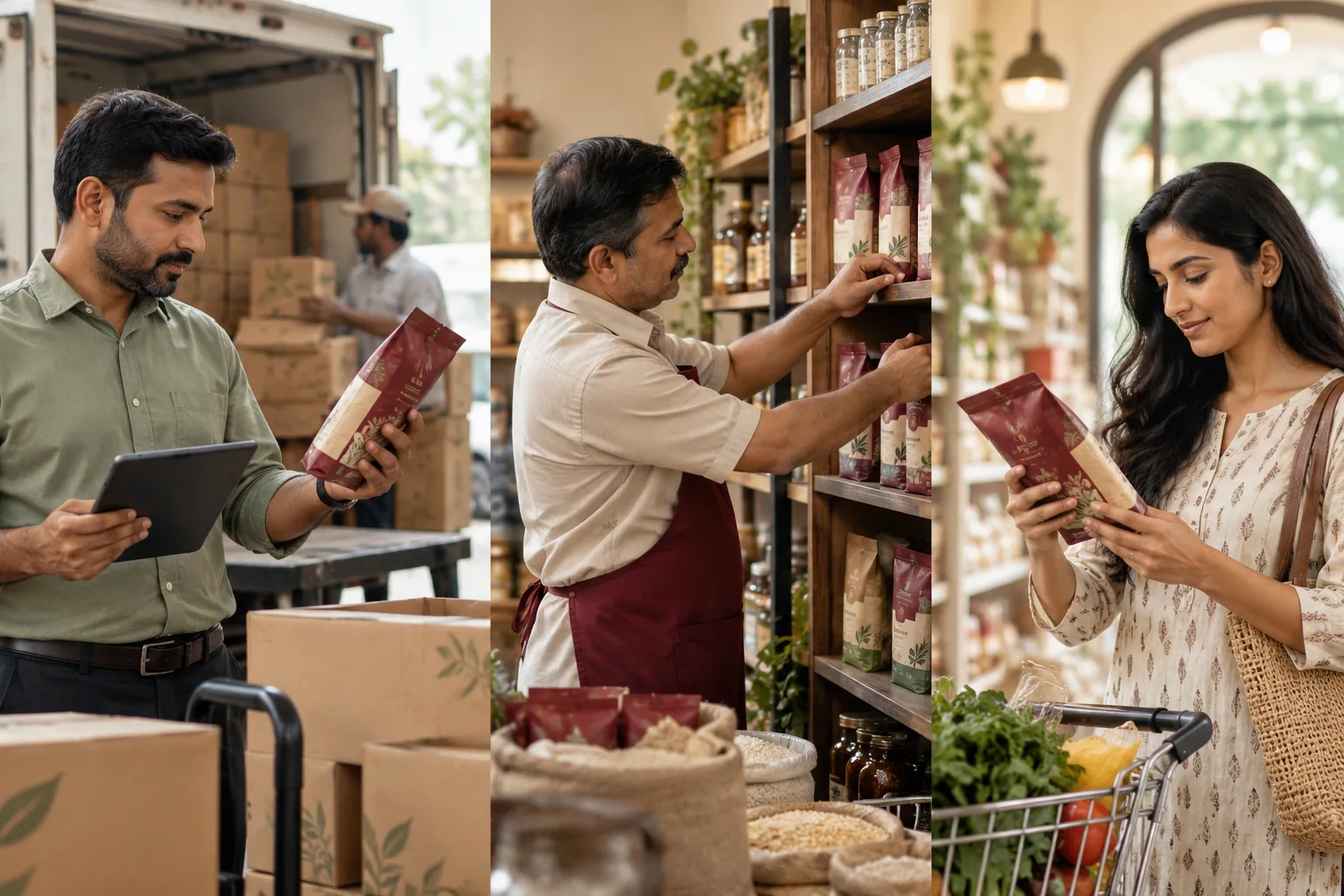 5 min read · 6 Oct 2026How food brands win the trade and the shopperA packed food or household brand is chosen twice: by the distributor, retailer or kitchen that stocks it, then by the shopper who picks it up. Here is what each buyer checks and where brands lose both.
More for institutional food suppliers
Everything else we would do for you.
Closest to this: search and visibility
Also for institutional food suppliers
Or start from the overview: sales and marketing for institutional food suppliers.
Your next practical step
Tell us what you are trying to grow, and we will read it before we call.
Eight short steps, mostly taps. Skip anything you would rather answer on the call.