Institutional food suppliers · Website
Show the licence, the van and the delivery hour before a purchase manager asks.
A website for an institutional food supplier is the page a purchase manager, warden or trust checks after receiving your rate sheet: the items, the licence, the vehicles, the delivery area and a form that asks for the kitchen's size and slot. GullySales builds it so a buyer can vet you without a call and you receive an enquiry you can quote.
Scope, fee, reporting and term are agreed in writing after we have read your brief and spoken to you.
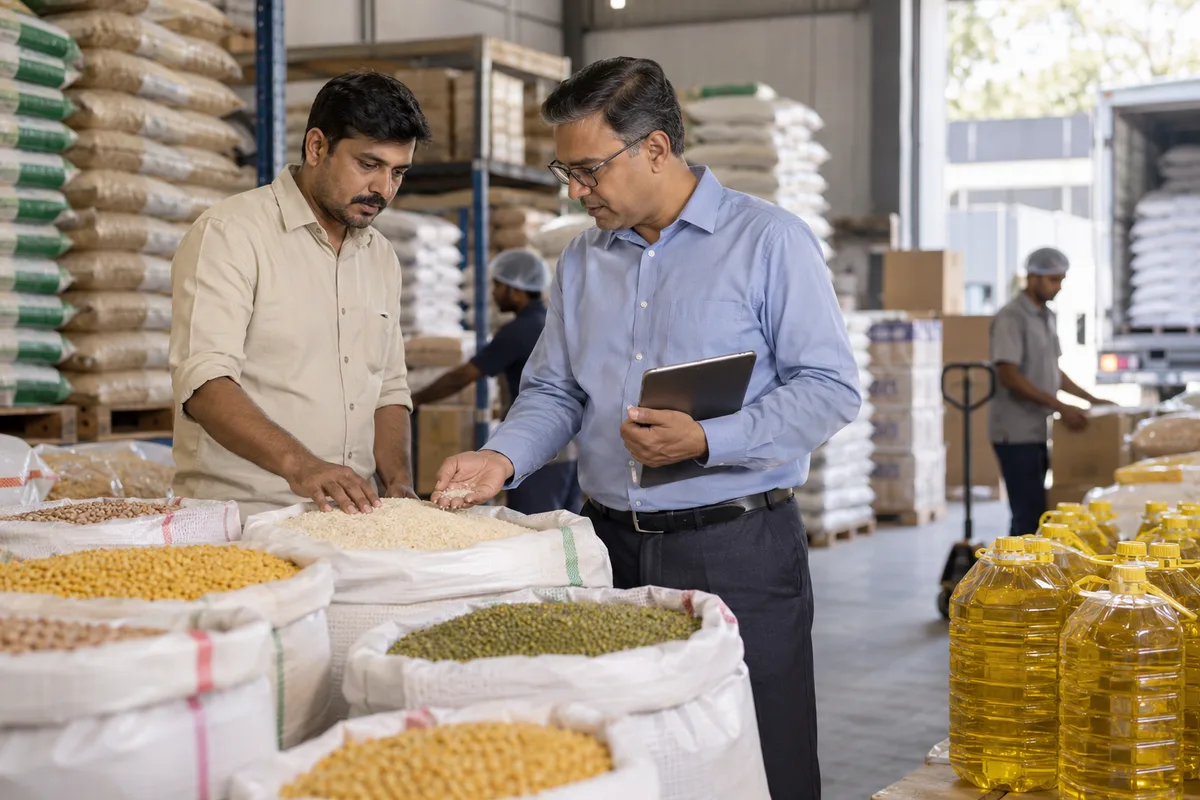
What website means
A website is the page a customer lands on after searching, clicking an advert or scanning a code, and it decides whether they call or leave. GullySales builds and maintains sites that load quickly, explain the offer plainly and make the enquiry form or phone number easy to find.
Also for institutional food suppliers
- SEO for institutional food suppliers
- Local SEO for institutional food suppliers
- Lead generation for institutional food suppliers
- Email marketing for institutional food suppliers
- CRM for institutional food suppliers
- WhatsApp marketing for institutional food suppliers
- Sales process for institutional food suppliers
- Sales management for institutional food suppliers
Sales and marketing for institutional food suppliers, the overview.
Last updated 6 Oct 2026.
For institutional food suppliers
Where it usually goes wrong, and what we would do.
“The site looks like a grocery shop”
A cart and a kilo price tell a hostel manager you sell to homes. Bulk buyers want items, grades and a way to ask.
“Photographs show produce, not the operation”
A heap of tomatoes does not say whether the van reaches the hostel by five. Show the loading bay, the vehicles, the cold room and the packing.
“The form asks for a name and a phone number only”
A warden's real question is the head count, items and hour. Without those fields you get a number to call back and nothing to quote.
What we do
What we deliver for institutional food suppliers.
Every deliverable, what it covers for you, and the result it is there to produce. Nothing here is an extra.
A home page that names the kitchens you supply
The kinds of kitchen, the items, the delivery area and the first hour of delivery, in the first screen.
Result: A buyer knows in seconds whether you serve their kind of kitchen.
Item pages with grade and pack
Each product line with varieties, pack sizes, minimum order and the source, written as text.
Result: A buyer can compare you without asking.
A credentials page
FSSAI licence as printed, GST registration, vehicles, storage and handling, and past supply letters you may share.
Result: Onboarding questions are answered before they are asked.
An enquiry form for kitchens
Kitchen name, meals cooked, items, delivery hour, a sample request and a WhatsApp number.
Result: Each enquiry arrives ready to quote.
Photographs of the operation
A shoot plan for the loading bay, vans, cold room, packing and the delivery at a kitchen door, with permission from anyone shown.
Result: A buyer sees the supplier, not only the stock.
Enquiry tracking by page
Which pages the enquiries came from and which became trials, against the baseline recorded when work starts.
Result: You know which page brings the right kitchens.
How the result is measured
- Page load time
- Bounce rate
- Enquiries from the website
Recorded as a baseline before work starts, so every later report has an honest comparison.
What the page must show
What a food supplier's website must show before a purchase manager or warden forwards it.
- FSSAI licence and GST number
- Print the licence number and category as on the certificate, with the GST number, in the footer and on the credentials page. Update it when the licence is renewed.
- Items, grades and pack sizes
- A table by item with the grade or variety, the pack and the minimum order. A buyer who must ask what you carry will ask another supplier instead.
- Delivery area and hour
- Name the localities your vans reach, the order cut-off and the hour of delivery. A kitchen planning an early cook checks this before the rate.
- Vehicles, storage and handling
- Photographs of the vans, the cold room if you have one and the packing area, each captioned with what it is for. Do not show a cold chain you do not run.
- Kitchens you supply
- Name an institution only with its written permission. Otherwise describe the kind: a hostel, a hospital kitchen, a canteen. Never imply an endorsement.
- A form that asks about the kitchen
- Ask for the kitchen's name, meals cooked, items, delivery hour and a sample request, with a WhatsApp number. Send the answers into the same record as phone enquiries.
Who it is for
This is written for these institutional food suppliers.
- Rice, dal and grain suppliers for hostels and canteens
- Fresh vegetable and fruit suppliers
- Dairy, paneer and egg suppliers
- Meat, poultry and fish suppliers
- Edible oil, spice and grocery wholesalers
- Frozen and processed food suppliers for hotels and restaurants
- Suppliers to school meal and government hostel kitchens
- One-stop suppliers who deliver a kitchen's full list
Not for
It is not the right fit if.
- Your licences and papers are not up to date, so a credentials page would publish documents you could not support.
- Nobody answers the site form during the day, and a form that goes unanswered looks worse than no form.
How it works
How the website work runs
The work itself, in order. How an engagement starts, from your brief to a written scope, is set out on our method page.
- 1
Confirm structure and content
We agree the page list, what each page must answer, and who supplies the text and photographs, before any design starts.
- 2
Design the templates
The home page, a service page, a location page and the enquiry page are designed first, on phone and desktop, and shown to you.
- 3
Build and test
The site is built and checked on real phones and the common browsers. Every form, call button and WhatsApp link is tested end to end.
- 4
Load real content
Actual copy, images and information replace placeholders. Pages are read through once by you, since you spot wrong details we cannot.
- 5
Check before launch
Tracking, page titles, the sitemap and the privacy page are checked on the staging site. If an old site exists, its addresses are mapped so old links still land somewhere.
- 6
Launch and hand over access
The site goes live and we record the domain, hosting, content login and analytics in your name. The first live enquiry is traced to confirm tracking works.
Where this fits
Three pieces of sales work, in this order.
This work sits inside sales process design, at stage 1, prospecting and lead generation. The audit comes before it, and sales management keeps it running.
Step 1
Sales audit
Find where deals are being lost and what to fix first.
Start here if you cannot say where orders are lost.
Step 2 · you are here
Sales process design
One written way to sell, from first enquiry to repeat order.
Start here if every salesperson sells differently.
Step 3
Sales management
A target, a review routine and someone who owns the number.
Start here if the team has targets and no routine.
FAQ
Questions owners ask before they call.
Not here? More answers, or ask on WhatsApp.
We are on IndiaMART. Why do we need our own website?
Should the site be in Kannada or Hindi as well as English?
Will the site load on a kitchen manager's phone?
Who should own the domain and the hosting?
How much does it cost?
How long is the contract?
How soon will we see results?
Who will actually do the work?
What do you need from us?
What if we are not happy with the work?
From the blog
Further reading for institutional food suppliers.
 6 min read · 6 Oct 2026How suppliers win a standing order after a trialA kitchen watches the first few mornings of a trial delivery before it gives a standing order. This is what the kitchen manager, the purchase head and the signing authority each check.
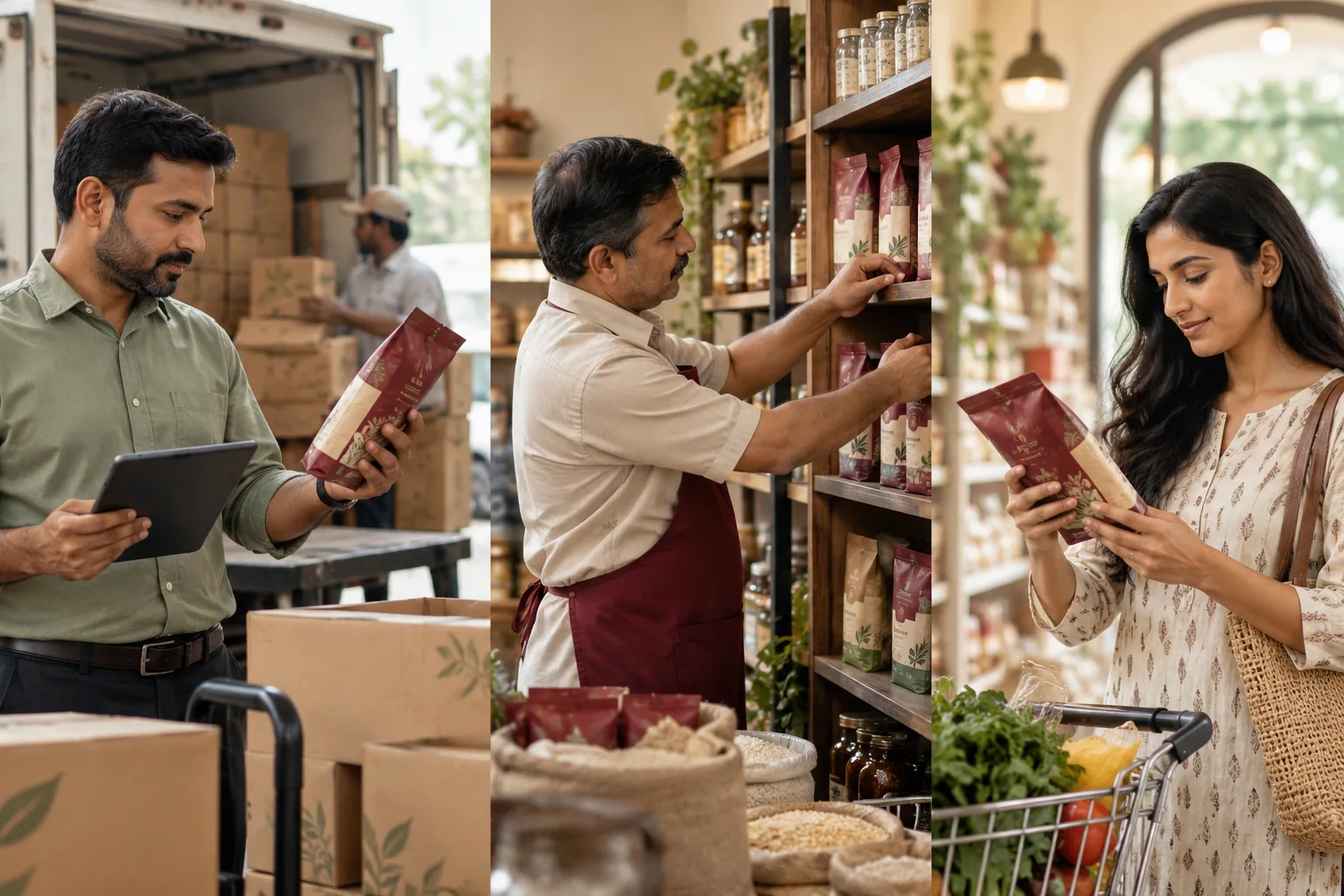 5 min read · 6 Oct 2026How food brands win the trade and the shopperA packed food or household brand is chosen twice: by the distributor, retailer or kitchen that stocks it, then by the shopper who picks it up. Here is what each buyer checks and where brands lose both.
More for institutional food suppliers
Everything else we would do for you.
Closest to this: search and visibility
Also for institutional food suppliers
Or start from the overview: sales and marketing for institutional food suppliers.
Your next practical step
Tell us what you are trying to grow, and we will read it before we call.
Eight short steps, mostly taps. Skip anything you would rather answer on the call.