Institutional food suppliers · Lead generation
Know whether an enquiry came from a warden's call, a tender notice or IndiaMART, and answer each differently.
Lead generation for an institutional food supplier is getting the right kitchens to ask for a rate: hostels, canteens, caterers, hospitals and hotels, through calls, WhatsApp, directories, tender notices and introductions from other kitchens. GullySales records every source and sets the first reply, so you can see which kitchens turn into standing orders.
Scope, fee, reporting and term are agreed in writing after we have read your brief and spoken to you.
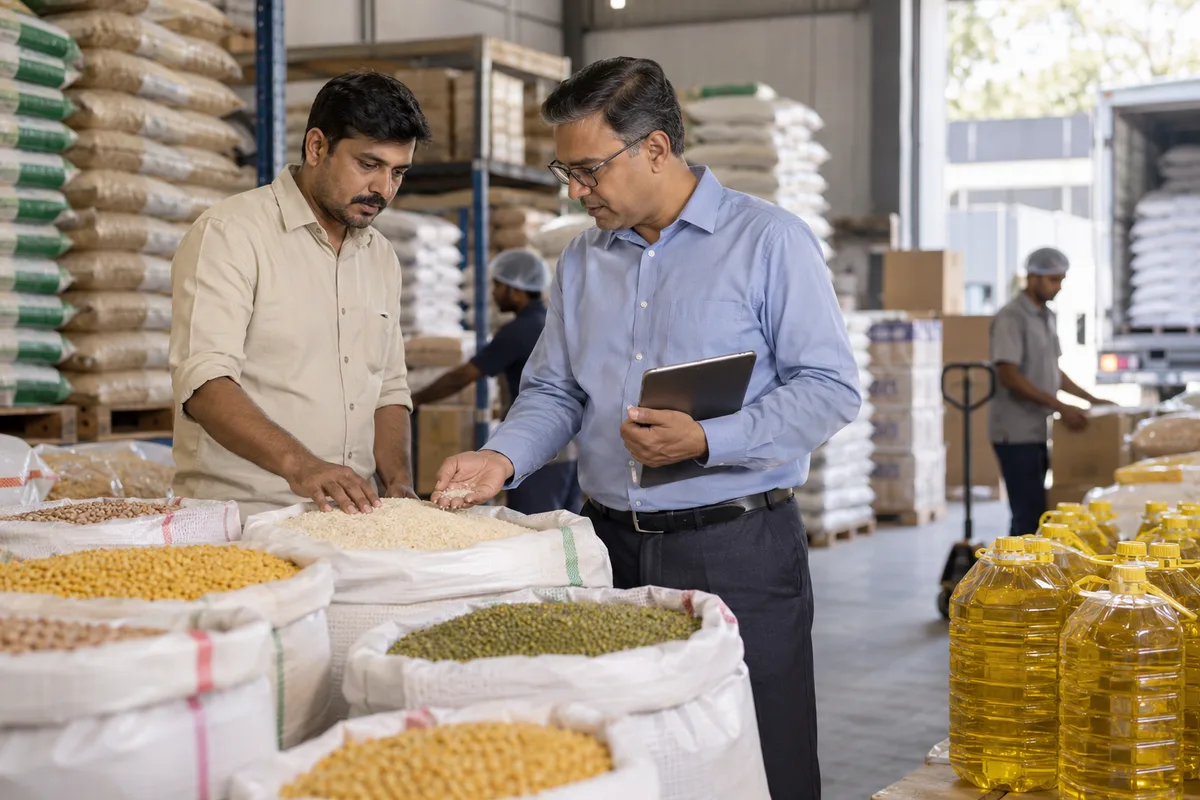
What lead generation means
Lead generation is the combined work of every channel that brings in a new enquiry, whether from search, adverts, referrals or a stall at an exhibition. GullySales runs these channels together and reports the number of enquiries each one produced, not the activity behind it.
Also for institutional food suppliers
- CRM for institutional food suppliers
- Follow-up systems for institutional food suppliers
- SEO for institutional food suppliers
- Email marketing for institutional food suppliers
- WhatsApp marketing for institutional food suppliers
- Sales process for institutional food suppliers
- Sales management for institutional food suppliers
- Referral marketing for institutional food suppliers
Sales and marketing for institutional food suppliers, the overview.
Last updated 6 Oct 2026.
For institutional food suppliers
Where it usually goes wrong, and what we would do.
“A tender notice is a lead nobody logs”
It turns up in a newspaper, on a portal or in a forwarded message, and because nobody owns it the last date passes.
“Directory buyers ask five suppliers at once”
A new caterer on IndiaMART sends one query to many. The first reply that names the item, pack and slot gets the trial.
“The best lead is a kitchen that has just lost its supplier”
After a bad morning a kitchen listens for about a week. You hear of it only if someone in the trade tells you.
What we do
What we deliver for institutional food suppliers.
Every deliverable, what it covers for you, and the result it is there to produce. Nothing here is an extra.
A source list for every enquiry
Call, WhatsApp, IndiaMART, JustDial, website form, tender notice, kitchen referral, godown walk-in and driver's tip, all entered in one place under one kitchen name.
Result: You see which source fills the standing-order list, not only the enquiry list.
A first-reply script for each kind of buyer
Different questions for a hostel, a caterer, a canteen contractor and a hospital stores office: meals served, items, delivery hour and credit.
Result: The first reply asks what is needed to quote.
A tender and notice watch list
The portals, GeM, newspapers and trust circulars you check, with a named owner and the last date for each notice.
Result: No notice lapses because nobody owned it.
An outreach list of kitchens on your route
Hostels, canteens, hospitals and caterers within delivery reach, built from public listings and your own drivers' eyes, with the buyer's role noted.
Result: Outreach goes to kitchens you can serve.
A duplicate and repeat-enquiry rule
One record per kitchen, even when it asks on three platforms in a week.
Result: A kitchen is quoted once, not by three of your people.
Report by source
Enquiries, rates sent, trials and standing orders by source, against the baseline recorded when work starts.
Result: Your effort moves towards the sources that give orders.
How the result is measured
- Enquiries generated
- Cost per enquiry
- Enquiries by source
Recorded as a baseline before work starts, so every later report has an honest comparison.
Where enquiries come from
Where a bulk food supplier's enquiries arrive, what to write down and how to reply.
- Phone call from a kitchen manager
- Write the kitchen, the person, the items, the meals cooked and the delivery hour while on the call. Send the rate sheet before the day ends.
- WhatsApp message with an item list
- Copy the list into the record, reply with rate and pack against each line, and ask for the delivery address and the hour.
- IndiaMART or JustDial enquiry
- Note the item and quantity the buyer chose, since several suppliers got the same query. Reply naming the item, pack, source and delivery area, not a general catalogue.
- Tender or quotation notice
- Record the notice date, the last date, the documents asked for and the deposit. Decide on the day whether to bid, and name who gathers the papers.
- Introduction from another kitchen
- Record who sent them and thank that kitchen. The new buyer already trusts you, so open with a trial order rather than a brochure.
- Walk-in at the godown or the market
- Take a name, kitchen and number before they leave. A buyer who came to see the stock is closer to a trial than a caller, so book a sample delivery.
Who it is for
This is written for these institutional food suppliers.
- Rice, dal and grain suppliers for hostels and canteens
- Fresh vegetable and fruit suppliers
- Dairy, paneer and egg suppliers
- Meat, poultry and fish suppliers
- Edible oil, spice and grocery wholesalers
- Frozen and processed food suppliers for hotels and restaurants
- Suppliers to school meal and government hostel kitchens
- One-stop suppliers who deliver a kitchen's full list
Not for
It is not the right fit if.
- You cannot reply to a directory enquiry within the working day, so more leads would only go cold in the inbox.
- Your vans are full on current routes, so new kitchens in far areas would be quoted for deliveries you cannot make.
How it works
How the lead generation work runs
The work itself, in order. How an engagement starts, from your brief to a written scope, is set out on our method page.
- 1
Understand your capacity
We ask how many enquiries your team can answer well, who answers after hours, and what a good enquiry looks like. Without this, the system fills a funnel nobody is watching.
- 2
Audit current sources
We read your call log, WhatsApp chats, enquiry sheet and platform dashboards. The baseline is recorded: enquiries by source, reply time, conversion and cost per order.
- 3
Strategise the channel mix
Search and maps are chosen for people ready to buy, ads for people who are not yet looking, and content and referrals for trust.
- 4
Implement capture and follow-up
Pages, forms, tags, the lead record and the first-reply message are built and tested end to end. We submit test enquiries ourselves before any media money is spent.
- 5
Measure and optimise
Enquiries are traced to source and judged by what became orders, not by volume alone. Channels that fill the sheet with poor enquiries are cut back. How often you are reported to is agreed in writing.
Where this fits
Three pieces of sales work, in this order.
This work sits inside sales process design, at stage 1, prospecting and lead generation. The audit comes before it, and sales management keeps it running.
Step 1
Sales audit
Find where deals are being lost and what to fix first.
Start here if you cannot say where orders are lost.
Step 2 · you are here
Sales process design
One written way to sell, from first enquiry to repeat order.
Start here if every salesperson sells differently.
Step 3
Sales management
A target, a review routine and someone who owns the number.
Start here if the team has targets and no routine.
FAQ
Questions owners ask before they call.
Not here? More answers, or ask on WhatsApp.
Should we buy lists of hostels and canteens?
What counts as a qualified enquiry for us?
The same kitchen enquires on IndiaMART, WhatsApp and by phone. What do we do?
Is a lead from our own driver worth recording?
How much does it cost?
How long is the contract?
How soon will we see results?
Who will actually do the work?
What do you need from us?
What if we are not happy with the work?
From the blog
Further reading for institutional food suppliers.
 6 min read · 6 Oct 2026How suppliers win a standing order after a trialA kitchen watches the first few mornings of a trial delivery before it gives a standing order. This is what the kitchen manager, the purchase head and the signing authority each check.
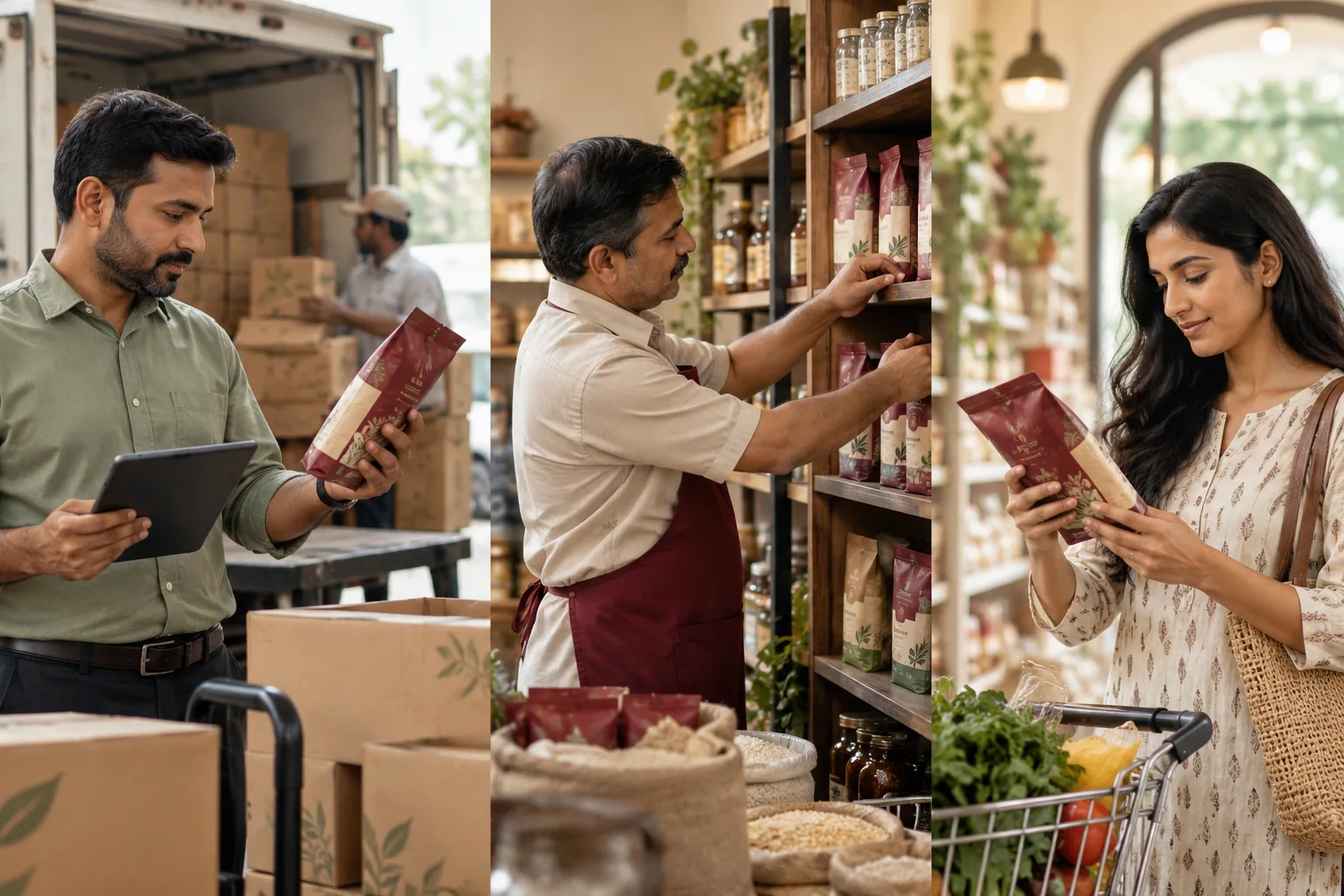 5 min read · 6 Oct 2026How food brands win the trade and the shopperA packed food or household brand is chosen twice: by the distributor, retailer or kitchen that stocks it, then by the shopper who picks it up. Here is what each buyer checks and where brands lose both.
More for institutional food suppliers
Everything else we would do for you.
Closest to this: leads and follow-up
Also for institutional food suppliers
Or start from the overview: sales and marketing for institutional food suppliers.
Your next practical step
Tell us what you are trying to grow, and we will read it before we call.
Eight short steps, mostly taps. Skip anything you would rather answer on the call.