Luggage manufacturers · Website
Build a website that a dealer can use to decide on a first lot.
A website for a luggage manufacturer is the place a dealer, a distributor or a sourcing head checks before they call: the range, the build, the terms and the claim process. GullySales plans and builds the pages so each of those buyers finds what they came for.
Scope, fee, reporting and term are agreed in writing after we have read your brief and spoken to you.
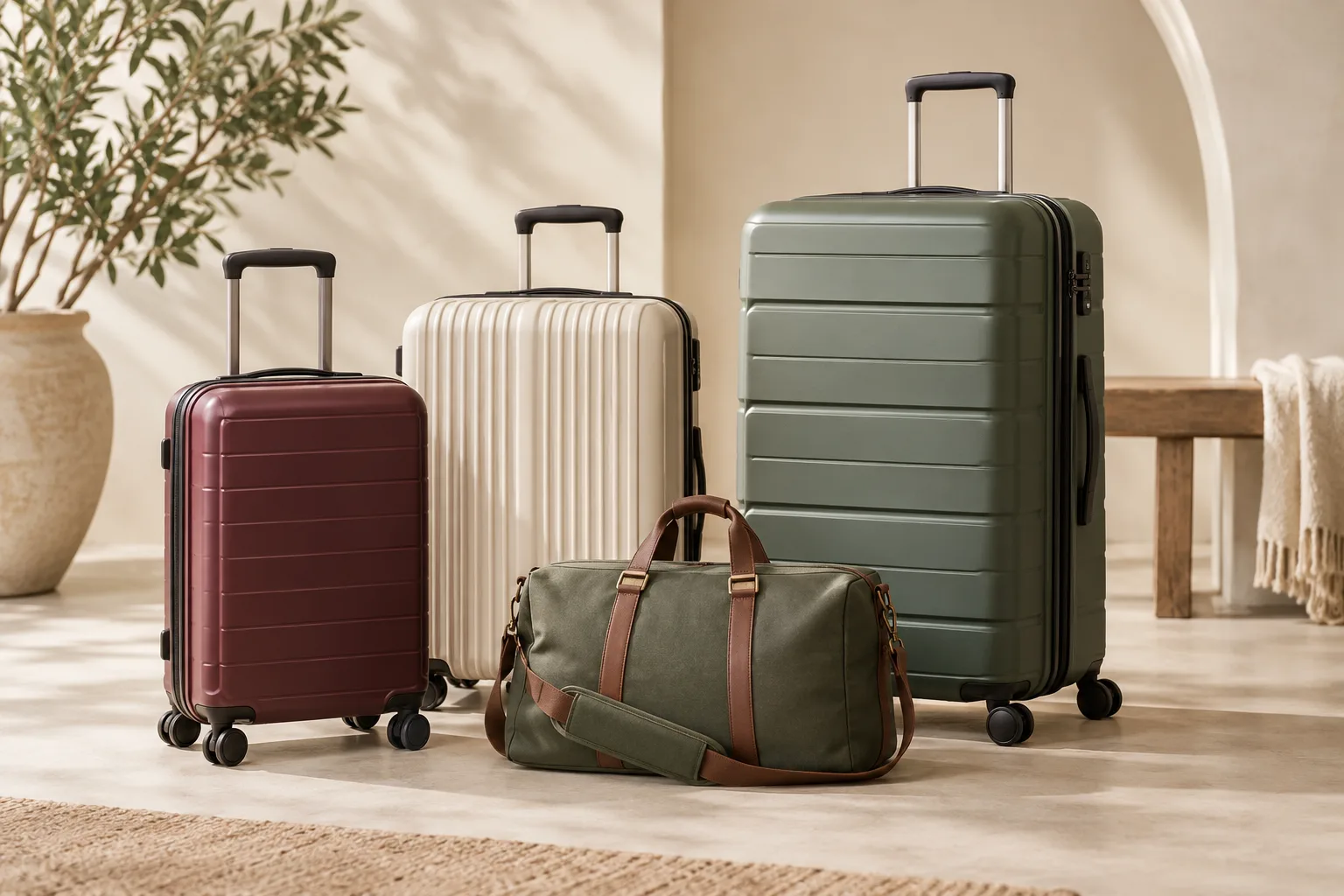
What website means
A website is the page a customer lands on after searching, clicking an advert or scanning a code, and it decides whether they call or leave. GullySales builds and maintains sites that load quickly, explain the offer plainly and make the enquiry form or phone number easy to find.
Also for luggage manufacturers
- SEO for luggage manufacturers
- Lead generation for luggage manufacturers
- Social media marketing for luggage manufacturers
- Content marketing for luggage manufacturers
- Buyer personas for luggage manufacturers
- CRM for luggage manufacturers
- Follow-up systems for luggage manufacturers
- WhatsApp marketing for luggage manufacturers
Sales and marketing for luggage manufacturers, the overview.
Last updated 14 Nov 2026.
For luggage manufacturers
Where it usually goes wrong, and what we would do.
“A catalogue download is not a website”
A dealer who must download a large file to see a model leaves before it opens. Model pages with photographs, shell, wheels, lock and zip in plain text load on a phone and can be read in the shop.
“Buyers need to find the terms”
A distributor looks for margin, territory and the claim process. If the site hides them behind a phone call, the buyer calls a maker who shows them. At the least, the site should say how to ask for the dealer programme.
“Corporate buyers need a place to start”
A company ordering branded travel kits looks for a page that states quantity, branding options and a sample route. Without it the enquiry goes to a general inbox and waits.
What we do
What we deliver for luggage manufacturers.
The work available for this need. We agree the deliverables and responsibilities for your engagement in writing.
Range and model pages
A page for each model group with photographs, shell, wheel, handle, lock, zip, capacity and weight.
Result: A dealer can compare models on a phone.
Dealer and distributor page
The programme overview, trial lot offer and an application form.
Result: A new dealer can apply without waiting for a visit.
Private-label and corporate pages
Pages for brands and institutional buyers with specification and sample route.
Result: Each buyer type has a separate route and form.
Claim and care page
Plain steps for claims and care, matching the warranty terms.
Result: A dealer and a customer can read the same steps.
Technical build
Mobile pages that load lightly, secure forms, tracking and a structure search engines can read.
Result: The site passes a crawl and the forms deliver to the right person.
How the result is measured
- Page load time
- Bounce rate
- Enquiries from the website
Recorded as a baseline before work starts, so every later report has an honest comparison.
Searches your buyers type
What a dealer needs from your site to decide on a first lot.
- Ranges by price band
- Show each range with the band it sells in, so a dealer sees what fits their town.
- Dealer terms page
- How to become a stockist: margin discussion, trial lot, warranty handling and a form.
- Warranty and claim process
- What you replace and how to file a claim, with the repair desk contact.
- Private label and corporate page
- Materials, test details, minimum quantities and a specification form. Separate from dealers.
- Where to buy
- A list of dealer shops with consent. A traveller finds a shop and a dealer sees you have reach.
- Factory and quality checks
- Photographs of assembly and the checks you do. Describe only what you do.
Who it is for
This is written for these luggage manufacturers.
- Hard shell trolley bag manufacturers
- Soft luggage and duffel bag manufacturers
- Travel backpack and rucksack makers
- School and college bag manufacturers
- Cabin and checked luggage makers for private label brands
- Corporate and promotional travel kit manufacturers
- Luggage component suppliers and assemblers
- Travel accessories makers, such as organisers and tags
Before you decide
When this may not be the right fit.
- You have no dealer list that stockists have agreed to show.
- The warranty is not decided, so a claims page would have to be rewritten.
- Nobody can maintain the site, and ranges would go out of date.
Before you decide
Agree the work. Know how to judge it.
Website for luggage manufacturers: use these checks to prepare, choose the scope, and review what changes.
Bring the right evidence
List the pages that support a buying decision and the actions visitors must complete. Keep examples of failed forms, unclear product information, and questions your team answers repeatedly.
Make the scope clear
Agree the page list, content ownership, integrations, and who controls the domain and hosting. Include redirects and existing search traffic in a redesign brief, before changing addresses.
Check the work in use
Complete a real enquiry journey on a phone and a laptop. Check that the confirmation appears, the enquiry reaches the right person, and tracking records the action once.
Know when to change course
If visitors can enquire but the team does not follow up, start with the sales handover. A larger website will not resolve that delay.
These are discussion points, not a fixed package. GullySales confirms the deliverables, responsibilities, fee, and term in writing after reading your brief and speaking with you.
Before we start
What to have ready before the work starts.
The records, access and decisions this work needs from luggage manufacturers. Anything missing is noted in the written scope, with who will supply it.
- Domain and hosting login details
- Find who registered the domain and who hosts the site, and get the logins. Ask the owner, the old developer or the accounts team. Without them we cannot launch, and a domain that lapses because the renewal notice goes to a former employee's email can take the site down. If the registrar account is in a former employee's name, start the transfer now.
- Your current catalogue in editable form
- Bring the catalogue in its source file if possible, not only the PDF. It saves retyping model details and reduces mistakes. If only a PDF exists, we type from it, and you must read the result carefully for errors in sizes and capacities. List the models discontinued, so that they are not carried onto the new pages.
- Dealer terms you are happy to publish
- Decide what dealers may see openly, such as how to become a dealer, the territories open and the support offered. Margins can stay private. If nothing is decided, the dealer page is a contact form only, and serious distributors will wonder if the factory is organised. Please note any territories already promised to a distributor, so the page does not offer them again.
- Photographs of each model on a plain floor
- Provide clear photographs of every model open, closed and from the side, with the wheel and lock close up. Phone pictures are acceptable if the light is good. Where they are missing, pages launch with fewer images and we mark them to be completed. A short clip of the wheel or lock in use is a welcome addition if you have one.
- A single person who approves every page
- Name one person to approve text and layouts, with authority to decide. Several opinions that conflict delay the launch without improving the site. If no one is named, the approval round repeats and the old catalogue stays your only public face. That person should also say who is responsible for the site after launch.
How it works
How the website work runs
The work itself, in order. How an engagement starts, from your brief to a written scope, is set out on our method page.
- 1
Agree which buyers the site must answer first
With your owner and sales head we decide whether the first visitor to serve is the dealer, the distributor, the private-label sourcing head or the corporate buyer. That choice sets the pages and the order. A site built to please everyone ends up answering nobody's first question. We ask what the visitor should do on arriving, whether to call, download a spec pack or request a trial lot.
- 2
Gather logins, files and the existing catalogue
Please hand over domain and hosting access, the current website files, the PDF catalogue, logos and photographs. We note what can be reused and what must be replaced. If the domain sits with an old developer, we resolve that before any design begins. We also check whether the catalogue contains models you no longer make, which should not return to the new site. Anything unclear is flagged for you.
- 3
Sketch the pages and have the owner sign off
We draw the sitemap with the range pages, dealer page, private-label page, claim and care page and contact routes, then show it with a sample layout. You change the order and names. Nothing is built until the sitemap is approved, so rework stays small. The private-label page is planned with a place where a sourcing head can ask for a specification pack without calling.
- 4
Load the test site with your own details
We load the model details, shell and wheel information, warranty text and dealer terms onto a hidden test site. Your product head and accounts head read the pages and correct them. Any statement they cannot stand behind is taken out before the site goes near a buyer. Where a fact is missing, the page carries a marked gap that you fill, instead of a guess that reads as true.
- 5
Approve the launch after a phone check
We open the test site on several phones and a laptop and check forms, call buttons and speed. You and your sales head send enquiries through each form and confirm they arrive. Only then is the launch approved and the domain pointed to the new site. We also confirm that the old catalogue links redirect to the right model pages.
- 6
Hand over access and read the first enquiries
We give you all logins, a short guide to editing and the list of pages, and check that tracking is recording visits and form sends. Against the figures noted before launch, your sales team reviews which enquiries were dealers, bulk buyers or consumers. Nothing is promised about the volume of enquiries.
Where this fits
Three pieces of sales work, in this order.
This work sits inside sales process design, at stage 1, prospecting and lead generation. The audit comes before it, and sales management keeps it running.
Step 1
Sales audit
Find where deals are being lost and what to fix first.
Start here if you cannot say where orders are lost.
Step 2 · you are here
Sales process design
One written way to sell, from first enquiry to repeat order.
Start here if every salesperson sells differently.
Step 3
Sales management
A target, a review routine and someone who owns the number.
Start here if the team has targets and no routine.
FAQ
Questions owners ask before they call.
Not here? More answers, or ask on WhatsApp.
Do we need an online shop?
Can the site show dealer locations?
How is the site maintained?
Can the site show dealer locations?
Will the old website address keep working?
Can your team update the site after launch?
How much does it cost?
How long is the contract?
How soon will we see results?
Who will actually do the work?
More for luggage manufacturers
Related work to consider.
Closest to this: search and visibility
Also for luggage manufacturers
Or start from the overview: sales and marketing for luggage manufacturers.
Your next practical step
Tell us what you are trying to grow, and we will read it before we call.
Eight short steps, mostly taps. Skip anything you would rather answer on the call.