Textile manufacturers · CRM
Record the quality reference and the shade, not just the buyer's company name.
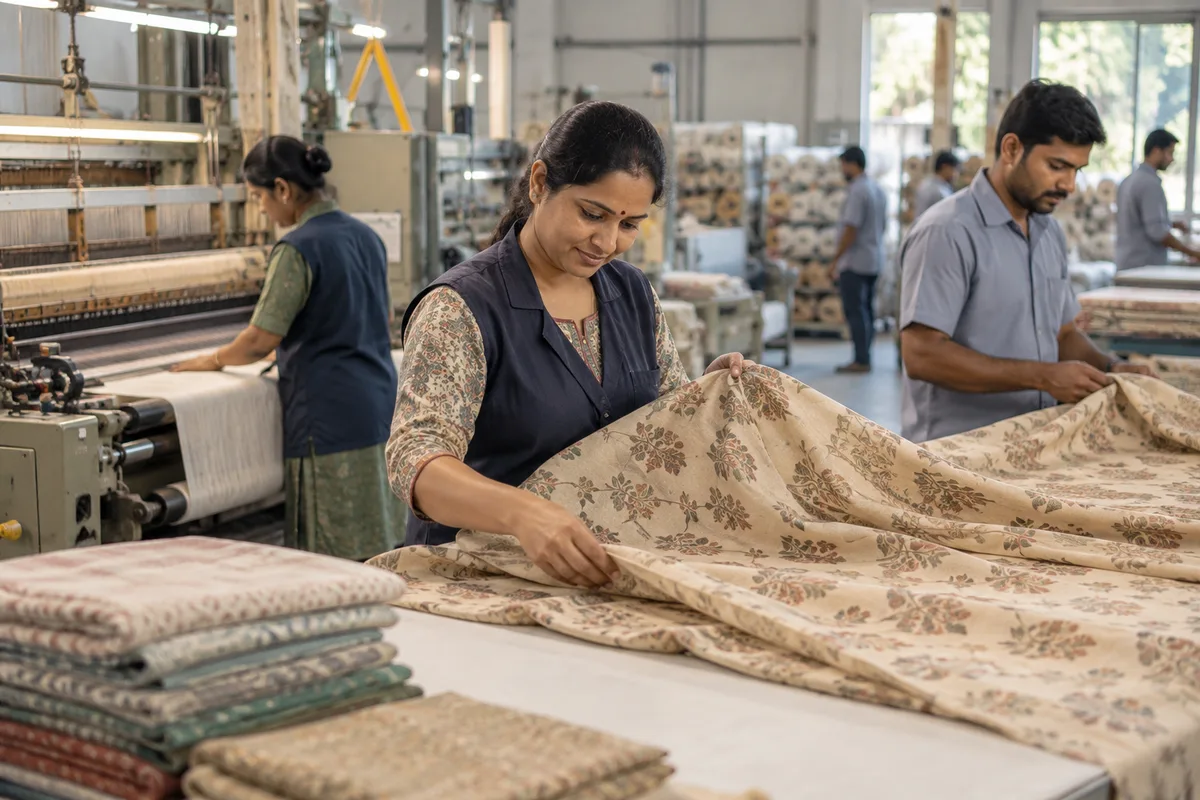
A CRM for a fabric mill holds the quality reference, the GSM and width quoted, the swatch sent, the lab dip approved and the season the buyer last ordered for. GullySales sets those fields, gets the marketing and sampling teams filling them, and makes the reorder date visible instead of remembered.
Scope, fee, reporting and term are agreed in writing after we have read your brief and spoken to you.
What CRM means
A CRM is the record where every enquiry, call and quote is kept against a customer, replacing separate notebooks, spreadsheets and memory. GullySales sets up or cleans an existing CRM and reports from it by enquiry outcome rather than by activity logged.
Also for textile manufacturers
- Lead generation for textile manufacturers
- Follow-up systems for textile manufacturers
- SEO for textile manufacturers
- PPC ads for textile manufacturers
- Digital marketing for textile manufacturers
- Reputation management for textile manufacturers
- Local SEO for textile manufacturers
- Branding and identity for textile manufacturers
Sales and marketing for textile manufacturers, the overview.
Last updated 5 Oct 2026.
For textile manufacturers
Where it usually goes wrong, and what we would do.
“The deal is a quality reference, not an account”
One garment buyer may run three qualities with you at different GSM and shades. Held as a single company row, the record cannot tell you which one is repeating and which was dropped after a season.
“Lab dip and approval status is the field everybody forgets”
Which shade was approved, on which date, against which reference, is the fact the bulk order turns on. Kept only in the dyeing department's register, it is unavailable to the person quoting.
“Season is the field that predicts the next order”
A buyer who ordered for autumn and winter last year will sample for it again. Recording the season alongside the order turns your customer list into a calling list at the right time of year.
What we do
What we deliver for textile manufacturers.
Every deliverable, what it covers for you, and the result it is there to produce. Nothing here is an extra.
Enquiries recorded by quality, GSM and width
Every enquiry logged with the specification asked for, so the pipeline shows which qualities are drawing demand.
Result: You know what to keep in greige and what to stop offering.
Swatch and lab dip status inside the sales record
Swatch dispatched, lab dip submitted and shade approval held against the enquiry, drawn from the sampling department.
Result: The person on the phone knows where the sample stands.
Season and last order recorded per buyer
The season each buyer develops for, the quantity taken and the rate agreed, held with the validity of that rate.
Result: The calling list builds itself before sampling opens.
Merchandiser contacts held beside the company
Named people in sampling, sourcing and merchandising for each buying house, with their category and a second name against each.
Result: A change of staff does not cost you the account.
Sample to order conversion reported by quality
Swatches sent against trial orders won, broken down by fabric type, against the baseline recorded before work began.
Result: You can see which quality is worth sampling for.
How the result is measured
- Enquiries logged in the CRM
- Data completeness
- Reports generated from CRM data
Recorded as a baseline before work starts, so every later report has an honest comparison.
What to record, and when
What a textile manufacturer should record about every buyer enquiry and quality, and whether software is needed yet.
- Composition and certification asked for
- Record the fibre blend, count or construction, and any certification the buyer asked for, such as OEKO-TEX or GOTS, and whether you hold it. Saying no early beats losing the order late.
- Minimum order and how long the rate holds
- Note the MOQ quoted, the rate and the date it is valid to, since yarn and cotton prices move. A rate quoted from memory against an old price is a loss waiting to happen.
- Agent and end buyer as two names
- Keep the agent who negotiated and the end buyer who pays in separate fields. Agents move between mills, and the end buyer is the account you need to hold on to.
- Stage reached: swatch, development, trial or bulk
- Mark where each buyer is, in your own words. The dyeing and weaving floors can then plan for what is likely rather than what is merely enquired.
- Payment terms and credit asked
- Record the credit period asked and agreed, with the buyer's references. A large order on long credit is a risk to see before production starts.
- Do you need software yet?
- A shared sheet with one row per buyer and quality is enough for a mill with a short buyer list. Use a CRM when agents, merchandisers and the sampling staff all need the same status, or reorder dates are being missed.
Who it is for
This is written for these textile manufacturers.
- Yarn spinning mills
- Fabric weaving and processing units
- Garment fabric manufacturers
- Home textile manufacturers
- Technical and industrial textile makers
- Export-oriented manufacturing units
- Private label and job-work manufacturers
- Knitwear and hosiery manufacturers
Not for
It is not the right fit if.
- The sampling register is in one person's notebook and they do not wish to share it.
- Only two or three accounts supply nearly all orders, and a spreadsheet already holds them well.
- The sales team will not record a visit or a swatch, so the record would show only invoices.
How it works
How the CRM work runs
The work itself, in order. How an engagement starts, from your brief to a written scope, is set out on our method page.
- 1
Map the sales process
We sit with the people who sell and write down how a deal moves from enquiry to payment, including where it stalls.
- 2
Agree stages, fields and owners
Each stage gets a name your team already uses and a proof that the deal has left it. We agree which fields are required at which stage, and who may change what.
- 3
Build on a copy
Pipeline, fields and views are built on a trial copy where the CRM offers one, or in a separate pipeline where the plan allows. Live work stays untouched.
- 4
Connect channels, then switch on automations
Channels are connected first. Each automation is then switched on separately, so a misfiring rule is easy to find.
- 5
Test with real deals
The people who will use the CRM run open deals through it. Gaps are fixed before the whole team switches over.
- 6
Switch over and trim
Once real use shows which fields stay empty and which stages nobody uses, those are cut and the handover record is updated.
Where this fits
Three pieces of sales work, in this order.
This work sits inside sales management. A target, a review routine and someone who owns the number.
Step 1
Sales audit
Find where deals are being lost and what to fix first.
Start here if you cannot say where orders are lost.
Step 2
Sales process design
One written way to sell, from first enquiry to repeat order.
Start here if every salesperson sells differently.
Step 3 · you are here
Sales management
A target, a review routine and someone who owns the number.
Start here if the team has targets and no routine.
FAQ
Questions owners ask before they call.
Not here? More answers, or ask on WhatsApp.
Our sampling department keeps its own register. Why change that?
What does the owner get out of it?
Buyers send enquiries through agents. How do we record both?
Can export documents and test reports go in the CRM?
How much does it cost?
How long is the contract?
How soon will we see results?
Who will actually do the work?
What do you need from us?
What if we are not happy with the work?
From the blog
Further reading for textile manufacturers.
 8 min read · 21 Sept 2026Tamil advertising creative: what actually changesTamil is written one way and spoken another, and its script cannot tell b from p. What that means for your line, voice artist and brand spelling.
 6 min read · 22 May 2026How to get export orders: a practical route for Indian manufacturersExport orders come from being ready before you are found: registrations, compliance, a buyer-ready catalogue, a short list of the right buyers, and follow-up that lasts months.
More for textile manufacturers
Everything else we would do for you.
Closest to this: leads and follow-up
Also for textile manufacturers
Or start from the overview: sales and marketing for textile manufacturers.
Your next practical step
Tell us what you are trying to grow, and we will read it before we call.
Eight short steps, mostly taps. Skip anything you would rather answer on the call.