Textile manufacturers · Social media
A ten-second drape video answers what a photograph cannot.
Social media for a textile manufacturer is short video of fabric moving, and a presence in front of merchandisers on LinkedIn. GullySales sets the filming routine on the floor, builds a WhatsApp catalogue by construction, and keeps buyers' developments off the feed.
Scope, fee, reporting and term are agreed in writing after we have read your brief and spoken to you.
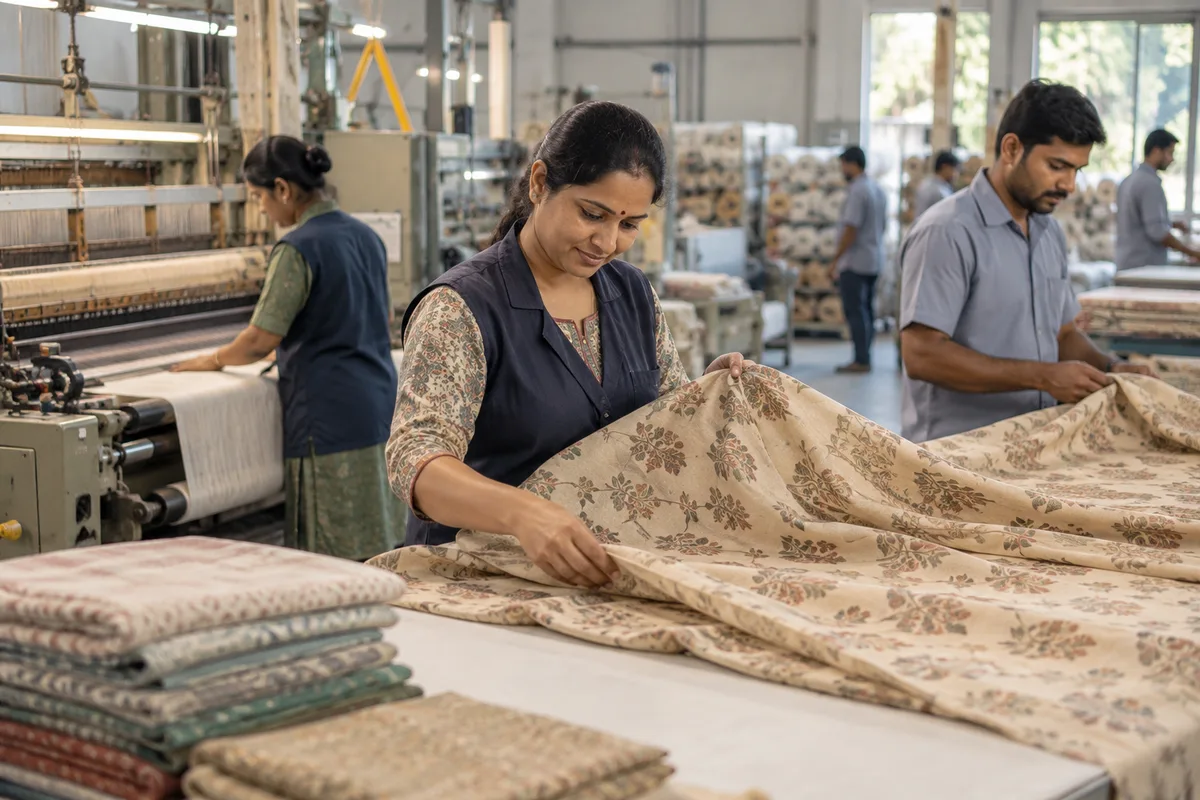
What social media means
Social media is the ongoing posting your business does on platforms such as Instagram, Facebook and LinkedIn to stay visible to customers and prospects between purchases. GullySales plans a posting calendar, writes captions and designs the images so the page looks active and answers what a visitor would ask.
Also for textile manufacturers
- Content marketing for textile manufacturers
- SEO for textile manufacturers
- PPC ads for textile manufacturers
- Lead generation for textile manufacturers
- Digital marketing for textile manufacturers
- Reputation management for textile manufacturers
- Local SEO for textile manufacturers
- Branding and identity for textile manufacturers
Sales and marketing for textile manufacturers, the overview.
Last updated 5 Oct 2026.
For textile manufacturers
Where it usually goes wrong, and what we would do.
“Fabric has to be seen moving”
Drape, hand feel and the way a twill falls are why a merchandiser asks for a hanger. A flat photograph shows none of it.
“The merchandiser is on LinkedIn, the designer is on Instagram”
Two buyers inside the same company, looking for different things, and most mills post the same picture to both.
“Posting a buyer's development can cost you the account”
The garment you helped develop is their season. Putting it online before the launch breaks what you signed.
What we do
What we deliver for textile manufacturers.
Every deliverable, what it covers for you, and the result it is there to produce. Nothing here is an extra.
A filming routine on the floor
Drape, hand feel, a loom running and a lab test, shot on a phone the same way during an ordinary shift.
Result: Posting stops needing a photographer.
A WhatsApp catalogue arranged by construction
Your range loaded as a business catalogue with counts, weights and MOQ, so a buyer on a phone can look through it.
Result: An enquiry starts from the right fabric.
A LinkedIn plan aimed at merchandisers and buying houses
Posts about capability, certification and development, written for somebody who sources fabric rather than somebody who wears it.
Result: The right people watch the mill working.
A permission rule for buyer work
A written rule on what may be shown from a development and who signs it off, kept where whoever posts can see it.
Result: Nothing confidential goes up by accident.
Fair week posting prepared in advance
Stall photographs, new developments and a post each day of the fair, written before anybody leaves for the airport.
Result: Buyers who missed the stall still see the range.
A count of enquiries per platform
Which platform produced which enquiry each month, so whichever one produces nothing gets dropped.
Result: Filming time follows the enquiries.
How the result is measured
- Posts published
- Engagement rate
- Enquiries from social profiles
Recorded as a baseline before work starts, so every later report has an honest comparison.
Platform for this buyer
Where fabric buyers look, and what a mill posts on each platform.
- LinkedIn for merchandisers and buying houses
- Post one fabric with its construction, count, GSM, width and finish, and a close photograph of the weave. The action is to request a swatch with the quality name and quantity.
- WhatsApp swatch catalogue
- Arrange the catalogue by construction: poplin, twill, jersey, canvas. Send the swatch card to a buyer only after they ask. The action is to reply with the quality they want.
- Instagram reels and YouTube of fabric moving
- Film the fabric draping, the hand-feel test and the loom running, with no buyer labels in frame. The action is to message for a swatch card.
- Trade fair posts
- Post your hall and stand number before the fair, and new collections on the day. The action is to book a time at the stand. Add the fair's own tag if it has one.
- What not to post
- A buyer's label or developed fabric, price per metre, a purchase order or tag showing a buyer's name, and workers' faces without consent. Show only certificates that are current and in your name.
Who it is for
This is written for these textile manufacturers.
- Yarn spinning mills
- Fabric weaving and processing units
- Garment fabric manufacturers
- Home textile manufacturers
- Technical and industrial textile makers
- Export-oriented manufacturing units
- Private label and job-work manufacturers
- Knitwear and hosiery manufacturers
Not for
It is not the right fit if.
- The fabrics are developed for named buyers who have not agreed to any display, so there is little you may post.
- Nobody on the team can take a steady drape video or swatch photograph, and the feed would carry poor images of good cloth.
- You wish to post the swatch card openly, though the same qualities are quoted to buyers at different rates.
How it works
How the social media work runs
The work itself, in order. How an engagement starts, from your brief to a written scope, is set out on our method page.
- 1
Confirm audience, platforms and access
We note which platforms your buyers use and check that the pages sit under your own business accounts, with you as owner and us as added roles.
- 2
Review the current presence
We read the existing pages, the posts that drew replies and the gaps in posting.
- 3
Build the calendar
Themes, formats and dates are set out for your approval, with space for offers and news.
- 4
Create, approve and publish
Posts are made, approved by you and scheduled. Replies to the public are handled in your voice.
- 5
Record enquiries and adjust
Enquiries are logged against the post or platform where they began, and the mix changes to follow what brings them.
Where this fits
Three pieces of sales work, in this order.
This work sits inside sales process design, at stage 0, foundation. The audit comes before it, and sales management keeps it running.
Step 1
Sales audit
Find where deals are being lost and what to fix first.
Start here if you cannot say where orders are lost.
Step 2 · you are here
Sales process design
One written way to sell, from first enquiry to repeat order.
Start here if every salesperson sells differently.
Step 3
Sales management
A target, a review routine and someone who owns the number.
Start here if the team has targets and no routine.
FAQ
Questions owners ask before they call.
Not here? More answers, or ask on WhatsApp.
Can we post fabric we developed for a buyer?
Is Instagram any use for a mill?
How do we share the swatch card on WhatsApp without it being forwarded to competitors?
Can we post our GOTS or OEKO-TEX certificate?
How much does it cost?
How long is the contract?
How soon will we see results?
Who will actually do the work?
What do you need from us?
What if we are not happy with the work?
From the blog
Further reading for textile manufacturers.
 8 min read · 21 Sept 2026Tamil advertising creative: what actually changesTamil is written one way and spoken another, and its script cannot tell b from p. What that means for your line, voice artist and brand spelling.
 6 min read · 22 May 2026How to get export orders: a practical route for Indian manufacturersExport orders come from being ready before you are found: registrations, compliance, a buyer-ready catalogue, a short list of the right buyers, and follow-up that lasts months.
More for textile manufacturers
Everything else we would do for you.
Closest to this: content and social
Also for textile manufacturers
Or start from the overview: sales and marketing for textile manufacturers.
Your next practical step
Tell us what you are trying to grow, and we will read it before we call.
Eight short steps, mostly taps. Skip anything you would rather answer on the call.