Towel manufacturers · Social media
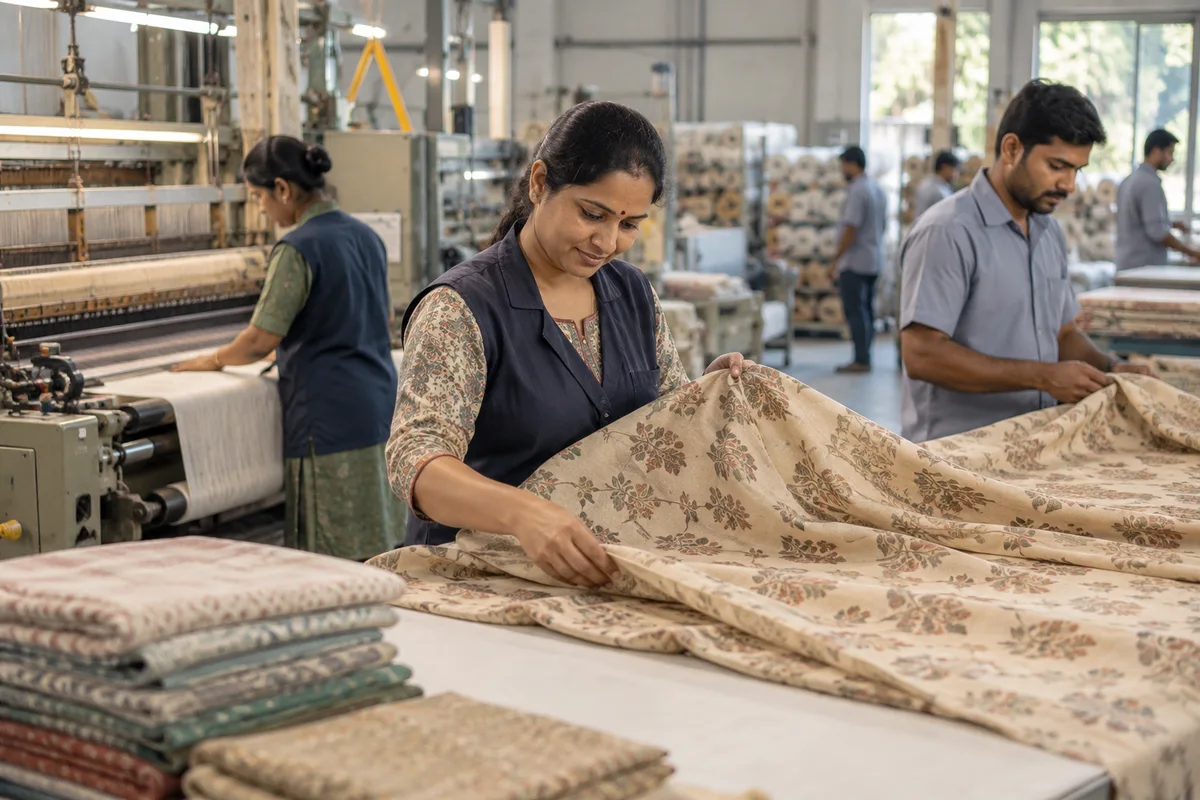
Show the loom, the finishing floor and the folded stack to the buyer.
Social media marketing for a towel manufacturer is the planned posting of work from the mill to the people who buy terry products. It lets a buyer see the weaving, the finishing and the packing before they ask for a sample. GullySales plans the content around the floor and links it to the enquiry route.
Scope, fee, reporting and term are agreed in writing after we have read your brief and spoken to you.
What social media means
Social media is the ongoing posting your business does on platforms such as Instagram, Facebook and LinkedIn to stay visible to customers and prospects between purchases. GullySales plans a posting calendar, writes captions and designs the images so the page looks active and answers what a visitor would ask.
Last updated 14 Nov 2026.
For towel manufacturers
Where it usually goes wrong, and what we would do.
“The product is tactile and the feed is flat”
A photo cannot show softness. Close shots of the pile, a towel being wrung out or folded and a stack ready to ship give a buyer reasons to ask for the sample instead of judging from a picture.
“Buyers look at who you are before they message”
A housekeeping head or an exporter checks a supplier's page. A feed that shows the mill, the machinery and finished lots reads as a working unit; a feed of festival greetings tells them nothing.
“Different buyers need different posts”
A hotel buyer wants to see wash performance and colour consistency. A retailer wants design and packing. One post style for all of them satisfies none, so content is planned per segment.
“Posts without a next step waste attention”
A good video of the finishing line that offers no way to ask for a sample ends at a like. Every post needs a simple route to a sample request or a quotation.
What we do
What we deliver for towel manufacturers.
The work available for this need. We agree the deliverables and responsibilities for your engagement in writing.
Content plan by segment
A set of post themes for hospitality, institutions, branded orders and trade buyers, drawn from what happens in your unit.
Result: You know what to photograph each time something is produced.
Shooting guide for the floor
Plain instructions on lighting, close shots and angles for the mill team to use on a phone.
Result: Staff can capture usable pictures without a studio.
Post templates
Layouts for new designs, colour launches, large lot dispatches and sample kits, written in sentence case with a clear call to action.
Result: Posts look consistent and carry a way to enquire.
Profile setup
Business profile details, catalogue links, enquiry buttons and a pinned post for each major platform you use.
Result: A buyer who lands on your profile can find a way to contact you.
Enquiry capture
A simple route from social posts to a sample request or WhatsApp message, with the source noted.
Result: You can see which posts brought a buyer to you.
How the result is measured
- Posts published
- Engagement rate
- Enquiries from social profiles
Recorded as a baseline before work starts, so every later report has an honest comparison.
Posts and pieces to plan
Posts that show a buyer how a towel is made and how it behaves.
- Loom floor walk-through
- A short clip of weaving in progress with a line on the yarn used. It needs only permission from the floor supervisor to film.
- Folded stack against a room set
- A photo of towels laid out as a hotel room would use them. It needs clean light and a caption naming the GSM and size.
- Wash and wear test
- A before and after photo of a towel through your own wash trial. State what was tested and keep the claim to what you did.
- Colour card reveal
- The shades you hold in stock, shown in a flat lay. A buyer matches colour to a room scheme from this alone.
- Logo embroidery close-up
- A close picture of woven or embroidered branding with a note on the lot size. It draws gyms and salons to the logo page.
- Packing and dispatch
- A shot of cartons being sealed for a named city. It shows an export or hotel buyer that orders do leave on schedule.
Who it is for
This is written for these towel manufacturers.
- Bath and hand towel manufacturers
- Hotel and resort towel suppliers
- Hospital and institutional towel makers
- Gym, spa and salon towel suppliers
- Bathrobe and terry product manufacturers
- Export-oriented terry towel units
- Promotional and logo-embroidered towel makers
- Wholesale suppliers to retail and kirana chains
Before you decide
When this may not be the right fit.
- No one on the floor can take photographs without stopping work, so posts would be rare and uneven.
- You are not allowed to show a client's name or room, and without that proof the posts would look like any other mill.
- Your buyers never use social platforms for sourcing, so the effort would be better placed on a catalogue and calls.
Before you decide
Agree the work. Know how to judge it.
Social media marketing for towel manufacturers: use these checks to prepare, choose the scope, and review what changes.
Bring the right evidence
Review the posts that produced useful conversations, not only the ones with the most views. Gather buyer questions and decide which team member can contribute credible material.
Make the scope clear
Choose the audience and channel before setting a posting volume. Agree who supplies material, approves posts, and handles messages, including complaints or questions the agency cannot answer.
Check the work in use
Follow a post through to the profile, website, and response. A useful report explains the quality of conversations and enquiries, alongside reach and engagement.
Know when to change course
If publishing takes time away from unanswered buyer messages, fix the response routine first. Do not expand to another channel without a clear reason for being there.
These are discussion points, not a fixed package. GullySales confirms the deliverables, responsibilities, fee, and term in writing after reading your brief and speaking with you.
Before we start
What to have ready before the work starts.
The records, access and decisions this work needs from towel manufacturers. Anything missing is noted in the written scope, with who will supply it.
- Permission to film on the mill floor
- Decide which areas may be filmed and who must be present. Some buyers' orders must not be seen. If permission is not clear, we film only the public parts, and the feed loses the proof that the floor offers.
- A phone and a person to shoot
- Name the person who will film and post. A phone and a clean lens are enough. If nobody is free in a busy production week, we plan fewer posts and write the captions for the person to publish later.
- Folded stacks, labels and packing ready to photograph
- Set aside a few finished towels, labelled and packed, for a photograph in daylight. The finished product is what buyers judge. Without it, the posts rely on loom footage, which shows effort but not the result.
- A list of customers who agreed to be named
- Bring only the names of buyers who have given written agreement. Naming without it can cost you the buyer. If the list is empty, we speak of segments such as hotels and hospitals, without names.
- Dates when the mill is least busy to film
- Choose a few hours when looms run but the floor is calm, so that filming does not slow work or put people at risk. Tell us the shifts and the safe areas for visitors. Without a chosen time, filming is postponed to a quiet day, and the feed starts later than planned.
How it works
How the social media work runs
The work itself, in order. How an engagement starts, from your brief to a written scope, is set out on our method page.
- 1
Walk the weaving and finishing floors with a phone
We go through the mill, from the yarn store to the loom shed to the finishing and packing area, and note what a buyer would want to see. You point out what is allowed to be filmed and what is not. We record a list of shots that show the work and respect the confidentiality of your customers.
- 2
Agree which buyers the feed is for
We decide with you whether the account speaks first to hotel and hospital buyers, to wholesalers or to export agents. Each reads a different feed. You tell us which platform your actual buyers use, and we set up one main profile and one backup.
- 3
Draft the shot list and the post templates
From the walk we write a small set of post templates: the loom and the yarn, the finishing floor, the folded stack with its label, the wash test. Each has a caption pattern that names the use and the buyer. A staff member can follow it with a phone.
- 4
Set the profile and the enquiry button
We fill the profile with the unit name, town, range and a link to the sample request. The bio states who you supply. You approve the wording. A clear button to message or request a sample is added, so every post leads to a next step.
- 5
Settle what is never shown
We write a short rule with you: no customer name or logo without written agreement, no design that belongs to a buyer, no price. You name who approves each post before it goes out. A buyer's custom pattern stays off the feed.
- 6
Count sample requests that name the post
We ask each new enquirer where they saw the mill and note those who name a post. We compare with the figures from the start. You keep the formats that led to a request and drop the ones that earned only likes. We promise no orders from posting.
Where this fits
Three pieces of sales work, in this order.
This work sits inside sales process design, at stage 0, foundation. The audit comes before it, and sales management keeps it running.
Step 1
Sales audit
Find where deals are being lost and what to fix first.
Start here if you cannot say where orders are lost.
Step 2 · you are here
Sales process design
One written way to sell, from first enquiry to repeat order.
Start here if every salesperson sells differently.
Step 3
Sales management
A target, a review routine and someone who owns the number.
Start here if the team has targets and no routine.
FAQ
Questions owners ask before they call.
Not here? More answers, or ask on WhatsApp.
Which platform matters for a towel mill?
Can we show customer names and logos?
Will posting make hotels order?
Can we show the factory floor to buyers on social media?
Can we post a custom design made for one buyer?
Who answers the messages that come through the account?
How much does it cost?
How long is the contract?
How soon will we see results?
Who will actually do the work?
More for towel manufacturers
Related work to consider.
Closest to this: content and social
Also for towel manufacturers
Or start from the overview: sales and marketing for towel manufacturers.
Your next practical step
Tell us what you are trying to grow, and we will read it before we call.
Eight short steps, mostly taps. Skip anything you would rather answer on the call.