Temples · Branding
Present the deity and the temple's history the way a devotee explains it.
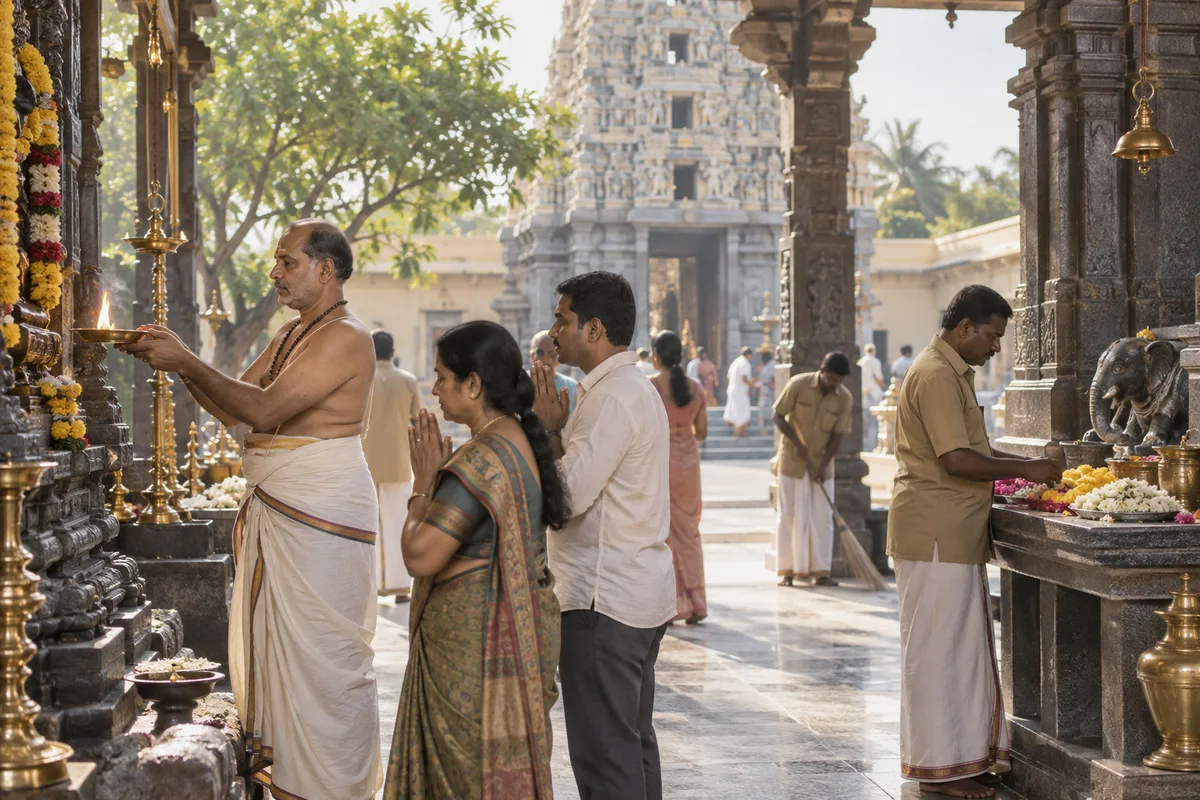
Branding for a temple means presenting the deity's name, founding story and known festival consistently online, built from the trust's own history. GullySales writes this from what the trust and priests tell us, then fixes the spelling and imagery inconsistencies across the site and profiles.
Scope, fee, reporting and term are agreed in writing after we have read your brief and spoken to you.
What branding means
Branding is what a customer remembers about your business beyond the product, including your name, colours, tone of voice and what you are known for locally. GullySales sets or corrects this once and applies it consistently across your website, signage and adverts so the business looks like one company everywhere.
Last updated 5 Oct 2026.
For temples
Where it usually goes wrong, and what we would do.
“The founding story is the identity”
The founding story and the deity's form are what devotees repeat to others, so the site leads with that.
“One name, spelled one way, everywhere”
Three spellings of the same temple name confuse search and devotees, so we fix it everywhere.
“The known festival leads the homepage”
A temple known regionally for one utsavam keeps that festival visible all year, not only the week before.
What we do
What we deliver for temples.
Every deliverable, what it covers for you, and the result it is there to produce. Nothing here is an extra.
One name, spelled the same way everywhere
A single agreed spelling of the temple's name and the deity's name, corrected across the website, Google profile and printed material.
Result: A devotee searching finds one temple, not three confusing entries.
The founding story confirmed by the trust
The temple's founding story and the deity's form written from what the trust and priests tell us, confirmed before it goes anywhere public.
Result: Devotees read the same story the temple itself would tell them.
The known festival kept visible all year
A section of the website and profile dedicated to the temple's known utsavam, visible outside festival week, not only just before it.
Result: The festival the temple is known for is never hard to find.
Photograph set of the deity and premises
A shoot list covering the deity's alankara, the mandapam and the temple grounds, replacing generic or borrowed imagery.
Result: A family planning a visit sees the real temple beforehand.
Consistency check across website and signage
A review of spelling, imagery and festival dates across the website, Google profile and any printed signage, with fixes agreed with the trust.
Result: Nothing a devotee reads about the temple contradicts something else.
How the result is measured
- Recognition in customer feedback
- Consistency across channels
- Repeat enquiries by name
Recorded as a baseline before work starts, so every later report has an honest comparison.
Positioning in one sentence
This is the temple of this deity in this place, known for this festival, and here is what a devotee can read about it.
- Who it is for: the devotee searching
- Decide whether the first reader is a local family, a pilgrim travelling in or an NRI devotee abroad. Each needs the same facts, but the NRI wants seva booking and live darshan details first.
- What the temple is: deity, place and tradition
- Write the deity's name, the place and the tradition once, in the form the trust confirms, such as the sampradaya or agama followed. The trust and the priests, not a designer, decide this wording.
- What a devotee finds here that is specific
- Name the known festival, the unique seva or the story behind the sanctum, as the trust tells it. Do not borrow a legend from another temple, and do not add a claim the priests have not confirmed.
- What the trust can show
- The founding year in the trust's records, the trust registration, the festival calendar and darshan timings. Show real photographs the trust has cleared. Respect any rule on photography inside the sanctum.
- Names and spellings that must not drift
- List every spelling in use: the deity, the town, the trust and the festival. Choose one in English and one in the local script, and use them on the board, the booking page, the Maps listing and the receipt.
Who it is for
This is written for these temples.
- Ancient and heritage temples with high pilgrim footfall
- Neighbourhood and community temples
- Temple trusts managing more than one shrine
- Shrines with a strong NRI devotee base overseas
- A temple known for one festival or utsavam
- Temples running annadanam and community welfare programmes
How it works
From your first message to the first report.
No open-ended retainer. Every step gives you something in writing.
First
Your brief
You tell us what you need in a few short steps: your business, what you want, where enquiries come from and how they are handled.
After the brief
A conversation and a written scope
We read it, then talk with whoever handles your enquiries. If you want our help, the scope, the fee and the reporting come in writing, and nothing starts before you have read them.
Before work starts
Baseline recorded
The numbers this work is meant to move, such as enquiries, quotations, orders, visits or renewals, written down so every later report has an honest comparison.
After the baseline
The first fix goes live
The fix we agreed to start with is put in place and measured against the baseline, whether that is a reply, a follow-up, a page, a listing or the handover between marketing and sales.
As agreed
Report against the baseline
What moved, what did not, and what changes next, in plain words. How often you get it is set in writing before work starts.
At renewal
Renew on the numbers
The term ends and you decide whether to continue from the results. The length is agreed in writing before anything starts.
How the branding work runs
- 1
Interview customers and team
We talk to real buyers, won and lost, and to people inside the business who deal with customers daily.
- 2
Review the competitive field
We look at how the nearest competitors present themselves so the position is not accidentally identical.
- 3
Draft the position
A first version of the positioning statement and messaging pillars is written and checked against what customers actually said.
- 4
Test it against real conversations
The draft is tried out in a real sales call or two before it is finalised, since a position that does not survive a real conversation needs rework.
- 5
Hand over the rollout brief
The final position, pillars and not-for list are documented for your team and any agency to apply consistently.
Why us
Why owners pick GullySales over an agency.
Marketing and sales, as one job
Most agencies stop at the enquiry. We also fix what happens after it: the reply, the follow-up, the quote and the CRM.
The person on the first call does the work
No account managers in between. You are never handed to someone you have not met.
A baseline before anything starts
Your numbers are written down on day one, so every later report compares against something honest.
The fee in writing, split three ways
Our time, your media spend and production on separate lines. You always see what goes to us.
No guarantees we cannot keep
The term is agreed in writing and never a default twelve months. We never promise a ranking or a lead count, because nobody controls those.
One office, and we say so
Nagarbhavi, Bengaluru. We work across India by call and WhatsApp and travel when a session needs to be in person.
#257, 3rd floor, Sri Nanjundeshwara Complex, Nagarbhavi 8th Block, Outer Ring Road. How we work.
Your brief
Tell us what you need, and we will read it before we call.
Eight short steps about your business, what you want and who decides. Most questions are a tap, and you can skip any you would rather answer on the call.
FAQ
Questions owners ask before they call.
Not here? More answers, or ask on WhatsApp.
Will this change anything about the rituals?
Do you write the temple's history for us?
Should the temple have a logo?
Who approves what we write about the deity and the history?
How much does it cost?
How long is the contract?
How soon will we see results?
Who will actually do the work?
What do you need from us?
What if we are not happy with the work?
From the blog
Further reading for temples.
 5 min read · 12 Oct 2026Tax receipts, FCRA and registrations: how an NGO should present credentials without overclaimingDonors look for registrations before they give. This post shows how to state what you hold in plain words, what to avoid implying, and how to get your adviser to confirm the wording.
- 5 min read · 14 Sept 2026Website for an NGO: the pages donors look for before they giveA first-time donor checks your website before paying. This post lists the pages and details they look for, in the order they look, and what a small NGO can leave out.
- 6 min read · 2 Jul 2026How an NGO builds a donor database it can actually useA donor database starts as one row per donor, a short list of columns and one named owner. Here is the sheet layout, the rules that keep it clean and how to move to a CRM.
More for temples
Everything else we would do for you.
Or start from the overview: sales and marketing for temples.
Your next practical step
Tell us what you are trying to grow, and we will read it before we call.
Eight short steps, mostly taps. Skip anything you would rather answer on the call.