Agricultural farms · Other
Sell your harvest to buyers you choose, not only to whoever is at the mandi that morning.
The crop is standing, the harvest date is three weeks away and the only price on offer is what the commission agent says at the mandi gate. Another farm down the road has a WhatsApp group of hotel purchase managers and a processor who sends a truck every Tuesday. The soil and the work are the same. The difference is who knows the farm exists.
Scope, fee, reporting and term are agreed in writing after we have read your brief and spoken to you.
In one paragraph
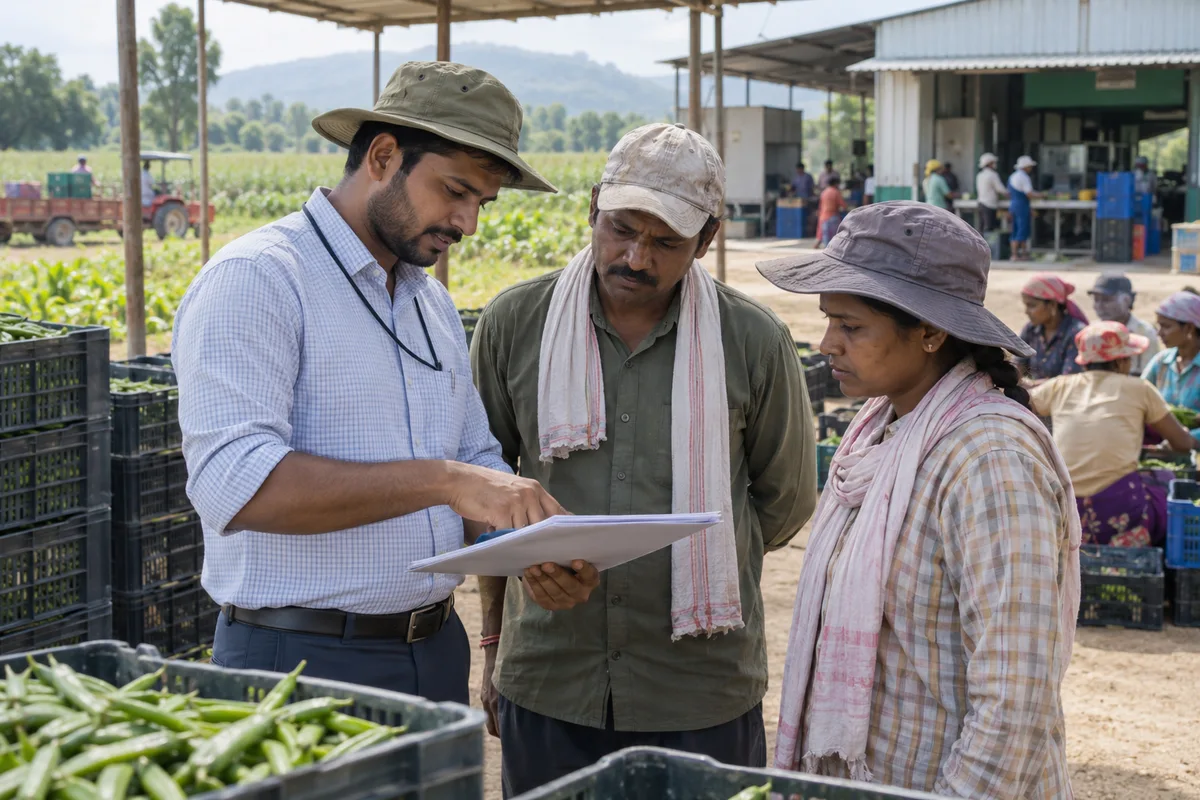
An agricultural farm grows field crops, vegetables or grain on its own or leased land and sells the harvest. Farm marketing finds buyers beyond the mandi agent. Farm sales turns an enquiry into a standing order at an agreed grade and rate. GullySales builds the buyer list, the farm page and the harvest-week reply sheet.
Your farm may sell through one or two agents because there has been no time to build anything else. A farm that can say what it grows, how much, in which grade and from which month is easy for a buyer to plan around. That description is the first thing a buyer asks for, and you may not have it written down yet.
Last updated 18 Oct 2026.
How buyers decide
How agricultural farms are chosen.
A bulk buyer, whether a processor, a wholesaler, a hotel chain's purchase team or a retail chain's sourcing desk, decides on three things: can this farm supply the same grade each week of the season, will the produce arrive on time, and will payment terms be workable? Price comes after those. A farm that cannot answer the first question in one message loses to the agent who can.
Buyers find farms through other farmers, FPO members, agents they already trust, a search or a forwarded WhatsApp message. They ask for a sample lot, a photo of the field and the harvest calendar. Ready to send, they make a supplier. Gathered after the call, they make a gamble.
After the first lot, the buyer decides on quality against the sample, weight at unloading and how the farm handles a rejected bag. A farm that settles a dispute politely and keeps its harvest calendar honest is added to the buyer's regular list, and that is where a season's income stops depending on one morning's price.
The problem
What usually goes wrong for agricultural farms.
What owners tell us on the first call, in their words.
“We sell to the same two agents every season”
They set the rate, they decide the grade, and we hear about price only after the lorry has left. We have never had a way to put the harvest in front of anyone else.
“Buyers ask what we grow and when, and we answer differently each time”
There is no single sheet with the crop, the acreage, the harvest weeks and the packing. Each call starts from nothing and a new buyer loses interest.
“Enquiries from processors and hotels go cold”
A purchase manager sends a message during harvest, when everyone is in the field. By the time we reply they have ordered elsewhere.
“Our produce is graded well but nobody outside the village knows”
A buyer cannot see the field, the sorting or the packing, so they fall back on the agent's word about quality.
“Good buyers from one season do not return the next”
Nobody wrote down who bought, what they wanted and when we last spoke. In the next season we start again.
“We have no clear answer on credit”
Buyers ask for thirty days and we have no rule for who gets it. We either lose the order or carry the risk without knowing it.
What we do
What we do for agricultural farms.
Everything included for agricultural farms.
A farm page that answers a buyer's first four questions
What you grow, how much, which weeks, and how it is graded and packed. Written plainly, with field photographs you supply and a phone number that reaches the person who decides.
A harvest calendar buyers can plan around
A simple sheet of crop, expected quantity range and harvest weeks for the season, kept current as the crop moves. You approve each version before it goes out.
A buyer list built by crop and region
We research processors, wholesalers, caterers, institutional kitchens and retail sourcing desks that buy your crop within reach of your farm, and keep their details in one place.
A WhatsApp reply routine for harvest weeks
Standard replies for price, sample, grade and delivery questions, and a rule for who answers when the field team is busy.
A season record of buyers and orders
Who bought, which grade, at what rate, when they paid and what they asked for next. Kept in a sheet or CRM your team can actually update.
How the result is measured
- Enquiries from buyers other than your regular agents
- Sample lots sent against standing orders received
- Share of the crop booked before harvest
- Repeat buyers from the previous season
- Reply time to buyer messages during harvest
- Payments received against the terms agreed
Recorded as a baseline before work starts, so every later report has an honest comparison.
Every service, written for agricultural farms
Each has its own page: what it involves for agricultural farms, what you get, and what it is measured on.
- Lead generationFind the processor, caterer or trader who needs your crop before harvest begins.
- SEOBe the farm a purchase manager finds when they search for the crop and the region.
- Social media marketingLet a buyer watch the crop grow, the sorting and the loading before ever ringing you.
- Content marketingWrite the crop note a purchase manager forwards to the people who sign the order.
- Buyer personasKnow the person who buys your crop well enough to answer before they ask.
- CRMOpen one row and know what each buyer took, paid and asked for last season.
- Follow-up systemsRing the buyer who tested your sample before they forget there ever was one.
- WhatsApp marketingSend the crop sheet, the photograph and the rate in the thread the buyer already reads.
- Digital marketingPut the farm where buyers look for crops, in a form they can judge in a minute.
- WebsiteBuild the page a purchase head reads once and forwards to the people who sign.
Worth a page and a campaign of their own
Direct bulk buyers beyond the commission agent · A one-page crop and harvest calendar buyers can forward · Sample lots that turn into standing orders · Quick replies to buyer messages during harvest · A rule for credit and payment terms · Repeat buyers across seasons · Grading, packing and weight standards buyers can trust · Visible farm identity on Google and WhatsApp
Priority campaigns
Campaigns for what agricultural farms most want to sell.
Each one planned around when your buyers decide, and measured against the baseline.
Sample lot offer to institutional kitchens
A short message and call sequence to hotels, hostels, catering companies and hospital kitchens near your farm, offering a small trial lot with grade and price stated plainly.
Pre-harvest booking round
Before the harvest weeks, a call and message round to processors and traders who bought last season or enquired, with the harvest calendar attached.
Farm visit day for new buyers
An invitation to buyers and their quality team to see the field and sorting area, with a short checklist so the visit ends with a sample order or a clear next step.
Aggregation outreach to nearby farms
A message to neighbouring growers and FPO leaders about combining lots to meet a larger buyer's volume, with one coordinator handling the buyer.
Beyond search
Where we reach buyers of agricultural farms, beyond Google.
Search matters, but it is rarely the only way this industry's buyers find a supplier.
Processors and millers
Rice and dal mills, oil expellers, jaggery units and cold stores that buy your crop, listed with an introduction stating the grade and volume you can supply.
Hotels, caterers and institutional kitchens
Purchase managers and executive chefs within a day's drive of the farm, each with a sample-lot offer written for their kitchen.
Retail and modern trade sourcing desks
Buyers at supermarket and grocery chains, approached with a supply note that fits their vendor-registration step.
FPOs, farmer groups and co-operatives
Leaders of FPOs and farmer groups, approached about joint supply and shared buyers, with a written rule for who takes each enquiry.
Exporters and merchant traders
Traders who source from farms for domestic and overseas orders, where your crop and the papers you hold fit what they buy.
Who it is for
This is written for these agricultural farms.
- Vegetable growers supplying hotels, caterers and retail chains
- Grain and pulse farms selling to millers and traders
- Sugarcane and cash crop growers dealing with factories and jaggery units
- Oilseed and spice farms selling to processors
- Farms delivering to FPO collection centres
- Family farms moving from agent sales to direct buyers
- Large estates with several crops across the year
- Farm groups selling together under one brand name
Not for
It is not the right fit if.
- You want a guaranteed Google ranking or a guaranteed number of leads. Nobody honest can promise either.
- You need enquiries by next week and have nobody to answer them.
- You want posts and reach reported, not enquiries and orders.
How it works
How the work runs for agricultural farms
The work itself, in order. How an engagement starts, from your brief to a written scope, is set out on our method page.
- 1
Understand the crop and the current buyers
A conversation about what you grow, which weeks you harvest, who buys today and what you wish buyers knew.
- 2
Write the farm down once
The crop sheet, harvest calendar, grading notes and a farm page, all approved by you before use.
- 3
Build the buyer list
Researched buyers by crop, region and type, with the right person to contact.
- 4
Start conversations before the harvest
Introductions, sample offers and bookings run alongside your field work, with your team taking over once a buyer is ready to order.
- 5
Keep the record for next season
Buyers, rates, payment notes and feedback captured so the next crop begins with real contacts.
Where this fits
Three pieces of sales work, in this order.
GullySales builds every engagement from three pieces of sales work. This page is not one of them, but the same three steps apply to the business behind it.
Step 1
Sales audit
Find where deals are being lost and what to fix first.
Start here if you cannot say where orders are lost.
Step 2
Sales process design
One written way to sell, from first enquiry to repeat order.
Start here if every salesperson sells differently.
Step 3
Sales management
A target, a review routine and someone who owns the number.
Start here if the team has targets and no routine.
FAQ
Questions agricultural farms ask before they call.
Not here? More answers, or ask on WhatsApp.
We already sell everything through agents. Why add buyers?
Do you buy or sell our crop?
Our land is small. Is this worth it?
Can you write about our farming methods?
Will our rates and buyer names be shared publicly?
How much does it cost?
How long is the contract?
How soon will we see results?
Who will actually do the work?
What do you need from us?
Part of Other. See the other industries in the sector.
Your next practical step
Tell us what you are trying to grow, and we will read it before we call.
Eight short steps, mostly taps. Skip anything you would rather answer on the call.