CCTV and security system installers · Local SEO
Show the localities a technician can actually reach the same day.
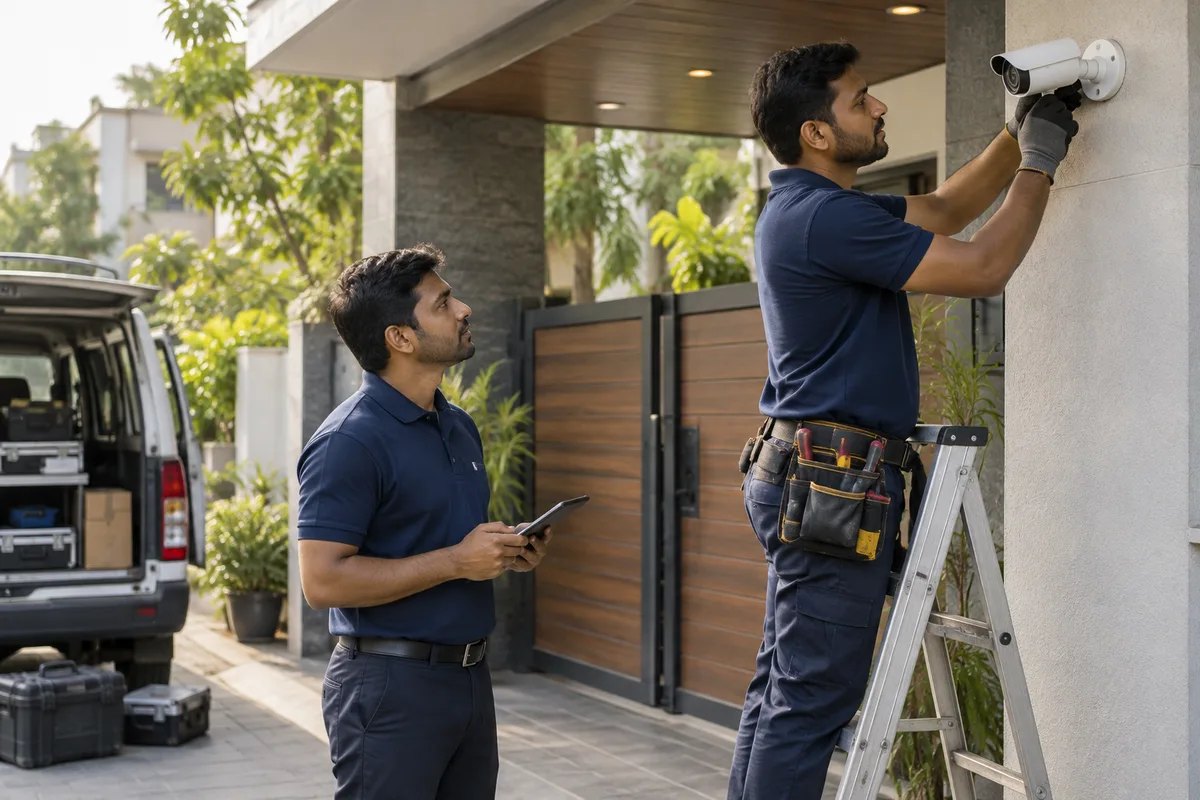
Local search for a CCTV installer is the Maps listing a trader opens after a break-in on his street. GullySales sets the categories and service areas, puts photographs of finished installations on the profile, and states the fault call position on the listing honestly.
Scope, fee, reporting and term are agreed in writing after we have read your brief and spoken to you.
What local SEO means
Local SEO is the work of making your business show up for searches that name your town or locality, such as a service plus an area name. GullySales sets up locality pages, local citations and map listings so nearby customers find you before a competitor across town.
Also for CCTV and security system installers
- SEO for CCTV and security system installers
- PPC ads for CCTV and security system installers
- Lead generation for CCTV and security system installers
- Digital marketing for CCTV and security system installers
- Reputation management for CCTV and security system installers
- Branding for CCTV and security system installers
- Social media for CCTV and security system installers
- Content marketing for CCTV and security system installers
Sales and marketing for CCTV and security system installers, the overview.
Last updated 5 Oct 2026.
For CCTV and security system installers
Where it usually goes wrong, and what we would do.
“The search is made within walking distance of the incident”
A trader who heard about a burglary in his market searches from behind his counter and calls two names. Being in that map pack is most of the job.
“Security agency and CCTV installer are different categories”
One brings guarding enquiries you do not take. The other brings a survey call from somebody who wants cameras fitted this week.
“Your installation photographs must not identify the customer”
A shop front with the board readable tells a stranger where the cameras are. Shoot the mount, the cable dressing and the recorder cabinet instead.
What we do
What we deliver for CCTV and security system installers.
Every deliverable, what it covers for you, and the result it is there to produce. Nothing here is an extra.
Categories set to installation work
A primary category matched to security system installation, with guarding and unrelated categories taken off so the wrong calls stop.
Result: The enquiries that arrive are jobs you actually do.
Service areas set to where you can reach the same day
The localities your technicians cover listed as the service area, with the ones you cannot reach for a fault call left off.
Result: You are not promising a visit you cannot make.
Photographs that prove the work without exposing a customer
Camera mounts, dressed cabling, recorder cabinets and the technician on site, uploaded with permission and with identifying detail kept out.
Result: The profile shows workmanship rather than a logo.
Every system you fit added as its own service
CCTV installation, IP upgrade, video door phone, access control, biometric attendance, alarm systems and annual maintenance, each added separately.
Result: A buyer knows you take the job before calling.
Hours and the fault call position stated plainly
Working hours, Sunday position and whether a night fault call is attended, written as it actually is rather than as a promise.
Result: Nobody calls twice at midnight for nothing.
Review requests and replies on the profile
A request made at handover on the customer's phone, and a written reply to every review, good or bad, within a few days.
Result: Recent, answered reviews sit where the buyer is deciding.
Calls and direction requests reported
Listing calls, messages and direction requests by locality, set against the figures recorded before the profile was touched.
Result: You can see the listing bringing in work.
How the result is measured
- Map pack ranking
- Local search visibility
- Enquiries by locality
Recorded as a baseline before work starts, so every later report has an honest comparison.
What Google weighs here
How a trader nearby finds an installer after an incident, and what to fix first.
- Installer, not guard service
- Choose the installation category closest to security systems. Do not use security guard service or security agency, which send you searchers wanting guards and make buyers doubt you do installation.
- Systems as separate services
- List IP cameras, DVR and NVR setups, biometric attendance, video door phones and access control apart. Say which sites each fits, such as a shop, a flat or a factory gate, and what the survey covers.
- Brand authorisation
- If you are an authorised partner of a camera maker such as Hikvision, CP Plus or Dahua, say so and use the logo only as the brand allows. If you are not, name the brands you fit without implying approval.
- Names of colonies and associations
- Apartment secretaries and shop-owner groups search by locality. Name the colonies, markets and societies where you have worked, with the owner's permission, in the description and on a locality page.
- Justdial, IndiaMART and the brand partner list
- Use Justdial for local shops and IndiaMART for factory and dealer buyers. Check the camera brand's installer or partner locator, which a buyer may open before any of them. Keep the number the same on each.
- Photographs without exposure
- Show finished cable runs, the DVR rack and the camera on a pole, framed so the street name, the shop name and the screens are out of view. A photograph that shows a customer's blind spots is a gift to a thief.
Who it is for
This is written for these CCTV and security system installers.
- CCTV installers serving homes and shops
- Security system integrators for businesses and factories
- Apartment and gated community security installers
- Access control and biometric attendance providers
- Intrusion alarm and video door phone installers
- Authorised dealers and distributors of camera brands
- IT and networking firms adding surveillance
- AMC and service-focused security companies
How it works
From your first message to the first report.
No open-ended retainer. Every step gives you something in writing.
First
Your brief
You tell us what you need in a few short steps: your business, what you want, where enquiries come from and how they are handled.
After the brief
A conversation and a written scope
We read it, then talk with whoever handles your enquiries. If you want our help, the scope, the fee and the reporting come in writing, and nothing starts before you have read them.
Before work starts
Baseline recorded
The numbers this work is meant to move, such as enquiries, quotations, orders, visits or renewals, written down so every later report has an honest comparison.
After the baseline
The first fix goes live
The fix we agreed to start with is put in place and measured against the baseline, whether that is a reply, a follow-up, a page, a listing or the handover between marketing and sales.
As agreed
Report against the baseline
What moved, what did not, and what changes next, in plain words. How often you get it is set in writing before work starts.
At renewal
Renew on the numbers
The term ends and you decide whether to continue from the results. The length is agreed in writing before anything starts.
How the local SEO work runs
- 1
Audit every listing
We check the Google Business Profile and directory listings for every branch against what should actually be shown.
- 2
Complete and correct
Profiles are filled in fully and inconsistent details are corrected across every directory found.
- 3
Build location pages
Each branch gets a page written for its own area, not a copy of the head office page with the address changed.
- 4
Set up review handling
A simple process for requesting and responding to reviews is put in place with whoever is closest to the customer.
- 5
Report and adjust
Map actions and enquiries per branch are reported, and branches falling behind are prioritised the next month.
Why us
Why owners pick GullySales over an agency.
Marketing and sales, as one job
Most agencies stop at the enquiry. We also fix what happens after it: the reply, the follow-up, the quote and the CRM.
The person on the first call does the work
No account managers in between. You are never handed to someone you have not met.
A baseline before anything starts
Your numbers are written down on day one, so every later report compares against something honest.
The fee in writing, split three ways
Our time, your media spend and production on separate lines. You always see what goes to us.
No guarantees we cannot keep
The term is agreed in writing and never a default twelve months. We never promise a ranking or a lead count, because nobody controls those.
One office, and we say so
Nagarbhavi, Bengaluru. We work across India by call and WhatsApp and travel when a session needs to be in person.
#257, 3rd floor, Sri Nanjundeshwara Complex, Nagarbhavi 8th Block, Outer Ring Road. How we work.
Your brief
Tell us what you need, and we will read it before we call.
Eight short steps about your business, what you want and who decides. Most questions are a tap, and you can skip any you would rather answer on the call.
FAQ
Questions owners ask before they call.
Not here? More answers, or ask on WhatsApp.
Our office is one room above a shop. Does that hurt us?
How do we get reviews when the customer never comes to us?
Can we put a camera brand's logo on our profile?
A customer's review mentions the break-in at their shop. Should we reply?
How much does it cost?
How long is the contract?
How soon will we see results?
Who will actually do the work?
What do you need from us?
What if we are not happy with the work?
From the blog
Further reading for CCTV and security system installers.
 6 min read · 23 Jul 2026Local search for niche trades: what to put on the profile and websiteA niche trade is found when its Google profile and website name the exact service, the area served and show photos of real work. This post lists what to write, what to upload and what to leave out.
 6 min read · 9 Jul 2026Quoting after a site visit: a one-page format that gets signedA one-page quotation with scope, price, exclusions and a next step is easier to approve than a long document. This post gives the layout, a worked example and the mistakes to avoid.
 6 min read · 16 Jun 2026Annual maintenance contracts: how a specialist trade turns a job into recurring workAn annual maintenance contract works when it offers scheduled visits with a clear scope after the job and a recorded due date. This post covers what to offer, when to offer it and how to track renewals.
More for CCTV and security system installers
Everything else we would do for you.
Closest to this: search and visibility
Also for CCTV and security system installers
- PPC ads for CCTV and security system installers
- Lead generation for CCTV and security system installers
- Digital marketing for CCTV and security system installers
- Reputation management for CCTV and security system installers
- Branding for CCTV and security system installers
- Social media for CCTV and security system installers
Or start from the overview: sales and marketing for CCTV and security system installers.
Your next practical step
Tell us what you are trying to grow, and we will read it before we call.
Eight short steps, mostly taps. Skip anything you would rather answer on the call.