Horticulture farms · Content marketing
Write what a buyer needs to read to trust your grade before they ever visit.
Content marketing for a horticulture farm means writing the guides, grade notes and season updates that a buyer reads while deciding whom to source from. GullySales works on the topics, the drafts and the pages they sit on, with you checking the facts.
Scope, fee, reporting and term are agreed in writing after we have read your brief and spoken to you.
What content marketing means
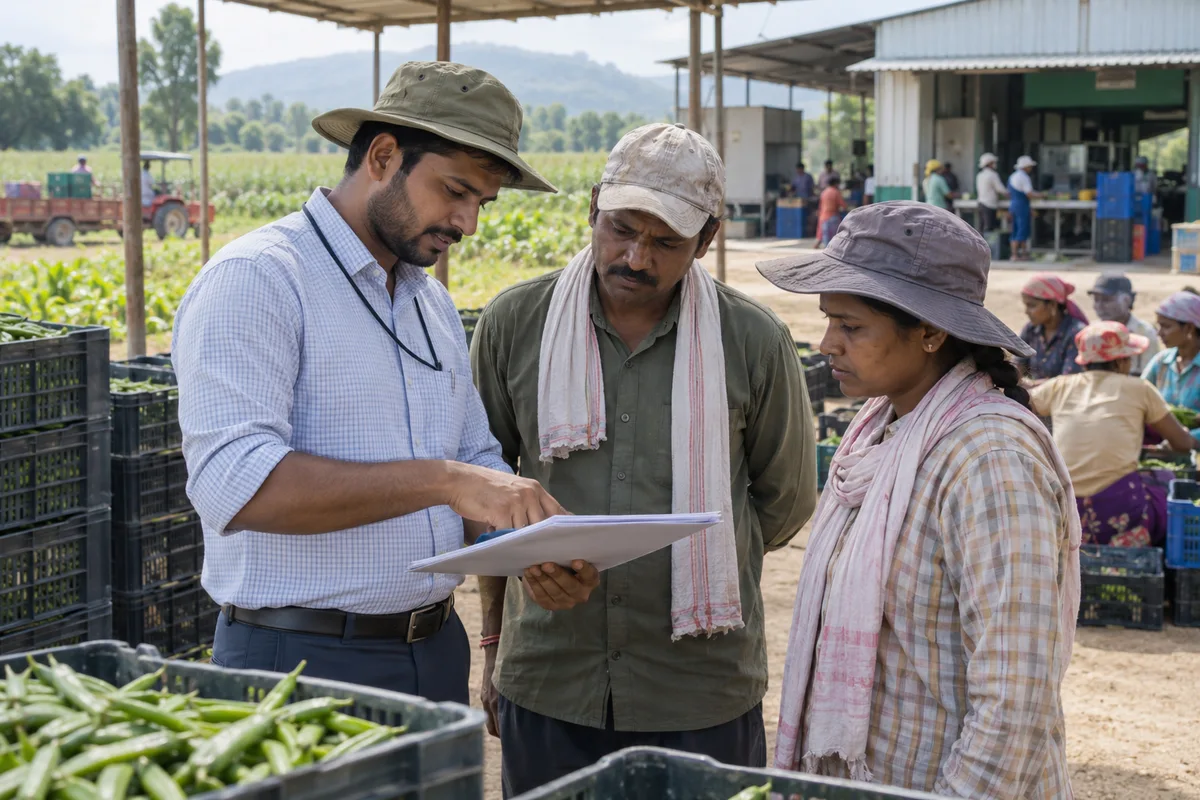
Content marketing is writing articles, guides and pages that answer the questions buyers search before they are ready to enquire. This makes your business visible and trusted before the first call. GullySales plans this content from the first conversation onward, choosing topics that match real search demand rather than guesses.
Last updated 18 Oct 2026.
For horticulture farms
Where it usually goes wrong, and what we would do.
“A grade described in words is easier to trust”
Size, colour, firmness and pack are things a buyer compares across farms. A plain description of how you grade, written once and kept current, answers questions a call would otherwise repeat. Keep the wording the same on every page and sheet so buyers see one standard.
“Buyers ask what happens after picking”
Cooling, sorting, crating and transport affect what arrives. A short account of the pack house routine shows the buyer the farm cares about the fruit after it leaves the tree. The page does not need to be long, only truthful about each step.
“Season notes build the habit of reading”
A buyer who reads an honest note at fruit set learns to trust the next one. Over several seasons, the notes become a record that shows the farm does what it says. Keep each one short and send it to the same list every season.
“Technical advice invites error”
Writing about sprays, residues or treatments risks repeating a rule that has changed. Rules differ by crop, destination and state, so keep such notes factual and tell the reader to check with the relevant board or adviser. Point readers to the board or adviser rather than quoting a limit that may change.
What we do
What we deliver for horticulture farms.
Every deliverable, what it covers for you, and the result it is there to produce. Nothing here is an extra.
A grade and packing guide for each crop
How you sort, size and pack, in plain words with your own photographs.
Result: A buyer can read exactly what a crate contains.
A pack house routine page
The steps from picking to dispatch, written from a walk through the farm.
Result: The handling is described by the people who do it.
A season update template
A structure for the flowering, fruit set and pre-harvest notes, with space for your honest view.
Result: Each note is simple for you to fill and clear to read.
A farm story page
Who runs the farm, which crops, how long, without borrowed claims.
Result: The buyer learns whom they are dealing with.
A content calendar tied to the crop
Which piece to write at which stage, listed against the harvest calendar.
Result: You see the writing in advance, not in a rush.
How the result is measured
- Pages published
- Organic traffic
- Enquiries from content pages
Recorded as a baseline before work starts, so every later report has an honest comparison.
Who it is for
This is written for these horticulture farms.
- Mango, banana and citrus orchards selling to wholesale merchants
- Grape, pomegranate and apple growers supplying exporters
- Plantation farms growing coconut, arecanut, coffee or pepper
- Vegetable and spice growers using polyhouse or open field
- Farms with their own pack house and grading line
- Orchards with farm-visit or fruit-picking days
- Farms supplying pulp, juice and dehydration units
- Farmer groups packing and selling under one brand
How it works
How the content marketing work runs
The work itself, in order. How an engagement starts, from your brief to a written scope, is set out on our method page.
- 1
Confirm the plan
Topics and formats for the coming month are confirmed against the content strategy.
- 2
Produce and review
Content is written or filmed, then reviewed by someone who knows your trade before it goes out.
- 3
Publish and distribute
Finished content is published to the site and pushed through the channels your buyers actually use.
- 4
Track enquiries
Enquiries are traced back to content where a direct line exists, and reported honestly where it does not.
- 5
Report and adjust
We report results and adjust the next topics based on what actually worked.
Where this fits
Three pieces of sales work, in this order.
This work sits inside sales process design, at stage 0, foundation. The audit comes before it, and sales management keeps it running.
Step 1
Sales audit
Find where deals are being lost and what to fix first.
Start here if you cannot say where orders are lost.
Step 2 · you are here
Sales process design
One written way to sell, from first enquiry to repeat order.
Start here if every salesperson sells differently.
Step 3
Sales management
A target, a review routine and someone who owns the number.
Start here if the team has targets and no routine.
FAQ
Questions owners ask before they call.
Not here? More answers, or ask on WhatsApp.
Do we need to publish constantly?
Who checks the facts?
Can we reuse the content for other channels?
How much does it cost?
How long is the contract?
How soon will we see results?
Who will actually do the work?
What do you need from us?
What if we are not happy with the work?
More for horticulture farms
Everything else we would do for you.
Closest to this: content and social
Also for horticulture farms
Or start from the overview: sales and marketing for horticulture farms.
Your next practical step
Tell us what you are trying to grow, and we will read it before we call.
Eight short steps, mostly taps. Skip anything you would rather answer on the call.