Livestock equipment suppliers · Other
Be the supplier a farmer asks for when the milking machine or chaff cutter breaks.
A farmer wants to buy a two-bucket milking machine for fifteen cows. The farmer has seen one at a neighbour's shed and holds a loan offer from the cooperative bank that needs a written quotation. The supplier who sends a clear quote at once, with the machine photographed in a real shed, gets the order. The one who says call back Monday does not.
Scope, fee, reporting and term are agreed in writing after we have read your brief and spoken to you.
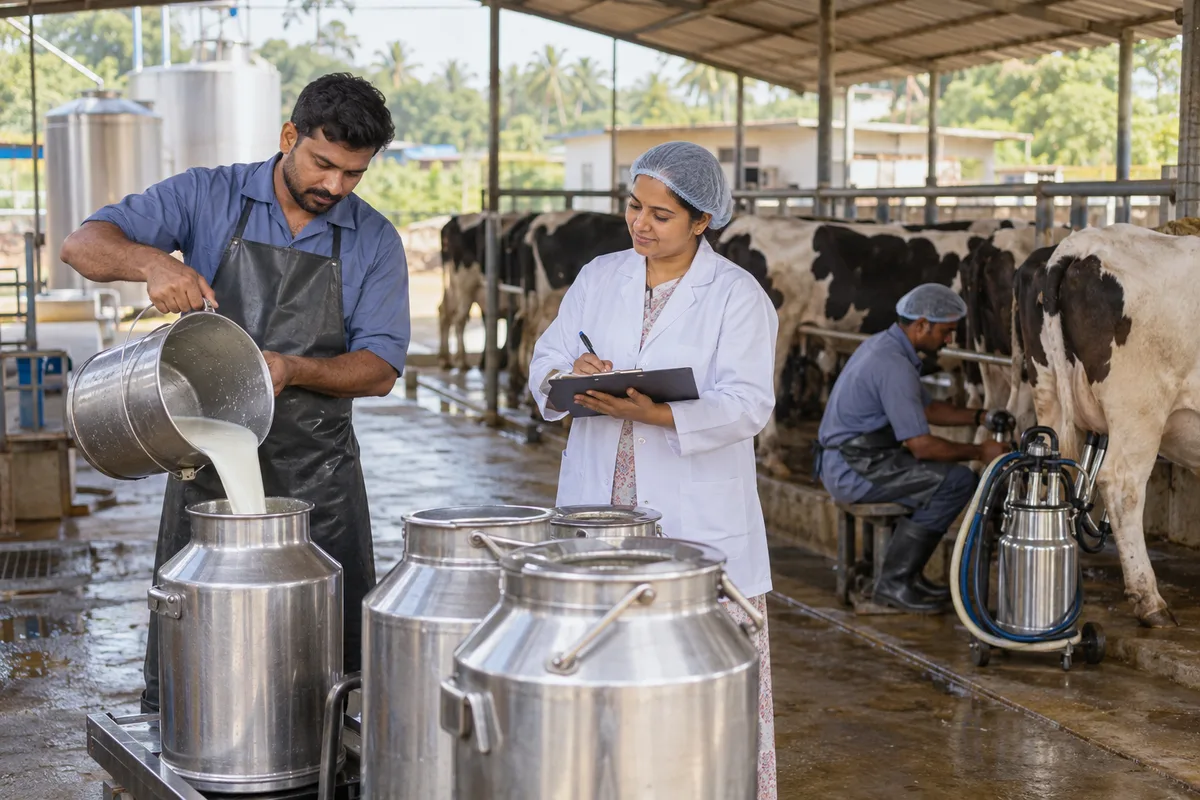
In one paragraph
Livestock equipment supplier marketing makes a business the name that dairy, poultry and goat farmers know for milking machines, chaff cutters, feeders, cooling tanks and shed fittings. Equipment sales turns a price enquiry into a demo, a quotation the farmer can take to the bank and a service relationship. GullySales builds the product pages, quote follow-up and service reminders for these suppliers.
Livestock equipment is bought once and carried for years. A chaff cutter is bought once, a bulk milk cooler is a loan-sized decision, and a breakdown in peak season is an emergency. Suppliers who treat the sale as the end of the relationship lose the service work and the next customer, who is the buyer's brother-in-law.
Last updated 18 Oct 2026.
How buyers decide
How livestock equipment suppliers are chosen.
Farmers choose equipment on someone else's experience. A neighbour's shed, a cooperative's recommendation or a field demonstration counts for more than a catalogue. They ask what it costs to run, how to get a spare, who will come when it breaks and whether the supplier will take it back if it fails.
Many purchases depend on a loan or a subsidy. The farmer needs a quotation in a form the bank accepts, and a supplier who understands that paperwork gets the order. Schemes and bank rules differ by state and change, so the buyer confirms with the bank or the department, and the supplier only supplies the quotation.
Larger buyers such as dairy cooperatives, milk chilling centres and commercial farms buy on technical comparison, delivery and installation terms, and after-sales support.
The problem
What usually goes wrong for livestock equipment suppliers.
What owners tell us on the first call, in their words.
“Farmers ask the price and disappear”
Quotes are sent and never followed up. We do not know whether the farmer bought elsewhere or is waiting on a loan.
“Our product is bought on a neighbour's recommendation, and we never meet the neighbour”
Past customers are not asked to refer, so word of mouth stays accidental.
“Spare parts and service decide the second sale and we keep no record”
When a machine breaks, the farmer calls whoever answers first. Nothing records who bought which machine.
“Demos eat our time”
Travelling to demonstrate a machine to a farmer who cannot afford it wastes a day.
“Lookalike machines on IndiaMART are priced below ours”
On a listing page, a buyer sees two similar photographs and one lower price, with nothing to show which machine has spares and a service team behind it.
What we do
What we do for livestock equipment suppliers.
Everything included for livestock equipment suppliers.
A product page with working video
Each machine with a clear photograph, a short video of it running in a shed, capacity, power need and what comes in the box.
A bank-friendly quotation format
A single-page quote with model, price, GST line and delivery and installation terms that a bank manager can read.
A quote follow-up routine
Each quote is entered in a register with the farmer's loan status, the next step agreed and a reason noted when the order goes elsewhere.
A customer and service register
Each buyer recorded with machine, date, location and service due date, with a reminder before a warranty or service interval ends.
A referral request
A message for after installation asking the farmer to introduce a neighbour who is considering the same equipment.
How the result is measured
- Enquiries by product and by source
- Quotes sent against orders won
- Demos held that ended in an order
- Service and spares revenue from existing buyers
- Referrals received after installation
- Reply time to marketplace enquiries
Recorded as a baseline before work starts, so every later report has an honest comparison.
Every service, written for livestock equipment suppliers
Each has its own page: what it involves for livestock equipment suppliers, what you get, and what it is measured on.
- Lead generationFind the dairy and poultry farmers who are ready to buy a machine this season.
- SEOAppear when a farmer types the name of the machine into the search bar.
- Local SEOBe the supplier on the map when a farmer searches for equipment near the village.
- Social media marketingShow the machine working in a real shed and let farmers talk about it.
- Content marketingWrite the guide a farmer reads before choosing between two machines.
- Buyer personasKnow whether the person asking the price is the buyer, the lender or the neighbour.
- CRMKeep every farmer, quote and machine in one register the service team can search.
- Follow-up systemsFollow every quotation until the farmer says yes, no or not this year.
- WhatsApp marketingSend the quote, the video and the spare parts list where the farmer already reads.
- Digital marketingJoin search, marketplace, video and messages into one route from enquiry to order.
- WebsiteGive the farmer a site that shows the machine, the price route and the service number.
Worth a page and a campaign of their own
Product pages with photographs from real sheds · Quotation format that suits bank and cooperative needs · IndiaMART and marketplace enquiry management · Demo scheduling that filters serious buyers · Customer register with purchase date and service due · Spare parts list and ordering by WhatsApp · Referral request after installation · Dealer and service agent network · Short video of the machine at work
Priority campaigns
Campaigns for what livestock equipment suppliers most want to sell.
Each one planned around when your buyers decide, and measured against the baseline.
Pre-season chaff cutter and milking machine push
Messages to dairy customers and cooperative members before the periods when farmers invest, with a demo sign-up.
Demo day at a customer's farm
One installed machine hosts a day for neighbouring farmers, with the supplier present.
Marketplace listing clean-up
Titles, photographs and descriptions on IndiaMART and similar sites rewritten to show what is genuine and why.
Service reminder messages
A note to owners when service is due, with an offer to book a visit and a spare parts price list.
Beyond search
Where we reach buyers of livestock equipment suppliers, beyond Google.
Search matters, but it is rarely the only way this industry's buyers find a supplier.
Dairy farmers with ten or more animals
Farms big enough for a milking machine or cooler, picked out from the supplier's own customer records and local cooperatives.
Milk societies and cooperative banks
The secretary or loan officer who recommends equipment and arranges the loan reads a different note from the farmer.
Commercial poultry and goat units
Larger units that buy feeders, drinkers, shed fittings and cages by the lot, each with a product sheet and a bulk quote.
Dealers and service agents in other districts
A dealer offer, with margin and service terms, for districts the supplier cannot cover directly.
Who it is for
This is written for these livestock equipment suppliers.
- Milking machine and dairy equipment suppliers
- Chaff cutter and fodder equipment dealers
- Bulk milk cooler and chilling equipment suppliers
- Poultry cage, feeder and drinker suppliers
- Goat and sheep shed fittings and feeding equipment
- Cattle shed flooring, mats and ventilation suppliers
- Biogas and slurry handling equipment suppliers
- Dealers and service agents for imported farm equipment
Not for
It is not the right fit if.
- You want a guaranteed Google ranking or a guaranteed number of leads. Nobody honest can promise either.
- You need enquiries by next week and have nobody to answer them.
- You want posts and reach reported, not enquiries and orders.
How it works
How the work runs for livestock equipment suppliers
The work itself, in order. How an engagement starts, from your brief to a written scope, is set out on our method page.
- 1
Read the quote book
The last season's quotations, sorted by which went to a bank, which went quiet and which machine each was for.
- 2
Photograph and write the product pages
Machines are filmed at a customer's farm and described in plain words.
- 3
Fix the quote and service routine
Quote format, follow-up and service register are built.
- 4
Run the season and demo campaigns
Season messages, the host-farm demo and the corrected marketplace listings are prepared together.
- 5
Review quotes won and lost
The register's reason for each lost quote points to what to change in the quote, the page or the demo.
Where this fits
Three pieces of sales work, in this order.
GullySales builds every engagement from three pieces of sales work. This page is not one of them, but the same three steps apply to the business behind it.
Step 1
Sales audit
Find where deals are being lost and what to fix first.
Start here if you cannot say where orders are lost.
Step 2
Sales process design
One written way to sell, from first enquiry to repeat order.
Start here if every salesperson sells differently.
Step 3
Sales management
A target, a review routine and someone who owns the number.
Start here if the team has targets and no routine.
FAQ
Questions livestock equipment suppliers ask before they call.
Not here? More answers, or ask on WhatsApp.
Can you help with subsidy or loan paperwork?
We sell on IndiaMART mostly. Is that enough?
Will you make performance claims for machines?
Can you help me find dealers?
How do you handle after-sales service?
How much does it cost?
How long is the contract?
How soon will we see results?
Who will actually do the work?
What do you need from us?
Part of Other. See the other industries in the sector.
Your next practical step
Tell us what you are trying to grow, and we will read it before we call.
Eight short steps, mostly taps. Skip anything you would rather answer on the call.