Livestock feed suppliers · Lead generation
A feed dealer finds new farmers by mapping villages, not by waiting at the counter.
Lead generation for a livestock feed supplier is the work of finding dairy, poultry and goat farmers within delivery distance who are not yet buying from the shop. GullySales works on a village map, a referral route through vets and milk societies, and a record of every enquiry.
Scope, fee, reporting and term are agreed in writing after we have read your brief and spoken to you.
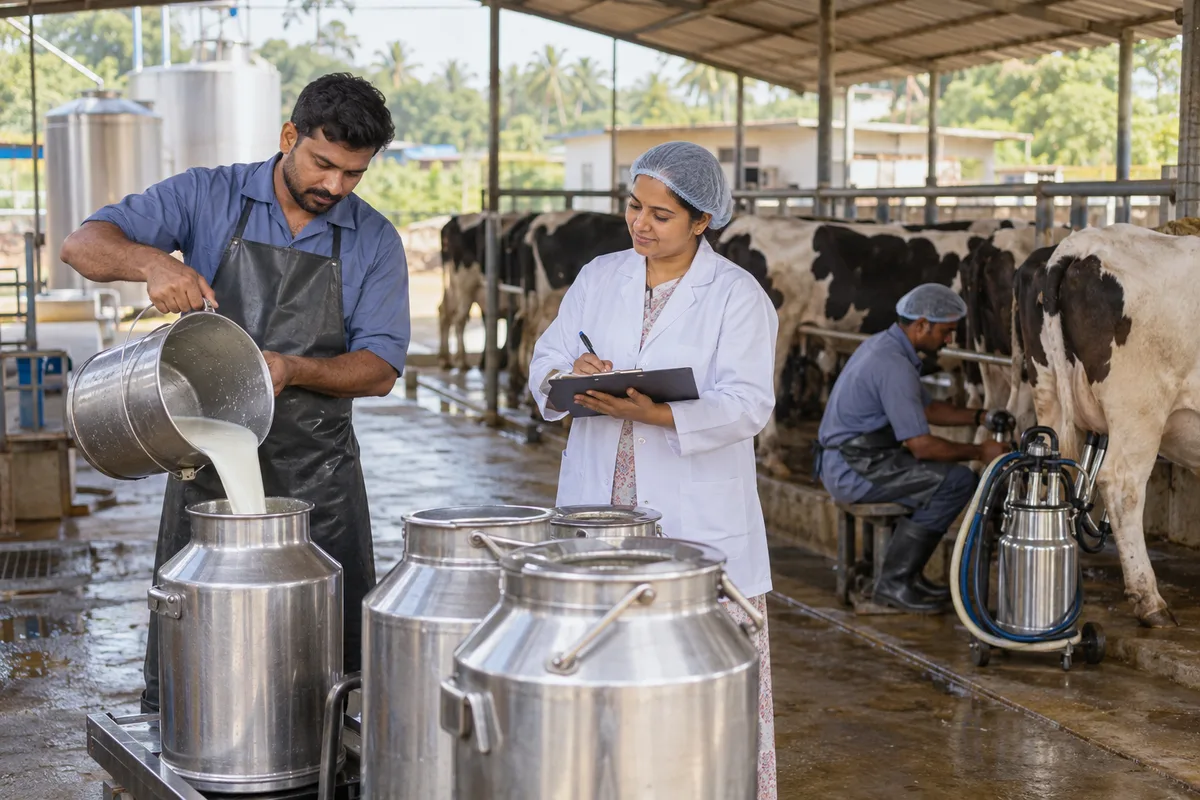
What lead generation means
Lead generation is the combined work of every channel that brings in a new enquiry, whether from search, adverts, referrals or a stall at an exhibition. GullySales runs these channels together and reports the number of enquiries each one produced, not the activity behind it.
Last updated 18 Oct 2026.
For livestock feed suppliers
Where it usually goes wrong, and what we would do.
“The best lead is a neighbour of an existing customer”
A farmer trusts the feed that the next farm already buys. Dealers rarely ask a happy customer who else in the village keeps cattle, so the strongest source of new buyers stays unused.
“Vets and society secretaries answer the question first”
When a farmer asks which feed to buy, the vet, the artificial insemination worker or the milk society secretary replies. A dealer who has never met them is not in that answer.
“Enquiries arrive by missed call and are lost”
A farmer rings once, the line is busy, and the call is not returned. Without a list of missed numbers and a person assigned to ring back, new demand goes to the dealer who picks up.
“Large farms need a different approach from small ones”
A commercial poultry or dairy unit wants a quote, batch papers and delivery terms. A smallholder wants a tempo tomorrow and credit until the milk cheque. One lead list for both wastes effort on each.
What we do
What we deliver for livestock feed suppliers.
Every deliverable, what it covers for you, and the result it is there to produce. Nothing here is an extra.
A village map of farms
Villages within the delivery radius listed with known farms, animals kept, and whether the shop already supplies them.
Result: The owner can point to the villages where the shop has no customer yet.
A referral ask for current customers
A short script and message asking each loyal farmer to name neighbours who keep cattle or poultry.
Result: Each referred farmer is recorded against the customer who named them.
A vet and society contact sheet
Vets, insemination workers and society secretaries in the delivery area, with a stock sheet to leave at each visit.
Result: Every contact has a visit date and a note on what was left.
A missed-call return routine
A shared list of missed and unanswered numbers with a named person to ring back each one.
Result: No enquiry number is left unreturned once the shop closes.
A separate large-farm list
Commercial dairy, poultry and goat units kept apart, each with a quote sheet and a follow-up note.
Result: Large farms are tracked separately from smallholders in the sheet.
How the result is measured
- Enquiries generated
- Cost per enquiry
- Enquiries by source
Recorded as a baseline before work starts, so every later report has an honest comparison.
Who it is for
This is written for these livestock feed suppliers.
- Cattle feed dealers serving small dairy farmers
- Poultry feed dealers for layer and broiler farms
- Goat, sheep and pig feed suppliers
- Mineral mixture and supplement traders
- Fodder and silage suppliers
- Wholesale feed distributors supplying village dealers
- Suppliers to dairy cooperatives and milk societies
- Feed traders who also sell animal healthcare products
How it works
How the lead generation work runs
The work itself, in order. How an engagement starts, from your brief to a written scope, is set out on our method page.
- 1
Understand your capacity
We agree how many enquiries your sales team can actually handle well, so the system is not built to overwhelm it.
- 2
Audit current sources
We check what already brings in enquiries today, even informally, before adding anything new.
- 3
Strategise the channel mix
Content, search and paid channels are chosen based on where your buyers already look.
- 4
Implement capture and follow-up
Pages, forms and a follow-up process are built and connected end to end.
- 5
Measure and optimise
We track enquiry volume and quality and adjust the channel mix to match.
Where this fits
Three pieces of sales work, in this order.
This work sits inside sales process design, at stage 1, prospecting and lead generation. The audit comes before it, and sales management keeps it running.
Step 1
Sales audit
Find where deals are being lost and what to fix first.
Start here if you cannot say where orders are lost.
Step 2 · you are here
Sales process design
One written way to sell, from first enquiry to repeat order.
Start here if every salesperson sells differently.
Step 3
Sales management
A target, a review routine and someone who owns the number.
Start here if the team has targets and no routine.
FAQ
Questions owners ask before they call.
Not here? More answers, or ask on WhatsApp.
Where do new feed customers come from?
Do I need to run paid advertising?
Can you give me a list of farmers to call?
How long is the contract?
How soon will we see results?
Who will actually do the work?
What do you need from us?
What if we are not happy with the work?
More for livestock feed suppliers
Everything else we would do for you.
Closest to this: leads and follow-up
Also for livestock feed suppliers
Or start from the overview: sales and marketing for livestock feed suppliers.
Your next practical step
Tell us what you are trying to grow, and we will read it before we call.
Eight short steps, mostly taps. Skip anything you would rather answer on the call.