Skip to content
GullySales

Agricultural seed companies · Sales presentation and demo improvement

Your buyer said it was a good demo and then went quiet.

Sales presentation and demo improvement is a review and rebuild of how your team presents and demonstrates in front of buyers, whether on a site visit, a screen share or a showroom floor. GullySales reads your recent decks and demos against what each buyer asked, then rewrites the structure, scripts and checks around the buyer's problem.

Scope, fee, reporting and term are agreed in writing after we have read your brief and spoken to you.

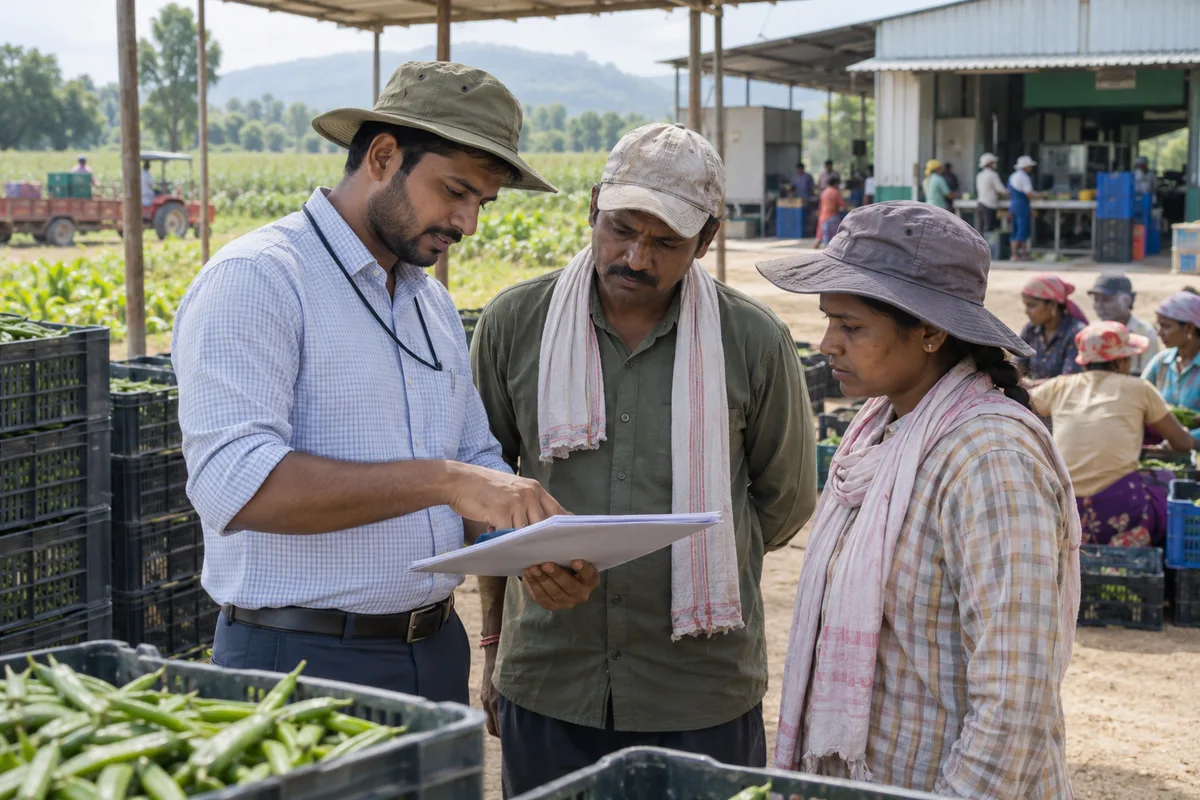
An agribusiness field officer reviewing a seasonal crew roster with supervisors at a crop collection point

Start with the buying decision

What does the person handling the conversation need to do differently?

Industry membership alone does not establish fit. The service exclusions, your operating model, and the records available determine the scope after your requirements brief.

Your team approves the scope and any commitments to buyers. GullySales does not assume authority over pricing, staffing, or delivery promises unless a specific responsibility is agreed in writing.

The context for Agricultural seed companies

Start with the decisions in your own enquiry records.

Use an actual enquiry, selling document, or anonymised conversation to identify the skill or material that is missing. A training topic is not evidence that the person can apply it.

How people choose in this industry

A farmer does not choose alone. The first call goes to the progressive farmer in the next village, to ask what was sown and how it stood in a dry spell, and the next to the input dealer, to ask what is on the shelf and what the company will do if germination fails. Field days at a demonstration plot, a sign painted on a wall near the highway and a WhatsApp video of a standing crop carry more weight than a brochure.

The dealer chooses what to stock, and chooses cautiously. The margin, the credit period, the return of unsold stock and the arrival of the company's field staff when a complaint comes all count. A company that is hard to reach in July loses its shelf space in the next June.

Larger buyers, such as seed distributors, FPOs, government agencies and contract seed growers, ask for documents first: seed licence, certification or truthful labelling, test results and lot details. Rules for seed sale differ by state and by crop, so check them with your own seed certification office or adviser before any claim goes on a page or a pack.

The decision before implementation

Agree the task to demonstrate and who will review the work before choosing the training or content scope.

Existing industry priorities to review

  • Dealer and distributor network growth
  • Crop-wise and variety-wise product pages
  • Demonstration plots and field days
  • Farmer enquiry and call-back handling
  • Kharif and rabi season campaigns

These describe the industry's wider priorities. The written scope identifies which this service will address.
Industry application review

Test the service against a problem in your own records.

These review scenarios connect the industry context to a possible output and a checkable next step. They are scope questions, not client results or a promise that every industry problem belongs in this engagement.

Our best hybrid is known in two districts and unknown in the next

Farmers in the neighbouring district have never seen a plot of it. The dealer there says nobody has asked for it.

Output to assess: Post-meeting feedback form

Review whether “Post-meeting feedback form” addresses this specific issue. Confirm that connection from the example before including the work in the scope.

What to bring

Bring an anonymised conversation or current selling document, with the task the person was expected to complete.

Proposed completion check

Trace the output back to the selected source record. The reviewer distinguishes confirmed information from assumptions and records any unmet requirement before accepting the handover.

Demonstration plots cost a season and bring back no list of names

Fifty farmers walk the field on field day, eat, take a leaflet and go home. We have no record of who came or what they grow.

Confirm the scope first

Check whether this issue belongs in the sales presentation and demo improvement engagement or requires different work. The industry problem alone does not establish that this service will solve it.

What to bring

Bring an anonymised conversation or current selling document, with the task the person was expected to complete.

Proposed completion check

Record the scope decision and its reason. If the issue is outside this engagement, identify the responsible team or the separate work required.

The problem

What sales presentation and demo improvement is meant to address.

  • “We showed everything and they still had questions”

    The demo follows the product menu, not the buyer's enquiry. The one feature that mattered to the buyer sits somewhere in the middle.

  • “The sample or the screen failed in front of the buyer”

    The login expired, the projector would not connect, or the sample in the bag was last year's batch. Nobody checked before leaving.

  • “Every rep demonstrates differently”

    One rep shows the price sheet first, another skips the installation step. The buyer who meets two of them hears two different products.

  • “The buyer liked it but no next step was set”

    The meeting ended with a handshake and no date, no document to send and no named person. Your rep restarts the conversation a week later.

Who it is for

Check your operating model against the scope.

  • Machinery and equipment makers whose reps demonstrate on a shop floor or at the buyer's plant
  • Software and app companies running screen-share demos for several kinds of buyer
  • Hospitals, clinics and schools whose staff present services to patients, parents or institutional partners
  • Dealers and showrooms where the same product is shown to a household one day and a contractor the next
  • Owners who sit in every demo because nobody else holds the room
  • Sales managers who hear that the demo went well but cannot say what was shown

Before you decide

When this may not be the right fit.

  • You have no deck, demo or site-visit routine yet. Build the first version before reviewing it.
  • The product cannot do what the buyer asks. A better demo will not cover a missing feature.
  • You want the team trained across every stage of selling. Sales training and development is the wider programme.

What we do

Agree the outputs before work begins.

These are the sales presentation and demo improvement deliverables available for agricultural seed companies. Your written scope identifies the included work and responsibilities.

  1. Recent meeting review

    Notes on the last decks, demos and site visits your team ran, set against the buyer's enquiry or call notes. Each note marks a point where the buyer's question went unanswered.

  2. Buyer-problem running order

    A written sequence that opens with the buyer's stated problem, shows the product against it, and closes on the decision and the next step. One version per kind of buyer you meet.

  3. Demo script for each product

    A script that names what to show, what to say, what to ask the buyer and where to stop. It carries a branch for the objection your team hears from buyers at this stage.

  4. Equipment and sample checklist

    A list for the laptop, demo account, charger, sample kit, brochure copies and venue access. A named person ticks it before the team leaves.

  5. Recorded practice sessions

    Reps run the new script on camera or phone, and you review the recording together. Practice recordings stay within your team.

  6. Post-meeting feedback form

    A one-page form the rep fills in after each demo: what the buyer asked, what was shown, what stayed unanswered, and the agreed next step.

How the result is measured

  • Demos and presentations reviewed against the buyer's questions
  • Buyer questions answered during the demo
  • Equipment and sample checks completed before meetings
  • Feedback forms returned after each meeting
  • Meetings that ended with a named next step
  • Quotations requested after a demo

Recorded as a baseline before work starts, so every later report has an honest comparison.

Industry baseline

Keep the industry's wider measures beside the service measures.

Use the existing baseline to understand the context. These figures are not all targets for this engagement, and a change must not be attributed to the service without evidence.

  • Dealer enquiries by district and source
  • Dealers who restocked against dealers who lapsed
  • Field day attendees recorded and re-contacted
  • Farmer enquiries logged and answered
  • Complaints logged against complaints closed
  • Repeat purchase from first-season farmers

This or a nearby service

Which piece of work fits your situation.

These services sit close to each other. The line between them, in plain words.

Capability presentations
Choose capability presentations when you have no reusable deck that shows what the business can deliver and the evidence behind it. Choose sales presentation and demo improvement when a deck exists but buyers still go quiet after meetings and you need to learn why.
Sales coaching
Choose sales coaching when one salesperson needs continuing feedback on live calls and deals across the whole selling job. Choose sales presentation and demo improvement when the weak point is the meeting itself, such as the running order of a deck, a screen share or a showroom demonstration.
Pitch deck development
Choose pitch deck development when a single decision, such as a major contract or a distribution agreement, needs one argument built for the people deciding. Choose sales presentation and demo improvement when your team presents the same offer to each new buyer and the routine needs fixing.

A sample of the output

A demo script sheet lines up each step with the buyer's problem it answers.

This is the sheet a rep follows in the meeting. Each row is one step of the demonstration, read from the buyer's problem across to the check made before anyone walks into the room.

Illustrative example, not client data. Yours is built from your own records.
Demo stepBuyer problem answeredWhat is shownCheck before the meeting
Opening questionThe current pump keeps stopping the lineNothing yet; the rep asks what stops firstNotes from the enquiry are open
Show the faultRepeated breakdowns in the buyer's plantThe pump running under the buyer's own dutyTest rig is filled and tried
Show the costCost of stoppages and repairsThe buyer's own repair records beside the quoted unitBuyer's records are copied from the enquiry
Handle a doubtWorry about a new supplierAn installation photograph the owner has permittedPhotograph permission is on file
Agree the next stepA decision needs the buyer's colleaguesA one-page summary the buyer can forwardSummary matches what was shown

Before we start

What we need from you.

The work depends on these. Each says why it is needed and what happens when it is missing.

The decks and demo files in use
We need the real slides, demo files and sample lists your reps carry, in the versions they use today. Untidy or out-of-date copies are fine. Without them, any rebuild would rest on a guess about what buyers actually see.
A working demonstration set-up
The scripts assume the product runs, the sample is on hand and the screen share loads. A staging account or a demonstration unit that behaves the same each time is acceptable. If it fails mid-meeting, a polished script still loses the room.
Notes on why buyers went quiet
Your sales head or reps should say, meeting by meeting, where interest dropped. Rough notes in a message are acceptable. Without them the work can only guess which part of the presentation to rebuild first.
One person who approves product claims
Every script states what the product does, and someone must confirm those statements are correct. One named technical or commercial person is enough. If nobody holds that role, the scripts stay as drafts and reps keep improvising claims.
Consent to record practice
Practice runs on record only if the reps agree and know where the recordings go. A short written note on who may watch them is acceptable. Without consent, practice continues unrecorded and the feedback leans on memory.

How it works

How sales presentation and demo improvement runs

The work itself, in order. How an engagement starts, from your brief to a written scope, is set out on our method page.

  1. 1

    Collect recent meetings

    You send the last decks, demo recordings if any, and enquiry or call notes from each buyer. We agree which meetings are fair to review.

  2. 2

    Compare shown against asked

    We list the buyer's questions for each meeting and mark which ones the demo answered. You see the gaps before any rewrite begins.

  3. 3

    Rebuild the structure and scripts

    We draft the running order and one script per product. Your senior rep and your product lead correct anything that misstates the product.

  4. 4

    Set the checks

    We write the equipment and sample checklist from the problems that actually occurred. You name who owns each item.

  5. 5

    Practise on record

    Reps rehearse the scripts, including the awkward questions, and review the recording with the team. We revise the scripts where reps stumble.

  6. 6

    Start the feedback form

    Your team uses the form on live meetings. The first completed forms show whether the new running order is being followed.

Approval and acceptance

Use an observable check before accepting an output.

These are proposed review checks for the named outputs. Agree the final conditions in the written scope, then record any missing requirement before accepting the handover.

  • Recent meeting review

    Trace the output back to the selected source record. The reviewer distinguishes confirmed information from assumptions and records any unmet requirement before accepting the handover.

  • Buyer-problem running order

    Trace the output back to the selected source record. The reviewer distinguishes confirmed information from assumptions and records any unmet requirement before accepting the handover.

  • Demo script for each product

    Use the draft in the selected enquiry scenario. The reviewer can identify the intended reader, verify the statements against supplied facts, and point to the next action without adding an explanation.

  • Equipment and sample checklist

    Trace the output back to the selected source record. The reviewer distinguishes confirmed information from assumptions and records any unmet requirement before accepting the handover.

  • Recorded practice sessions

    Inspect a sample record against the original information. Check required fields, duplicate handling, the responsible owner, and who is permitted to access it.

  • Post-meeting feedback form

    Trace the output back to the selected source record. The reviewer distinguishes confirmed information from assumptions and records any unmet requirement before accepting the handover.

FAQ

Questions owners ask before they call.

Not here? More answers, or ask on WhatsApp.

How is sales presentation and demo improvement scoped for agricultural seed companies?
Industry membership alone does not establish fit. The service exclusions, your operating model, and the records available determine the scope after your requirements brief. Agree the task to demonstrate and who will review the work before choosing the training or content scope.
Do you attend our demos?
Reviewing recordings, notes and decks comes first. Attendance at a live demo or site visit is possible where you agree it, and the buyer should be told that an observer will be present.
Can you rebuild the deck as well?
We rework the order and the talking points. If the slides need new design and evidence pages, that is capability presentations. Investor and partner decks belong to pitch deck development.
Is this the same as sales coaching?
No. This service fixes the team's shared demo structure, scripts and checks. Coaching follows one rep's calls over time. Some teams do one and then the other.
Can you record our reps?
Practice sessions can be recorded with the reps' knowledge. Recording a real buyer meeting needs the buyer's consent, and your own adviser should confirm what applies to you.
We demonstrate physical samples. Does this still apply?
Yes. The script and the sample checklist cover what is shown, in what order, and what the buyer may handle. Running sampling at events or counters is a separate service.

Continue your review

Compare the service scope and the related work.

The scope, responsibilities, fee, reporting frequency, and term are agreed in writing after the requirements brief and conversation. Tell us what you need.

Your brief

Tell us what you need, and we will read it before we call.

Eight short steps about your business, what you want and who decides. Most questions are a tap, and you can skip any you would rather answer on the call.