CCTV and security system installers · Pay per click advertising
Pay for the survey enquiry, not for a man pricing a camera box.
Paid advertising for a CCTV installer buys the searches made in the days after an incident, when a shop owner or a society secretary wants somebody to come and look. GullySales runs those campaigns on a call and WhatsApp route, and keeps the budget away from people shopping for a kit.
Scope, fee, reporting and term are agreed in writing after we have read your brief and spoken to you.
What pay per click advertising means
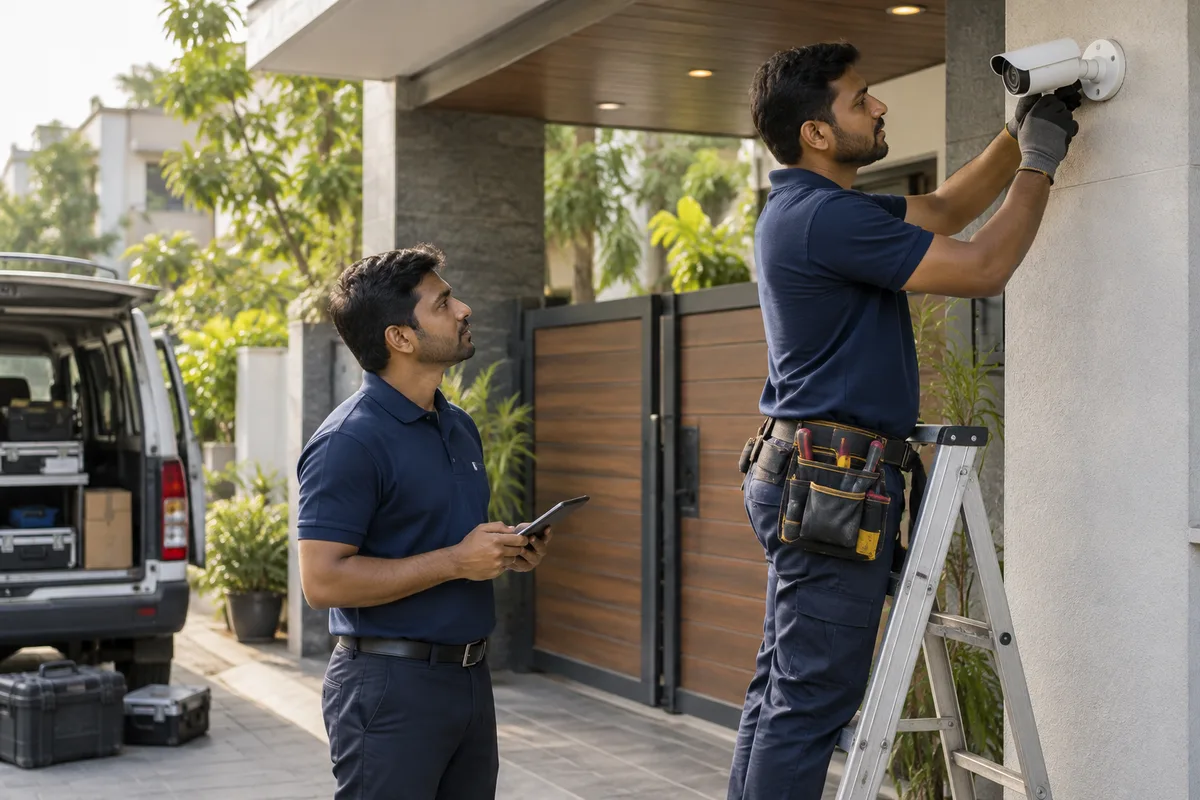
Pay per click advertising (PPC) is paying a fee each time someone clicks your advert on Google or another platform. It puts you at the top of a search page immediately, instead of waiting for ranking to build. GullySales sets the targeting, writes the ad text and checks spend against enquiries received.
Also for CCTV and security system installers
- SEO for CCTV and security system installers
- Lead generation for CCTV and security system installers
- Digital marketing for CCTV and security system installers
- Reputation management for CCTV and security system installers
- Local SEO for CCTV and security system installers
- Branding for CCTV and security system installers
- Social media for CCTV and security system installers
- Content marketing for CCTV and security system installers
Sales and marketing for CCTV and security system installers, the overview.
Last updated 5 Oct 2026.
For CCTV and security system installers
Where it usually goes wrong, and what we would do.
“Half the clicks are buying a kit, not an installer”
Camera price, DVR price and hard disk price are e-commerce searches. Leave those words in and most of the money goes to people who will never book a survey.
“Demand rises one pin code at a time”
A run of break-ins in one market or one layout lifts searches there for a fortnight. A budget spread evenly across the city misses it and pays city prices everywhere.
“The enquiry wants a rate on WhatsApp within the hour”
Sending a paid click to a contact form loses it. A call button and a WhatsApp click, both answered while your office is open, is what this trade needs.
What we do
What we deliver for CCTV and security system installers.
Every deliverable, what it covers for you, and the result it is there to produce. Nothing here is an extra.
Call and WhatsApp campaigns rather than form campaigns
Click to call and click to WhatsApp set as the action on every ad, with a named person answering during the hours the ads run.
Result: A paid enquiry gets a human reply the same hour.
A negative list written around camera searches
Camera price, DVR price, dealership, CCTV course, operator job, how to install and the e-commerce sites, loaded before anything runs and reviewed afterwards.
Result: The budget stops going to shoppers and job seekers.
Budget moved to the areas where something has happened
Spend shifted into the pin codes around a reported incident while the searches are high, and pulled back when they settle.
Result: The money is spent where people are already looking.
Separate campaigns for home, shop, society and factory
Four sets of keywords and four landing pages, because the camera count, the decision maker and the quote are different in each.
Result: The ad matches what the buyer typed.
Landing pages that offer a survey
A page showing a coverage sketch, what the survey covers and how long it takes, instead of a brochure about camera features.
Result: The click turns into a site visit booking.
Cost per survey and per order reported
Every call and message tracked to a survey, a quote and an order, priced by campaign against the baseline recorded before work starts.
Result: You can say what an order from search costs you.
How the result is measured
- Cost per click
- Cost per enquiry
- Enquiries from paid search
Recorded as a baseline before work starts, so every later report has an honest comparison.
Searches to bid on and block
The searches worth paying for as a security installer, and the ones to keep out.
- Installation by site, such as CCTV for shop, apartment or factory
- Bid by site type. A shop owner, a society committee and a plant manager need different cameras, cabling and maintenance, so each gets its own campaign and page.
- Brand and system searches, such as Hikvision or CP Plus dealer
- Bid only on brands you are authorised to sell, and write dealer or installer. Do not suggest you are the maker, and check the platform's current rules on brand names.
- CCTV repair, DVR not working and AMC searches
- Bid in a campaign of its own. A person with a failed recorder is a customer for repair and for an AMC, and often becomes the next installation job.
- Kit, buy online, wholesale, course and technician job searches
- Block. Add kit, buy online, Amazon, wholesale, distributor, course, training and vacancy as negatives. These searchers want a box, a trade price or a job, not a survey.
- Where the click lands
- Send the click to a page that offers a site survey, with the site type, the city and a call and WhatsApp button. Put the survey first and the packages after it.
- Counting a real enquiry
- Count a call or message that books a site survey. Then mark quote sent, order placed and AMC signed in the survey register, and read each campaign against orders.
Who it is for
This is written for these CCTV and security system installers.
- CCTV installers serving homes and shops
- Security system integrators for businesses and factories
- Apartment and gated community security installers
- Access control and biometric attendance providers
- Intrusion alarm and video door phone installers
- Authorised dealers and distributors of camera brands
- IT and networking firms adding surveillance
- AMC and service-focused security companies
Not for
It is not the right fit if.
- Nobody can return a call or WhatsApp message the same day, so paid clicks would turn into missed enquiries
- Your quote is still unclear about what it includes, so ads would bring price comparisons with a camera kit
How it works
How the pay per click advertising work runs
The work itself, in order. How an engagement starts, from your brief to a written scope, is set out on our method page.
- 1
Agree the whole budget
We fix the total paid budget across platforms, who owns each ad account, and how much is open to moving.
- 2
Audit tracking and accounts
We check that conversions fire once, that calls and WhatsApp chats are counted, and that your enquiry sheet matches what the platforms say.
- 3
Set one definition of success
You and we agree what a qualified enquiry is and what an order is, so every platform is judged the same way.
- 4
Build and launch the plan
Campaigns are structured across platforms with shared naming and tags from day one.
- 5
Read search terms and lead quality
We review the queries that triggered ads and the enquiries that arrived, and remove waste before moving money.
- 6
Reallocate and report
Budget moves toward what is earning, within agreed limits. Results are reported against the baseline, at the frequency agreed in writing.
Where this fits
Three pieces of sales work, in this order.
This work sits inside sales process design, at stage 1, prospecting and lead generation. The audit comes before it, and sales management keeps it running.
Step 1
Sales audit
Find where deals are being lost and what to fix first.
Start here if you cannot say where orders are lost.
Step 2 · you are here
Sales process design
One written way to sell, from first enquiry to repeat order.
Start here if every salesperson sells differently.
Step 3
Sales management
A target, a review routine and someone who owns the number.
Start here if the team has targets and no routine.
FAQ
Questions owners ask before they call.
Not here? More answers, or ask on WhatsApp.
Is Google Ads worth it when JustDial already sends us leads?
What do we do with callers who only want a rate?
Should adverts run when nobody can answer the phone?
Should an installer bid on its own name?
How much does it cost?
How long is the contract?
How soon will we see results?
Who will actually do the work?
What do you need from us?
What if we are not happy with the work?
From the blog
Further reading for CCTV and security system installers.
 6 min read · 23 Jul 2026Local search for niche trades: what to put on the profile and websiteA niche trade is found when its Google profile and website name the exact service, the area served and show photos of real work. This post lists what to write, what to upload and what to leave out.
 6 min read · 9 Jul 2026Quoting after a site visit: a one-page format that gets signedA one-page quotation with scope, price, exclusions and a next step is easier to approve than a long document. This post gives the layout, a worked example and the mistakes to avoid.
 6 min read · 16 Jun 2026Annual maintenance contracts: how a specialist trade turns a job into recurring workAn annual maintenance contract works when it offers scheduled visits with a clear scope after the job and a recorded due date. This post covers what to offer, when to offer it and how to track renewals.
More for CCTV and security system installers
Everything else we would do for you.
- SEO for CCTV and security system installers
- Lead generation for CCTV and security system installers
- Digital marketing for CCTV and security system installers
- Reputation management for CCTV and security system installers
- Local SEO for CCTV and security system installers
- Branding for CCTV and security system installers
Or start from the overview: sales and marketing for CCTV and security system installers.
Your next practical step
Tell us what you are trying to grow, and we will read it before we call.
Eight short steps, mostly taps. Skip anything you would rather answer on the call.