CCTV and security system installers · Website
Build a site a society secretary can forward to the whole committee.
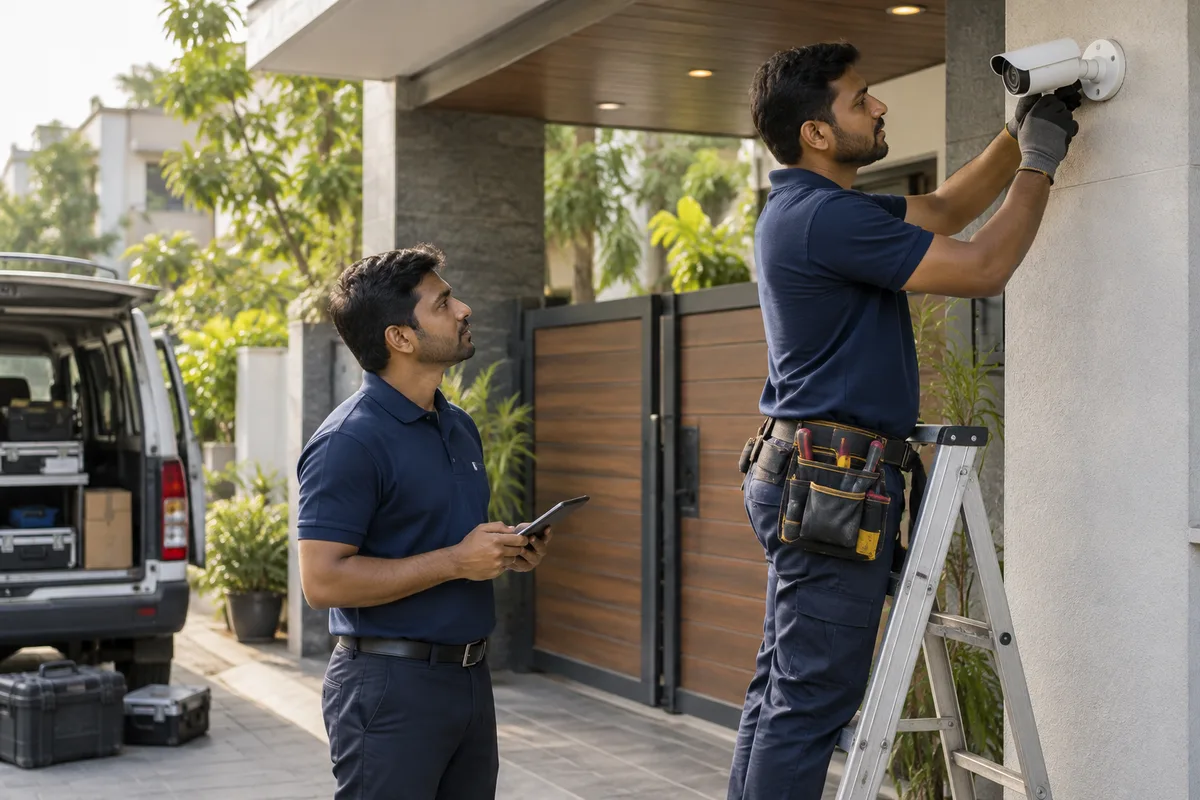
A website for a CCTV installer is the page a school administrator, a factory manager or a society secretary opens to check that the firm is real before inviting a survey. GullySales builds it around the work you have done, the systems you fit and one clear route to book a survey.
Scope, fee, reporting and term are agreed in writing after we have read your brief and spoken to you.
What website means
A website is the page a customer lands on after searching, clicking an advert or scanning a code, and it decides whether they call or leave. GullySales builds and maintains sites that load quickly, explain the offer plainly and make the enquiry form or phone number easy to find.
Also for CCTV and security system installers
- SEO for CCTV and security system installers
- Local SEO for CCTV and security system installers
- PPC ads for CCTV and security system installers
- Lead generation for CCTV and security system installers
- Digital marketing for CCTV and security system installers
- Reputation management for CCTV and security system installers
- Branding for CCTV and security system installers
- Social media for CCTV and security system installers
Sales and marketing for CCTV and security system installers, the overview.
Last updated 5 Oct 2026.
For CCTV and security system installers
Where it usually goes wrong, and what we would do.
“The site is where the firm gets checked”
Homeowners find you on Maps and never open the site. An institution hears your name, then looks for an office address, a GST registration and finished work. When those basics are missing, the conversation ends before anyone phones.
“A brochure of camera brands says little”
Pages that list brand names and resolution figures repeat what the maker says. A buyer wants to see what you did for a site of their shape, what the quote contained and who looks after the system afterwards.
“The phone number must sit under the thumb”
Visitors arrive on a phone, often after an incident, and want to speak to someone. A call button and a WhatsApp button fixed to the screen on every page matter more than any slider or banner.
What we do
What we deliver for CCTV and security system installers.
Every deliverable, what it covers for you, and the result it is there to produce. Nothing here is an extra.
A home page that says who you serve and where
The types of site you wire, the areas your team reaches and the two ways to reach the office, shown before anything else.
Result: A visitor knows in one look whether you take their job.
A page for each system and each building
Separate pages for cameras, door phones, access control and alarms, and for a house, a shop, a society and a factory, each written from jobs you have done.
Result: Each buyer reads a page about their own site.
Finished work shown with permission
Installation photographs with a short description of the site type, the cameras fitted and the service arrangement, with no board, door number or screen in view.
Result: The work is visible and no customer is exposed.
A survey booking page
A short form and a call button asking for cameras, floors and area, answered by a named person in your office.
Result: The site produces survey bookings, not just visits.
A company details page
Address, GST registration, authorisations you hold and your service numbers, kept identical to your Maps listing.
Result: An institution can verify the firm in one place.
A sample proposal to download
A proposal for a fictional site with a placement sketch, storage calculation, warranty and contract terms.
Result: Committees see your format before they ask for it.
Mobile and privacy basics
Pages light enough for mobile data, a privacy note beside the enquiry form, and no customer detail collected beyond what a survey needs.
Result: The site loads on a market street and treats details with care.
How the result is measured
- Page load time
- Bounce rate
- Enquiries from the website
Recorded as a baseline before work starts, so every later report has an honest comparison.
Searches your buyers type
The questions that bring a buyer to a CCTV installer's site, and the page that answers each.
- CCTV installation company in Pune
- A home page that names the city, the buildings you serve and the number to ring, with a survey booking button within reach of the thumb.
- CCTV for apartment complex proposal
- A society page with a downloadable sample proposal, the stages of a committee order and what members may see.
- what is included in CCTV installation quote
- A quote contents page listing cameras, recorder, disk, cabling, power backup, installation and warranty.
- CCTV company contact and registered address
- A company details page with the address, the registration details you hold and the people who will attend the site.
- CCTV installation photos office
- A finished work page with permission from the customer and no footage or identifying detail.
Who it is for
This is written for these CCTV and security system installers.
- CCTV installers serving homes and shops
- Security system integrators for businesses and factories
- Apartment and gated community security installers
- Access control and biometric attendance providers
- Intrusion alarm and video door phone installers
- Authorised dealers and distributors of camera brands
- IT and networking firms adding surveillance
- AMC and service-focused security companies
Not for
It is not the right fit if.
- Your company details such as the address and registration are not settled, so the site would carry facts that change
- Nobody will check the booking form each day, so survey requests would sit unanswered
How it works
How the website work runs
The work itself, in order. How an engagement starts, from your brief to a written scope, is set out on our method page.
- 1
Confirm structure and content
We agree the page list, what each page must answer, and who supplies the text and photographs, before any design starts.
- 2
Design the templates
The home page, a service page, a location page and the enquiry page are designed first, on phone and desktop, and shown to you.
- 3
Build and test
The site is built and checked on real phones and the common browsers. Every form, call button and WhatsApp link is tested end to end.
- 4
Load real content
Actual copy, images and information replace placeholders. Pages are read through once by you, since you spot wrong details we cannot.
- 5
Check before launch
Tracking, page titles, the sitemap and the privacy page are checked on the staging site. If an old site exists, its addresses are mapped so old links still land somewhere.
- 6
Launch and hand over access
The site goes live and we record the domain, hosting, content login and analytics in your name. The first live enquiry is traced to confirm tracking works.
Where this fits
Three pieces of sales work, in this order.
This work sits inside sales process design, at stage 1, prospecting and lead generation. The audit comes before it, and sales management keeps it running.
Step 1
Sales audit
Find where deals are being lost and what to fix first.
Start here if you cannot say where orders are lost.
Step 2 · you are here
Sales process design
One written way to sell, from first enquiry to repeat order.
Start here if every salesperson sells differently.
Step 3
Sales management
A target, a review routine and someone who owns the number.
Start here if the team has targets and no routine.
FAQ
Questions owners ask before they call.
Not here? More answers, or ask on WhatsApp.
Do we need a website if Maps brings the calls?
Should the site show prices?
Who should own the domain and the hosting?
Do we need to publish prices on the site?
How long is the contract?
How soon will we see results?
Who will actually do the work?
What do you need from us?
What if we are not happy with the work?
From the blog
Further reading for CCTV and security system installers.
 6 min read · 23 Jul 2026Local search for niche trades: what to put on the profile and websiteA niche trade is found when its Google profile and website name the exact service, the area served and show photos of real work. This post lists what to write, what to upload and what to leave out.
 6 min read · 9 Jul 2026Quoting after a site visit: a one-page format that gets signedA one-page quotation with scope, price, exclusions and a next step is easier to approve than a long document. This post gives the layout, a worked example and the mistakes to avoid.
 6 min read · 16 Jun 2026Annual maintenance contracts: how a specialist trade turns a job into recurring workAn annual maintenance contract works when it offers scheduled visits with a clear scope after the job and a recorded due date. This post covers what to offer, when to offer it and how to track renewals.
More for CCTV and security system installers
Everything else we would do for you.
Closest to this: search and visibility
Also for CCTV and security system installers
- PPC ads for CCTV and security system installers
- Lead generation for CCTV and security system installers
- Digital marketing for CCTV and security system installers
- Reputation management for CCTV and security system installers
- Branding for CCTV and security system installers
- Social media for CCTV and security system installers
Or start from the overview: sales and marketing for CCTV and security system installers.
Your next practical step
Tell us what you are trying to grow, and we will read it before we call.
Eight short steps, mostly taps. Skip anything you would rather answer on the call.