Environmental testing laboratories · Website
A lab website earns its keep when an officer finds the test, the scope and the contact in one visit.
A website for an environmental testing laboratory is the place a plant or consultant checks the tests, the accreditation and how to book a sampling. GullySales works on structure, wording and forms so that each visit ends with a clear enquiry.
Scope, fee, reporting and term are agreed in writing after we have read your brief and spoken to you.
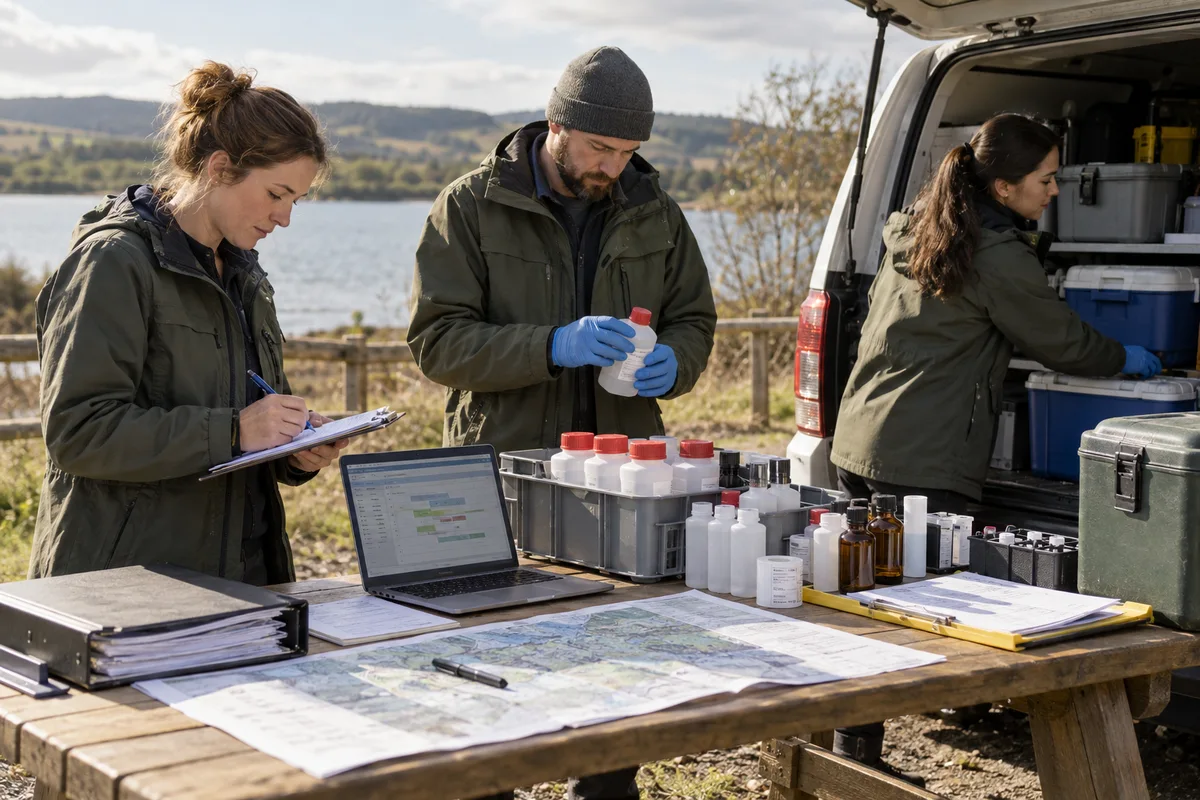
What website means
A website is the page a customer lands on after searching, clicking an advert or scanning a code, and it decides whether they call or leave. GullySales builds and maintains sites that load quickly, explain the offer plainly and make the enquiry form or phone number easy to find.
Also for environmental testing laboratories
- SEO for environmental testing laboratories
- Local SEO for environmental testing laboratories
- Lead generation for environmental testing labs
- Social media marketing for environmental testing laboratories
- Content marketing for environmental testing laboratories
- Buyer personas for environmental testing laboratories
- CRM for environmental testing laboratories
- Follow-up systems for environmental testing laboratories
Sales and marketing for environmental testing laboratories, the overview.
Last updated 18 Oct 2026.
For environmental testing laboratories
Where it usually goes wrong, and what we would do.
“A list of parameters is not enough”
A table of parameters tells a buyer little about sampling, report layout or who to call. Pages built around each test, with what the visit involves, answer the real questions.
“Accreditation needs its own page”
The body, the scope, the validity and the laboratory location should appear as on the certificate, with a link to the scope document. Vague claims of recognition invite doubt.
“The enquiry form decides the quote”
A form that asks only for name and phone produces calls with no detail. One that asks for the plant, the test, the sampling point and the due date lets the first reply be a quote.
“Consultants need a page of their own”
A consultant wants the scope sheet, a sample report and a direct contact. A page for them, with those items, shortens the path from first look to first project.
What we do
What we deliver for environmental testing laboratories.
Every deliverable, what it covers for you, and the result it is there to produce. Nothing here is an extra.
A site structure by test
Pages for water, wastewater, air, soil, noise and waste, each with sampling and report described.
Result: A visitor reaches the right test in one step.
An accreditation page
The certificate details and scope reviewed by your quality manager.
Result: The page says what the lab holds and nothing more.
A short enquiry form
Fields for plant, test, sampling point and due date, with a note on how the lab replies.
Result: Your quote starts from usable details.
A consultant page
The scope sheet, sample report and a contact line gathered in one place.
Result: Consultants have what they need to recommend you.
Mobile and speed checks
Pages tested on a phone, since officers browse from the plant floor.
Result: The site works where buyers read it.
How the result is measured
- Page load time
- Bounce rate
- Enquiries from the website
Recorded as a baseline before work starts, so every later report has an honest comparison.
Searches your buyers type
Give each visitor the page that answers the question they arrived with.
- [test name] testing lab in [city]
- A page per test with the parameters, method and sample needs. Ends in a short scoping form and a contact route.
- [lab name] NABL accreditation parameters
- A page listing the scope as text, copied exactly from the certificate. The purchase officer checks this before the order.
- environmental testing for consultants
- A consultant page with matrices, formats and a contact for baseline work. Consultants look for data supply, not a brochure.
- how to book a sampling visit
- A page with the steps, what the plant must prepare and the form. Spares the plant a call and the lab a vague enquiry.
- sample environmental testing report
- A masked report with notes on each section. Shown with the client's permission, and it earns trust before a quote.
Who it is for
This is written for these environmental testing laboratories.
- Water and wastewater testing laboratories for factories and housing societies
- Stack emission and ambient air monitoring agencies
- Soil, sludge and hazardous waste testing laboratories
- Noise, workplace air and occupational hygiene monitoring firms
- Drinking water laboratories serving packaged water, hotels and hospitals
- Laboratories that support consultants with baseline data for clearances
- Mobile and field laboratories that sample at the site
- Laboratories that serve a single industrial cluster such as textile, pharma or food
Not for
It is not the right fit if.
- You have not decided who updates the accreditation page when the scope changes, and an out-of-date list is worse than none.
- Your forms are not monitored, so a new enquiry page would collect messages that nobody answers.
How it works
How the website work runs
The work itself, in order. How an engagement starts, from your brief to a written scope, is set out on our method page.
- 1
Confirm structure and content
We agree the page list, what each page must answer, and who supplies the text and photographs, before any design starts.
- 2
Design the templates
The home page, a service page, a location page and the enquiry page are designed first, on phone and desktop, and shown to you.
- 3
Build and test
The site is built and checked on real phones and the common browsers. Every form, call button and WhatsApp link is tested end to end.
- 4
Load real content
Actual copy, images and information replace placeholders. Pages are read through once by you, since you spot wrong details we cannot.
- 5
Check before launch
Tracking, page titles, the sitemap and the privacy page are checked on the staging site. If an old site exists, its addresses are mapped so old links still land somewhere.
- 6
Launch and hand over access
The site goes live and we record the domain, hosting, content login and analytics in your name. The first live enquiry is traced to confirm tracking works.
Where this fits
Three pieces of sales work, in this order.
This work sits inside sales process design, at stage 1, prospecting and lead generation. The audit comes before it, and sales management keeps it running.
Step 1
Sales audit
Find where deals are being lost and what to fix first.
Start here if you cannot say where orders are lost.
Step 2 · you are here
Sales process design
One written way to sell, from first enquiry to repeat order.
Start here if every salesperson sells differently.
Step 3
Sales management
A target, a review routine and someone who owns the number.
Start here if the team has targets and no routine.
FAQ
Questions owners ask before they call.
Not here? More answers, or ask on WhatsApp.
Do we need a separate site for each location?
Can we show sample reports?
Can we show sample reports on the site?
Do we need a separate site for each location?
How much does it cost?
How long is the contract?
How soon will we see results?
Who will actually do the work?
What do you need from us?
What if we are not happy with the work?
More for environmental testing laboratories
Everything else we would do for you.
Closest to this: search and visibility
Also for environmental testing laboratories
- Lead generation for environmental testing labs
- Social media marketing for environmental testing laboratories
- Content marketing for environmental testing laboratories
- Buyer personas for environmental testing laboratories
- CRM for environmental testing laboratories
- Follow-up systems for environmental testing laboratories
Or start from the overview: sales and marketing for environmental testing laboratories.
Your next practical step
Tell us what you are trying to grow, and we will read it before we call.
Eight short steps, mostly taps. Skip anything you would rather answer on the call.