Environmental testing laboratories · Social media
Post what a sampling visit looks like, because buyers cannot see inside a lab.
Social media marketing for an environmental testing laboratory means showing the people and the process behind a report to the EHS officers, consultants and facility managers who follow industry pages. GullySales works on a short list of posts that explain tests and the sampling day, and on LinkedIn above other platforms.
Scope, fee, reporting and term are agreed in writing after we have read your brief and spoken to you.
What social media means
Social media is the ongoing posting your business does on platforms such as Instagram, Facebook and LinkedIn to stay visible to customers and prospects between purchases. GullySales plans a posting calendar, writes captions and designs the images so the page looks active and answers what a visitor would ask.
Also for environmental testing laboratories
- Content marketing for environmental testing laboratories
- Lead generation for environmental testing labs
- SEO for environmental testing laboratories
- Local SEO for environmental testing laboratories
- Buyer personas for environmental testing laboratories
- CRM for environmental testing laboratories
- Follow-up systems for environmental testing laboratories
- WhatsApp marketing for environmental testing laboratories
Sales and marketing for environmental testing laboratories, the overview.
Last updated 18 Oct 2026.
For environmental testing laboratories
Where it usually goes wrong, and what we would do.
“Buyers are on LinkedIn at work”
Plant managers and consultants read LinkedIn during the day. A lab page that explains one test per post reaches them where they already look at suppliers, while a general photo feed does not.
“The sampling day is the interesting part”
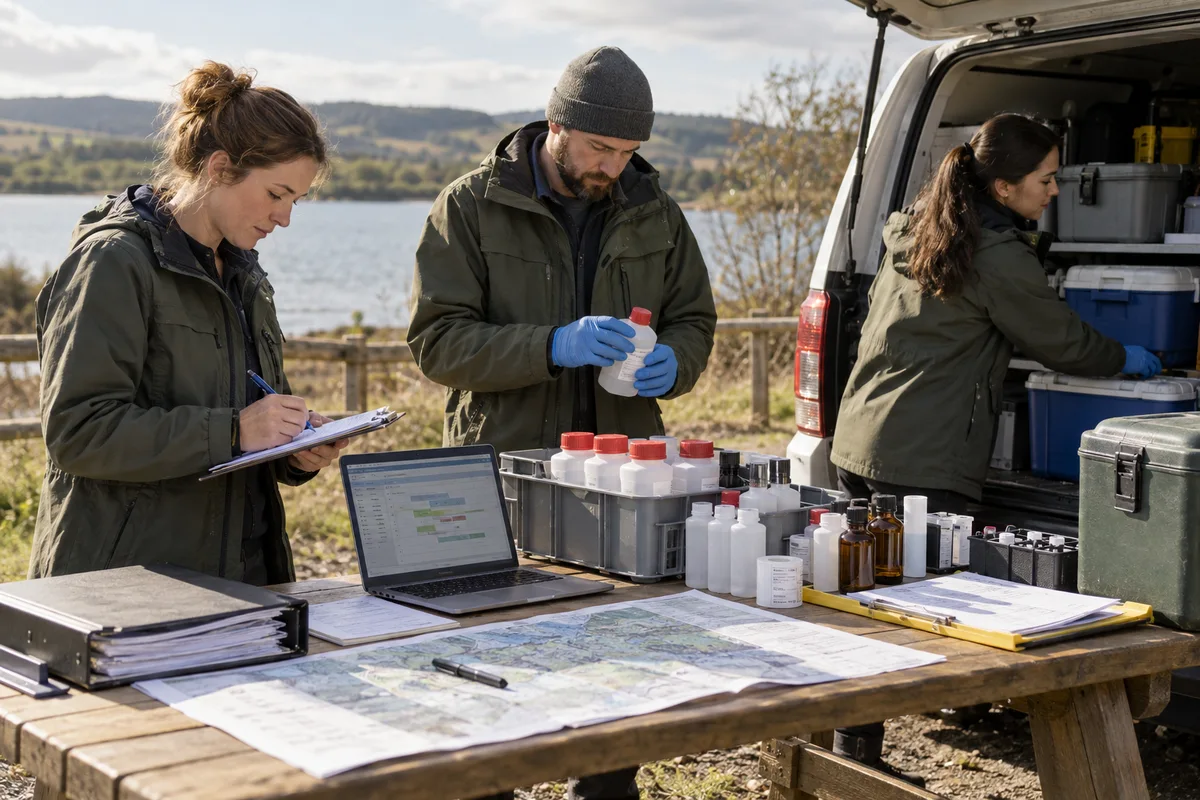
A sampler preparing bottles, a stack platform being set up or a field kit being calibrated shows care that a rate card cannot. These pictures need the plant's permission and no client names.
“Posts about rules age badly”
A post on a board requirement may be wrong next quarter. Posts that explain what a test measures and what a plant should prepare stay useful, and they point to the board for requirements.
“Consultants share what is clear”
A short explainer on how stack emission testing differs from ambient air monitoring gets passed to a client. Vague posts with an image of a flask do not.
What we do
What we deliver for environmental testing laboratories.
Every deliverable, what it covers for you, and the result it is there to produce. Nothing here is an extra.
A page set up for buyers
A LinkedIn page with the scope, the tests and the contact line completed, and the same details on any other channel you keep.
Result: A visitor knows what you test within a minute.
A bank of explainer posts
Single posts each covering one test, one parameter or one preparation step, written plainly.
Result: Your team has material ready to post without writing from scratch.
A site-visit photo routine
A simple permission check and a photo rule for samplers, with no client names or plant signage.
Result: You can show the work without exposing a client.
A consultant share list
A set of consultants and associations whose posts you follow and answer.
Result: Your name is seen where project decisions start.
A record of enquiries from social
Each enquiry that mentions a post logged against the post.
Result: You can see whether the effort is worth continuing.
How the result is measured
- Posts published
- Engagement rate
- Enquiries from social profiles
Recorded as a baseline before work starts, so every later report has an honest comparison.
Posts and pieces to plan
Plan LinkedIn posts that show how a report is made.
- A sampling day, step by step
- A carousel on arrival, the sampling point, the sealed container and the chain of custody. Photographs show your team and equipment and no client plant name.
- A parameter explained
- A post on one parameter, such as chemical oxygen demand or particulate matter, in plain words. Reviewed by the quality manager for accuracy.
- A note on how to read a report
- A masked sample report with arrows to the sections. Proof of what the buyer receives, shared with consent.
- A notice type and the tests it points to
- A dated post linked to the issuing body's page. Describes the tests, and leaves the interpretation of the rule to the reader's adviser.
- A message for consultants
- A short post on the formats and data you supply for baseline studies. Written for the consultant who shares it with a client.
Who it is for
This is written for these environmental testing laboratories.
- Water and wastewater testing laboratories for factories and housing societies
- Stack emission and ambient air monitoring agencies
- Soil, sludge and hazardous waste testing laboratories
- Noise, workplace air and occupational hygiene monitoring firms
- Drinking water laboratories serving packaged water, hotels and hospitals
- Laboratories that support consultants with baseline data for clearances
- Mobile and field laboratories that sample at the site
- Laboratories that serve a single industrial cluster such as textile, pharma or food
Not for
It is not the right fit if.
- No one has agreed to review technical posts, and a post that gets a method wrong is shared by the people best placed to notice.
- You have no clearance to show photographs from client sites, so posts would rely on stock images that tell a buyer nothing.
How it works
How the social media work runs
The work itself, in order. How an engagement starts, from your brief to a written scope, is set out on our method page.
- 1
Confirm audience, platforms and access
We note which platforms your buyers use and check that the pages sit under your own business accounts, with you as owner and us as added roles.
- 2
Review the current presence
We read the existing pages, the posts that drew replies and the gaps in posting.
- 3
Build the calendar
Themes, formats and dates are set out for your approval, with space for offers and news.
- 4
Create, approve and publish
Posts are made, approved by you and scheduled. Replies to the public are handled in your voice.
- 5
Record enquiries and adjust
Enquiries are logged against the post or platform where they began, and the mix changes to follow what brings them.
Where this fits
Three pieces of sales work, in this order.
This work sits inside sales process design, at stage 0, foundation. The audit comes before it, and sales management keeps it running.
Step 1
Sales audit
Find where deals are being lost and what to fix first.
Start here if you cannot say where orders are lost.
Step 2 · you are here
Sales process design
One written way to sell, from first enquiry to repeat order.
Start here if every salesperson sells differently.
Step 3
Sales management
A target, a review routine and someone who owns the number.
Start here if the team has targets and no routine.
FAQ
Questions owners ask before they call.
Not here? More answers, or ask on WhatsApp.
Which platform should a lab use?
Can we show client plants in photographs?
Should a lab post about changes in the board's requirements?
Can the sampling team post from the field?
How much does it cost?
How long is the contract?
How soon will we see results?
Who will actually do the work?
What do you need from us?
What if we are not happy with the work?
More for environmental testing laboratories
Everything else we would do for you.
Closest to this: content and social
Also for environmental testing laboratories
Or start from the overview: sales and marketing for environmental testing laboratories.
Your next practical step
Tell us what you are trying to grow, and we will read it before we call.
Eight short steps, mostly taps. Skip anything you would rather answer on the call.