Marble mining companies · Social media
Use social posts to show the stone at its best before a buyer asks.
Social media marketing for a marble mine is the steady showing of benches, blocks and finished work to the processors, traders, designers and contractors who follow the stone trade. GullySales works on what to post, how to photograph it and how a comment becomes an enquiry.
Scope, fee, reporting and term are agreed in writing after we have read your brief and spoken to you.
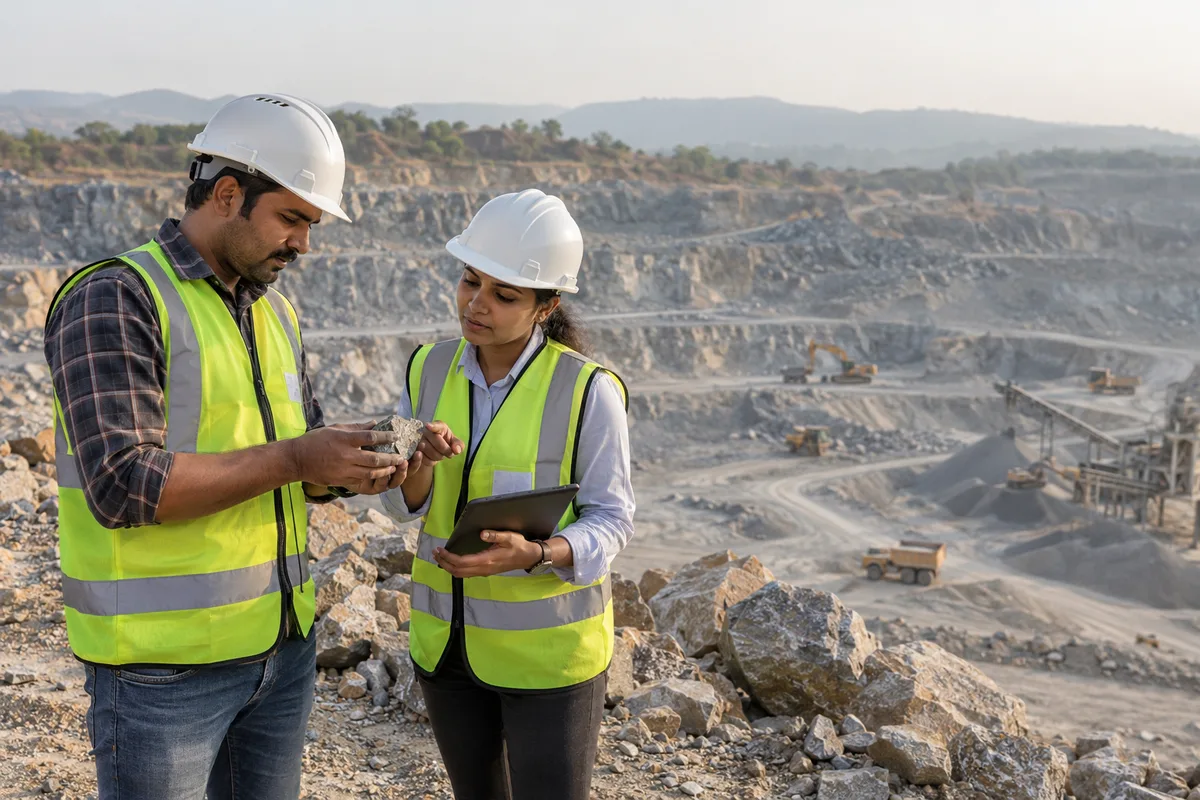
What social media means
Social media is the ongoing posting your business does on platforms such as Instagram, Facebook and LinkedIn to stay visible to customers and prospects between purchases. GullySales plans a posting calendar, writes captions and designs the images so the page looks active and answers what a visitor would ask.
Last updated 18 Oct 2026.
For marble mining companies
Where it usually goes wrong, and what we would do.
“The audience is narrow and knowledgeable”
Followers worth having are processors, traders, architects and temple contractors. They judge a block at a glance, so posts that talk about passion for marble are skipped and a clean cut face with its size stated is studied.
“Glare spoils a post as it spoils a lot page”
A face shot at noon with sun on wet stone hides the veining. Morning or shaded light, a dry face beside a wet one and a hand for scale give a post that a buyer can read.
“Finished work persuades the designer”
An architect or temple contractor cannot picture a block as a floor or a carving. A post showing the same stone installed, with the mine named, closes the gap between the quarry and the finished room.
“Comments and messages arrive without a handler”
A buyer asks for the rate under a post and the manager is underground. Without one person watching messages, the question sits in public and the buyer moves to the next mine.
What we do
What we deliver for marble mining companies.
Every deliverable, what it covers for you, and the result it is there to produce. Nothing here is an extra.
A posting plan built on the bench
A list of recurring post types: new bench, block close-up, loading day, finished installation, each with its photograph rules.
Result: The mine posts from a list instead of when someone remembers.
A photograph routine at the mine
A short guide for the person with the phone: light, angle, wet and dry faces and a scale reference.
Result: Photographs of different lots can be compared side by side.
Installed-work posts with permission
Posts about finished work using your stone, written only where the owner of the project has agreed.
Result: The designer sees the stone in use, with its source named.
A message routine for comments
One person named to answer comments and messages, with a short reply that asks for use and quantity.
Result: A question under a post meets a reply from a named person.
A tally of posts that drew enquiries
A note of which posts brought messages and which lot each one was about.
Result: The next post is chosen from what drew buyers.
How the result is measured
- Posts published
- Engagement rate
- Enquiries from social profiles
Recorded as a baseline before work starts, so every later report has an honest comparison.
Posts and pieces to plan
Plan posts around the stone and the people who work it.
- A fresh block, cut face in daylight
- One clear photograph of a newly cut face, taken without glare, with the stone name and bench. The veining speaks; the caption gives size.
- The same stone, installed
- A photograph of finished work using the stone, posted only with the owner's permission and a caption naming the stone. Designers respond to finished floors and walls.
- Loading day at the bench
- A short clip of a block being lifted onto a truck, with the safety gear visible. It shows buyers that the mine runs an orderly yard.
- A stone in two kinds of light
- The same slab wet and dry, or in shade and sun. A processor can judge what the finish will look like on a customer's floor.
- Tools of the carving contractor
- A post about a large block sent for temple carving, with the contractor's consent. It tells other carvers that the mine can supply their size.
Who it is for
This is written for these marble mining companies.
- White marble mines
- Beige and cream marble mines
- Coloured and veined marble mines
- Large-block sellers for carving and temple work
- Suppliers to tile and slab processors
- Sellers who work through traders
- Operators with an attached processing unit
- Mines offering marble waste and slurry for secondary use
Not for
It is not the right fit if.
- No worker or contractor has agreed to appear, and a page of empty benches would give a buyer nothing to judge.
- Nobody is named to reply to comments and messages, and buyers who ask about a lot would read silence as indifference.
- You want the page to compete with importers on price, which a photograph cannot do and an honest lot note can.
How it works
How the social media work runs
The work itself, in order. How an engagement starts, from your brief to a written scope, is set out on our method page.
- 1
Confirm audience, platforms and access
We note which platforms your buyers use and check that the pages sit under your own business accounts, with you as owner and us as added roles.
- 2
Review the current presence
We read the existing pages, the posts that drew replies and the gaps in posting.
- 3
Build the calendar
Themes, formats and dates are set out for your approval, with space for offers and news.
- 4
Create, approve and publish
Posts are made, approved by you and scheduled. Replies to the public are handled in your voice.
- 5
Record enquiries and adjust
Enquiries are logged against the post or platform where they began, and the mix changes to follow what brings them.
Where this fits
Three pieces of sales work, in this order.
This work sits inside sales process design, at stage 0, foundation. The audit comes before it, and sales management keeps it running.
Step 1
Sales audit
Find where deals are being lost and what to fix first.
Start here if you cannot say where orders are lost.
Step 2 · you are here
Sales process design
One written way to sell, from first enquiry to repeat order.
Start here if every salesperson sells differently.
Step 3
Sales management
A target, a review routine and someone who owns the number.
Start here if the team has targets and no routine.
FAQ
Questions owners ask before they call.
Not here? More answers, or ask on WhatsApp.
Which platform suits a marble mine?
Do we need to post every day?
Is it safe to post pictures of the working face?
Which platform suits a mine whose buyers are processors and traders?
How much does it cost?
How long is the contract?
How soon will we see results?
Who will actually do the work?
What do you need from us?
What if we are not happy with the work?
More for marble mining companies
Everything else we would do for you.
Closest to this: content and social
Also for marble mining companies
Or start from the overview: sales and marketing for marble mining companies.
Your next practical step
Tell us what you are trying to grow, and we will read it before we call.
Eight short steps, mostly taps. Skip anything you would rather answer on the call.