Pet service businesses · CRM
The record is about the dog, not about the person paying the bill.
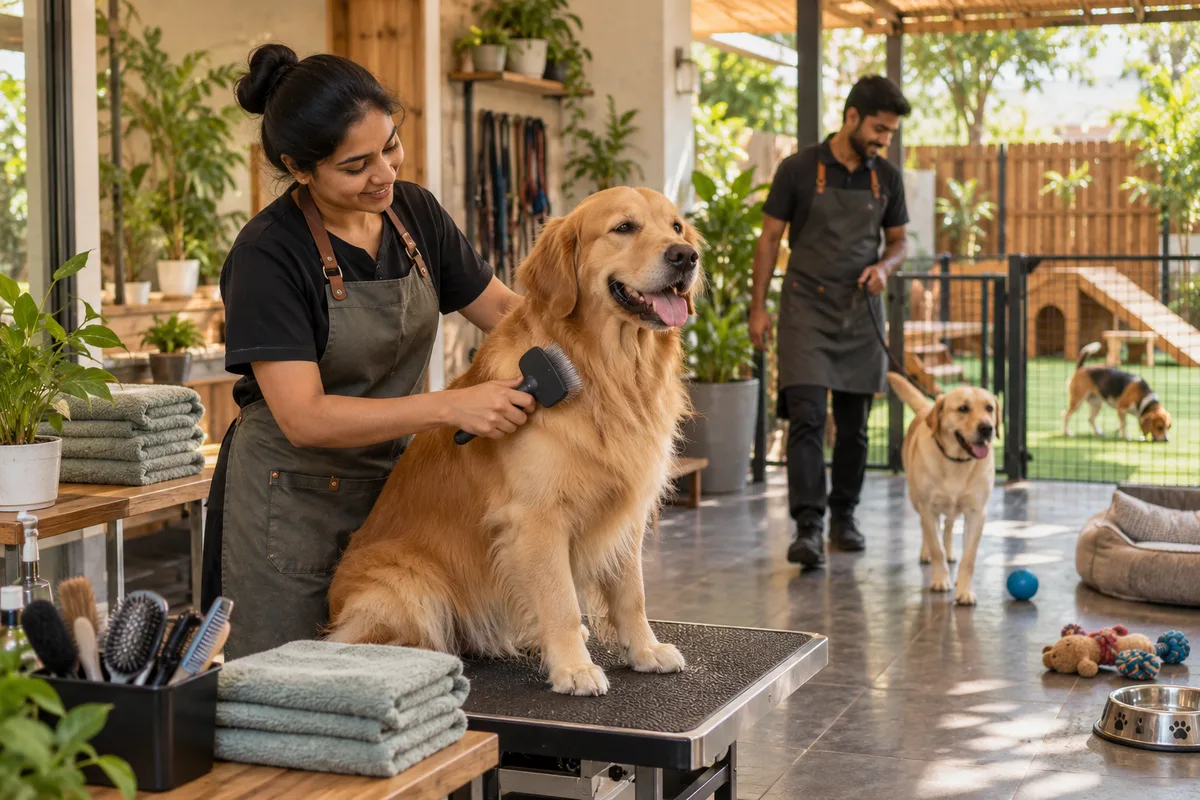
A CRM for a pet business is a file per pet: breed, coat, temperament, vaccination dates, feed, allergies, the vet's number and who last handled the pet. GullySales sets those fields, gets the groomer and the kennel staff filling them, and turns the file into the reminder that brings the pet back.
Scope, fee, reporting and term are agreed in writing after we have read your brief and spoken to you.
What CRM means
A CRM is the record where every enquiry, call and quote is kept against a customer, replacing separate notebooks, spreadsheets and memory. GullySales sets up or cleans an existing CRM and reports from it by enquiry outcome rather than by activity logged.
Also for pet service businesses
- Lead generation for pet service businesses
- Follow-up systems for pet service businesses
- Answer engine optimisation for pet service businesses
- Branding and identity for pet service businesses
- Content marketing for pet service businesses
- Digital marketing for pet service businesses
- Email marketing for pet service businesses
- Google Business Profile for pet service businesses
Sales and marketing for pet service businesses, the overview.
Last updated 5 Oct 2026.
For pet service businesses
Where it usually goes wrong, and what we would do.
“Temperament belongs in the record, in plain words”
A note saying a dog snaps when the paws are touched, or settles if the radio is on, is what lets a different groomer handle the dog well. That knowledge currently sits with whichever staff member happens to be in that day.
“Vaccination dates are a booking condition, so store them”
A boarding centre that checks the card at the gate is already too late if it has expired. Holding the dates in the record lets you tell the parent before the parent packs the dog into the car.
“Coat type sets the grooming cycle, and the cycle sets the reminder”
A double-coated breed, a poodle cross and a short-haired Indian dog come back on completely different rhythms. A single reminder rule applied to all of them is wrong for most.
What we do
What we deliver for pet service businesses.
Every deliverable, what it covers for you, and the result it is there to produce. Nothing here is an extra.
A file per pet with breed, coat and temperament
Breed, coat type, handling notes, allergies, feed brand and quantity, plus the vet's name and number, recorded once and updated at each visit.
Result: Any staff member can handle the dog the way the dog is used to.
Vaccination records with their expiry dates
Each pet's vaccination dates held with the boarding rule attached, so an expiry is flagged when a stay is booked.
Result: No family arrives at the gate and is turned away.
Grooming history driving the next due date
Last groom, the service given and the coat condition recorded, with the next due date worked out from that pet's own cycle.
Result: The reminder list builds itself.
Boarding history with the notes from each stay
Dates stayed, how the dog settled, what the dog ate and anything the staff had to manage, kept against the pet.
Result: A returning dog is not a stranger on the second stay.
Services never used, flagged per pet
A marker showing which of your services a pet has never had, such as training for a grooming regular.
Result: The right offer goes to the right pet parent.
How the result is measured
- Enquiries logged in the CRM
- Data completeness
- Reports generated from CRM data
Recorded as a baseline before work starts, so every later report has an honest comparison.
What to record, and when
What a pet business should record about every pet and owner, and whether software is needed yet.
- Owner consent for handling and photos
- Record at the first visit whether the owner agreed to your handling rules, to photos being shared and to the vet being called in an emergency. Note the date it was given.
- Second contact and the family vet
- Hold a second person to reach and the family vet's clinic, for when the owner cannot be reached during a stay. A boarding centre needs both before the first night.
- Incidents noticed at drop-off and pick-up
- Write down any bite, scratch, tick or skin problem seen, with the date and who saw it. The owner's trust rests on a note made at the time, not one remembered later.
- Where the pet parent came from
- Note whether it was Maps, a vet's referral, a society group or another owner. Vet and society referrals are the ones worth looking after.
- Boarding dates and grooming packs
- Keep each stay's dates and any grooming pack with sessions left. Holiday weeks fill the kennel, and last year's dates tell you who to call and when.
- Do you need software yet?
- A shared sheet works for a small salon with one or two groomers and a short client list. Look at software when boarding dates, vaccination expiries and reminders are too many to check by eye each morning.
Who it is for
This is written for these pet service businesses.
- Dog grooming salons
- Pet boarding and daycare centres
- Pet training academies
- Mobile grooming services
- Veterinary clinics offering allied services
- Pet taxi and transport services
- Multi-service pet care centres
- Cattery and exotic pet boarding
Not for
It is not the right fit if.
- Only one person ever handles bookings and the register already works for them, so a shared record is not yet needed.
- You are unwilling to record temperament honestly, which is the field the staff most need.
How it works
How the CRM work runs
The work itself, in order. How an engagement starts, from your brief to a written scope, is set out on our method page.
- 1
Map the sales process
We sit with the people who sell and write down how a deal moves from enquiry to payment, including where it stalls.
- 2
Agree stages, fields and owners
Each stage gets a name your team already uses and a proof that the deal has left it. We agree which fields are required at which stage, and who may change what.
- 3
Build on a copy
Pipeline, fields and views are built on a trial copy where the CRM offers one, or in a separate pipeline where the plan allows. Live work stays untouched.
- 4
Connect channels, then switch on automations
Channels are connected first. Each automation is then switched on separately, so a misfiring rule is easy to find.
- 5
Test with real deals
The people who will use the CRM run open deals through it. Gaps are fixed before the whole team switches over.
- 6
Switch over and trim
Once real use shows which fields stay empty and which stages nobody uses, those are cut and the handover record is updated.
Where this fits
Three pieces of sales work, in this order.
This work sits inside sales management. A target, a review routine and someone who owns the number.
Step 1
Sales audit
Find where deals are being lost and what to fix first.
Start here if you cannot say where orders are lost.
Step 2
Sales process design
One written way to sell, from first enquiry to repeat order.
Start here if every salesperson sells differently.
Step 3 · you are here
Sales management
A target, a review routine and someone who owns the number.
Start here if the team has targets and no routine.
FAQ
Questions owners ask before they call.
Not here? More answers, or ask on WhatsApp.
We run a small salon. Is a paper register really a problem?
What should the groomer actually record after a visit?
Can the vaccine reminder go out on WhatsApp?
What if two people in a family book for the same dog?
How much does it cost?
How long is the contract?
How soon will we see results?
Who will actually do the work?
What do you need from us?
What if we are not happy with the work?
From the blog
Further reading for pet service businesses.
 6 min read · 26 Aug 2026Pet grooming marketing: how to get grooming and boarding customersPet grooming marketing works on Maps, reviews, before and after photographs and fast replies. Boarding is won on trust. Here is how to fill both, and what a plan should cover.
 8 min read · 19 Aug 2026The pet parent journey: from the first search to regular visitsThe pet parent journey runs from the first anxious search to years of repeat visits. Here are the stages, and where Indian clinics lose owners.
 6 min read · 20 Jul 2026Seasonal and event-linked demand: planning for peaks and quiet monthsHow a specialist trade with busy and slow months can read its own year from past bookings, then time outreach and capacity ahead of each peak instead of after it.
More for pet service businesses
Everything else we would do for you.
Closest to this: leads and follow-up
Also for pet service businesses
Or start from the overview: sales and marketing for pet service businesses.
Your next practical step
Tell us what you are trying to grow, and we will read it before we call.
Eight short steps, mostly taps. Skip anything you would rather answer on the call.