Wedding planners · Buyer persona
Know every person in the room before the family meeting begins.
A buyer persona for a wedding planner is a written profile of each person who shapes the booking: the couple, the parents who hold the budget, the relatives with views on the rituals. GullySales works on building those profiles from your own past weddings and shaping the portfolio, proposal and meeting around them.
Scope, fee, reporting and term are agreed in writing after we have read your brief and spoken to you.
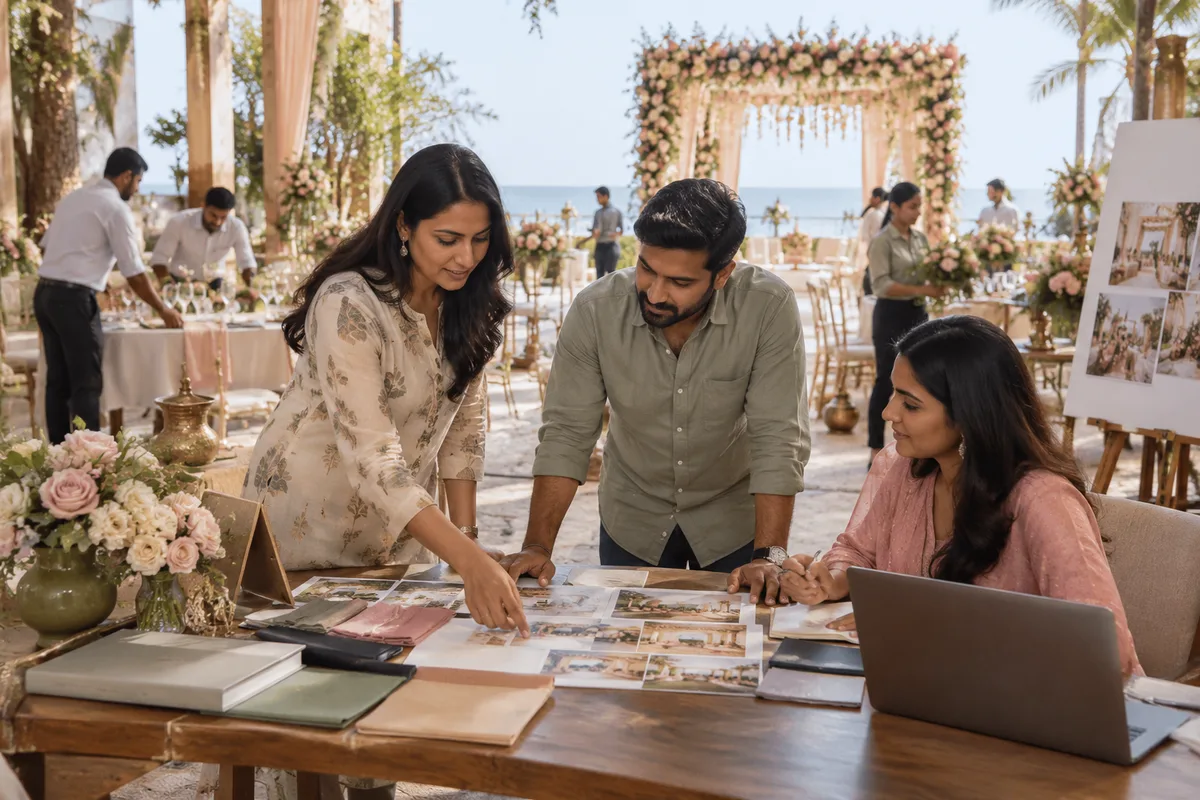
What buyer persona means
A buyer persona is a plain description of the kind of customer who actually buys from you. It includes what they search, what worries them and who else they ask before deciding. GullySales builds this from real enquiries and past sales rather than a generic template, then uses it to write every page and advert.
Last updated 5 Oct 2026.
For wedding planners
Where it usually goes wrong, and what we would do.
“The person who finds you is not the person who signs”
The bride saves your reels at midnight. The father who pays the advance has never opened your Instagram. A planner who writes every message for the bride arrives at the family meeting with nothing prepared for the one holding the cheque.
“The mother of the groom asks about the rituals, not the budget”
In a community wedding the groom's mother tests whether your team knows the order of the ceremonies. A planner who answers with a décor moodboard loses that conversation, and the family hears the doubt long after the meeting ends.
“The NRI family decides across time zones”
Parents in India, a couple abroad and an uncle who handles money in a third city each see a different part of your pitch. One persona for all of them gives you a pack that answers none of their questions in full.
“A relative with a planner of their own”
A cousin or an uncle may recommend someone they know. That relative is a buyer too, and the persona should record what that person needs to hear to stand down, which is a plain answer on vendor choice and cost control.
What we do
What we deliver for wedding planners.
Every deliverable, what it covers for you, and the result it is there to produce. Nothing here is an extra.
Past-wedding review
Your last season's weddings sorted by who started the enquiry, who negotiated and who paid, drawn from your own records and notes.
Result: You can name who really decided each booking.
One profile per decision-maker
A page each for the couple, the paying parents, the ritual elder and the NRI relative, covering what they ask, what worries them and what proof they need.
Result: Everyone on your team describes the buyer in the same words.
Questions-by-person list
The questions each persona asks at the meeting, with a written answer from your team for each, including vendor choice, room blocks and rain plans.
Result: No question at the family meeting catches the team unprepared.
Message set per persona
A short reply, a portfolio reel choice and a proposal opening for each profile, so the bride hears about style and the father hears about control.
Result: Each person in the family gets a message written for them.
Wedding-type split
Separate profiles for destination, traditional multi-day, intimate and NRI weddings, since the people involved differ with each type.
Result: A destination enquiry and a small-function enquiry stop getting the same reply.
Persona check after each family meeting
A short note on who spoke, who objected and who closed, added to the enquiry record after every meeting.
Result: The profiles improve with each wedding you pitch.
How the result is measured
- Enquiry match to persona
- Conversion rate by persona
- Content aligned to persona
Recorded as a baseline before work starts, so every later report has an honest comparison.
Who is asking
These are the people who reach a wedding planner before a booking.
Each of these asks a different question, and a planner who answers only the bride loses the rest of the room.
- Bride-to-be who saved your reel
- Wants to know whether you have done a wedding in this style and whether the couple's own taste will be heard against the elders' wishes.
- Father paying the advance
- Wants a clear split of vendor costs and your fee, and wants to know who to call when something goes wrong on the day.
- Mother handling the rituals
- Wants proof you have run the family's community ceremonies, the muhurta timings and the family's food customs without friction.
- Groom's side joining late
- Wants to know if you will coordinate their guests, their rooms and their baraat without them having to manage a second planner.
- Sibling or cousin abroad
- Wants a proposal they can open on a laptop and a way to ask questions across time zones before the family decides.
Who it is for
This is written for these wedding planners.
- Full-service wedding planners
- Destination wedding planners
- Décor-led planners and designers
- Budget and intimate wedding planners
- Planners specialising in regional and community weddings
- Wedding coordinators for the day of the event
- Planners handling guest hospitality and logistics
- Planners serving NRI families
- Multi-city wedding planning companies
Not for
It is not the right fit if.
- You plan a handful of weddings and know each family personally, so a written persona adds paperwork without adding knowledge.
- You have not yet recorded who paid for past weddings, so the persona would be a guess about people you never asked.
- Your team has no routine to use it in proposals, so it would stay a document no one opens.
How it works
How the buyer persona work runs
The work itself, in order. How an engagement starts, from your brief to a written scope, is set out on our method page.
- 1
Understand the current view
We start with how your team currently describes the customer, since the gap between belief and reality is the finding itself.
- 2
Audit past enquiries and sales
We look at recent enquiries and closed deals to see who actually bought, not who was assumed to buy.
- 3
Interview customers and staff
Structured conversations with recent buyers, held as talk about the last purchase and not a questionnaire. We ask what happened before they called, who else was involved and what they compared. Customers agree before we contact them, and their answers are reported without names.
- 4
Build the personas
Findings are written into short, usable persona documents rather than a long report.
- 5
Apply to your marketing
We show where each persona should change a page, an ad or a script you already have. The sales team reads the drafts and says which ring true. A persona they do not recognise is rewritten.
Where this fits
Three pieces of sales work, in this order.
This work sits inside sales process design, at stage 0, foundation. The audit comes before it, and sales management keeps it running.
Step 1
Sales audit
Find where deals are being lost and what to fix first.
Start here if you cannot say where orders are lost.
Step 2 · you are here
Sales process design
One written way to sell, from first enquiry to repeat order.
Start here if every salesperson sells differently.
Step 3
Sales management
A target, a review routine and someone who owns the number.
Start here if the team has targets and no routine.
FAQ
Questions owners ask before they call.
Not here? More answers, or ask on WhatsApp.
Do we need a persona if we only plan a few weddings?
How do we find out who really paid for past weddings?
Should the persona use real family names?
How does a persona differ for destination and local weddings?
How much does it cost?
How long is the contract?
How soon will we see results?
Who will actually do the work?
What do you need from us?
What if we are not happy with the work?
From the blog
Further reading for wedding planners.

More for wedding planners
Everything else we would do for you.
Closest to this: strategy and research
Also for wedding planners
Or start from the overview: sales and marketing for wedding planners.
Your next practical step
Tell us what you are trying to grow, and we will read it before we call.
Eight short steps, mostly taps. Skip anything you would rather answer on the call.