Industrial park developers · Website
Build a park website that answers the plant head's questions before they ring.
A website for an industrial park is the place a manufacturer, consultant or banker checks the specification, the approvals and the available stock. GullySales works on the page structure, the plot and shed pages and the enquiry forms that feed your record.
Scope, fee, reporting and term are agreed in writing after we have read your brief and spoken to you.
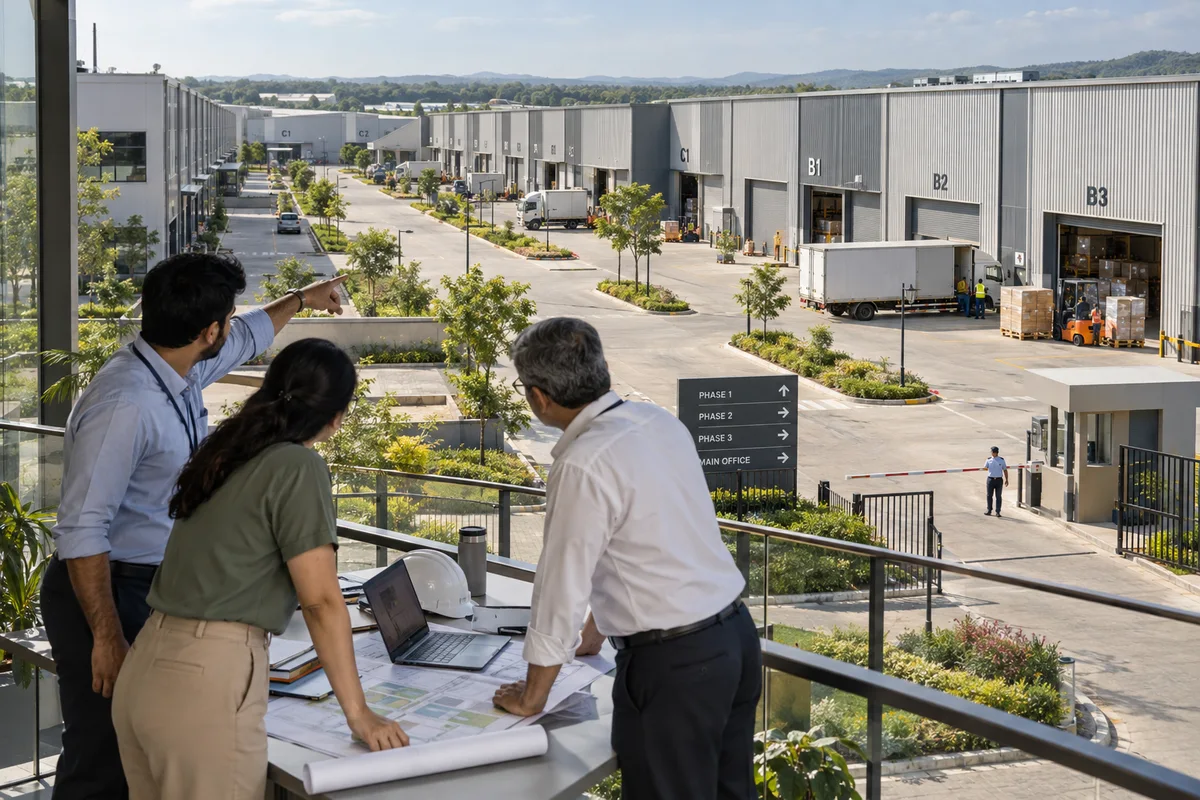
What website means
A website is the page a customer lands on after searching, clicking an advert or scanning a code, and it decides whether they call or leave. GullySales builds and maintains sites that load quickly, explain the offer plainly and make the enquiry form or phone number easy to find.
Also for industrial park developers
Sales and marketing for industrial park developers, the overview.
Last updated 18 Oct 2026.
For industrial park developers
Where it usually goes wrong, and what we would do.
“The plant head reads the specification first”
Power load, water source, effluent arrangement, road width and distance to the port decide whether the park stays on the list. A site that opens with a slogan and a drone shot hides these behind menus.
“The page is forwarded, so it must stand alone”
An owner sends the link to a banker or partner. The page has to make sense without the sales team beside it, with date of last update, approvals and contact for questions visible.
“Phones are used on site and on the road”
A plant head checks the plot map on a phone while driving to the gate. Large files and tiny tables on a phone screen send the reader to ring instead, or to the next park.
“A half-built park needs honest pages”
If a phase is under construction, the site should say which parts are ready and which are planned. A buyer who finds the difference on site doubts everything else on the page.
What we do
What we deliver for industrial park developers.
Every deliverable, what it covers for you, and the result it is there to produce. Nothing here is an extra.
A park home page led by the specification
The facts a plant head needs, followed by plots, sheds, approvals and a clear way to enquire.
Result: The first screen carries the park's location and key infrastructure.
Plot pages and shed pages
Separate pages with size ranges, terms, handover state and a table of utilities.
Result: A buyer sees terms that apply to the product they want.
An approvals and documents page
A list of approvals held and papers available, published after you confirm them in writing.
Result: Each approval listed has a confirmation on file.
Enquiry forms and click-to-chat
A short form and a WhatsApp link that ask about product, size, power need and start date.
Result: Each enquiry arrives with the facts that decide fit.
Phone-friendly plot maps and tables
Maps and specification tables that load and read on a phone.
Result: The plot map opens and can be read on a phone.
A last-updated line and a page owner
Each page shows when it was last checked and who in the park is responsible for it.
Result: Every page has a named owner and a date.
How the result is measured
- Page load time
- Bounce rate
- Enquiries from the website
Recorded as a baseline before work starts, so every later report has an honest comparison.
Who it is for
This is written for these industrial park developers.
- Auto component and engineering manufacturers
- Food processing and packaging units
- Pharma and chemicals units where the park allows them
- Electronics and electrical assemblers
- Textile and garment units
- Export-oriented manufacturers
- Industrial consultants and project advisers
- Anchor tenants and large single-plot buyers
How it works
How the website work runs
The work itself, in order. How an engagement starts, from your brief to a written scope, is set out on our method page.
- 1
Confirm structure and content
We agree the site's pages and content needs before design begins, drawing on website strategy where it exists.
- 2
Design the site
Every page is designed against your brand identity and checked for how it should convert a visitor.
- 3
Build and test
The site is developed and tested across devices and browsers before anything goes live.
- 4
Load real content
Actual copy, images and information about your business replace placeholder content before launch.
- 5
Launch and hand over access
The site goes live with domain, hosting and content management access clearly handed to you.
Where this fits
Three pieces of sales work, in this order.
This work sits inside sales process design, at stage 1, prospecting and lead generation. The audit comes before it, and sales management keeps it running.
Step 1
Sales audit
Find where deals are being lost and what to fix first.
Start here if you cannot say where orders are lost.
Step 2 · you are here
Sales process design
One written way to sell, from first enquiry to repeat order.
Start here if every salesperson sells differently.
Step 3
Sales management
A target, a review routine and someone who owns the number.
Start here if the team has targets and no routine.
FAQ
Questions owners ask before they call.
Not here? More answers, or ask on WhatsApp.
What should a park site never leave out?
Do we need a virtual tour?
Who keeps the site up to date?
How much does it cost?
How long is the contract?
How soon will we see results?
Who will actually do the work?
What do you need from us?
What if we are not happy with the work?
More for industrial park developers
Everything else we would do for you.
Closest to this: search and visibility
Also for industrial park developers
Or start from the overview: sales and marketing for industrial park developers.
Your next practical step
Tell us what you are trying to grow, and we will read it before we call.
Eight short steps, mostly taps. Skip anything you would rather answer on the call.