Commercial solar EPC companies · Website
Build a site that proves you have done a roof like theirs before they ring.
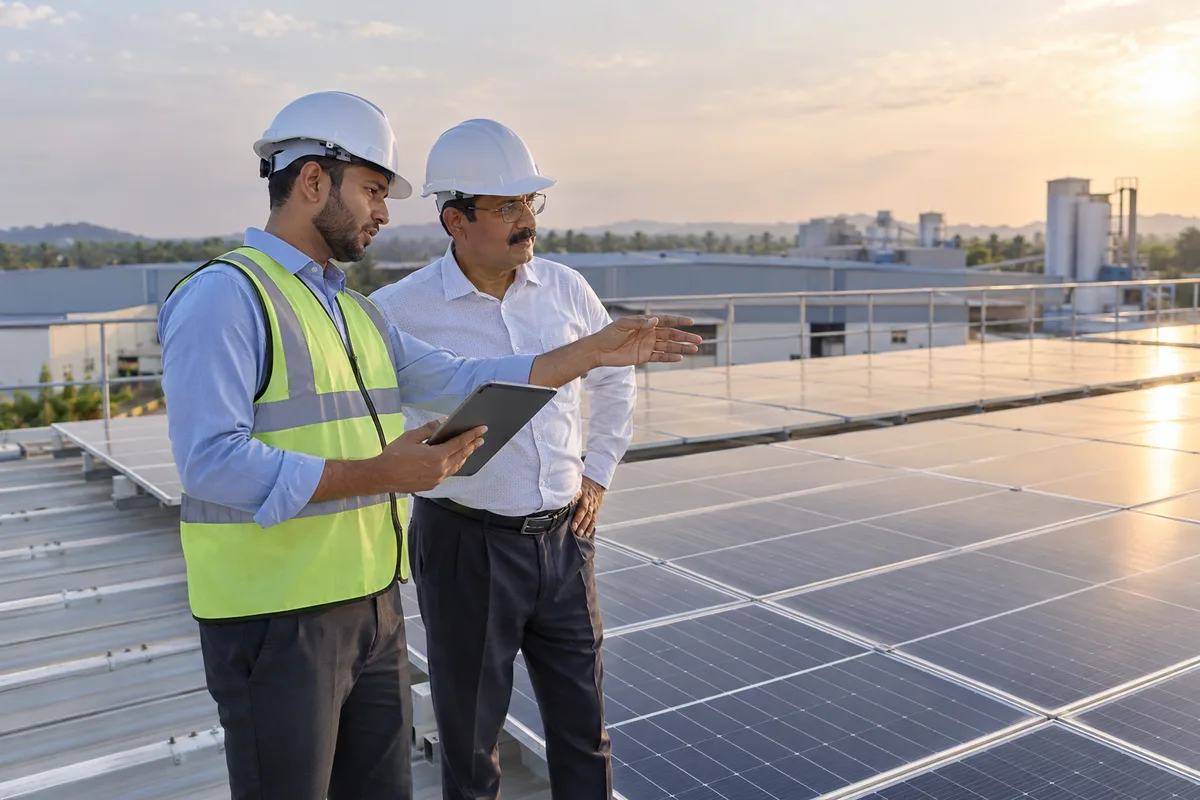
Website development for a commercial solar EPC company is building the site that a plant head, finance head or trustee checks before agreeing to a survey. GullySales builds pages for each building type, a project page for every commissioned plant, and a survey form that asks for the bill.
Scope, fee, reporting and term are agreed in writing after we have read your brief and spoken to you.
What website means
A website is the page a customer lands on after searching, clicking an advert or scanning a code, and it decides whether they call or leave. GullySales builds and maintains sites that load quickly, explain the offer plainly and make the enquiry form or phone number easy to find.
Also for commercial solar EPC companies
- SEO for commercial solar EPC companies
- Content marketing for commercial solar EPC companies
- Lead generation for commercial solar EPC companies
- Google Ads for commercial solar EPC companies
- Email marketing for commercial solar EPC companies
- Buyer persona for commercial solar EPC companies
- Sales process for commercial solar EPC companies
- Referral marketing for commercial solar EPC companies
Sales and marketing for commercial solar EPC companies, the overview.
Last updated 6 Oct 2026.
For commercial solar EPC companies
Where it usually goes wrong, and what we would do.
“The site is checked by a committee”
A plant head opens it, then forwards the link to the owner and the finance head. Each looks for a different thing. A site with only a company profile and a list of services gives none of them anything.
“Projects are listed as a name and a number”
A table saying client, kWp and year proves little. A page with the roof, the problem on the bill, the equipment and the owner's consent is evidence a buyer can weigh.
“The form asks too little or too much”
A form with only a name and a number brings tyre-kickers. A form with a dozen fields is abandoned. Ask the roof type, the building ownership and a bill upload, and nothing else.
What we do
What we deliver for commercial solar EPC companies.
Every deliverable, what it covers for you, and the result it is there to produce. Nothing here is an extra.
Pages by building type
A page each for factory, warehouse and cold storage, campus and commercial buildings, written around the roof, the bill and the approvals for that building.
Result: A buyer sees their own kind of building in your offer.
A project page for every commissioned plant
Each plant shown with site, roof type, system size, equipment, year and the owner's agreed words, with generation data only from their own monitoring.
Result: A buyer can find a plant like their own and visit it.
A survey request form that asks for the bill
A short form for building, roof, ownership and a bill upload, with the reply and survey routine behind it.
Result: A request arrives with the facts an engineer needs.
Pages for the finance head
Pages on buy or pay per unit, how a saving is worked and what a maintenance contract includes.
Result: The finance head finds the working on the site.
A credentials page for tenders and banks
Registration, GST, past orders, certifications you hold, and the list of equipment brands you supply, kept current.
Result: A tender officer or lender checks you in one place.
Speed, mobile layout and tracking
A fast site on phones, with form submissions and calls recorded by source.
Result: A plant head on a mobile in a factory sees the page, and you see where the enquiry came from.
How the result is measured
- Page load time
- Bounce rate
- Enquiries from the website
Recorded as a baseline before work starts, so every later report has an honest comparison.
What the page must show
What a commercial solar EPC company's website must show before a buyer invites you to the roof.
- Plants you have commissioned, by roof type
- Show metal sheet, RCC and ground-mount plants separately, with the year, the system size and the owner's agreed words. A plant head looks for a roof like their own.
- Equipment named, with warranties
- Name the makes of module, inverter and structure you supply and what each warranty covers. Buyers and their banks ask for the datasheets, so keep them downloadable.
- Who handles approvals, and what the owner signs
- List each approval from the application to charging, say who files it and what the owner provides. Rules differ by state, so link the official source and avoid stating specifics.
- Buy or pay per unit, side by side
- A plain comparison of who invests, who owns the plant and who maintains it, with the term and what happens at the end. A finance head reads this page first.
- What happens after commissioning
- Describe monitoring, cleaning, inspection and fault handling, with what the maintenance contract includes and how a fault is reported. Name the person or team who answers the call.
- A survey form that asks for the bill
- Ask the building, the roof, the ownership and a bill upload, with a line that says what happens next. Show a phone number and a WhatsApp link beside it.
Who it is for
This is written for these commercial solar EPC companies.
- Rooftop EPC specialists for factories and industrial units
- Warehouse, cold storage and logistics park rooftop installers
- Campus installers for schools, colleges and hospitals
- Pay-per-unit (OPEX) rooftop developers
- Open access and group captive solar developers
- Ground-mount and solar carport contractors
- Government and public sector tender EPC companies
- Operations and maintenance firms adding new installations
Not for
It is not the right fit if.
- You have no commissioned roofs you may photograph or name, so the site would list capacities and nothing a committee could check
- Nobody can answer a survey request through the site, so a better page would only add forms that go unread
How it works
How the website work runs
The work itself, in order. How an engagement starts, from your brief to a written scope, is set out on our method page.
- 1
Confirm structure and content
We agree the page list, what each page must answer, and who supplies the text and photographs, before any design starts.
- 2
Design the templates
The home page, a service page, a location page and the enquiry page are designed first, on phone and desktop, and shown to you.
- 3
Build and test
The site is built and checked on real phones and the common browsers. Every form, call button and WhatsApp link is tested end to end.
- 4
Load real content
Actual copy, images and information replace placeholders. Pages are read through once by you, since you spot wrong details we cannot.
- 5
Check before launch
Tracking, page titles, the sitemap and the privacy page are checked on the staging site. If an old site exists, its addresses are mapped so old links still land somewhere.
- 6
Launch and hand over access
The site goes live and we record the domain, hosting, content login and analytics in your name. The first live enquiry is traced to confirm tracking works.
Where this fits
Three pieces of sales work, in this order.
This work sits inside sales process design, at stage 1, prospecting and lead generation. The audit comes before it, and sales management keeps it running.
Step 1
Sales audit
Find where deals are being lost and what to fix first.
Start here if you cannot say where orders are lost.
Step 2 · you are here
Sales process design
One written way to sell, from first enquiry to repeat order.
Start here if every salesperson sells differently.
Step 3
Sales management
A target, a review routine and someone who owns the number.
Start here if the team has targets and no routine.
FAQ
Questions owners ask before they call.
Not here? More answers, or ask on WhatsApp.
Should the site be in more than one language?
Can we show a saving calculator on the site?
Who owns the domain and the site after it is built?
Do we list the equipment brands?
How much does it cost?
How long is the contract?
How soon will we see results?
Who will actually do the work?
What do you need from us?
What if we are not happy with the work?
From the blog
Further reading for commercial solar EPC companies.
 6 min read · 6 Oct 2026Why power buyers hire the firm that explained the billHomes, societies and factories rarely plan to buy solar, a generator or an audit. This post shows how each buyer chooses between energy and utilities firms, and what the winner did first.
 6 min read · 6 Oct 2026What a factory finance head asks before rooftop solarA rooftop solar order is held up by the finance head, not the promoter. The questions that come at the proposal stage, and how an EPC company can answer them in the buyer's own bill terms.
More for commercial solar EPC companies
Everything else we would do for you.
Closest to this: search and visibility
Also for commercial solar EPC companies
Or start from the overview: sales and marketing for commercial solar EPC companies.
Your next practical step
Tell us what you are trying to grow, and we will read it before we call.
Eight short steps, mostly taps. Skip anything you would rather answer on the call.