Warehouse developers · Local SEO
Put each warehouse on the map at the right gate, with a number that is answered.
Local SEO for a warehouse developer means each park and shed appears on Google Maps with the correct pin, gate, hours and contact, so visitors, drivers and brokers reach the right place. GullySales works on the Business Profile for each site and the area pages that connect searches to it.
Scope, fee, reporting and term are agreed in writing after we have read your brief and spoken to you.
What local SEO means
Local SEO is the work of making your business show up for searches that name your town or locality, such as a service plus an area name. GullySales sets up locality pages, local citations and map listings so nearby customers find you before a competitor across town.
Last updated 13 Nov 2026.
For warehouse developers
Where it usually goes wrong, and what we would do.
“A wrong pin costs a site visit”
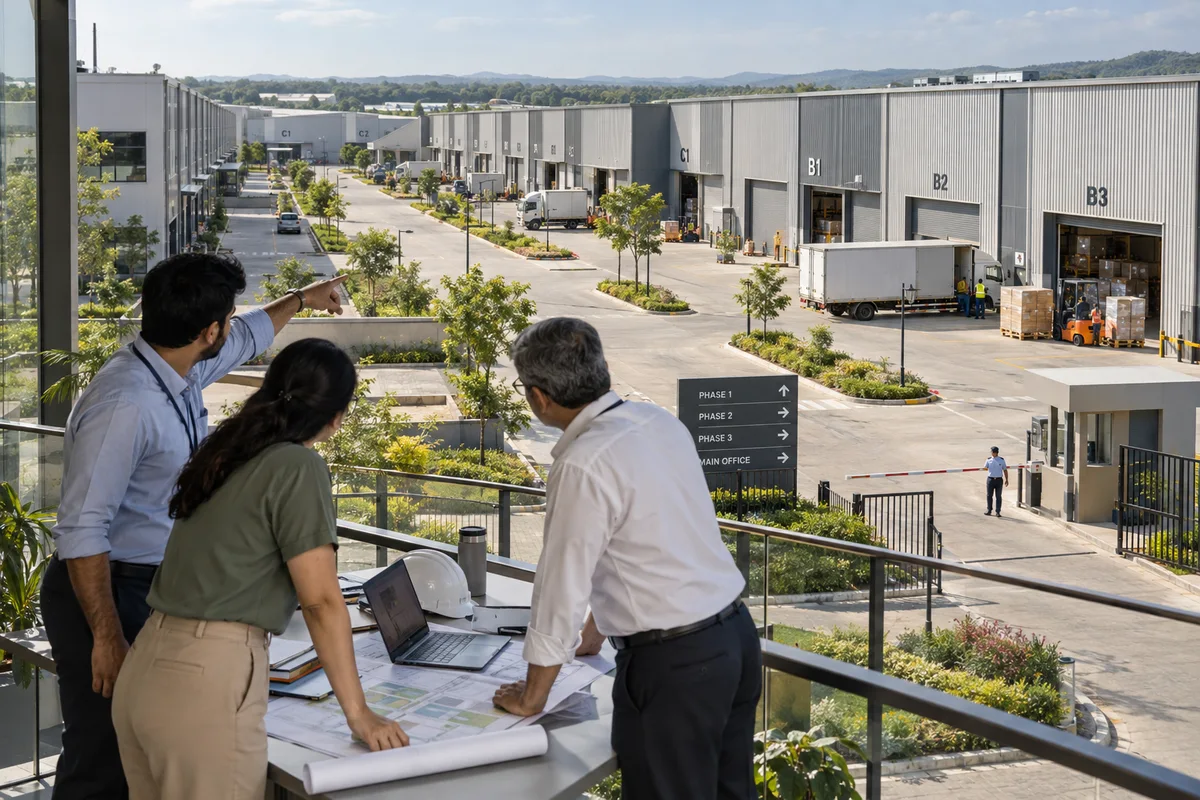
Industrial parks have several gates and service roads. A pin placed on the main road sends the visiting logistics head's driver to the wrong entrance, and the first impression of the shed is a phone call asking for directions.
“Searches name the area, not the developer”
A buyer looks for warehouse near a named town or industrial belt. A park with a complete map profile and area page appears for that search, while one known only by its owner's name does not.
“Photographs set the first expectation”
The map profile shows what the shed looks like before anyone calls. Pictures of the dock side, the internal clear height and the truck turning space tell a buyer more than a skyline shot of the compound.
“Reviews and questions reach brokers too”
A broker or an occupier's staff may leave a note about access or a gate. Left unanswered, a complaint about the approach road stays at the top of the profile.
What we do
What we deliver for warehouse developers.
The work available for this need. We agree the deliverables and responsibilities for your engagement in writing.
Business Profile for each park
A profile per park or shed with the exact pin, gate entry, name, business type, contact and photographs.
Result: Each site opens on the map at the gate a visitor should use.
Area pages
Pages for the town or belt around each site, with distance to the highway, the port or the city and a link to the shed.
Result: An area search ends on a page about your shed.
Photograph plan
A list of shots to take at each site: gate, dock side, interior height, yard and approach road.
Result: Profiles show the building a buyer would visit.
Directions note for visitors
A short note with landmarks, the gate to use and a number for the security desk, linked from the profile.
Result: A visitor's driver reaches the gate without calling the leasing team.
Reply routine for profile questions
A named person who answers questions and notes left on the profile.
Result: Every question on the profile has an answer from a named person.
How the result is measured
- Map pack ranking
- Local search visibility
- Enquiries by locality
Recorded as a baseline before work starts, so every later report has an honest comparison.
Searches your buyers type
What a visitor types when finding the gate of a park.
- warehouse park gate directions
- A directions note and a pin at the actual gate, not the main road. A wrong pin costs a driver an afternoon and a visit.
- industrial warehouse near the NH junction
- An area page naming the nearby junction, the distance to the highway and the port or city served. Use only distances you have measured.
- developer office in Pune warehouse park
- A profile with the site office address, the hours and a number that is answered. Replace the city with your own.
- photographs of warehouse docks
- A photograph set showing docks, yards, truck movement and roads, on the profile. They set the first expectation of a visitor.
- questions about warehouse availability
- A reply routine for questions raised on the profile, answered by a named person. Brokers read these too.
Who it is for
This is written for these warehouse developers.
- Third-party logistics providers
- E-commerce and quick-commerce operators
- FMCG and consumer goods companies
- Automotive and engineering supply chains
- Pharma and cold chain operators
- Retail chains with a regional distribution centre
- Manufacturers needing a satellite warehouse
- Brokers and industrial real estate consultants
Not for
It is not the right fit if.
- The gate and the postal address differ and nobody has fixed the pin, so a map visit would still send a driver to the wrong place.
- Tenants have created profiles for your sheds and you have not agreed who owns them, so edits would start a dispute.
- Nobody answers the phone number on the profile, which is the first thing a buyer tries.
Before you decide
Agree the work. Know how to judge it.
Local SEO for warehouse developers: use these checks to prepare, choose the scope, and review what changes.
Bring the right evidence
Confirm the real business address, service area, contact details, and who controls the business listings. Keep examples of calls that came from the wrong location or asked for a service you do not provide.
Make the scope clear
Choose the locations you actually serve and the information each needs. Agree who approves listing changes, responds to enquiries, and keeps opening hours accurate.
Check the work in use
Check the journey from a local search to a call or enquiry on a phone. The address, service area, and description should agree across your website and listings.
Know when to change course
Do not create an office claim for a place where you only serve customers remotely. Clear service coverage is more useful than a misleading local presence.
These are discussion points, not a fixed package. GullySales confirms the deliverables, responsibilities, fee, and term in writing after reading your brief and speaking with you.
Before we start
What to have ready before the work starts.
The records, access and decisions this work needs from warehouse developers. Anything missing is noted in the written scope, with who will supply it.
- Gate and entry details for each site
- Which gate trucks use, visitor entry, security arrangements and the nearest landmark. A note from the site manager is enough. Without it, the directions describe the address and drivers still arrive at the wrong gate.
- Owner access to any existing profile
- Whoever created the profile must give access or help recover it. A shared company email is acceptable. If tenants made the profiles, we begin with claims, and the rest waits.
- Permission to photograph and publish
- Written approval from tenants for any photograph that shows their goods, vehicles or signage, and from the site security head for access. If missing, pictures show empty yards and exteriors only.
- A named person to watch profile questions
- A leasing or site executive who looks at the profile and answers. They need the confirmed figures to hand. Without them, questions sit unanswered under your name. Where the same person fields calls from both leasing and site, say so, and we write the answers for both.
- A list of industrial areas you serve
- The belts and corridors where you hold space or plan to. A short list is enough. Without it, the area pages cover only the sites you name today and miss neighbouring searches.
How it works
How the local SEO work runs
The work itself, in order. How an engagement starts, from your brief to a written scope, is set out on our method page.
- 1
Drive to each gate and check the pin
We visit, or ask your site team to, each park and shed, and compare the map pin with the real gate, the weighbridge, the truck approach and the visitor entrance. You tell us where drivers get lost. What exists afterwards is a list of pins that are wrong, profiles that are missing and gate details that no map shows.
- 2
Settle one profile per park or per shed
With you we decide whether each park gets a single profile or each shed its own, based on whether tenants and visitors think of them as separate addresses. You confirm names and the contacts to show. We also look for profiles that tenants or former agents have created for your buildings, so they can be claimed or merged.
- 3
Photograph the approach, gate and yard
We agree a shot list for each park: the main road turning, the signage, the gate, the dock side, the yard, an empty interior with its height shown. You allow access and tell us what must not be photographed. These pictures set a driver's and a broker's first expectation before any visit.
- 4
Write the area pages and the directions note
For each industrial area, we write a page naming the belt, the roads and the nearest landmarks, and a directions note for drivers and visitors with the gate to use and any restrictions on entry. You correct anything a regular visitor would find wrong. The note is also used in broker emails and on the site.
- 5
Set a routine for profile questions and reviews
Questions and reviews reach brokers and occupiers too, so we agree who watches the profile and what is said in reply. You name the person. A question about clear height gets an answer with the confirmed figure, and a review gets a courteous reply that does not name any tenant without consent.
- 6
Compare map actions with the first list
We read the profile figures for searches, calls and direction requests, and ask the site team how many visitors mention the map, against the list from the first step. You decide what to fix next. A profile with a high count of views but no calls is checked for what the photographs and the contact say.
Where this fits
Three pieces of sales work, in this order.
This work sits inside sales process design, at stage 1, prospecting and lead generation. The audit comes before it, and sales management keeps it running.
Step 1
Sales audit
Find where deals are being lost and what to fix first.
Start here if you cannot say where orders are lost.
Step 2 · you are here
Sales process design
One written way to sell, from first enquiry to repeat order.
Start here if every salesperson sells differently.
Step 3
Sales management
A target, a review routine and someone who owns the number.
Start here if the team has targets and no routine.
FAQ
Questions owners ask before they call.
Not here? More answers, or ask on WhatsApp.
Do we need one profile per warehouse or per park?
What if tenants already created profiles for our sheds?
Does local SEO matter for B2B buyers?
Do we need one profile per warehouse or per park?
What if tenants already created profiles for our sheds?
Is local SEO worth doing for sheds that serve other businesses?
How much does it cost?
How long is the contract?
How soon will we see results?
Who will actually do the work?
More for warehouse developers
Related work to consider.
Closest to this: search and visibility
Also for warehouse developers
Or start from the overview: sales and marketing for warehouse developers.
Your next practical step
Tell us what you are trying to grow, and we will read it before we call.
Eight short steps, mostly taps. Skip anything you would rather answer on the call.