Ethnic wear stores · Retail
Treat a wedding invitation as one family order, not five separate outfits.
A wedding invitation arrives at one household, and within a week the mother, two sisters, a brother and the father all need an outfit. A store that notes the function date and lists everyone who needs one has the whole order in view, not one piece of it.
Scope, fee, reporting and term are agreed in writing after we have read your brief and spoken to you.
In one paragraph
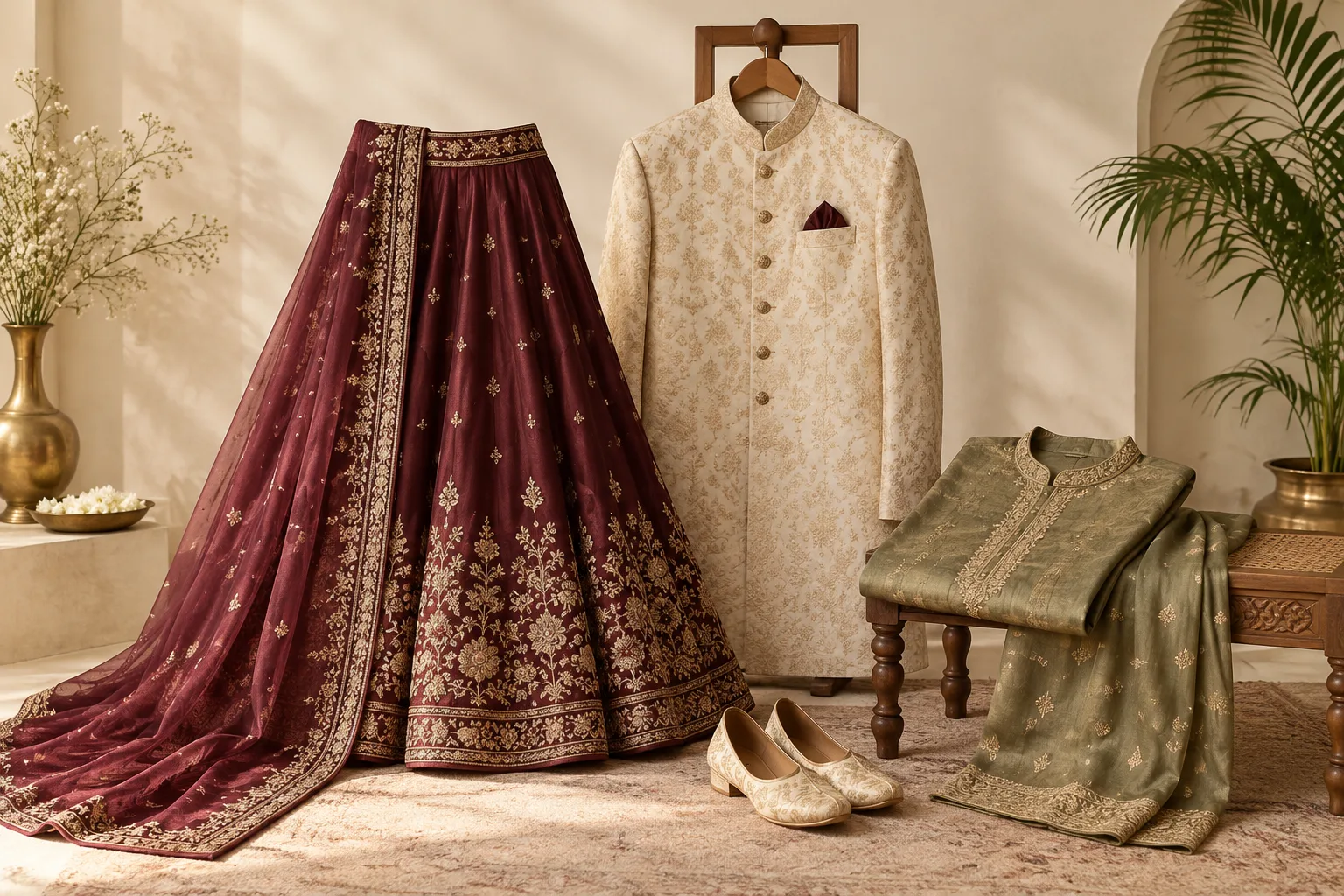
An ethnic wear store sells kurta sets, lehengas, sherwanis, Indo-western outfits and festive wear for women, men and children, ready-made or altered to fit. Marketing puts the store in front of families searching for a function outfit. Sales records the whole family's needs and the date each alteration is promised against the function. GullySales builds the enquiry log and the family order sheet.
The deadline is the product. An outfit that fits perfectly but arrives the day after the sangeet has failed. A store that knows the date and tells the family plainly when an alteration cannot be done earns more trust than one that agrees to everything.
Last updated 18 Oct 2026.
How buyers decide
How ethnic wear stores are chosen.
Buyers start on Instagram and Pinterest, looking for a colour or a cut, then visit stores to see the fabric and try the fit. They notice the quality of the embroidery, whether the store has outfits for the whole family, and how long alterations take. A store with only a mirror and no trial room loses buyers who want to try the fit.
The occasion fixes the budget. For a wedding, families spend more and shop in groups; for Navratri, Eid or Pongal, one outfit is bought quickly. Families compare two stores on a Saturday and weigh the size on the rack against a firm date for alterations.
Men's ethnic wear is bought differently. A groom or a groomsman comes in with the mother, picks a sherwani or a kurta set and wants the alteration done fast. Matching a group, such as ten cousins in the same colour, needs one store to stock the lot.
The problem
What usually goes wrong for ethnic wear stores.
What owners tell us on the first call, in their words.
“We sell one outfit to a family that needed five”
The mother buys one outfit and leaves. Nobody asked about the sisters, the brother and the father.
“Alteration dates go wrong in wedding season”
The slips pile up, one function is missed and the family tells everyone.
“People tell us on WhatsApp that they will come and never do”
We reply with photographs and a price, and the conversation ends.
“We cannot offer a group order without a mess”
Ten cousins want the same kurta set in different sizes and the order is written on the back of a bill.
“Our Instagram shows outfits but not the store”
Followers like the photographs and do not know where we are, what we charge or whether they can try on.
“Festival traffic is a flood and then nothing”
Navratri and Diwali fill the store, and the names taken in the rush stay on bill books with no plan to call them for the next occasion.
What we do
What we do for ethnic wear stores.
Everything included for ethnic wear stores.
An occasion and alteration tracker
Each order is logged with the function date, outfit, size, alteration needed and delivery slot, with a reminder call to the family before the date.
A family order sheet
One sheet per family that lists every person, outfit, size and colour so the store can plan the whole set.
An occasion catalogue on WhatsApp
Photographs grouped by occasion, such as sangeet, mehendi, reception, Navratri and Eid, with price ranges and sizes available.
A Google Business Profile for ethnic wear
Photographs of the store, trial room and alteration counter, and posts for each festival.
A group order routine
A simple process for matching sets across many sizes, with a deposit step and a date for the last fitting.
An outfits-per-family count
Outfits per order, alterations ready by the promised date and group orders, counted from the family sheets and set beside the figures from before the work.
How the result is measured
- Enquiries by source and by occasion
- Outfits per family order
- Alterations delivered by the promised date
- Group orders won
- Repeat buyers by occasion
- Reviews mentioning delivery
Recorded as a baseline before work starts, so every later report has an honest comparison.
Every service, written for ethnic wear stores
Each has its own page: what it involves for ethnic wear stores, what you get, and what it is measured on.
- Lead generationCollect the function date and the guest list with every enquiry, not just a name.
- SEORank for the garment and the occasion a family types, not for the word fashion.
- Local SEOBe the shop that appears on the map when a family searches for a lehenga nearby.
- Social media marketingShow the outfit at the function, then tell the viewer where the shop is.
- Content marketingWrite the guides a worried family reads before choosing where to buy the outfit.
- Buyer personasWrite down who chooses the outfit, who pays and who approves it at the fitting.
- CRMKeep one record for each family, with every function, outfit and fitting in it.
- Follow-up systemsCall the family before the function, not only after the enquiry goes quiet.
- WhatsApp marketingSend a shortlist by occasion on WhatsApp so the family arrives knowing what to try.
- Digital marketingAim the spend at the weeks a family is choosing, and at the streets near the shop.
- WebsiteBuild a site that shows the outfits and tells the family where to try them.
Worth a page and a campaign of their own
A function-date log for every enquiry · An alteration booking and delivery tracker · A WhatsApp catalogue by occasion · Family and group order handling · A Google profile that says kurta sets, lehengas and sherwanis · Festival campaigns for Navratri, Eid, Diwali and Pongal · A customer list by occasion and family · Reviews from function-day customers
Priority campaigns
Campaigns for what ethnic wear stores most want to sell.
Each one planned around when your buyers decide, and measured against the baseline.
Wedding guest campaign
Search and Instagram ads and WhatsApp messages in wedding months for guests who need outfits, with a page for each outfit type.
Navratri and festival sets
Early messages and ads for garba and festival wear, with sizes held for customers who book before the rush.
Groom and groomsmen
A page and ads for sherwanis and kurta sets for the groom's party, with a group booking option.
Alteration date message
A message sent after the visit with the date the alteration is promised for, and a reminder as that date nears.
Beyond search
Where we reach buyers of ethnic wear stores, beyond Google.
Search matters, but it is rarely the only way this industry's buyers find a supplier.
Families with a function coming
Search ads and Instagram posts for wedding guest and festival outfits.
Grooms and groomsmen
Pages and ads for sherwanis and Indo-western wear, aimed at the groom's family.
Wedding planners and photographers
A short introduction, with photographs of finished sets, for the planners and photographers clients ask for outfit suggestions.
Women's groups and apartment communities
WhatsApp group posts and in-store evenings before festivals, with the group's permission.
Past customers
Families whose bills show last year's Navratri, Eid or wedding purchase, messaged as that occasion comes round again.
Who it is for
This is written for these ethnic wear stores.
- Kurta set and salwar suit stores for women
- Lehenga and gown shops for functions
- Sherwani and Indo-western menswear shops
- Family ethnic wear stores selling for all ages
- Festival-led stores for Navratri, Eid and Pongal
- Ethnic wear shops with in-house alteration
- Rental and buy ethnic wear stores
- Group and cousin-set order specialists
Not for
It is not the right fit if.
- You want a guaranteed Google ranking or a guaranteed number of leads. Nobody honest can promise either.
- You need enquiries by next week and have nobody to answer them.
- You want posts and reach reported, not enquiries and orders.
How it works
From your first message to the first report.
No open-ended retainer. Every step gives you something in writing.
First
Your brief
You tell us what you need in a few short steps: your business, what you want, where enquiries come from and how they are handled.
After the brief
A conversation and a written scope
We read it, then talk with whoever handles your enquiries. If you want our help, the scope, the fee and the reporting come in writing, and nothing starts before you have read them.
Before work starts
Baseline recorded
The numbers this work is meant to move, such as enquiries, quotations, orders, visits or renewals, written down so every later report has an honest comparison.
After the baseline
The first fix goes live
The fix we agreed to start with is put in place and measured against the baseline, whether that is a reply, a follow-up, a page, a listing or the handover between marketing and sales.
As agreed
Report against the baseline
What moved, what did not, and what changes next, in plain words. How often you get it is set in writing before work starts.
At renewal
Renew on the numbers
The term ends and you decide whether to continue from the results. The length is agreed in writing before anything starts.
How the work runs for ethnic wear stores
- 1
Study the orders
We read recent bills and alteration slips to see how many outfits per family you sell and where dates slip.
- 2
Put the family sheet and tracker on the counter
The family order sheet and the alteration tracker, simple enough for the counter.
- 3
Set up the catalogue
Photographs by occasion with price and size, ready for WhatsApp and Instagram.
- 4
Run an occasion
A campaign for the nearest wedding months or festival, with a booking route for groups.
- 5
Count outfits per family
Check the family sheets for how many outfits each order carried and how many alterations were ready by the promised date, against the first bills read.
Why us
Why owners pick GullySales over an agency.
Marketing and sales, as one job
Most agencies stop at the enquiry. We also fix what happens after it: the reply, the follow-up, the quote and the CRM.
The person on the first call does the work
No account managers in between. You are never handed to someone you have not met.
A baseline before anything starts
Your numbers are written down on day one, so every later report compares against something honest.
The fee in writing, split three ways
Our time, your media spend and production on separate lines. You always see what goes to us.
No guarantees we cannot keep
The term is agreed in writing and never a default twelve months. We never promise a ranking or a lead count, because nobody controls those.
One office, and we say so
Nagarbhavi, Bengaluru. We work across India by call and WhatsApp and travel when a session needs to be in person.
#257, 3rd floor, Sri Nanjundeshwara Complex, Nagarbhavi 8th Block, Outer Ring Road. How we work.
Engagement options
Ways to work with us.
Pick the size of commitment that fits. Every option starts with your brief and a conversation.
Option 1
The conversation on its own
A call after you send your brief. It says honestly whether you need outside help, and many fixes are ones your own team can make.
Option 2
One fix, scoped
Start with the fix that matters most, such as reply time or follow-up. The fee is in writing before anything starts.
Option 3
An ongoing programme
We run the work, report against the baseline, and you renew on the numbers. The term and the reporting are agreed in writing first.
Option 4
Guidance for your own team or agency
We plan, brief and check the work of your in-house team or current agency, instead of replacing them.
Your brief
Tell us what you need, and we will read it before we call.
Eight short steps about your business, what you want and who decides. Most questions are a tap, and you can skip any you would rather answer on the call.
FAQ
Questions ethnic wear stores ask before they call.
Not here? More answers, or ask on WhatsApp.
Should we offer rental as well as sale?
How do we avoid missing alteration dates?
What is the difference between your ethnic wear page and a saree shop page?
Do ads work for a lehenga or sherwani?
Can you help us take group orders?
How much does it cost?
How long is the contract?
How soon will we see results?
Who will actually do the work?
What do you need from us?
Part of Retail. See the other industries in the sector.
Your next practical step
Tell us what you are trying to grow, and we will read it before we call.
Eight short steps, mostly taps. Skip anything you would rather answer on the call.