Fashion accessory stores · Search engine optimisation
Be the shop that appears when someone searches for the exact clip, belt or bangle.
SEO for a fashion accessory store is the work of making the shop and its range appear when a buyer types the name of a thing, such as oxidised earrings or a leather belt, along with the place. GullySales works on the pages, listings and wording that match those searches to what is on your shelves.
Scope, fee, reporting and term are agreed in writing after we have read your brief and spoken to you.
What search engine optimisation means
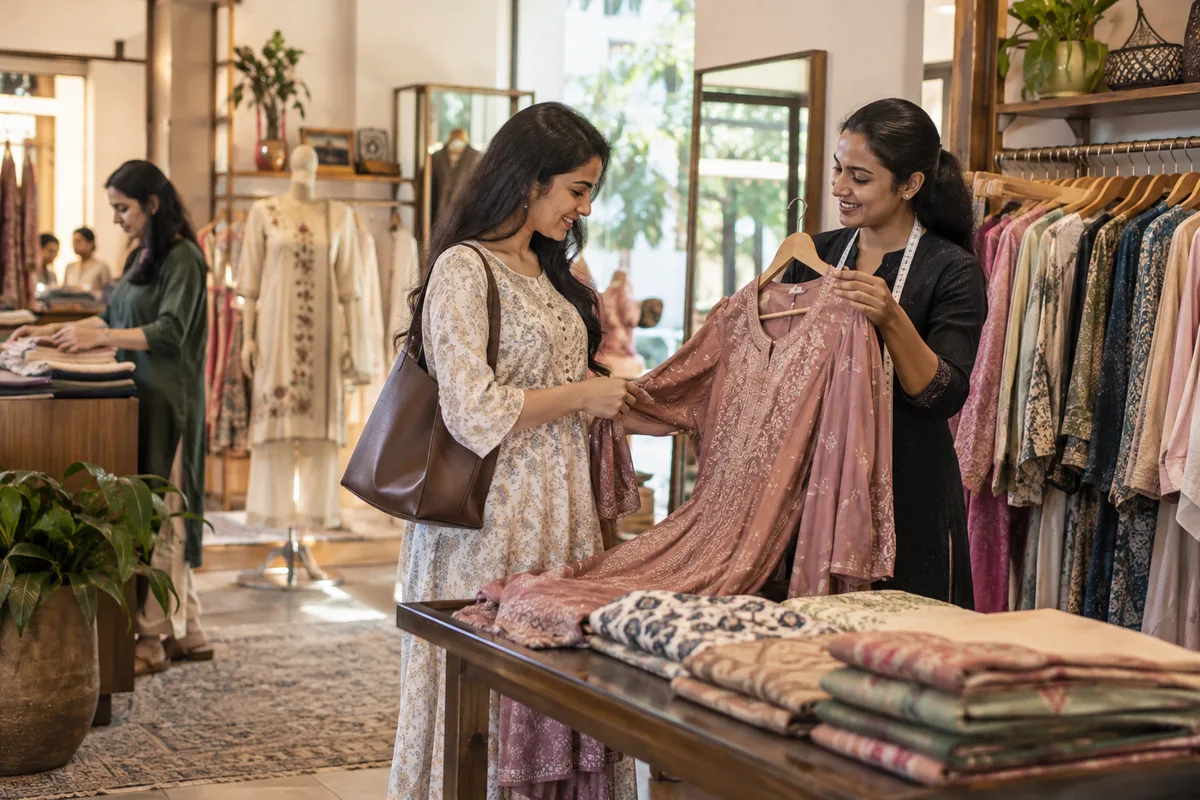
Search engine optimisation (SEO) is the work of getting your website to appear when a buyer searches Google for what you sell. GullySales builds pages around real search terms, fixes technical issues that block ranking, and tracks which searches actually bring enquiries.
Also for fashion accessory stores
- Local SEO for fashion accessory stores
- Website for fashion accessory stores
- Lead generation for fashion accessory stores
- Social media marketing for fashion accessory stores
- Content marketing for fashion accessory stores
- Buyer personas for fashion accessory stores
- CRM for fashion accessory stores
- Follow-up systems for fashion accessory stores
Sales and marketing for fashion accessory stores, the overview.
Last updated 18 Oct 2026.
For fashion accessory stores
Where it usually goes wrong, and what we would do.
“Buyers search for the item, not the shop”
Nobody types the name of an accessory store they have never heard of. They type bridal bangles, claw clips or aviator sunglasses, with the name of the area added. A shop that only shows its own name misses the search that matters.
“Stock changes and pages go stale”
A style sells out, a new one lands, and the page still describes last season. The searcher clicks, finds nothing, and goes back. Pages need to follow the shelf, or they bring visits that end in a bounce.
“Marketplaces own the plain product search”
A search for a basic hair clip is crowded by large online sellers. The shop does not win that term. It wins where it has something they lack: the area, the occasion, the try-on, the set matched to an outfit.
“Photographs carry the search more than paragraphs”
A buyer of accessories judges by sight. A page with a clear photograph, a plain name for the item and a price will be read, while a page of long copy about fashion is skipped. The words matter, but the picture finishes the sale.
What we do
What we deliver for fashion accessory stores.
Every deliverable, what it covers for you, and the result it is there to produce. Nothing here is an extra.
A list of the searches your buyers use
Item names, occasions and area words gathered from counter questions, Instagram messages and the Google listing, sorted by the type of buyer.
Result: You have one sheet of the phrases a buyer uses for what you sell.
A page for each range you stock
A page for hair accessories, one for fashion jewellery, one for sunglasses and caps, each with photographs, plain item names and the shop address.
Result: Each range on the shelf has a page a search can land on.
Item names written the way buyers say them
Product names and descriptions checked against the phrases buyers use, so a scrunchie is not listed under a name only the supplier knows.
Result: The wording on the page matches the wording in the search.
Festival and season pages kept ready
Pages for bridal sets, Rakhi gifts and the summer sunglasses push, prepared before the season so they can be found when the searches start.
Result: The season has a page waiting before the buying begins.
Photograph and filename housekeeping
Image sizes, descriptive filenames and alternative text so the pages load well on a phone and the pictures can appear in image search.
Result: The pages open cleanly on a mid-range phone.
A check on what the search tool reports
Search appearances, clicks and the pages that attract them, read from Google Search Console and set against the baseline noted at the start.
Result: You see which pages bring visitors and which do not.
How the result is measured
- Ranking positions
- Organic traffic
- Enquiries from organic search
Recorded as a baseline before work starts, so every later report has an honest comparison.
Who it is for
This is written for these fashion accessory stores.
- Hair accessory and kids' accessory shops
- Fashion jewellery and imitation jewellery stores
- Sunglasses and watches kiosks
- Belts, wallets and scarves shops
- Mall kiosks and cart stores
- Bridal accessory and bangles shops
- College-area budget accessory shops
- Wholesale accessory dealers with a shop front
How it works
From your first message to the first report.
No open-ended retainer. Every step gives you something in writing.
First
Your brief
You tell us what you need in a few short steps: your business, what you want, where enquiries come from and how they are handled.
After the brief
A conversation and a written scope
We read it, then talk with whoever handles your enquiries. If you want our help, the scope, the fee and the reporting come in writing, and nothing starts before you have read them.
Before work starts
Baseline recorded
The numbers this work is meant to move, such as enquiries, quotations, orders, visits or renewals, written down so every later report has an honest comparison.
After the baseline
The first fix goes live
The fix we agreed to start with is put in place and measured against the baseline, whether that is a reply, a follow-up, a page, a listing or the handover between marketing and sales.
As agreed
Report against the baseline
What moved, what did not, and what changes next, in plain words. How often you get it is set in writing before work starts.
At renewal
Renew on the numbers
The term ends and you decide whether to continue from the results. The length is agreed in writing before anything starts.
How the search engine optimisation work runs
- 1
Audit and baseline
We record where the site stands today: positions, traffic, technical faults and the enquiries search currently produces. Nothing starts until this number is written down.
- 2
Decide what to rank for
We map the searches your buyers use, in your words and theirs, and pick the ones worth the effort for your margin and your capacity.
- 3
Fix the foundations
Technical faults first, because the cheapest gains are usually there. Then the Business Profile and directory consistency.
- 4
Build the pages
A page for each thing you do, written to answer the question it is searched for, with a clear next step at the end.
- 5
Publish and earn mentions
Content goes out on the calendar. Links and mentions are earned from real relationships, not bought.
- 6
Measure, report, adjust
At the interval agreed at the start we report what moved and what did not, and change the plan when the numbers say so.
Why us
Why owners pick GullySales over an agency.
Marketing and sales, as one job
Most agencies stop at the enquiry. We also fix what happens after it: the reply, the follow-up, the quote and the CRM.
The person on the first call does the work
No account managers in between. You are never handed to someone you have not met.
A baseline before anything starts
Your numbers are written down on day one, so every later report compares against something honest.
The fee in writing, split three ways
Our time, your media spend and production on separate lines. You always see what goes to us.
No guarantees we cannot keep
The term is agreed in writing and never a default twelve months. We never promise a ranking or a lead count, because nobody controls those.
One office, and we say so
Nagarbhavi, Bengaluru. We work across India by call and WhatsApp and travel when a session needs to be in person.
#257, 3rd floor, Sri Nanjundeshwara Complex, Nagarbhavi 8th Block, Outer Ring Road. How we work.
Your brief
Tell us what you need, and we will read it before we call.
Eight short steps about your business, what you want and who decides. Most questions are a tap, and you can skip any you would rather answer on the call.
FAQ
Questions owners ask before they call.
Not here? More answers, or ask on WhatsApp.
Can a small accessory shop rank against big online stores?
Do we need an online store for SEO?
How do we know the SEO is working?
How much does it cost?
How long is the contract?
How soon will we see results?
Who will actually do the work?
What if we are not happy with the work?
More for fashion accessory stores
Everything else we would do for you.
Closest to this: search and visibility
Also for fashion accessory stores
Or start from the overview: sales and marketing for fashion accessory stores.
Your next practical step
Tell us what you are trying to grow, and we will read it before we call.
Eight short steps, mostly taps. Skip anything you would rather answer on the call.