Men's clothing stores · Local SEO
Be the open shop on the map when a man needs formal wear before the weekend.
Local SEO for a men's clothing store is the work of appearing in the map results when a buyer nearby searches for shirts, suits or wedding wear. GullySales works on the listing, the photographs and the review flow that decide those results.
Scope, fee, reporting and term are agreed in writing after we have read your brief and spoken to you.
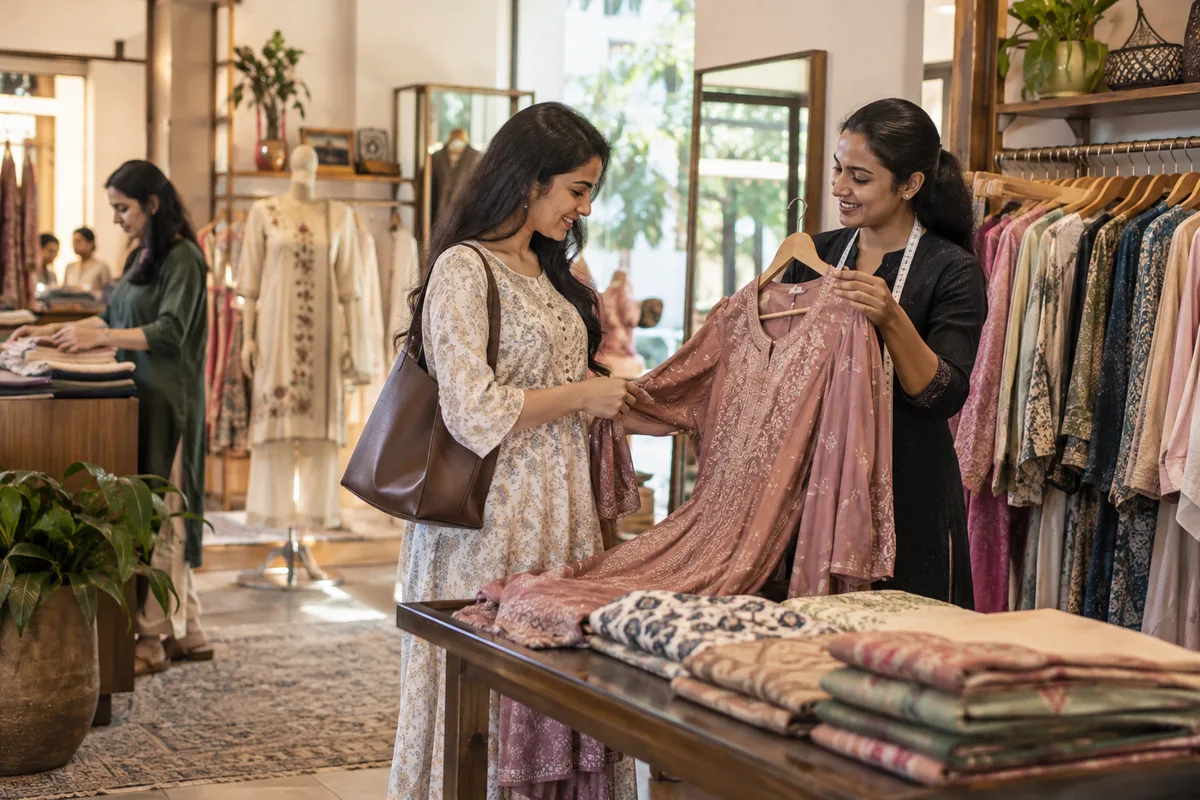
What local SEO means
Local SEO is the work of making your business show up for searches that name your town or locality, such as a service plus an area name. GullySales sets up locality pages, local citations and map listings so nearby customers find you before a competitor across town.
Also for men's clothing stores
- SEO for men's clothing stores
- Website for men's clothing stores
- Lead generation for men's clothing stores
- Social media marketing for men's clothing stores
- Content marketing for men's clothing stores
- Buyer personas for men's clothing stores
- CRM for men's clothing stores
- Follow-up systems for men's clothing stores
Sales and marketing for men's clothing stores, the overview.
Last updated 18 Oct 2026.
For men's clothing stores
Where it usually goes wrong, and what we would do.
“The search is urgent and close”
A man needing a shirt for tomorrow's meeting looks on a phone and picks the nearest open shop. Opening hours, a clear primary type and a recent photograph decide the tap, long before price comes up.
“Photographs sell a clothing shop”
A listing with one dim image loses to a competitor with a lit shop front, racks and the suit section. Buyers judge whether the shop looks their style from the pictures before they read a word.
“Reviews describe the staff, and the buyer reads that”
Comments on fitting help, alteration and honest advice weigh more with a nervous buyer than a star count. A shop with recent reviews that mention the people looks alive.
“Festival and wedding seasons change the hours”
Shops stay open late before big festivals and wedding dates. A listing that still shows ordinary hours sends buyers to a rival at the one time they would have come.
What we do
What we deliver for men's clothing stores.
Every deliverable, what it covers for you, and the result it is there to produce. Nothing here is an extra.
A complete and correct listing
Name, business type, address, timings, brands stocked, services such as alterations and the WhatsApp number, all checked.
Result: Nothing on the listing contradicts what a visitor finds at the door.
Photographs of the shop and the racks
A shot of the front at night, the formal wall, the wedding section and the trial rooms, refreshed when stock changes.
Result: The listing shows what the shop looks like today.
Festival and season hours
Special hours entered ahead of festivals and wedding peaks, with a reminder for the staff to update them.
Result: A late-night search finds the shop shown as open.
A review ask at the billing desk
A card or phone link offered when the customer is paid, with a short reply written to each review afterwards.
Result: New reviews come from buyers who visited.
Posts for arrivals and offers
Short updates on new stock, wedding collections and alteration services on the profile.
Result: The profile shows activity, not a dated entry.
Calls and direction tracking
The listing's own counts of calls, direction requests and website taps, recorded against the start.
Result: You can see how many nearby searches reached the shop.
How the result is measured
- Map pack ranking
- Local search visibility
- Enquiries by locality
Recorded as a baseline before work starts, so every later report has an honest comparison.
Who it is for
This is written for these men's clothing stores.
- Formal shirt and trouser shops near offices and business districts
- Multi-brand men's wear showrooms in district markets
- Suit, blazer and wedding wear shops for grooms
- Jeans and casual wear stores near colleges
- Big-and-tall and plus-size men's wear shops
- Franchise outlets of a single men's brand
- Shirting and trouser cloth shops with in-house stitching
- Corporate uniform and bulk shirt suppliers
How it works
From your first message to the first report.
No open-ended retainer. Every step gives you something in writing.
First
Your brief
You tell us what you need in a few short steps: your business, what you want, where enquiries come from and how they are handled.
After the brief
A conversation and a written scope
We read it, then talk with whoever handles your enquiries. If you want our help, the scope, the fee and the reporting come in writing, and nothing starts before you have read them.
Before work starts
Baseline recorded
The numbers this work is meant to move, such as enquiries, quotations, orders, visits or renewals, written down so every later report has an honest comparison.
After the baseline
The first fix goes live
The fix we agreed to start with is put in place and measured against the baseline, whether that is a reply, a follow-up, a page, a listing or the handover between marketing and sales.
As agreed
Report against the baseline
What moved, what did not, and what changes next, in plain words. How often you get it is set in writing before work starts.
At renewal
Renew on the numbers
The term ends and you decide whether to continue from the results. The length is agreed in writing before anything starts.
How the local SEO work runs
- 1
Audit every listing
We check the Google Business Profile and directory listings for every branch against what should actually be shown.
- 2
Complete and correct
Profiles are filled in fully and inconsistent details are corrected across every directory found.
- 3
Build location pages
Each branch gets a page written for its own area, not a copy of the head office page with the address changed.
- 4
Set up review handling
A simple process for requesting and responding to reviews is put in place with whoever is closest to the customer.
- 5
Report and adjust
Map actions and enquiries per branch are reported, and branches falling behind are prioritised the next month.
Why us
Why owners pick GullySales over an agency.
Marketing and sales, as one job
Most agencies stop at the enquiry. We also fix what happens after it: the reply, the follow-up, the quote and the CRM.
The person on the first call does the work
No account managers in between. You are never handed to someone you have not met.
A baseline before anything starts
Your numbers are written down on day one, so every later report compares against something honest.
The fee in writing, split three ways
Our time, your media spend and production on separate lines. You always see what goes to us.
No guarantees we cannot keep
The term is agreed in writing and never a default twelve months. We never promise a ranking or a lead count, because nobody controls those.
One office, and we say so
Nagarbhavi, Bengaluru. We work across India by call and WhatsApp and travel when a session needs to be in person.
#257, 3rd floor, Sri Nanjundeshwara Complex, Nagarbhavi 8th Block, Outer Ring Road. How we work.
Your brief
Tell us what you need, and we will read it before we call.
Eight short steps about your business, what you want and who decides. Most questions are a tap, and you can skip any you would rather answer on the call.
FAQ
Questions owners ask before they call.
Not here? More answers, or ask on WhatsApp.
Should we list each branch separately?
A competitor has more reviews. Can we catch up?
Do we need a website to appear on Maps?
How much does it cost?
How long is the contract?
How soon will we see results?
Who will actually do the work?
What do you need from us?
What if we are not happy with the work?
More for men's clothing stores
Everything else we would do for you.
Closest to this: search and visibility
Also for men's clothing stores
Or start from the overview: sales and marketing for men's clothing stores.
Your next practical step
Tell us what you are trying to grow, and we will read it before we call.
Eight short steps, mostly taps. Skip anything you would rather answer on the call.