Women's clothing stores · Retail
Put new arrivals on the customer's phone with the price, size and a way to ask.
A woman who likes a kurti on Instagram saves the post, sends it to a friend, asks the shop for the price and size, and decides when the cousin replies. A reply with a photo of the actual piece gives the family group chat something to forward.
Scope, fee, reporting and term are agreed in writing after we have read your brief and spoken to you.
In one paragraph
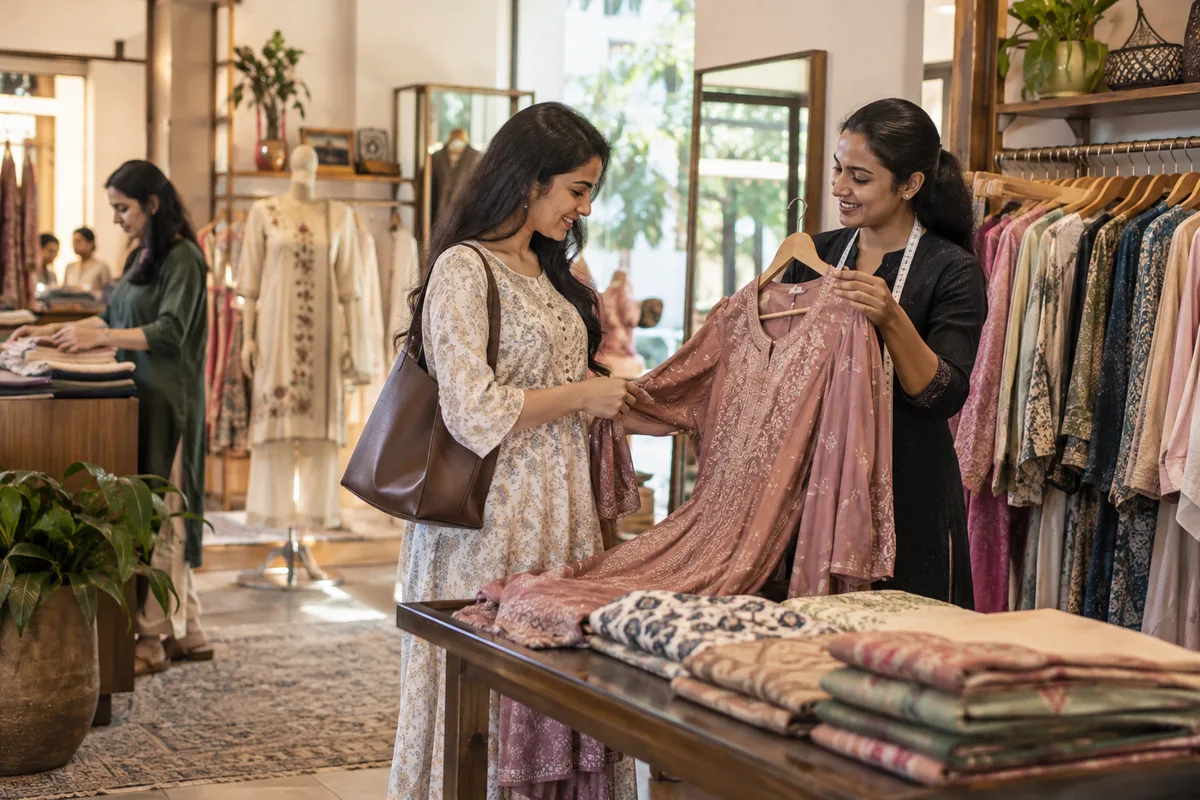
A women's clothing store sells kurtis, tops, dresses, western wear and everyday outfits to women, from a ready rack in a market or mall. Marketing makes the shop easy to find and its new stock visible on Instagram and WhatsApp. Sales handles the DM that asks only for a price. GullySales builds the catalogue, the customer list and the reply routine.
Stock moves fast. A rack that was new last month is old this month, and a customer who comes in and sees the same pieces does not return. Most stores sell the same few hundred pieces to the same few hundred women, and know neither who they are nor which colours they bought.
Last updated 18 Oct 2026.
How buyers decide
How women's clothing stores are chosen.
Women find a clothing store through Instagram reels, a friend's outfit, and Google Maps when they are near a market. They look for recent photographs, whether the store posts new stock, and whether the prices are written down. A shop that hides prices and replies slowly loses to one that sends a catalogue.
Occasion decides what is bought and how much. Festival season, a cousin's wedding, a college fest or a new job each calls for different outfits, shopped over two or three weekends. The buyer compares three shops and an online app, and buys where the piece can be tried on and the size is right.
Resellers and Instagram boutiques sit in between: they buy wholesale, post pieces on stories and sell on a screenshot. They compete on speed of reply and a new post every day, which a walk-in store must match to stay in the same conversation.
The problem
What usually goes wrong for women's clothing stores.
What owners tell us on the first call, in their words.
“We post new pieces and get few messages”
The posts are product photos with no price, no sizes and no instruction, so people like them and scroll on.
“A DM asking for the price goes unanswered for hours”
The owner replies when the shop is quiet. By then the customer has bought from the next boutique that answered.
“We do not know who our regular customers are”
Bills are written without a name or number, so we cannot message anyone about the colour bought last Diwali.
“New stock sits unseen”
A fresh set of kurtis arrives on Thursday and only people who walk in see it by the weekend, because our WhatsApp list is a few hundred old contacts.
“Fast-moving sizes run out in the middle of the season”
We learn what sells only when a size is gone, and refill after the customers have left.
“Our listing does not say what we sell”
The Maps entry says garment shop and shows a blurred front photo. Someone searching for kurtis nearby gets a competitor.
What we do
What we do for women's clothing stores.
Everything included for women's clothing stores.
A WhatsApp catalogue with working replies
Product photographs grouped by type, with price, sizes available and a reply routine so a customer asking about a piece gets a person and a photograph.
A customer list from bills
Name, phone, size, preferred colours and last purchase, kept in a simple sheet that counter staff fill in at billing, with permission to message.
Reels and posts planned around stock
A plan for short videos of new pieces, trial-room try-ons with the customer's consent and styling ideas, each with the price and an instruction to message.
A sharper Google Business Profile
Categories and photographs that say kurtis, western wear or plus size, product posts for new arrivals, and answers to questions customers keep asking.
Festival and college campaigns
Messages and ads timed to the weeks before festivals, farewell days and wedding invitations, each tied to the pieces you actually have.
A post-by-post enquiry tally
Each reel, post and broadcast matched to the DMs, WhatsApp messages and visits that followed it, with best-selling sizes listed beside the count.
How the result is measured
- Instagram and WhatsApp enquiries received
- Enquiries that became a shop visit
- Repeat customers from the list
- Reply time to messages
- Best-selling sizes and colours
- Reviews added with photographs
Recorded as a baseline before work starts, so every later report has an honest comparison.
Every service, written for women's clothing stores
Each has its own page: what it involves for women's clothing stores, what you get, and what it is measured on.
- Lead generationTurn a scroll through new kurtis into a message that asks for a size.
- SEOBe the page a buyer finds when typing the exact outfit and the city.
- Local SEOBe the shop the map shows when a buyer nearby searches for kurtis.
- Social media marketingPost the piece, the price and the size so a viewer can reply at once.
- Content marketingWrite what a buyer asks before the wedding, so the shop is already trusted.
- Buyer personasDescribe the women who actually walk in, and write every post to one of them.
- CRMRemember every customer's size, colour and last purchase, and message them about it.
- Follow-up systemsReply to the price query, then follow up the customer who tried on and left.
- WhatsApp marketingSend the new set to the customers who asked, with the price and a photo.
- Digital marketingJoin the listing, the posts and the replies so one path leads to the counter.
- WebsiteGive the shop one page that shows the range, the address and a way to ask.
Worth a page and a campaign of their own
A WhatsApp catalogue with price, size and photograph · A reply routine for Instagram and WhatsApp enquiries · A customer list with name, phone, size and colour liked · New-arrival posts and reels with the price visible · A Google profile that lists kurtis, tops, dresses and plus sizes · Stock movement by size and colour · Festival and college-season campaigns · Reviews with photographs of real customers
Priority campaigns
Campaigns for what women's clothing stores most want to sell.
Each one planned around when your buyers decide, and measured against the baseline.
New arrival drop
A set of reels and a WhatsApp message to the customer list each time a new lot lands, naming the pieces, sizes and price range.
College season
Instagram ads and creator posts aimed at students in the neighbourhood, with fest-wear and daily wear sets under a clear price range.
Festival wardrobe push
A campaign before the nearest big festival with outfit sets by colour, a Maps post and a message to past buyers who bought for the last one.
Size-back-in-stock message
A short message to women who asked about a size that was out, sent when it returns.
Beyond search
Where we reach buyers of women's clothing stores, beyond Google.
Search matters, but it is rarely the only way this industry's buyers find a supplier.
Women in the neighbourhood
Local ads and Maps listings around the market, hostels, offices and apartment complexes within a short ride.
College students
Instagram and creator posts for students buying farewell and fest outfits, linked to a price list on WhatsApp.
Working women
Content on office-wear kurtis and dresses, with a reel that shows how a set looks from desk to dinner.
Women planning a family function
Pages and messages on outfit sets for sisters and cousins before a wedding or a baby shower.
Past customers
Women whose size and colour you noted at billing, messaged when a matching piece arrives or an out-of-stock size returns.
Who it is for
This is written for these women's clothing stores.
- Kurti and kurta set shops in neighbourhood markets
- Western wear and dress stores near colleges and offices
- Multi-brand women's fashion showrooms
- Plus-size and maternity wear shops
- Leggings, palazzo and daily wear stores
- Ladies' boutique shops with ready-to-wear and stitching
- Instagram-first stores with one small physical counter
- Franchise outlets of women's wear brands
Not for
It is not the right fit if.
- You want a guaranteed Google ranking or a guaranteed number of leads. Nobody honest can promise either.
- You need enquiries by next week and have nobody to answer them.
- You want posts and reach reported, not enquiries and orders.
How it works
From your first message to the first report.
No open-ended retainer. Every step gives you something in writing.
First
Your brief
You tell us what you need in a few short steps: your business, what you want, where enquiries come from and how they are handled.
After the brief
A conversation and a written scope
We read it, then talk with whoever handles your enquiries. If you want our help, the scope, the fee and the reporting come in writing, and nothing starts before you have read them.
Before work starts
Baseline recorded
The numbers this work is meant to move, such as enquiries, quotations, orders, visits or renewals, written down so every later report has an honest comparison.
After the baseline
The first fix goes live
The fix we agreed to start with is put in place and measured against the baseline, whether that is a reply, a follow-up, a page, a listing or the handover between marketing and sales.
As agreed
Report against the baseline
What moved, what did not, and what changes next, in plain words. How often you get it is set in writing before work starts.
At renewal
Renew on the numbers
The term ends and you decide whether to continue from the results. The length is agreed in writing before anything starts.
How the work runs for women's clothing stores
- 1
Check the feed and the counter
Scroll the last month of posts, read the unanswered DMs and watch how the counter takes a name at billing, then note how many enquiries turn into visits today.
- 2
Set up the catalogue
Photographs sorted by kurti, top and dress, each with price and sizes, plus a short reply sheet for whoever holds the phone.
- 3
Start the customer list
Counter staff begin taking name, number and size at billing, with permission to send messages.
- 4
Post with a purpose
Reels and posts built around actual stock, each one with a price and an instruction to message.
- 5
Read the tally
Set the post-by-post counts beside the first week's figures and shift effort toward the posts and messages that drew questions.
Why us
Why owners pick GullySales over an agency.
Marketing and sales, as one job
Most agencies stop at the enquiry. We also fix what happens after it: the reply, the follow-up, the quote and the CRM.
The person on the first call does the work
No account managers in between. You are never handed to someone you have not met.
A baseline before anything starts
Your numbers are written down on day one, so every later report compares against something honest.
The fee in writing, split three ways
Our time, your media spend and production on separate lines. You always see what goes to us.
No guarantees we cannot keep
The term is agreed in writing and never a default twelve months. We never promise a ranking or a lead count, because nobody controls those.
One office, and we say so
Nagarbhavi, Bengaluru. We work across India by call and WhatsApp and travel when a session needs to be in person.
#257, 3rd floor, Sri Nanjundeshwara Complex, Nagarbhavi 8th Block, Outer Ring Road. How we work.
Engagement options
Ways to work with us.
Pick the size of commitment that fits. Every option starts with your brief and a conversation.
Option 1
The conversation on its own
A call after you send your brief. It says honestly whether you need outside help, and many fixes are ones your own team can make.
Option 2
One fix, scoped
Start with the fix that matters most, such as reply time or follow-up. The fee is in writing before anything starts.
Option 3
An ongoing programme
We run the work, report against the baseline, and you renew on the numbers. The term and the reporting are agreed in writing first.
Option 4
Guidance for your own team or agency
We plan, brief and check the work of your in-house team or current agency, instead of replacing them.
Your brief
Tell us what you need, and we will read it before we call.
Eight short steps about your business, what you want and who decides. Most questions are a tap, and you can skip any you would rather answer on the call.
FAQ
Questions women's clothing stores ask before they call.
Not here? More answers, or ask on WhatsApp.
Why do our posts get likes but no sales?
Should we run Instagram ads for a ladies' shop?
Can we message customers without annoying them?
Do we need a website?
How do we compete with big online apps?
How much does it cost?
How long is the contract?
How soon will we see results?
Who will actually do the work?
What do you need from us?
Part of Retail. See the other industries in the sector.
Your next practical step
Tell us what you are trying to grow, and we will read it before we call.
Eight short steps, mostly taps. Skip anything you would rather answer on the call.