Antique and curio dealers · Lead generation
Find the designer, the collector and the hotelier before they find another lane.
Lead generation for an antique or curio dealer is the work of reaching people who want an old piece and do not yet know your shop holds it. GullySales works on where those buyers look, what they are shown and how each enquiry is recorded.
Scope, fee, reporting and term are agreed in writing after we have read your brief and spoken to you.
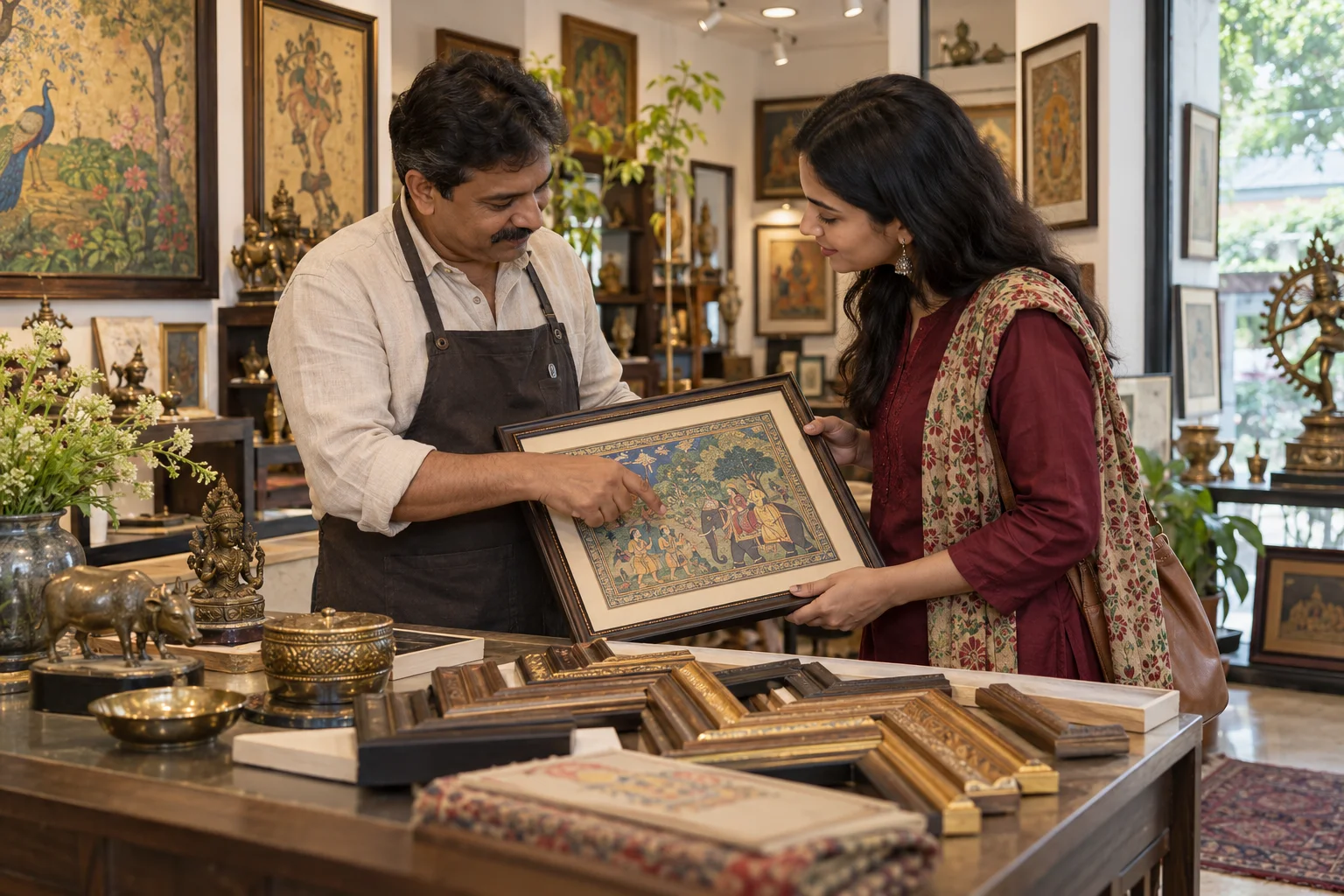
What lead generation means
Lead generation is the combined work of every channel that brings in a new enquiry, whether from search, adverts, referrals or a stall at an exhibition. GullySales runs these channels together and reports the number of enquiries each one produced, not the activity behind it.
Plan the next part of the work
Last updated 21 Nov 2026.
For antique and curio dealers
Where it usually goes wrong, and what we would do.
“The best buyers are not walking past”
A hotel owner furnishing a heritage property or a designer sourcing a lobby piece searches from another city. The shop in the lane is invisible to them unless the stock is described online with sizes, material and origin.
“A photo and a price is where the chat ends”
The buyer sends a picture and asks how much. A bare figure gives them nothing to weigh, while a reply that says what the piece is, where it came from and how it was restored keeps the conversation alive.
“Designers buy for a project, and projects repeat”
One designer sourcing for a hotel buys several pieces and returns for the next job. A dealer who records the brief, the style and the budget can message the same person when something matching arrives.
“Collectors are specialists and look for specifics”
A person who gathers old coins, cameras or brass lamps searches with exact terms. A shop that lists items by type, period and condition appears for them, and a shop that posts a general shelf does not.
What we do
What we deliver for antique and curio dealers.
The work available for this need. We agree the deliverables and responsibilities for your engagement in writing.
A buyer enquiry route on every listing
Every photograph, page and post links to one WhatsApp number and a short form for item of interest, city and purpose.
Result: No enquiry arrives without a note of what it was for.
A trade pack for designers and architects
A short catalogue by style and room use, with sizes and finish, and a clear route for viewing and shipping.
Result: Professionals have something to forward to a client.
Collector lists by interest
A register of buyers by what they gather, kept with their consent, so a new arrival reaches the right few.
Result: A new coin set goes to coin collectors only.
A reply that explains the piece
A saved format for answering a price request with description, condition, origin as known and the viewing offer.
Result: The buyer receives a reason to visit, not just a number.
An enquiry sheet with source and outcome
A record of who asked, through which door, about what, and whether a viewing or sale followed.
Result: You see which door brings serious buyers.
How the result is measured
- Relevant enquiries by source
- Duplicate and unsuitable enquiries
- Time to the first response
- Accepted enquiries reaching an agreed next step
Recorded as a baseline before work starts, so every later report has an honest comparison.
What to capture or send
What to record when a buyer asks about an old piece.
- Piece the buyer asked about
- Note the item, and the photo or listing it came from. A dealer who knows which carved door drew the enquiry can offer the matching panel when it arrives.
- Purpose of the purchase
- Ask whether it is for a home, a hotel lobby, a client project or a collection. A designer needing matching pieces wants a different reply from a tourist wanting one brass lamp.
- Where the piece will stand
- Record the city and the room, with the door width if the piece is large. The dealer can then say whether a cabinet will pass a flat's lift before the buyer travels.
- Budget the buyer is comfortable with
- Write down a range if one is given. It lets you offer a smaller piece of the same period instead of losing the enquiry to a price nobody discussed.
- Photos and provenance already sent
- Log which images, condition notes and origin details went out. When the buyer returns, nothing is repeated and the account of any repair is told the same way each time.
Who it is for
This is written for these antique and curio dealers.
- Antique furniture and carved wood dealers
- Brass, bronze and temple artefact dealers
- Old coin, stamp and banknote dealers
- Vintage poster, radio, camera and gramophone sellers
- Colonial and heritage home decor dealers
- Textile, saree and tribal jewellery antique dealers
- Reproduction and curio shops for tourists
- Auction house consignment agents and estate clearance dealers
Before you decide
When this may not be the right fit.
- You have not photographed or written up the stock yet, so an enquiry would arrive for a piece nobody can describe.
- Every price is quoted by one elder who is away from the shop for long stretches, and nobody else can answer a buyer.
- You deal in items whose sale or movement needs a licence you have not checked, so more enquiries would only add risk.
Before you decide
Agree the work. Know how to judge it.
Lead generation for antique dealers: use these checks to prepare, choose the scope, and review what changes.
Bring the right evidence
Define the organisations or buyers you can serve and the reasons they would consider a conversation. Bring examples of accepted and rejected prospects so the selection rule is visible.
Make the scope clear
Agree the research sources, contact approach, qualification rules, and handover. Clarify which meetings count as accepted and what happens to replies that are not ready to buy.
Check the work in use
Review why a prospect was selected and what was learned from the response. Count held, relevant conversations separately from contacts found, messages sent, or meetings booked.
Know when to change course
If the same objection appears repeatedly, adjust the offer or buyer group before increasing outreach. Respect a request to stop contact and keep the exclusion in the record.
These are discussion points, not a fixed package. GullySales confirms the deliverables, responsibilities, fee, and term in writing after reading your brief and speaking with you.
Before we start
What to have ready before the work starts.
The records, access and decisions this work needs from antique and curio dealers. Anything missing is noted in the written scope, with who will supply it.
- The sales book for the last two years
- We need the invoices, the register or the chats that show who bought what. The plan is aimed at buyers like your best ones, so it must see them. If the book is incomplete, we work from the sales you remember and mark that clearly. Bring the invoice book or the chat history.
- Photographs of twenty pieces to sell
- Bring clean images on a plain background, with measurements and the notes you would give a buyer in the shop. Listings and the trade pack depend on them. Pieces without good photographs wait until a photo session is arranged. Bring them with sizes and any marks you can show.
- A decision on who may hold a piece
- Decide who gets a hold, for how long you will keep it and whether an advance is taken. The pack and the replies state your rule. If no rule exists, we write one with you before the pack goes out. The same rule then appears in every reply.
- Names of designers and hotels you already supply
- List the buyers you trust and are willing to be approached through. We do not contact anyone you have not named. A short list is enough to begin, and a missing one means the trade pack starts with public sources only.
How it works
How the lead generation work runs
The work itself, in order. How an engagement starts, from your brief to a written scope, is set out on our method page.
- 1
Sort past sales by who bought and why
We begin with your sales book, invoices and chats and sort the last sales by buyer: designer, collector, hotel or restaurant owner, visitor from abroad. You tell us what each bought and how they first found the shop, and the pattern shows where your best buyers came from. The sorted list is the first page of the plan.
- 2
Choose the buyers worth reaching next
From that pattern we pick the two or three kinds of buyer who pay properly and come back, and the pieces that suit them. You decide, since only the dealer knows which stock can be replaced and which cannot, and the rest of the work is built around that choice.
- 3
Put an enquiry route on every listing
We add one clear way to ask about a piece wherever it is shown, with the photograph, a short condition note and a link that opens a message with the piece already named. You test it on your own phone, and we remove any route that sends the buyer into a general chat.
- 4
Prepare the trade pack for designers
We assemble a short pack for designers and architects: who you are, the kinds of pieces you hold, how a hold is arranged and how a piece travels. You choose which pieces appear, and we prepare it as a link they can forward to a client.
- 5
Log every enquiry and what became of it
We set up a sheet where each enquiry is entered with its source, the piece asked about and the outcome. You or the person at the counter fill it in, and we compare it with the sales we sorted at the start to see which source gave the buyers you wanted.
Where this fits
Three pieces of sales work, in this order.
This work sits inside sales process design, at stage 1, prospecting and lead generation. The audit comes before it, and sales management keeps it running.
Step 1
Sales audit
Find where deals are being lost and what to fix first.
Start here if you cannot say where orders are lost.
Step 2 · you are here
Sales process design
One written way to sell, from first enquiry to repeat order.
Start here if every salesperson sells differently.
Step 3
Sales management
A target, a review routine and someone who owns the number.
Start here if the team has targets and no routine.
FAQ
Questions owners ask before they call.
Not here? More answers, or ask on WhatsApp.
Where do serious antique buyers come from?
Should we list stock on marketplaces?
What if a buyer will not give any details?
Can one designer's enquiries be tracked across several projects?
How do we deal with a buyer who sends a photo and asks only the price?
Should we tell a designer the name of our source for a piece?
How long is the contract?
How soon will we see results?
Who will actually do the work?
What do you need from us?
More for antique and curio dealers
Related work to consider.
Closest to this: leads and follow-up
Also for antique and curio dealers
Or start from the overview: sales and marketing for antique and curio dealers.
Your next practical step
Tell us what you are trying to grow, and we will read it before we call.
Eight short steps, mostly taps. Skip anything you would rather answer on the call.