Antique and curio dealers · Buyer persona
Know whether the person at the door is decorating, collecting or reselling.
A buyer persona for an antique dealer is a written profile of a type of buyer: what they look for, how they judge a piece and what makes them buy. GullySales works on building those profiles from your own sales and conversations.
Scope, fee, reporting and term are agreed in writing after we have read your brief and spoken to you.
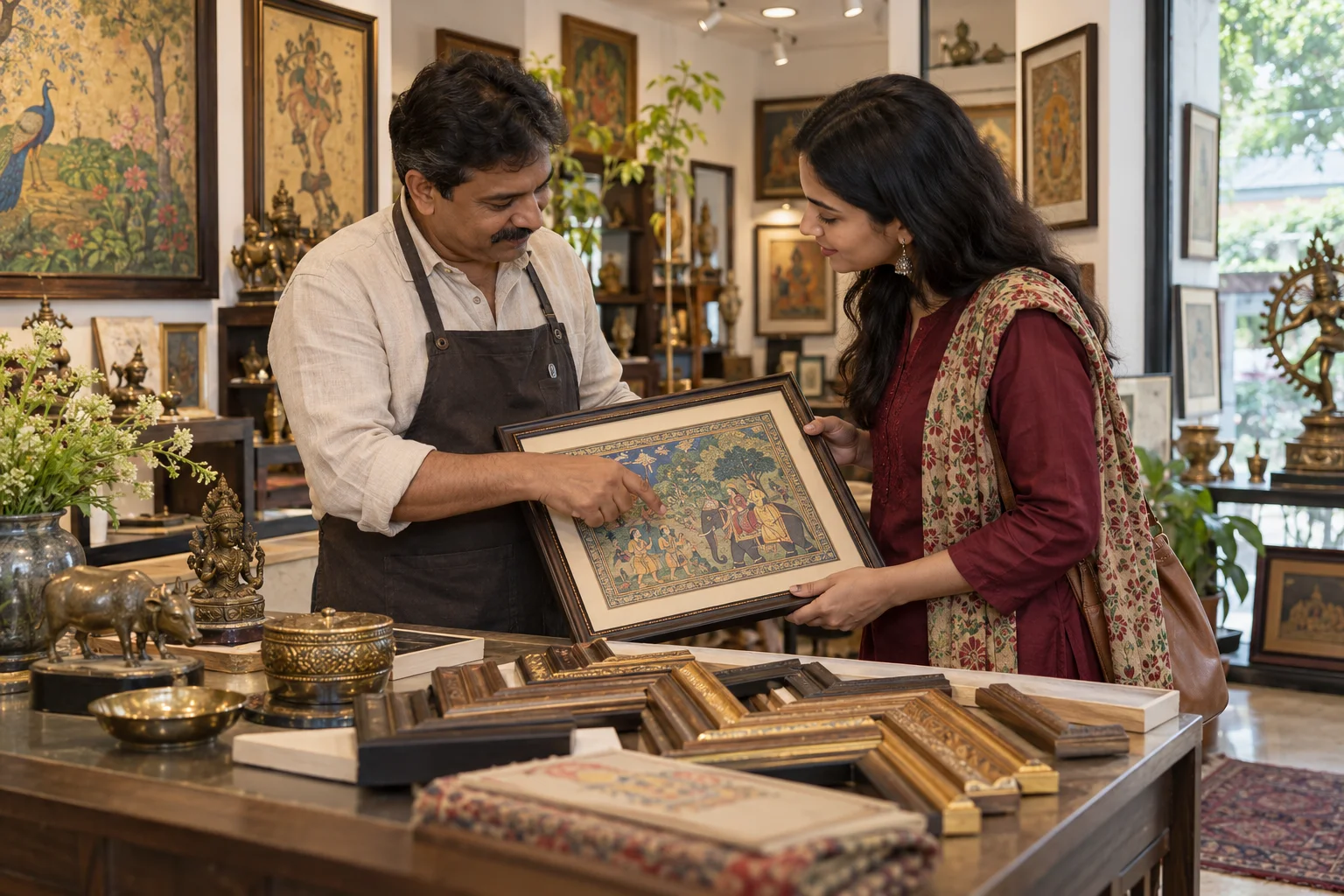
What buyer persona means
A buyer persona is a plain description of the kind of customer who actually buys from you. It includes what they search, what worries them and who else they ask before deciding. GullySales builds this from real enquiries and past sales rather than a generic template, then uses it to write every page and advert.
Last updated 14 Nov 2026.
For antique and curio dealers
Where it usually goes wrong, and what we would do.
“The interior designer buys for a client and a deadline”
A designer needs sizes, finish and a delivery plan, and returns if the dealer behaves well on the first order. Style matters, and so does the dealer's reliability.
“The collector buys depth and rarity”
A person who gathers a particular kind of object will pay for condition, provenance and completeness. They ask detailed questions and notice any vague answer.
“The hotel or restaurant owner buys atmosphere in quantity”
A hospitality buyer wants a set of pieces that suit a theme and a budget, with delivery and installation handled. They are a larger order, with a longer decision.
“The tourist buys a memory and wants to carry it”
A visitor looks for something small, authentic enough and easy to pack. They need honest labels on what is old and what is made for visitors, and a simple way to ship.
What we do
What we deliver for antique and curio dealers.
The work available for this need. We agree the deliverables and responsibilities for your engagement in writing.
Four to five buyer profiles from past sales
Each names the buyer, what they buy, what they ask and what stops them.
Result: You can describe the person you are selling to.
Question lists by profile
The real questions heard in the shop and on chat, sorted by buyer type.
Result: Replies match who is asking.
A buying path for each profile
Where each profile meets the shop, what they check and where they drop off.
Result: You see where each type is lost.
Different messages for designers, collectors and visitors
Separate pages and saved replies suited to each profile.
Result: A collector and a tourist do not receive the same pitch.
A short interview guide for past buyers
A few questions the dealer can ask at billing, to improve the profiles over time.
Result: Profiles are corrected by real answers.
How the result is measured
- Enquiry match to persona
- Conversion rate by persona
- Content aligned to persona
Recorded as a baseline before work starts, so every later report has an honest comparison.
Who is asking
The people who enquire about old pieces, and what each wants answered first.
- Interior designer sourcing for a client
- Wants size, finish, age and a firm hold date, plus a set of photographs to forward. Asks whether the piece can be viewed in daylight.
- Hotel or restaurant owner furnishing a property
- Wants to know whether matching pieces exist in quantity, how they will be delivered and whether a bill and condition note come with each.
- Collector of one kind of object
- Wants the exact type, period and condition, any known history, and a promise to hear before the next one is listed.
- Visitor from abroad or another city
- Wants to know whether the piece can be packed and carried or shipped, and which papers travel with it.
- Reseller buying from the lane
- Wants a trade price, the right to return and a plain note on what has been repaired, because their own customer will ask.
Who it is for
This is written for these antique and curio dealers.
- Antique furniture and carved wood dealers
- Brass, bronze and temple artefact dealers
- Old coin, stamp and banknote dealers
- Vintage poster, radio, camera and gramophone sellers
- Colonial and heritage home decor dealers
- Textile, saree and tribal jewellery antique dealers
- Reproduction and curio shops for tourists
- Auction house consignment agents and estate clearance dealers
Before you decide
When this may not be the right fit.
- You have never recorded who bought what, and building profiles from memory would invent buyers rather than describe them.
- Your sales are almost all to one buyer type, and a set of profiles would add paper without changing a reply.
- No one can answer a designer's technical question about size and condition, so knowing the profile would not help.
Before you decide
Agree the work. Know how to judge it.
Buyer personas for antique dealers: use these checks to prepare, choose the scope, and review what changes.
Bring the right evidence
Write the decision the research must support, such as entering a market or choosing a buyer group. Separate what you know from sales records from what the team currently assumes.
Make the scope clear
Agree which buyers to speak to, which sources to review, and what access you can provide. Include lost enquiries and people who chose another supplier, where they are willing to take part.
Check the work in use
Look for source dates, sample limitations, and evidence that disagrees with the preferred answer. A recommendation should show how it follows from the findings.
Know when to change course
Do not treat a few positive conversations as proof of demand. Test the proposed offer with an actual buying decision before committing to a wider launch.
These are discussion points, not a fixed package. GullySales confirms the deliverables, responsibilities, fee, and term in writing after reading your brief and speaking with you.
Before we start
What to have ready before the work starts.
The records, access and decisions this work needs from antique and curio dealers. Anything missing is noted in the written scope, with who will supply it.
- Records of your best sales
- Bring invoices or notes of the pieces that sold well and to whom. Profiles are drawn from them. If records are thin, we use your recollection and mark the profile as less certain.
- Chats from three recent sales
- Share real conversations from sales, with names hidden if you prefer. Buyers' questions are in them. Without chats, the profiles depend on interviews alone, which are fewer. Messages with names removed are acceptable. Remove names if you like. We read for the questions asked, the objections raised and the words buyers use for age and condition.
- Introductions to past buyers
- Name the buyers who would speak with us and ask them first. We do not contact a buyer ourselves. If none agree, the persona rests on records and says so. Interviews are the part that adds detail records cannot.
- A note on tourists and casual visitors
- Tell us who visits and what they buy, even if it is small. They form their own profile. Without a note, the profile is built from public reviews and general knowledge. A rough note on who walks in and what they buy is enough. It tells us whether tourists need a separate sheet, with plainer words and packing information, and what staff say to them now.
- A senior staff member to check each draft
- Someone who serves buyers at the counter must read each profile. A persona that staff do not recognise is rewritten, since the shop will not use it otherwise. Their corrections are applied before the profile is used on a page.
How it works
How the buyer persona work runs
The work itself, in order. How an engagement starts, from your brief to a written scope, is set out on our method page.
- 1
Name the buyers who paid last year
We list the buyers in your records by type: designers, collectors, hotels and restaurants, visitors who carry a piece home. You add what you remember about each, and the list tells us which four or five profiles to write first. The list is the base for every profile that follows. Buyers you have only met once are included if you remember what they bought, since one-time visitors form a profile of their own.
- 2
Reread the chats before each purchase
We read the messages that led to the sales of your best pieces and underline the questions the buyer asked, such as size, age, whether it can be held. You open the chats you are comfortable sharing, and names are hidden before we read. Questions are grouped by buyer type.
- 3
Interview a few past buyers
We draft a short interview guide and you introduce us to willing designers and collectors. We ask how they found the shop and what would have stopped them buying, and only what they are glad to share. Only willing buyers are asked, and only for what they are happy to share.
- 4
Trace the path each kind of buyer took
For each profile we draw the path from first look to sale: where they saw the piece, who they asked, how long they thought and what finally decided them. You correct the path from the shop's experience. The path is drawn from real cases, not from guesses. Where a buyer asked three people before buying, we record whom they asked, because that person is part of the sale.
- 5
Write a page for each buyer
We write each persona in plain sentences: what they look for, how they judge a piece, what worries them and what makes them buy. You mark anything a real buyer would not say. Each page is one page long, so staff will read it.
- 6
Use the pages on messages and listings
We rewrite a reply, a listing and a caption for each persona and compare the enquiries after with those before. You decide which wording stays, and the interview guide is reused as new buyers appear. The interview guide is kept for reuse.
Where this fits
Three pieces of sales work, in this order.
This work sits inside sales process design, at stage 0, foundation. The audit comes before it, and sales management keeps it running.
Step 1
Sales audit
Find where deals are being lost and what to fix first.
Start here if you cannot say where orders are lost.
Step 2 · you are here
Sales process design
One written way to sell, from first enquiry to repeat order.
Start here if every salesperson sells differently.
Step 3
Sales management
A target, a review routine and someone who owns the number.
Start here if the team has targets and no routine.
FAQ
Questions owners ask before they call.
Not here? More answers, or ask on WhatsApp.
How do we create profiles without research?
Does this mean ignoring casual visitors?
Do buyers of reproductions need a different profile?
How do we serve a buyer who wants proof of age?
How do we build profiles if we have kept no research?
Does the shop need a different profile for reproductions?
How much does it cost?
How long is the contract?
How soon will we see results?
Who will actually do the work?
More for antique and curio dealers
Related work to consider.
Closest to this: strategy and research
Also for antique and curio dealers
Or start from the overview: sales and marketing for antique and curio dealers.
Your next practical step
Tell us what you are trying to grow, and we will read it before we call.
Eight short steps, mostly taps. Skip anything you would rather answer on the call.