Antique and curio dealers · Search engine optimisation
Rank for the object a buyer is hunting, not for the word antiques.
SEO for an antique or curio dealer means appearing in search when a buyer looks for a particular kind of old piece, a style or a shop in a named lane. GullySales works on the pages, descriptions and technical basics that let a search engine understand your stock.
Scope, fee, reporting and term are agreed in writing after we have read your brief and spoken to you.
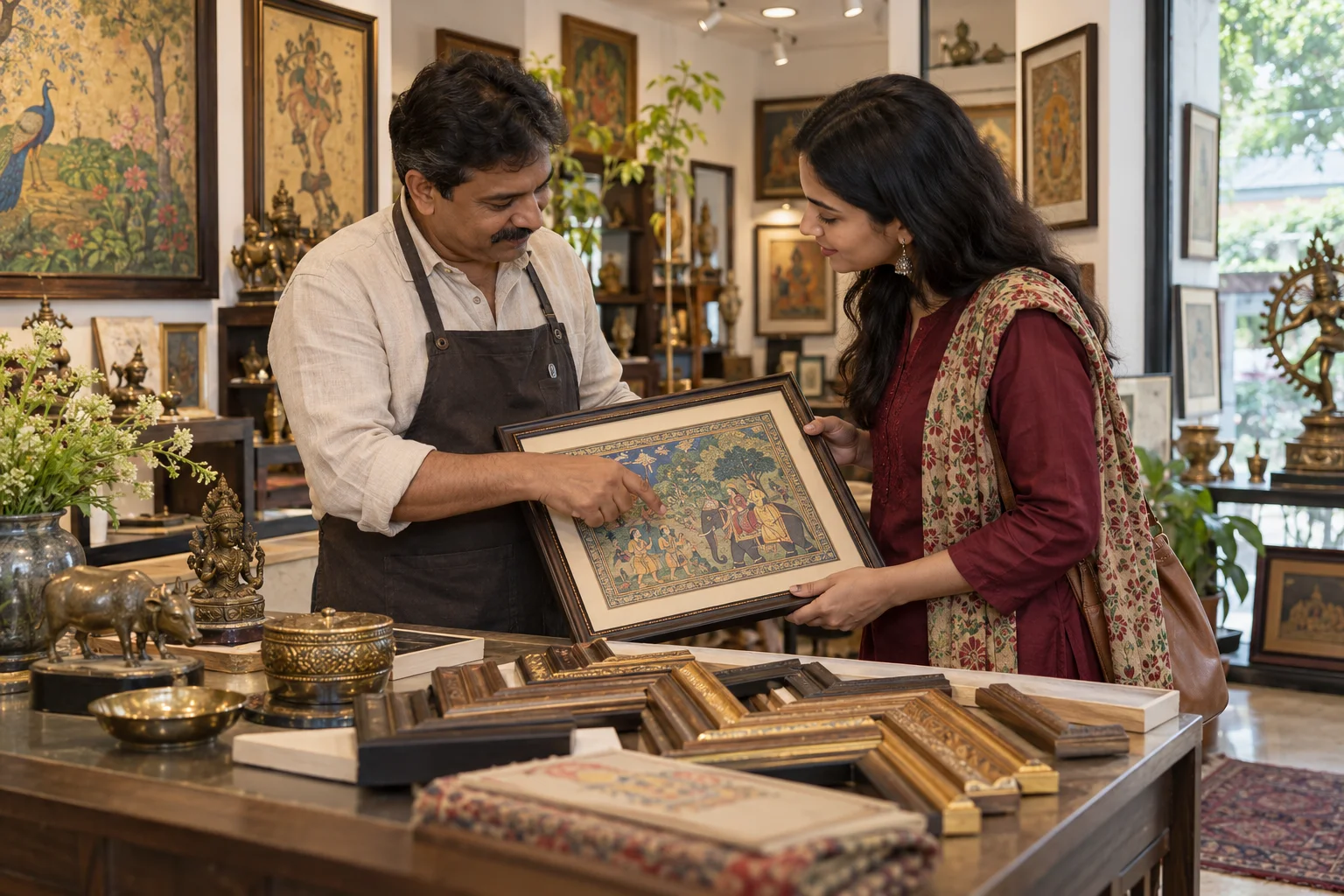
What search engine optimisation means
Search engine optimisation (SEO) is the work of getting your website to appear when a buyer searches Google for what you sell. GullySales builds pages around real search terms, fixes technical issues that block ranking, and tracks which searches actually bring enquiries.
Last updated 14 Nov 2026.
For antique and curio dealers
Where it usually goes wrong, and what we would do.
“Buyers search by object, period and material”
Nobody types antiques and stops. They type teak almirah, Chettinad door, brass temple lamp or vintage gramophone. A shop page named Collection gives the search engine nothing to match, and each type of piece needs its own page.
“Pieces sell once, and pages go stale”
A one-off item sold on Tuesday leaves a dead page on Wednesday. Pages built around types of stock stay useful, with sold pieces marked and similar ones shown, instead of vanishing.
“Honest descriptions are the ranking advantage”
Reproduction and original, restored and untouched are different things to a buyer. A page that states which is which, in plain words, earns trust that a vague listing cannot, and trust is what brings the second visit.
“The lane's name is a search term”
People look for a shop in Mattancherry, Chor Bazaar or a city's antique street. Mentioning the lane, the landmark and the way in lets the shop appear for buyers who plan a trip around it.
What we do
What we deliver for antique and curio dealers.
The work available for this need. We agree the deliverables and responsibilities for your engagement in writing.
Pages for each type of piece
Furniture, brass, textiles, coins, posters and so on, each with its own description, examples and enquiry route.
Result: A search for a type of piece lands on a page about it.
A standard format for describing an item
Material, size, period as known, condition, restoration and origin, written the same way each time.
Result: Every listing says what a buyer needs to know.
Sold items kept as references
Pieces that have sold stay on the page marked as sold, with a note offering to find similar.
Result: A dead end becomes a new enquiry.
Titles and descriptions for the searcher
Each page title names the object, material and shop location in the words buyers use.
Result: Search results show what the page holds.
Photographs named and described
Images renamed with the object and described, with several angles and a scale reference.
Result: Photos bring image search visitors.
How the result is measured
- Ranking positions
- Organic traffic
- Enquiries from organic search
Recorded as a baseline before work starts, so every later report has an honest comparison.
Searches your buyers type
The searches a buyer types for an old piece, and the page that answers each.
- old teak pillars for hotel lobby
- A page for architectural pieces. Describe the timber, origin, size and condition, and say whether a viewing can be arranged at the godown.
- antique brass lamp Mattancherry
- A page for brass and bronze with the lane named. List what is in stock, whether each was cleaned or left as found, and the hours for a visit.
- old Indian coins dealer near me
- A collector page by period and condition, with a sold archive. A coin collector searches with exact terms, so give the condition as the dealer judges it.
- vintage gramophone repair and sale
- A page for working and non-working pieces. State what has been tested, what is sold as found and what a buyer should expect to restore.
- how to tell if a carved door is old
- A guide page that meets the fear of fakes, ending in the shop's own way of describing marks, wear and repairs.
Who it is for
This is written for these antique and curio dealers.
- Antique furniture and carved wood dealers
- Brass, bronze and temple artefact dealers
- Old coin, stamp and banknote dealers
- Vintage poster, radio, camera and gramophone sellers
- Colonial and heritage home decor dealers
- Textile, saree and tribal jewellery antique dealers
- Reproduction and curio shops for tourists
- Auction house consignment agents and estate clearance dealers
Before you decide
When this may not be the right fit.
- Your stock changes with each clearance and nobody is free to update a page when a piece sells, so the pages would go stale.
- You cannot yet photograph the back and base of a piece, and a page without them would not answer a doubting buyer.
- The shop sells mostly to visitors who walk in from the lane, and no buyer outside the city could be served yet.
Before you decide
Agree the work. Know how to judge it.
SEO for antique dealers: use these checks to prepare, choose the scope, and review what changes.
Bring the right evidence
Bring the pages for the products or services you want to sell, the search queries available in your reports, and examples of enquiries from search. Separate branded searches from buyers discovering you for the first time.
Make the scope clear
Agree which pages and technical fixes come first, who can publish changes, and who supplies subject knowledge. Link search work to a relevant enquiry route on each priority page.
Check the work in use
Follow the trail from a relevant query to its landing page and then to an enquiry. Review whether those enquiries fit your offer, alongside indexing and search visibility.
Know when to change course
A ranking movement alone is not a buying signal. If traffic grows but relevant enquiries do not, revisit page intent and the offer before producing more pages.
These are discussion points, not a fixed package. GullySales confirms the deliverables, responsibilities, fee, and term in writing after reading your brief and speaking with you.
Before we start
What to have ready before the work starts.
The records, access and decisions this work needs from antique and curio dealers. Anything missing is noted in the written scope, with who will supply it.
- Edit rights to the shop's site
- Pages must be added to the site itself. Bring an editor login or the developer who can add them. If you have no site, the plan starts with a simple one before any search work begins. If a developer manages the site, name them now so changes do not wait on an unknown contact.
- A folder of stock photographs by piece
- Each piece should have its own images, named by what it is. Search reads names and captions. Folders of untitled camera files are workable, but we rename them with you before use. We rename them once and keep a note so staff can follow the same habit.
- What you know about each piece's history
- Write region, period, material, maker's marks and how it was acquired, as you understand them. Uncertainty is acceptable if stated. Where you know nothing, the description says what can be seen and leaves the rest out. Even rough notes help, because we turn them into plain sentences you check before they appear.
- A rule for stating period and origin
- Decide how the shop words a period it cannot prove, such as circa or attributed to. Without a rule each description invents its own wording. We write the rule into the template. It keeps one staff member's confident wording from becoming the shop's claim.
- A list of the stock you can supply again
- Mark the types you restock, like brass lamps, against the one-off pieces. Pages for types you restock earn their effort. One-off pieces get shorter pages. We use the list to decide which pages are worth long upkeep and which get a short entry.
How it works
How the search engine optimisation work runs
The work itself, in order. How an engagement starts, from your brief to a written scope, is set out on our method page.
- 1
Search the lane the way a stranger would
We search for the kinds of old pieces you hold, with a city and the name of your lane, and write down who appears. You tell us which results are marketplaces, which are rival shops and which are lists copied from elsewhere, and we mark the gaps your stock could fill. The notes of who appears become the first page of our plan.
- 2
Photograph and measure one piece properly
We pick a single piece and prepare it as a model: photographs from the front, side, underside and detail, measurements, material, condition and the story as you know it. You check every statement, and anything uncertain is stated as uncertain.
- 3
Fix the standard format for describing a piece
From the model piece we make a template of the lines every description will carry, in the order a collector reads them. You adjust the lines to what you really know, so staff can complete a new listing without help from us. The template is kept as a one-page card at the counter.
- 4
Write one page for each type of piece
We draft pages for the types of piece you hold in greatest number, such as carved doors or brass lamps, each with a short guide to how they are made and what to look for. You supply the knowledge, and we write it into plain sentences a buyer can follow. Each page names the lane and the city once, in the sentence where a buyer would expect it.
- 5
Keep sold items as references
We set up how a sold piece stays on the site, marked as sold, with its description kept. You decide which sold pieces are worth keeping as examples of what you hold, since they bring searches long after the sale. Sold pieces keep their photographs and description, with a clear marker, so a visitor sees the shop's depth.
- 6
Read the searches against the starting picture
We repeat the searches we made at the start and read the enquiries that mention the pages against the earlier record. You decide which type page to deepen and which to merge, and no position in search results is promised. Pages that bring nothing are merged into a stronger one.
Where this fits
Three pieces of sales work, in this order.
This work sits inside sales process design, at stage 1, prospecting and lead generation. The audit comes before it, and sales management keeps it running.
Step 1
Sales audit
Find where deals are being lost and what to fix first.
Start here if you cannot say where orders are lost.
Step 2 · you are here
Sales process design
One written way to sell, from first enquiry to repeat order.
Start here if every salesperson sells differently.
Step 3
Sales management
A target, a review routine and someone who owns the number.
Start here if the team has targets and no routine.
FAQ
Questions owners ask before they call.
Not here? More answers, or ask on WhatsApp.
Can a small shop appear above big marketplaces?
Do we need to put prices on the page?
Should sold pieces stay on the site?
Can we name the origin of a piece we are unsure about?
Can we describe a piece as antique if we are not certain?
Will a page for each piece slow the site?
How long is the contract?
How soon will we see results?
Who will actually do the work?
What do you need from us?
More for antique and curio dealers
Related work to consider.
Closest to this: search and visibility
Also for antique and curio dealers
Or start from the overview: sales and marketing for antique and curio dealers.
Your next practical step
Tell us what you are trying to grow, and we will read it before we call.
Eight short steps, mostly taps. Skip anything you would rather answer on the call.