Costume and clothing rental shops · Digital marketing
Pick the few online channels that fill your calendar, and run those well.
Digital marketing for a rental shop covers maps, search, social media and chat, and the choice of which to use for which season. GullySales decides the mix with you and reports against your own baseline.
Scope, fee, reporting and term are agreed in writing after we have read your brief and spoken to you.
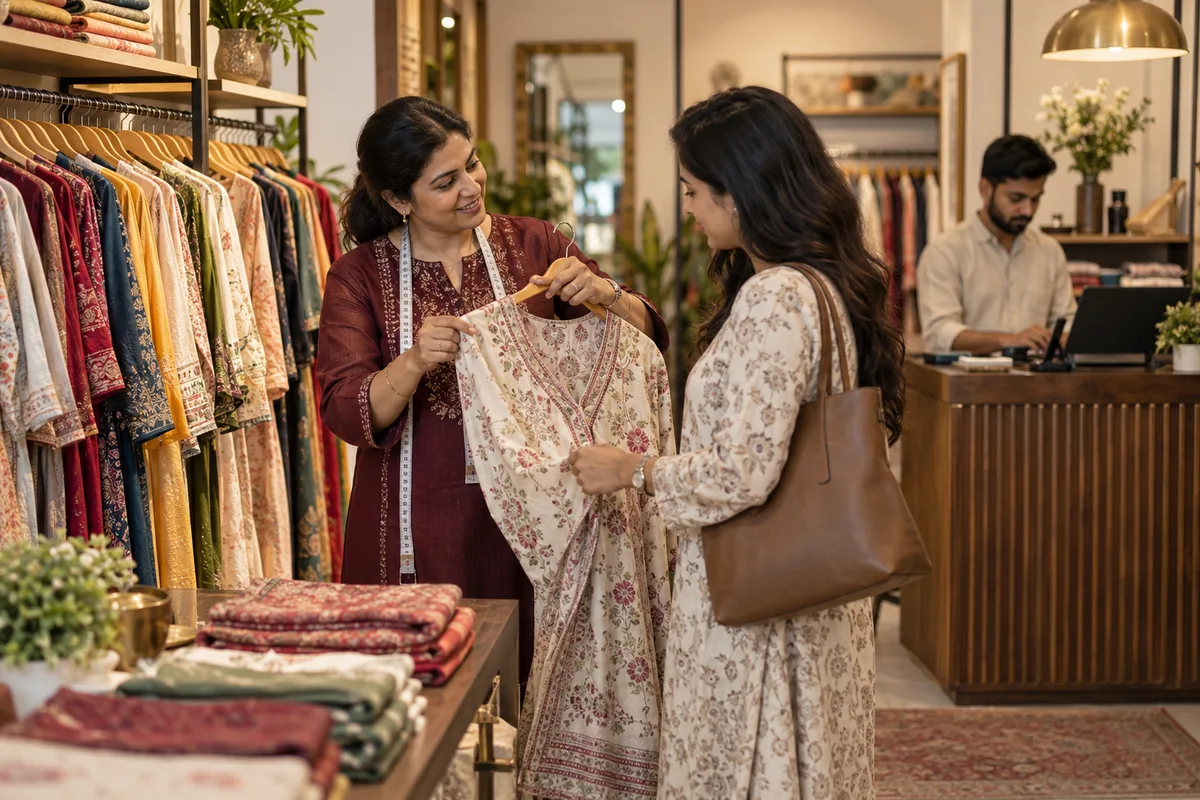
What digital marketing means
Digital marketing is the combined work of search, social media, advertising and website channels running together rather than as separate projects with separate people. GullySales runs these as one connected system so a change in one channel, such as a new offer, is reflected everywhere at once.
Also for costume and clothing rental shops
- Buyer personas for costume and clothing rental shops
- Lead generation for costume and clothing rental shops
- SEO for costume and clothing rental shops
- Local SEO for costume and clothing rental shops
- Social media marketing for costume and clothing rental shops
- Content marketing for costume and clothing rental shops
- CRM for costume and clothing rental shops
- Follow-up systems for costume and clothing rental shops
Sales and marketing for costume and clothing rental shops, the overview.
Last updated 14 Nov 2026.
For costume and clothing rental shops
Where it usually goes wrong, and what we would do.
“Peaks need a plan”
Wedding months, Navratri and school annual days bring a rush that arrives in a few weeks. Preparing pages, posts and map photographs ahead means you are visible when the first enquiries begin, not after the best outfits are booked.
“Local beats national”
Your buyers live near the shop and must visit for a trial. A channel that reaches the whole country wastes spend, so each rupee and each hour goes to the map, local search and the chat that those nearby buyers use.
“Different buyers, different channels”
A bride's family searches on the map and asks on WhatsApp, a school coordinator is sent a recommendation by another parent, and a dance teacher follows Instagram. Each persona needs a channel that matches where they look.
“Off-season is for reactivation”
Quiet months suit messages to past customers, new photographs and fresh pages. A family that hired for one wedding is told when the next season's stock arrives, which costs less than finding a new buyer.
What we do
What we deliver for costume and clothing rental shops.
The work available for this need. We agree the deliverables and responsibilities for your engagement in writing.
A channel choice
Channels picked for each buyer type, with the reason written down and the channels left out named too.
Result: You spend where your buyers look.
A baseline
Present enquiries, trial visits and bookings recorded by source before any work begins, taken from your register and chats.
Result: Progress is measured honestly.
Set-up of maps, search and chat
The map profile, the garment pages and the business chat put in place first, since the other channels depend on them.
Result: The core is in place.
A season calendar
Pages, posts and ads scheduled against wedding months, festivals and school days, with the date each piece must be live.
Result: You are ready for each peak.
An off-season reactivation plan
A list of past customers by occasion, with a note to send when new stock arrives or a family event is due.
Result: Quiet months bring repeat bookings.
A report
Enquiries, trials and bookings by source, shown against the baseline in plain words with the next step.
Result: You decide next steps from facts.
How the result is measured
- Enquiries across channels
- Cost per enquiry overall
- Channel mix by contribution
Recorded as a baseline before work starts, so every later report has an honest comparison.
Searches your buyers type
Digital work follows what the renter searches before a date.
- outfit on rent for a wedding near me
- Answered by the Maps listing and a few photographs of racks, rather than a general site, since the trial is in the shop.
- fancy dress for annual day
- Answered by a theme page and a post to school coordinators with age ranges and how to book in bulk.
- sherwani rent price
- Answered by a page that explains how rent, deposit and the days of hire fit together, without a fixed price you cannot hold.
- navratri dress on rent
- Answered by a seasonal post and page ready before the festival, with group booking explained.
- costume shop open late
- Answered by special hours on the listing for the weeks when families can only come in the evening.
Who it is for
This is written for these costume and clothing rental shops.
- Wedding sherwani, achkan and groom accessories rental shops
- Lehenga, saree and bridal outfit rental boutiques
- Fancy dress and school annual day costume shops
- Theatre, dance and stage costume suppliers
- Gown, tuxedo and party wear rental for receptions and proms
- Festival costume renters for Navratri chaniya choli and Ganesh festivals
- Film, photography and shoot wardrobe rental houses
- Traditional wear rental for cultural societies and associations
- Halloween and theme party costume sellers in big cities
Before you decide
When this may not be the right fit.
- Your calendar is full for the coming peak, and more enquiries would only be turned away.
- Your garment register is not in order and reach would create double bookings.
- You want one ad to cover weddings, schools and festivals, which need different messages.
Before you decide
Agree the work. Know how to judge it.
Digital marketing for costume and clothing rental shops: use these checks to prepare, choose the scope, and review what changes.
Bring the right evidence
Bring a recent won order and an enquiry that went nowhere. Trace how each buyer found you, what they asked, and who handled the next step. A channel list alone will not explain the difference.
Make the scope clear
Choose one offer and one buyer group first. Agree which part needs attention: being found, getting a useful enquiry, or turning an enquiry into an order. Separate recommendations from the work required to carry them out.
Check the work in use
A useful plan names the first change, its owner, the evidence behind it, and the number that will show whether it worked. Ask what has deliberately been left out and why.
Know when to change course
If your team cannot answer the enquiries it already receives, improve that handover before buying more traffic. If the offer itself is unclear, test it with buyers before adding channels.
These are discussion points, not a fixed package. GullySales confirms the deliverables, responsibilities, fee, and term in writing after reading your brief and speaking with you.
Before we start
What to have ready before the work starts.
The records, access and decisions this work needs from costume and clothing rental shops. Anything missing is noted in the written scope, with who will supply it.
- Last year's bookings by month
- The mix of channels follows the shape of your year. Bring the booking register or a count by month, even approximate. It shows which season earns the money. Without it, we plan on general assumptions and might spend effort on a month when your racks are empty or fully hired.
- Access to every account you already hold
- Maps, website, social pages and the business phone each need a login or an invitation. Gather the names and emails that hold them. A missing login means that channel waits, and the plan shrinks to what we can reach, which may leave the best channel out.
- A counter note on how people found you
- Ask staff to note, for any recent customer, how they came to know the shop. A page in a notebook will do. This note is how we see which channel gives walk-ins. Without it, results can be read only from the platforms, which cannot see a customer who arrives on foot.
- Your off-season stock and offers
- A plan for quiet months needs something to sell: party wear, theme costumes, photoshoot hire. Bring a list of what you have and what you would rent out then. If the racks are empty of such items, the off-season plan stays small, concentrated on regular customers.
- A decision on how much time you can give
- Digital work needs attention from the shop for photographs, replies and approvals. Tell us honestly what time the owner and staff can give. If it is little, we shorten the plan to one or two channels so that nothing is started and dropped.
How it works
How the digital marketing work runs
The work itself, in order. How an engagement starts, from your brief to a written scope, is set out on our method page.
- 1
Choose the season that carries the year
We begin by asking where the year's money is made: wedding months, school annual day, festival weeks or party hire. You rank them, and we plan around the top two. This decision means the first months go to the season that pays, and the quieter periods get a lighter plan, written down for the owner to approve.
- 2
Record the starting position of each channel
We count what each channel gives now: calls from the map profile, enquiries from search, chats from WhatsApp, visits that mention social media. We take these from the counter slips and the platforms' own pages. You check them against what you remember. This becomes the baseline, written before any change.
- 3
Name who owns each channel
For maps, search, social media and chat, we settle who holds the login, who writes and who answers. You may take two roles yourself. We write the list on one page. The step ends when every channel has a named person, or we remove the channel from the plan.
- 4
Write the messages for each buyer group
We draft what to say to the groom's family, the school coordinator and the dance teacher in each channel, using the personas if they exist. You approve every message, including rent and deposit wording. Messages reach channels only after the person who will answer has read them.
- 5
Set up the profile, pages and chat together
We bring the map profile, website pages, social accounts and WhatsApp catalogue up to the same facts and the same photographs. You supply any missing items. Every channel then carries one address, one set of hours and one booking route, which the staff recognise from the counter.
- 6
Reconcile the channels with the counter record
After the season we set each channel's results beside the baseline and beside the bookings at the counter. We count trials and bookings, not clicks. You decide which channel to feed more and which to rest until the next occasion. We describe what was recorded and make no promise.
Where this fits
Three pieces of sales work, in this order.
This work sits inside sales process design, at stage 0, foundation. The audit comes before it, and sales management keeps it running.
Step 1
Sales audit
Find where deals are being lost and what to fix first.
Start here if you cannot say where orders are lost.
Step 2 · you are here
Sales process design
One written way to sell, from first enquiry to repeat order.
Start here if every salesperson sells differently.
Step 3
Sales management
A target, a review routine and someone who owns the number.
Start here if the team has targets and no routine.
FAQ
Questions owners ask before they call.
Not here? More answers, or ask on WhatsApp.
What budget is needed?
Do you run ads?
Can you promise bookings?
Should we advertise in the off-season?
Which channel should a shop with one phone use first?
How do we judge a channel without clicks and likes?
How long is the contract?
How soon will we see results?
Who will actually do the work?
What do you need from us?
More for costume and clothing rental shops
Related work to consider.
Closest to this: strategy and research
Also for costume and clothing rental shops
Or start from the overview: sales and marketing for costume and clothing rental shops.
Your next practical step
Tell us what you are trying to grow, and we will read it before we call.
Eight short steps, mostly taps. Skip anything you would rather answer on the call.