Electronic components distributors · Customer retention
The buyer who stopped ordering resistors is buying them from someone else.
Customer retention for an electronic components distributor means keeping the contract manufacturers, startups and repair shops that already buy from you, and noticing when one begins to buy a line elsewhere. GullySales works that out from your invoice history, and builds the calls and reminders that bring the buyer back before they are gone.
Scope, fee, reporting and term are agreed in writing after we have read your brief and spoken to you.
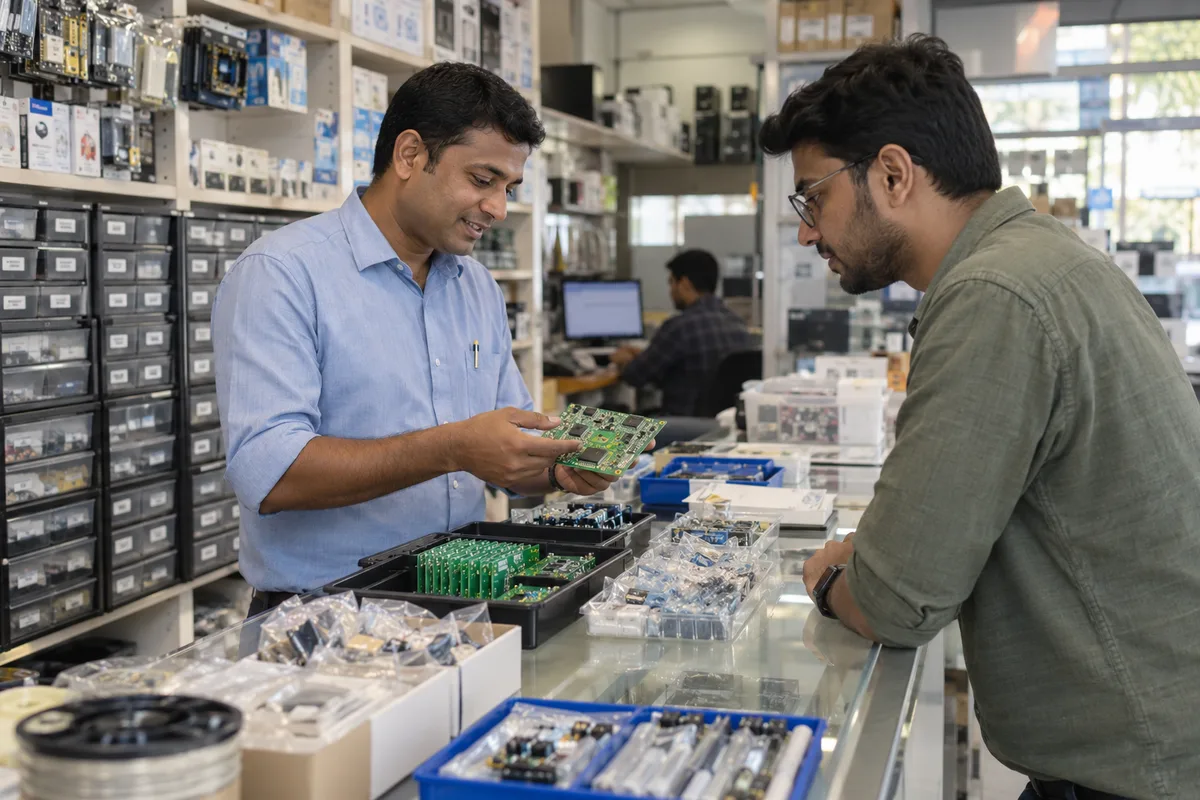
What customer retention means
Customer retention is keeping an existing customer buying again rather than losing them to a competitor after the first purchase, usually cheaper than winning a new customer. GullySales sets a routine of check-ins and renewal reminders aimed at customers before they show signs of leaving.
Also for electronic components distributors
- SEO for electronic components distributors
- Lead generation for electronic components distributors
- Email marketing for electronic components distributors
- CRM for electronic components distributors
- WhatsApp marketing for electronic components distributors
- Sales process for electronic components distributors
- Website development for electronic components distributors
- Sales management for electronic components distributors
Sales and marketing for electronic components distributors, the overview.
Last updated 6 Oct 2026.
For electronic components distributors
Where it usually goes wrong, and what we would do.
“A buyer leaves one line at a time”
The buyer still orders resistors, so the account looks alive. The connectors and ICs have gone to another counter, and only the invoices by line would show it.
“The engineer who liked you moved on”
A new purchase head or engineer arrives with their own suppliers. If nobody calls them within the first weeks, the account is quietly given to someone they know.
“A startup buys once and is never called again”
The founder who took ten pieces of a sensor goes into production and orders from whoever stayed in touch.
What we do
What we deliver for electronic components distributors.
Every deliverable, what it covers for you, and the result it is there to produce. Nothing here is an extra.
A list of buyers by what they bought
Companies and the families they bought in the last year, taken from your sales register, so you see who bought what.
Result: You know your buyers by line, not only by name.
A quiet buyer list
For each regular buyer, the usual gap between orders and a flag when it has been passed, so a call is made before the account is lost.
Result: A buyer who is drifting is called while the relationship is warm.
A lost-line check
Each major buyer's purchases compared year on year by family, to spot a line that has stopped.
Result: A move to another counter is seen, not guessed.
A new contact routine
A call and a one-page note for any new purchase head or engineer at an account you hold, with the brands and terms already in place.
Result: A changed buying team starts with you on the list.
A sample-to-production follow-up
A reminder to call every startup that bought a prototype quantity, after its design should be final, with a line card and credit terms ready.
Result: A small first order has a chance of becoming a production one.
A reason-for-leaving record
A short call to every buyer who stops ordering, with the reason written down, whether price, stock, date, paperwork or a person.
Result: You learn why buyers leave, from them.
How the result is measured
- Retention rate
- Repeat purchase rate
- Customers won back
Recorded as a baseline before work starts, so every later report has an honest comparison.
Work it out from your records
How to find the buyers drifting away, from the invoices you already keep.
- List who bought in the last year
- Export the sales register from Tally by buyer and part family. This is your base list, and it shows how many buyers you actually have, not only who you remember.
- Mark the buyers who ordered more than once
- Count invoices per buyer on the list. Those with one invoice are samples or one-offs. Those with several are your regulars, and the ones to protect.
- Work out each regular's usual gap
- For every regular, note the dates of the last orders and the usual gap. A buyer long past that gap is quiet, and should get a call.
- Check each buyer's lines year on year
- Compare each major buyer's purchases by family against the year before. A family that vanished, while others continue, has probably gone to another supplier.
- Follow up startups that bought once
- Mark every first-time prototype buyer and the date. Call after the design should be final. Record who ordered again and who did not, and what each one said.
- Separate buyers you stopped supplying
- Where you held a buyer's orders for unpaid dues, note it in the record. A buyer lost by your own decision is not a lapsed buyer, and should not be chased as one.
Who it is for
This is written for these electronic components distributors.
- Authorised distributors for one or two brand lines
- Multi-brand stockists of ICs, passives and connectors
- Independent and excess-stock traders
- Development board, module and sensor suppliers for startups and colleges
- BOM sourcing and kitting firms for contract manufacturers
- Repair spares and service parts counters
- Relay, transformer, battery and power component suppliers
- Importers who source against a customer's RFQ
Not for
It is not the right fit if.
- You have no invoice history by buyer, so lapsed buyers cannot be identified yet.
- The engineer at your best account has left and nobody has met the replacement, so retention calls would reach a stranger.
- You intend to cut prices on every part to win lapsed buyers back, which teaches all buyers to wait.
How it works
How the customer retention work runs
The work itself, in order. How an engagement starts, from your brief to a written scope, is set out on our method page.
- 1
Read the records
Your sales and billing records are read for repeat purchase, the normal gap between orders and the customers who have gone quiet. The record-keeping gaps found here are listed.
- 2
Ask why they stopped
A small set of lapsed and current customers is called with your team's consent, and asked plainly what changed. The reasons are sorted into price, service, competitor and circumstance.
- 3
Build the strategy
The written plan sets priority groups, touchpoints, offers, owners, consent rules and a target.
- 4
Align existing tactics
Each retention activity you already run is mapped against the plan, then kept, changed or dropped.
- 5
Start with one group
The plan goes live for the most valuable at-risk group first, with a held-back comparison group, before it widens.
- 6
Review against the baseline
Retention is compared with the baseline recorded before work began. How often you are reported to is agreed in writing.
Where this fits
Three pieces of sales work, in this order.
This work sits inside sales process design, at stage 7, after the sale. The audit comes before it, and sales management keeps it running.
Step 1
Sales audit
Find where deals are being lost and what to fix first.
Start here if you cannot say where orders are lost.
Step 2 · you are here
Sales process design
One written way to sell, from first enquiry to repeat order.
Start here if every salesperson sells differently.
Step 3
Sales management
A target, a review routine and someone who owns the number.
Start here if the team has targets and no routine.
FAQ
Questions owners ask before they call.
Not here? More answers, or ask on WhatsApp.
When do we call a buyer lapsed?
Should we cut price to win a lapsed buyer back?
Who should call the quiet buyers?
What do we do when the engineer at a good account leaves?
How long is the contract?
How soon will we see results?
Who will actually do the work?
What do you need from us?
What if we are not happy with the work?
From the blog
Further reading for electronic components distributors.
 6 min read · 6 Oct 2026How trade buyers pick a dealer when the brands matchWhen every counter in town carries the same brands, trade buyers choose on stock, delivery, paperwork and returns. This post sets out how contractors, electricians, plumbers and purchase managers compare dealers.
 5 min read · 6 Oct 2026How electronic components distributors answer a BOM enquiryAnswer a BOM in the buyer's own line order, saying for each part whether you hold it, how many, from which source and by what date, and send the firm lines before the open ones.
More for electronic components distributors
Everything else we would do for you.
- SEO for electronic components distributors
- Lead generation for electronic components distributors
- Email marketing for electronic components distributors
- CRM for electronic components distributors
- WhatsApp marketing for electronic components distributors
- Sales process for electronic components distributors
Or start from the overview: sales and marketing for electronic components distributors.
Your next practical step
Tell us what you are trying to grow, and we will read it before we call.
Eight short steps, mostly taps. Skip anything you would rather answer on the call.