Fabric shops and retailers · Local SEO
Be the shop found on the market name plus the cloth.
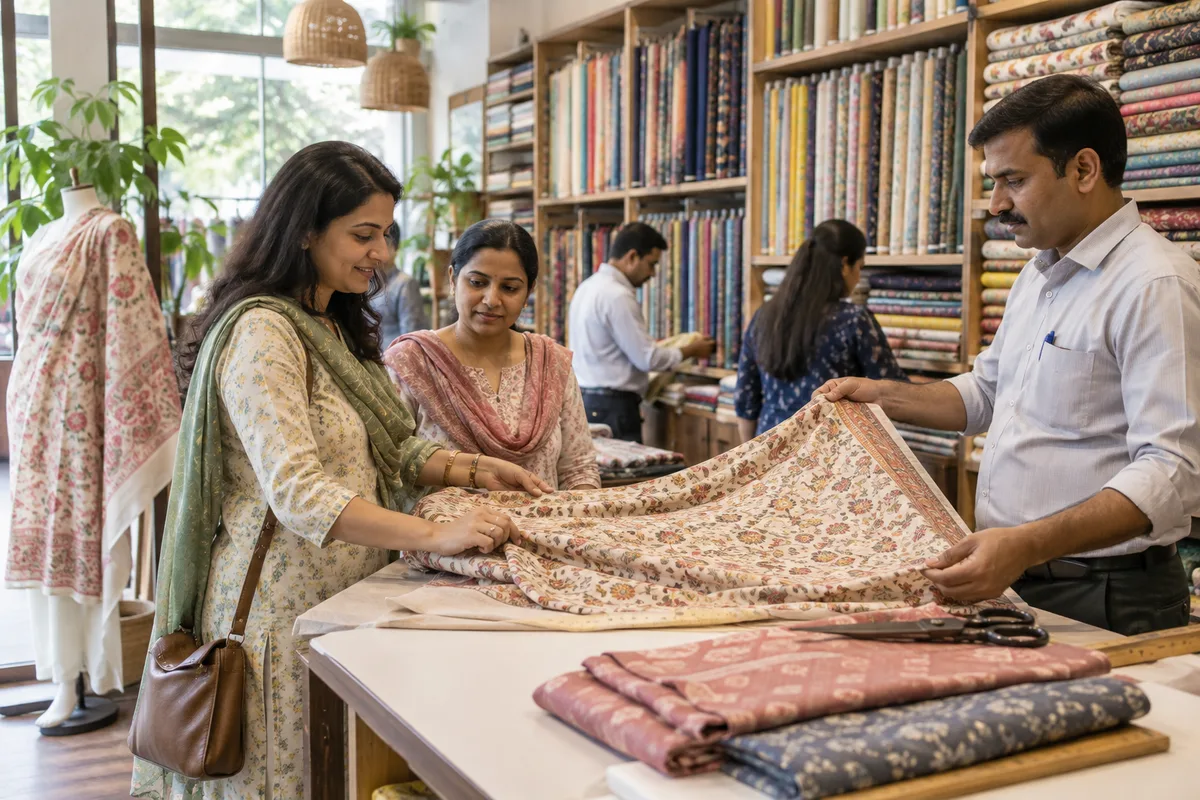
Local SEO for a cloth shop is the map listing a buyer opens before deciding which street of shops to walk down. GullySales sets the categories a tailor searches with, puts current rack photographs on the listing, and keeps the festival hours right.
Scope, fee, reporting and term are agreed in writing after we have read your brief and spoken to you.
What local SEO means
Local SEO is the work of making your business show up for searches that name your town or locality, such as a service plus an area name. GullySales sets up locality pages, local citations and map listings so nearby customers find you before a competitor across town.
Also for fabric shops and retailers
- SEO for fabric shops and retailers
- Website for fabric shops
- PPC ads for fabric shops and retailers
- Lead generation for fabric shops and retailers
- Digital marketing for fabric shops and retailers
- Reputation management for fabric shops and retailers
- Branding and identity for fabric shops and retailers
- Social media for fabric shops and retailers
Sales and marketing for fabric shops and retailers, the overview.
Last updated 5 Oct 2026.
For fabric shops and retailers
Where it usually goes wrong, and what we would do.
“Your market name is half the search”
Buyers travel to a cloth market rather than to a shop, and the listing naming the market and the road catches them on the way.
“The category decides whether a tailor finds you”
Cloth shop, fabric store, curtain supplier and wholesale merchant are separate categories, and a retail-only listing is invisible to trade searches.
“A photograph of the shutter is a wasted listing”
Buyers want racks, shades and a counter, and most cloth shop listings show a closed shop front and a signboard.
What we do
What we deliver for fabric shops and retailers.
Every deliverable, what it covers for you, and the result it is there to produce. Nothing here is an extra.
Categories set for retail and for trade
The primary category matched to what you mostly sell, with wholesale, curtain and uniform categories added where you genuinely supply them.
Result: A tailor searching wholesale finds your shop.
Rack photographs refreshed by season
Current shelves, the new lot and the counter, shot in daylight and uploaded when the season turns rather than once at setup.
Result: A buyer sees what is in the shop this month.
The market, the road and the landmark written in
The description and the posts naming the cloth market, the street and the landmark buyers use, because that is how they search.
Result: People planning the trip find you on the way.
Festival and weekly closing hours kept current
The weekly closed day, extended muhurat season hours and festival closures entered before they happen rather than after a complaint.
Result: Nobody travels across town to a shutter.
Services listed the way buyers ask for them
Matching, cutting, courier of cut pieces, curtain measurement and any stitching tie-up added as services on the listing.
Result: A shopper knows you will match a blouse piece.
Calls, messages and direction requests reported
What the listing produced, read against the baseline taken before anything on it was changed.
Result: You can see the listing bringing people in.
How the result is measured
- Map pack ranking
- Local search visibility
- Enquiries by locality
Recorded as a baseline before work starts, so every later report has an honest comparison.
What Google weighs here
How a buyer finds a cloth shop by market and by fabric, and what to fix first.
- Fabric store, saree shop or wholesaler
- Pick fabric store, textile shop or saree shop by what most customers buy. A wholesaler selling to tailors adds the wholesale category as a secondary, so tailors find the trade counter.
- Fabrics as products
- Add cotton, georgette, crepe, suiting, curtain cloth or silk as products with a photograph each. Someone searching for a fabric name by locality is a buyer with cloth already chosen in mind.
- Market name in the address
- Write the market, lane and nearest landmark the way customers say them, not only the postal address. Shoppers search the market name, and a listing that omits it looks like any other shop.
- Hours with the closing day
- Mark the day your market shuts and festival early closing. A buyer who travels across town and finds a shut shutter will not try your listing again.
- Names in more than one script
- Add the shop name in the local language script as well, in the description. Part of your trade searches in the local script, and a sign photograph helps confirm the shop is the same one.
- Justdial and Sulekha entries
- Both still show up when someone looks for a shop by lane. Keep the number, hours and category identical to your Business Profile and delete listings you cannot log into.
Who it is for
This is written for these fabric shops and retailers.
- Retail cloth shops selling suiting and shirting
- Saree and blouse-piece shops
- Dress material and unstitched wear shops
- Curtain, sofa and upholstery fabric houses
- Wholesale cloth merchants supplying tailors and boutiques
- Uniform cloth suppliers for schools, hotels and factories
- Handloom, khadi and silk outlets
- Online fabric sellers cutting to the metre and couriering
- Brand franchise counters for suiting and shirting
Not for
It is not the right fit if.
- The map pin is on the wrong lane of the market and the shop will not correct it, so a better listing would send buyers to a neighbour.
- The shop moves or shares its name with another trader in the market, and the listing cannot yet be told apart.
- Rack photographs are months old and the staff will not update them, so the listing would show cloth that is gone.
How it works
How the local SEO work runs
The work itself, in order. How an engagement starts, from your brief to a written scope, is set out on our method page.
- 1
Write down what is true
Each branch's real address, signboard name, phone, hours and owning Google account go into one record you sign off. Every later listing is copied from it.
- 2
Search as your buyer does
We search each branch on a phone from points around it, in your buyers' words, and note who appears with what reviews and photos.
- 3
Fix the profile first
Ownership first, then name, address, pin, phone, hours and business type. Google can suspend a profile with extra words in its name or an address that is not a real premises.
- 4
Build the branch pages and match the listings
Each real branch gets its own page, and the other listings are changed to agree with it. We write none for towns without a branch, because Google treats near-identical pages as doorway pages.
- 5
Ask, reply and measure
We agree with each branch who asks for reviews, when and how. Results are set against the baseline recorded before work began, and the branch that is behind gets the next round.
Where this fits
Three pieces of sales work, in this order.
This work sits inside sales process design, at stage 1, prospecting and lead generation. The audit comes before it, and sales management keeps it running.
Step 1
Sales audit
Find where deals are being lost and what to fix first.
Start here if you cannot say where orders are lost.
Step 2 · you are here
Sales process design
One written way to sell, from first enquiry to repeat order.
Start here if every salesperson sells differently.
Step 3
Sales management
A target, a review routine and someone who owns the number.
Start here if the team has targets and no routine.
FAQ
Questions owners ask before they call.
Not here? More answers, or ask on WhatsApp.
Everyone on our street sells cloth. Can a listing make any difference?
Should we list on IndiaMART as well?
Our shop has a board name and a firm name. Which goes on the profile?
Can we show the rate per metre on the listing?
How much does it cost?
How long is the contract?
How soon will we see results?
Who will actually do the work?
What do you need from us?
What if we are not happy with the work?
More for fabric shops and retailers
Everything else we would do for you.
Closest to this: search and visibility
Also for fabric shops and retailers
Or start from the overview: sales and marketing for fabric shops and retailers.
Your next practical step
Tell us what you are trying to grow, and we will read it before we call.
Eight short steps, mostly taps. Skip anything you would rather answer on the call.