Fabric shops and retailers · Pay per click advertising
Advertise the blackout cloth and the uniform lot, never the word fabric.
Paid advertising for a cloth shop works on the specific searches: blackout curtain cloth, dress material, uniform cloth for a school. GullySales runs campaigns by fabric and use, pushes the budget into the weeks before the muhurat dates, and sends the click into a WhatsApp chat.
Scope, fee, reporting and term are agreed in writing after we have read your brief and spoken to you.
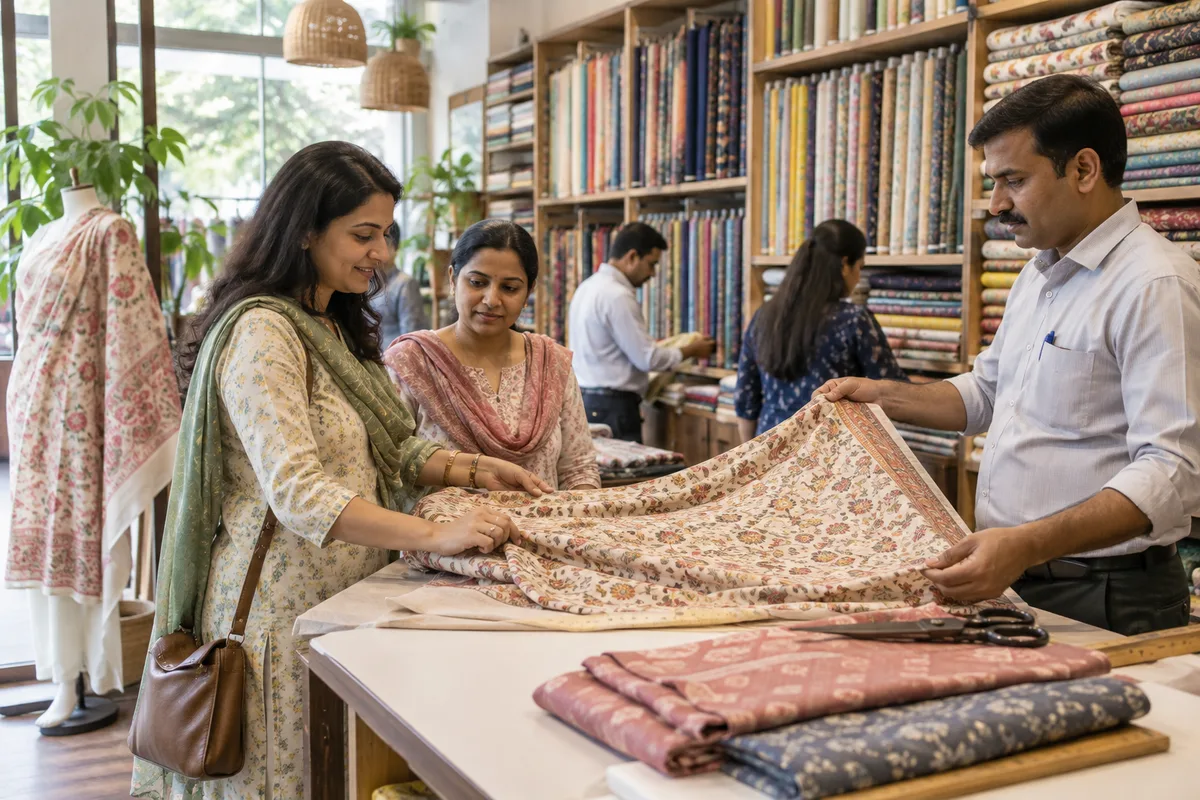
What pay per click advertising means
Pay per click advertising (PPC) is paying a fee each time someone clicks your advert on Google or another platform. It puts you at the top of a search page immediately, instead of waiting for ranking to build. GullySales sets the targeting, writes the ad text and checks spend against enquiries received.
Also for fabric shops and retailers
- Social media ads for fabric shops and retailers
- SEO for fabric shops and retailers
- Lead generation for fabric shops and retailers
- Digital marketing for fabric shops and retailers
- Reputation management for fabric shops and retailers
- Local SEO for fabric shops and retailers
- Branding and identity for fabric shops and retailers
- Social media for fabric shops and retailers
Sales and marketing for fabric shops and retailers, the overview.
Last updated 5 Oct 2026.
For fabric shops and retailers
Where it usually goes wrong, and what we would do.
“The word fabric will spend your money on students”
Fabric painting, fabric glue, tailoring courses and craft projects sit under the same word, and every one of those clicks costs what a buyer's does.
“Your season is a few weeks long, not a year”
The muhurat dates and the school reopening weeks are when money has to be out, and a budget spread evenly misses both of them.
“The click wants a chat, not a form”
A shopper who has seen a colour wants to ask whether it comes in cotton, and types that into WhatsApp rather than a contact box.
What we do
What we deliver for fabric shops and retailers.
Every deliverable, what it covers for you, and the result it is there to produce. Nothing here is an extra.
Campaigns split by fabric and by use
Separate budgets for curtain cloth, dress material, uniform lots, suiting and blouse pieces, each pointing at its own page and its own photographs.
Result: A curtain budget stops paying for saree searches.
A click-to-chat advert with the catalogue ready
Adverts that open WhatsApp with the fabric already named, and saved replies that send the right photographs inside the first minute.
Result: The enquiry is answered before the shopper asks twice.
Spend timed to the muhurat and school months
Budget raised in the fortnight before the wedding dates and in the weeks before schools reopen, then pulled back through the quiet months.
Result: You advertise while the buying is being decided.
Negatives for courses, crafts and jobs
Blocks on tailoring course, fabric painting, how to stitch, cloth shop jobs and the second-hand searches that fill a cloth shop's terms report.
Result: The budget stops paying for hobbyists.
Landing pages showing the rack, not a model
The page behind each advert carrying daylight photographs of the actual shelf, with the width, the weave and a rate band beside them.
Result: A shopper sees what you hold before travelling.
Cost per walk-in and per bill
Spend read against enquiries, walk-ins who mentioned an advert and metres billed, set against the baseline recorded before work starts.
Result: You know whether the season's spend came back.
How the result is measured
- Cost per click
- Cost per enquiry
- Enquiries from paid search
Recorded as a baseline before work starts, so every later report has an honest comparison.
Searches to bid on and block
The searches worth paying for at a cloth shop, and the ones to keep out.
- Fabric and use, such as blackout curtain cloth near me
- Bid. A buyer who names the fabric and the use is ready for a counter. Give each fabric its own ad group and name the shop's area, so it reads as a place to go.
- Uniform cloth for a school, hotel or factory
- Bid, as a campaign for institutions. Show the fabric and the colours you hold and ask for the quantity and the date. These are orders for the whole lot, not by the metre.
- Dress material, suiting and saree searches in the weeks of the muhurat dates
- Bid in those weeks and pause after. Buyers compare shops across the same days. Show the rack with a price range and ask them to visit or send a photograph.
- Fabric design, boutique course, craft and job searches
- Block. Fabric painting, fashion designing course, tailoring job and embroidery tutorial come from students and hobbyists. Add them as negatives.
- Where the click lands
- A WhatsApp chat with the catalogue ready, or a page showing the actual rack and the metre rate range. Do not send the click to a model photograph or a homepage.
- Counting a real enquiry
- Count a WhatsApp chat that asked for a fabric and a quantity, a call from the right area, or a walk-in who says they came from the advertisement. Match them to cut bills.
Who it is for
This is written for these fabric shops and retailers.
- Retail cloth shops selling suiting and shirting
- Saree and blouse-piece shops
- Dress material and unstitched wear shops
- Curtain, sofa and upholstery fabric houses
- Wholesale cloth merchants supplying tailors and boutiques
- Uniform cloth suppliers for schools, hotels and factories
- Handloom, khadi and silk outlets
- Online fabric sellers cutting to the metre and couriering
- Brand franchise counters for suiting and shirting
Not for
It is not the right fit if.
- Stock is not photographed, so a clicked advert would land the buyer in the same forty-photograph chat.
- The occasion you want to advertise for has already passed and the lot is still unbought, since the money would chase a closed season.
- Nobody watches the chat during shop hours, so paid clicks would reach a phone that answers late.
How it works
How the pay per click advertising work runs
The work itself, in order. How an engagement starts, from your brief to a written scope, is set out on our method page.
- 1
Agree the whole budget
We fix the total paid budget across platforms, who owns each ad account, and how much is open to moving.
- 2
Audit tracking and accounts
We check that conversions fire once, that calls and WhatsApp chats are counted, and that your enquiry sheet matches what the platforms say.
- 3
Set one definition of success
You and we agree what a qualified enquiry is and what an order is, so every platform is judged the same way.
- 4
Build and launch the plan
Campaigns are structured across platforms with shared naming and tags from day one.
- 5
Read search terms and lead quality
We review the queries that triggered ads and the enquiries that arrived, and remove waste before moving money.
- 6
Reallocate and report
Budget moves toward what is earning, within agreed limits. Results are reported against the baseline, at the frequency agreed in writing.
Where this fits
Three pieces of sales work, in this order.
This work sits inside sales process design, at stage 1, prospecting and lead generation. The audit comes before it, and sales management keeps it running.
Step 1
Sales audit
Find where deals are being lost and what to fix first.
Start here if you cannot say where orders are lost.
Step 2 · you are here
Sales process design
One written way to sell, from first enquiry to repeat order.
Start here if every salesperson sells differently.
Step 3
Sales management
A target, a review routine and someone who owns the number.
Start here if the team has targets and no routine.
FAQ
Questions owners ask before they call.
Not here? More answers, or ask on WhatsApp.
Is it worth advertising a shop nobody can order from online?
We have budget for one season only. Which one?
Should we advertise wholesale cloth to tailors on Google?
Should the advertisement show prices per metre?
How long is the contract?
How soon will we see results?
Who will actually do the work?
What do you need from us?
What if we are not happy with the work?
More for fabric shops and retailers
Everything else we would do for you.
Closest to this: paid and media
Also for fabric shops and retailers
Or start from the overview: sales and marketing for fabric shops and retailers.
Your next practical step
Tell us what you are trying to grow, and we will read it before we call.
Eight short steps, mostly taps. Skip anything you would rather answer on the call.