Fabric shops and retailers · Digital marketing
Your year is a list of dates, and that list is the plan.
Digital marketing for a cloth shop is the calendar of occasions, the photography underneath everything, and the split between household and trade buyers. GullySales sets that plan against your own season, and puts the photography first because nothing else works without it.
Scope, fee, reporting and term are agreed in writing after we have read your brief and spoken to you.
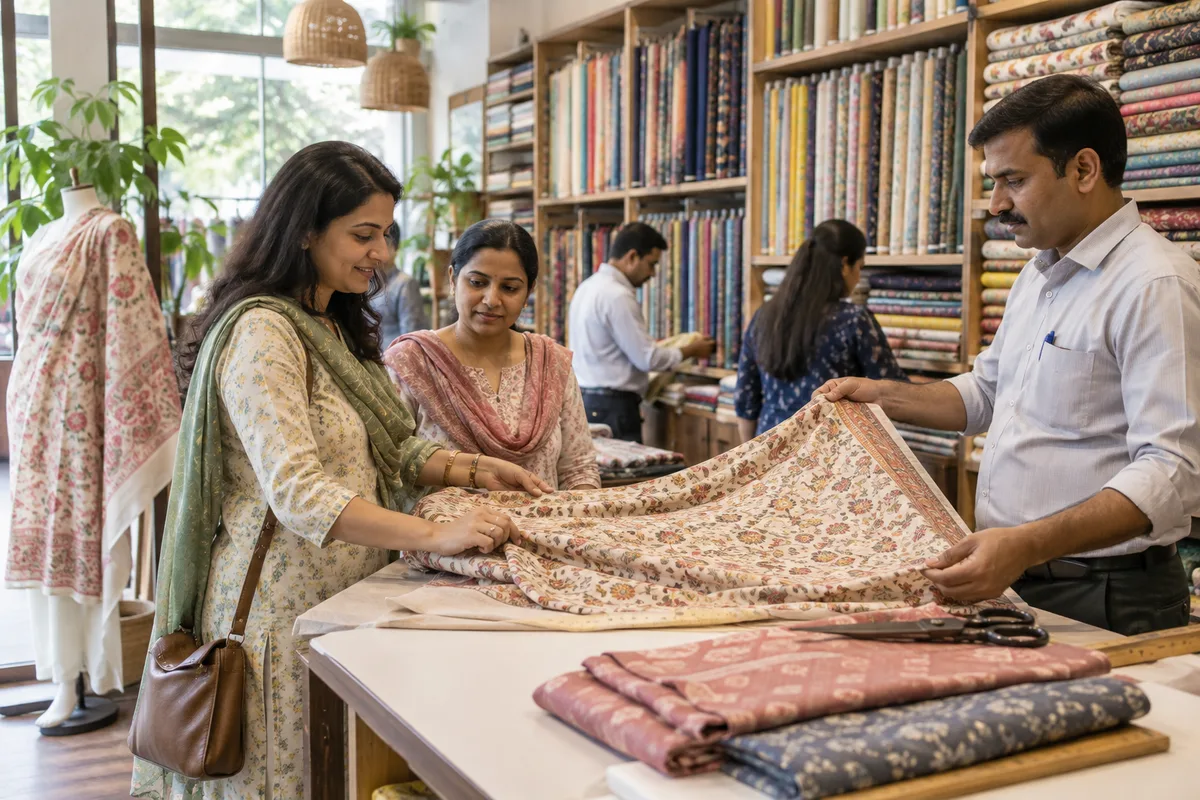
What digital marketing means
Digital marketing is the combined work of search, social media, advertising and website channels running together rather than as separate projects with separate people. GullySales runs these as one connected system so a change in one channel, such as a new offer, is reflected everywhere at once.
Also for fabric shops and retailers
- Marketing strategy for fabric shops and retailers
- Buyer journey for fabric shops and retailers
- Buyer persona for fabric shops
- SEO for fabric shops and retailers
- PPC ads for fabric shops and retailers
- Lead generation for fabric shops and retailers
- Reputation management for fabric shops and retailers
- Local SEO for fabric shops and retailers
Sales and marketing for fabric shops and retailers, the overview.
Last updated 5 Oct 2026.
For fabric shops and retailers
Where it usually goes wrong, and what we would do.
“The occasions are the plan”
Ugadi, Onam, Ramzan, Durga Puja, Diwali, the muhurat weeks and school reopening decide what to show and to whom, in that order.
“Two buyers on one phone number is the real problem”
A tailor asking a thaan rate and a lady asking for two metres get the same slow reply from one handset, and the trade buyer leaves.
“Photography before advertising, every time”
A rupee spent shooting the shelf outlasts a rupee spent on reach, because every channel afterwards runs on those pictures.
What we do
What we deliver for fabric shops and retailers.
Every deliverable, what it covers for you, and the result it is there to produce. Nothing here is an extra.
An occasion calendar for your own city
What to show, to whom and in which week, set against the muhurat dates, the festivals your buyers keep and the school year.
Result: The new lot reaches the right buyer first.
One photography standard used everywhere
Daylight, a plain sheet, the width and weave noted, shot the same way each time so the catalogue, the listing and the adverts match.
Result: One set of pictures serves every channel.
A separate number and reply routine for trade
Tailors, boutiques and contractors given their own line and their own reply times, away from the retail phone at the counter.
Result: A thaan enquiry stops queuing behind a two-metre one.
Maps, WhatsApp and Instagram in one order of work
The listing and the catalogue fixed first, then the status and video routine, then anything paid, with the reason for that order written down.
Result: Money goes where the enquiries already are.
A clearance plan for last season
The slow thaans matched to the buyers who will take them, at a rate you fix in advance rather than in a panic in June.
Result: Money comes off the top shelf.
One report the owner reads at the counter
Enquiries by source, walk-ins, metres billed, trade accounts that ordered and curtain quotations converted, on one page against the baseline.
Result: You see which channel brought a bill.
How the result is measured
- Enquiries across channels
- Cost per enquiry overall
- Channel mix by contribution
Recorded as a baseline before work starts, so every later report has an honest comparison.
Where to start for cloth shops
Photograph the shelf properly, then give households and tailors their own routes.
- A photograph standard
- Pick a corner with daylight, shoot each cloth flat and draped with the width, the metre rate and the code. Test one shade on two phones before you post it.
- WhatsApp Business catalogue
- Load the best-selling suiting, sarees and curtain fabrics, with the rate and the colour name. Record the cloth each message asked for.
- A second number for trade
- Give tailors and boutiques their own number and rate sheet, away from household queries. Note which accounts stopped ordering and ring them.
- Google Business Profile
- Check the timings, the lanes or landmarks that help a customer find you, and photographs of the shelves. Count the calls from the profile before the muhurat season.
- An occasion calendar
- Write the dates that matter in your city, such as wedding, Diwali and the school uniform months, and the cloth to push before each. Clear last season's rolls at the front of the shop.
- What to leave until later
- A full online shop with payment and courier. Start with photographs and a catalogue, because most buyers still want to touch the cloth.
Who it is for
This is written for these fabric shops and retailers.
- Retail cloth shops selling suiting and shirting
- Saree and blouse-piece shops
- Dress material and unstitched wear shops
- Curtain, sofa and upholstery fabric houses
- Wholesale cloth merchants supplying tailors and boutiques
- Uniform cloth suppliers for schools, hotels and factories
- Handloom, khadi and silk outlets
- Online fabric sellers cutting to the metre and couriering
- Brand franchise counters for suiting and shirting
Not for
It is not the right fit if.
- You have not written down the dates when your own buyers come, so the year's plan would be copied from the big showroom's calendar.
- The shelf is not photographed, so every channel would show blurred pictures of the same lot.
- One person answers every phone and counter query during the season, so another channel would only add messages they cannot reach.
How it works
How the digital marketing work runs
The work itself, in order. How an engagement starts, from your brief to a written scope, is set out on our method page.
- 1
Agree the one aim
We settle what the campaign must achieve, such as enquiries for a launch or footfall for an event, and the date it must be live.
- 2
Check what is ready
We list the channels you already run, who runs them, and what each can produce in the time available. Anything that cannot be done properly is left out.
- 3
Write the idea and the message sheet
We draft the one-sentence idea, test it against each planned format, and fix the wording that all channels will copy.
- 4
Brief every channel from the same sheet
Your agency, freelancer or in-house person receives the message sheet and calendar. Their work is checked against the sheet before it goes out.
- 5
Run on the shared calendar
Channels go live together. If the offer changes, every channel is changed on the same day from the same sheet.
- 6
Measure as one campaign
Enquiries and orders are read against the baseline. The reporting schedule is agreed in writing with the scope.
Where this fits
Three pieces of sales work, in this order.
This work sits inside sales process design, at stage 0, foundation. The audit comes before it, and sales management keeps it running.
Step 1
Sales audit
Find where deals are being lost and what to fix first.
Start here if you cannot say where orders are lost.
Step 2 · you are here
Sales process design
One written way to sell, from first enquiry to repeat order.
Start here if every salesperson sells differently.
Step 3
Sales management
A target, a review routine and someone who owns the number.
Start here if the team has targets and no routine.
FAQ
Questions owners ask before they call.
Not here? More answers, or ask on WhatsApp.
Where should a shop with a small budget start?
Does a cloth shop need its own website?
A customer says the colour looked different on their phone. What do I do?
Should I put my cloth rates on Instagram?
How long is the contract?
How soon will we see results?
Who will actually do the work?
What do you need from us?
What if we are not happy with the work?
More for fabric shops and retailers
Everything else we would do for you.
Closest to this: strategy and research
Also for fabric shops and retailers
Or start from the overview: sales and marketing for fabric shops and retailers.
Your next practical step
Tell us what you are trying to grow, and we will read it before we call.
Eight short steps, mostly taps. Skip anything you would rather answer on the call.