Fabric shops and retailers · Buyer persona
Write down who buys your cloth before you decide what to show them.
A buyer persona for a fabric shop is a plain description of each kind of person who walks in or messages for cloth: the household, the tailor, the boutique, the curtain stitcher, the uniform contractor. GullySales works with you to draw those people from your own bills and chats, so the catalogue, the replies and the rates speak to each one.
Scope, fee, reporting and term are agreed in writing after we have read your brief and spoken to you.
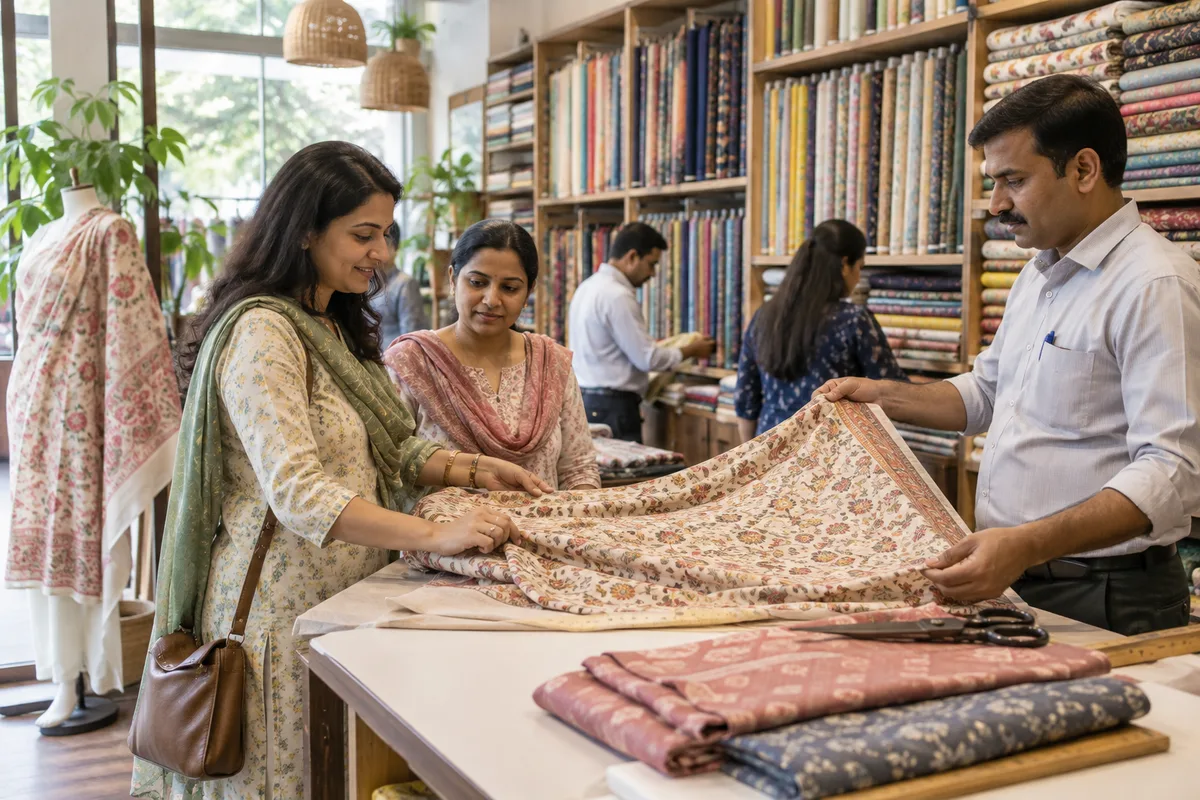
What buyer persona means
A buyer persona is a plain description of the kind of customer who actually buys from you. It includes what they search, what worries them and who else they ask before deciding. GullySales builds this from real enquiries and past sales rather than a generic template, then uses it to write every page and advert.
Also for fabric shops and retailers
- Digital marketing for fabric shops and retailers
- Marketing strategy for fabric shops and retailers
- Buyer journey for fabric shops and retailers
- SEO for fabric shops and retailers
- PPC ads for fabric shops and retailers
- Lead generation for fabric shops and retailers
- Reputation management for fabric shops and retailers
- Local SEO for fabric shops and retailers
Sales and marketing for fabric shops and retailers, the overview.
Last updated 5 Oct 2026.
For fabric shops and retailers
Where it usually goes wrong, and what we would do.
“The person paying is often not the person choosing”
A mother pays for a lehenga length while the daughter chooses the shade from a reel, and the tailor decides the lining. If your shop speaks to only one of the three, the sale stalls at the other two.
“A tailor and a household ask for the same cloth in different words”
The household asks how the fabric feels after washing. The tailor asks the width, the shrinkage and whether the same lot is available again. One reply cannot answer both, so the persona decides which question gets answered first.
“A boutique owner is a repeat buyer waiting to be recognised”
A designer who buys a few metres of each new weave to test a collection is worth more over a year than a wedding shopper. Without a written profile the counter treats the designer like a walk-in.
“Institutional buyers decide on sample and match, not on rate”
A school administrator or a hotel purchase head wants a shade card, a sample length and a lot that will match next year. A persona that notes this stops you sending them a festival offer.
What we do
What we deliver for fabric shops and retailers.
Every deliverable, what it covers for you, and the result it is there to produce. Nothing here is an extra.
Four to five buyer profiles built from your own bills
We sort your past invoices and chat history into the household, the tailor, the boutique, the furnishing buyer and the institution, and write what each one buys, asks and worries about.
Result: You can read a one-page description of each buyer and check it against what you know.
The first question each buyer asks
For every profile, the opening question as it arrives on WhatsApp or at the counter, with the reply that answers it with a photograph and a rate.
Result: Staff know what to answer first for each kind of buyer.
A decision map for each profile
Who pays, who chooses and who approves, written out for a household wedding order, a curtain job and a uniform lot.
Result: You see which person in the chain your last lost sale never reached.
A word list in the buyer's own language
The terms each buyer uses, such as fall, pico, thaan, drape, lining, GSM, in English and the local language, taken from real messages.
Result: The catalogue and listing use the words buyers actually type.
Marking each contact by profile in your phone and ledger
A simple label added to every saved number and every account, so the household and the trade buyer are never mixed in one list.
Result: A festival message goes to households and a new-lot message goes to tailors.
How the result is measured
- Enquiry match to persona
- Conversion rate by persona
- Content aligned to persona
Recorded as a baseline before work starts, so every later report has an honest comparison.
Who is asking
The cloth buyers who ask differently and what each wants answered first.
- Household buyer before a function
- Wants to know the colour in daylight, the width and how many metres a blouse or kurta needs. Answer with a daylight photograph and the metres.
- Tailor buying lining and basics
- Wants the rate per metre, the lot size and whether the shade matches last time. A trade rate card and a repeat-shade note settle it.
- Boutique owner planning a season
- Wants a design that is not on the next street and a quantity held for their label. Show new lots first and offer to hold a thaan.
- Curtain stitcher or interior designer
- Wants blackout, lining and upholstery cloth with width, weave and washing advice for a client. A sample book and a quotation sheet suit them.
- School or hotel uniform buyer
- Wants a swatch, a colour code and a lot that can be repeated next year. The decision goes through a committee, so offer a sample before a rate.
Who it is for
This is written for these fabric shops and retailers.
- Retail cloth shops selling suiting and shirting
- Saree and blouse-piece shops
- Dress material and unstitched wear shops
- Curtain, sofa and upholstery fabric houses
- Wholesale cloth merchants supplying tailors and boutiques
- Uniform cloth suppliers for schools, hotels and factories
- Handloom, khadi and silk outlets
- Online fabric sellers cutting to the metre and couriering
- Brand franchise counters for suiting and shirting
Not for
It is not the right fit if.
- Your bills do not say which buyer type bought, so profiles would be built on opinion and not on invoices.
- The shop sells one cloth to one kind of buyer, and five profiles would repeat the same household under different names.
- Staff will not use the profiles to decide what to answer first, and the work would end as a page in a drawer.
How it works
How the buyer persona work runs
The work itself, in order. How an engagement starts, from your brief to a written scope, is set out on our method page.
- 1
Understand the current view
We start with how your team currently describes the customer, since the gap between belief and reality is the finding itself.
- 2
Audit past enquiries and sales
We look at recent enquiries and closed deals to see who actually bought, not who was assumed to buy.
- 3
Interview customers and staff
Structured conversations with recent buyers, held as talk about the last purchase and not a questionnaire. We ask what happened before they called, who else was involved and what they compared. Customers agree before we contact them, and their answers are reported without names.
- 4
Build the personas
Findings are written into short, usable persona documents rather than a long report.
- 5
Apply to your marketing
We show where each persona should change a page, an ad or a script you already have. The sales team reads the drafts and says which ring true. A persona they do not recognise is rewritten.
Where this fits
Three pieces of sales work, in this order.
This work sits inside sales process design, at stage 0, foundation. The audit comes before it, and sales management keeps it running.
Step 1
Sales audit
Find where deals are being lost and what to fix first.
Start here if you cannot say where orders are lost.
Step 2 · you are here
Sales process design
One written way to sell, from first enquiry to repeat order.
Start here if every salesperson sells differently.
Step 3
Sales management
A target, a review routine and someone who owns the number.
Start here if the team has targets and no routine.
FAQ
Questions owners ask before they call.
Not here? More answers, or ask on WhatsApp.
Do we need a persona if we know our customers by name?
How many buyer types should a single shop write down?
Should the persona include age and income?
How does a persona deal with a buyer who is both a household and a tailor's friend?
How much does it cost?
How long is the contract?
How soon will we see results?
What do you need from us?
What if we are not happy with the work?
More for fabric shops and retailers
Everything else we would do for you.
Closest to this: strategy and research
Also for fabric shops and retailers
Or start from the overview: sales and marketing for fabric shops and retailers.
Your next practical step
Tell us what you are trying to grow, and we will read it before we call.
Eight short steps, mostly taps. Skip anything you would rather answer on the call.