Fruit and vegetable stores · Content marketing
Teach families how to choose fruit, and they will remember who taught them.
Content marketing for a fruit and vegetable store is the habit of publishing useful answers about produce, such as how to pick a ripe papaya or what is in season, so that nearby families and kitchens come to know the shop. GullySales works on which questions to answer, in what form and where to put them.
Scope, fee, reporting and term are agreed in writing after we have read your brief and spoken to you.
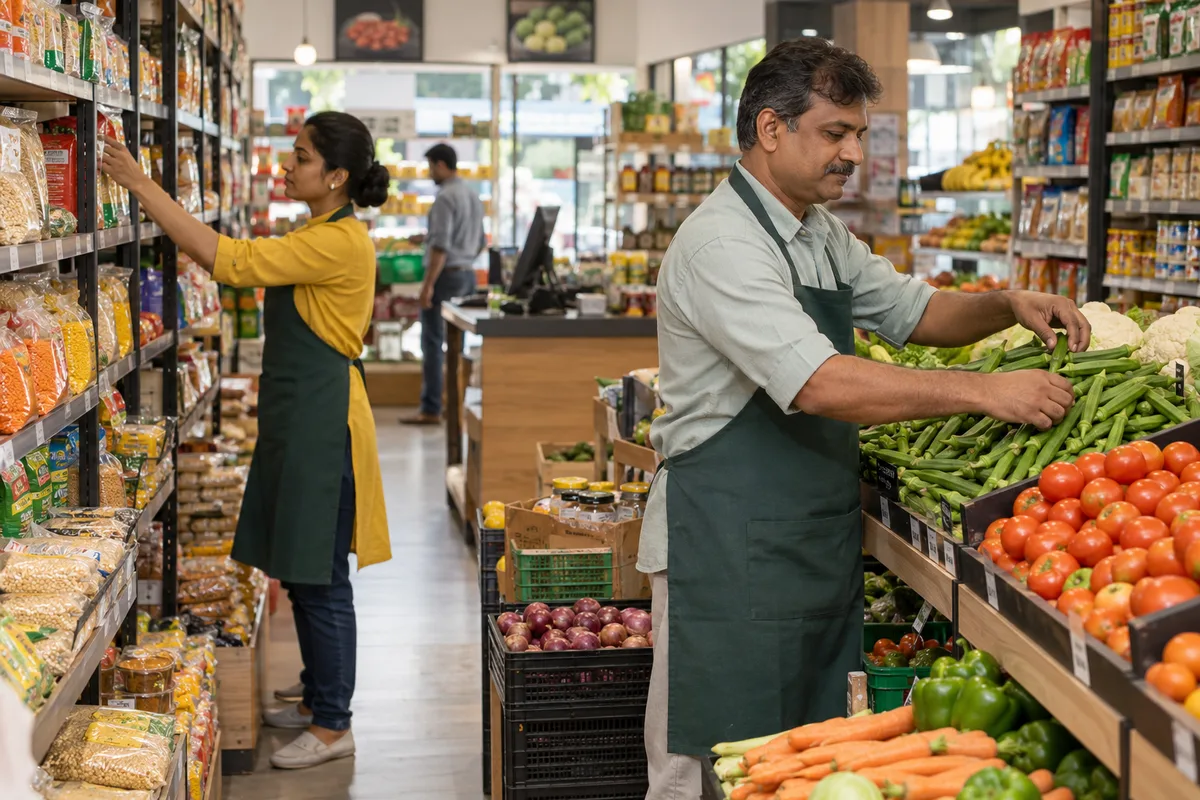
What content marketing means
Content marketing is writing articles, guides and pages that answer the questions buyers search before they are ready to enquire. This makes your business visible and trusted before the first call. GullySales plans this content from the first conversation onward, choosing topics that match real search demand rather than guesses.
Also for fruit and vegetable stores
- Social media marketing for fruit and vegetable stores
- Lead generation for fruit and vegetable stores
- SEO for fruit and vegetable stores
- Local SEO for fruit and vegetable stores
- Buyer personas for fruit and vegetable stores
- CRM for fruit and vegetable stores
- Follow-up systems for fruit and vegetable stores
- WhatsApp marketing for fruit and vegetable stores
Sales and marketing for fruit and vegetable stores, the overview.
Last updated 14 Nov 2026.
For fruit and vegetable stores
Where it usually goes wrong, and what we would do.
“Buyers ask the same few questions at the counter”
Is this sweet, is it from here, how do I keep it, how ripe is it, when does the next batch come. Every one of those answers, written once, can be pinned on a page and a WhatsApp status.
“A calendar of what is in season is useful to everyone”
A household planning a fast, a wedding or a festival wants to know what is at its best this fortnight. A shop that explains the season earns attention before the buyer thinks of buying.
“Kitchens want specifications, not recipes”
A purchase manager cares about size, grade, packing and arrival time. A short note on how the shop grades tomatoes or packs leafy greens answers the question a kitchen is about to ask.
“Storage advice keeps produce from becoming a complaint”
A family that stores berries in a closed box and finds them soft by evening blames the shop. A simple guide on keeping each item moves that disappointment away from the counter.
What we do
What we deliver for fruit and vegetable stores.
The work available for this need. We agree the deliverables and responsibilities for your engagement in writing.
A bank of customer questions
The questions asked at the counter, on the phone and in messages, collected in one sheet and grouped by fruit or vegetable.
Result: A list of topics drawn from your own customers.
A choosing-and-keeping guide for the top items
One short guide each for the fruit and vegetables that sell most, covering how to pick, how to store and how long it keeps.
Result: A guide the counter can hand over or send.
A season guide for your region
What arrives in which months where you buy, written in plain words with local names for each item.
Result: A page families return to as the months change.
A grading note for kitchen buyers
How the shop sorts, sizes and packs each item for hotels and caterers, with a photograph of each grade.
Result: A buyer can see what the rate sheet will deliver.
A place for each piece to live
Each guide goes on a page, in a WhatsApp status and in a printed card at the counter.
Result: Nothing is written once and left unseen.
How the result is measured
- Pages published
- Organic traffic
- Enquiries from content pages
Recorded as a baseline before work starts, so every later report has an honest comparison.
Posts and pieces to plan
Plan guides that answer what buyers ask across the counter.
- How to tell a ripe mango from an unripe one
- A short guide with photographs from your own stock, written in the language customers speak at the counter.
- Storing leafy greens and herbs at home
- A single-page note on keeping greens, with the shop's own practice, given to buyers at the billing desk and posted.
- What is in season in your region this month
- A season guide listing local produce by period, updated as the mandi changes, with no promise of availability.
- Grades and sizes for hotel kitchens
- A one-page grading note for catering buyers describing sizes, counts per crate and acceptable trim.
- Choosing fruit for a festival basket
- A guide for gift buyers pairing fruit with budgets, with a photograph of a basket the shop has packed.
Who it is for
This is written for these fruit and vegetable stores.
- Neighbourhood fruit and vegetable shops with a fixed counter
- Push-cart and roadside vendors who run a set route
- Stores inside apartment communities
- Exotic and imported fruit stores
- Cut fruit and salad counters
- Wholesale-and-retail shops that sell to hotels and caterers
- Farm-direct vegetable stores and organic vegetable counters
- Fruit stores that sell gift baskets and festival fruit
Before you decide
When this may not be the right fit.
- Your counter staff cannot yet answer the common questions themselves, so a guide would not match what customers hear.
- You change suppliers every few days, and a guide on origin or grade would be wrong by the time it is posted.
Before you decide
Agree the work. Know how to judge it.
Content marketing for fruit and vegetable stores: use these checks to prepare, choose the scope, and review what changes.
Bring the right evidence
Bring questions from sales calls and examples of objections that delay a decision. Choose a subject expert who can check the substance, and identify evidence that can be published.
Make the scope clear
Agree the reader, buying question, format, and distribution route for each piece. Set the approval process and distinguish new research from rewriting material you already have.
Check the work in use
Ask a colleague to use the draft in a real buyer conversation. It should answer the question, support its claims, and make the next step clear without requiring a sales pitch to explain it.
Know when to change course
If the same unanswered question appears in several articles, improve the strongest page before commissioning another. More words are not a substitute for missing evidence.
These are discussion points, not a fixed package. GullySales confirms the deliverables, responsibilities, fee, and term in writing after reading your brief and speaking with you.
Before we start
What to have ready before the work starts.
The records, access and decisions this work needs from fruit and vegetable stores. Anything missing is noted in the written scope, with who will supply it.
- A notebook of questions from the counter
- Ask staff to note questions for a few days in any form, on the back of a bill or in a phone note. Messy notes are acceptable. Without them we write what we imagine buyers ask, which differs from what they ask at your counter, and the guides answer questions nobody has.
- Your grading and packing habits
- Describe how you sort, size and pack for kitchens: the grades you hold, the weight per crate, how leafy vegetables are bundled and what you do with a damaged piece. A sample crate photographed is useful. Without this the grading note cannot be written truthfully, and we do not write it from a textbook.
- A decision on health statements
- Decide whether guides may say anything about nutrition or health. We suggest none unless your own adviser has approved the wording, since a claim about what a fruit does for the body is not ours or yours to make casually. Without a decision, guides stay on handling, choice and storage only.
- The language for each audience
- Say which language households read and which kitchens expect, because a note for a hotel purchase manager reads differently from a message to a neighbour. This affects every piece we write. If undecided, we write in English and the local language side by side and you tell us which gets read.
- A person who checks facts before release
- Name the person who reads each draft for errors in storage, ripeness and season. It could be the owner or the senior hand at the counter. Without a reader, a wrong tip goes out under your shop's name, and a customer who followed it will say so at the till.
How it works
How the content marketing work runs
The work itself, in order. How an engagement starts, from your brief to a written scope, is set out on our method page.
- 1
Write down the counter questions with your staff
We sit with the people who serve customers and list the questions they answer all morning, such as how to tell a ripe papaya or why a pomegranate is dry. You decide which answers the shop is willing to put its name to. What exists afterwards is a bank of real questions, ranked by how frequently staff hear them, and a note of who answered each.
- 2
Choose the first ten pieces
From the bank we pick the pieces that save the greatest amount of explaining at the counter and help a kitchen decide. You rule out anything outside your knowledge, such as health claims. We agree the order, putting the fruit in season first. Each piece is given a place to live: the website, the profile or the list, and staff are told where.
- 3
Draft the choosing-and-keeping guides
We write short guides on how to choose and keep your top items, taking facts from you and the staff rather than from a textbook. You correct any storage advice that does not match how your produce behaves. The guides carry no health or cure claims, only handling and selection.
- 4
Write the grading note for kitchen buyers
A hotel or caterer wants to know what size, ripeness and trimming they will receive. You tell us how you grade, and we set it out as a plain note a purchase manager can read. You approve it before it reaches any kitchen, as it is a promise about the product.
- 5
Publish each piece where buyers look
Pieces go on the website, are shared as messages on WhatsApp and are printed for the counter where it suits. You decide which are printed. Staff are told which piece to point a customer to for a given question.
- 6
Check which pieces saved a conversation
At the review we ask staff which guides they handed out, which questions stopped coming and which kitchens asked for the grading note, against the notes made at the start. You tell us what to write next. We do not promise traffic or rankings.
Where this fits
Three pieces of sales work, in this order.
This work sits inside sales process design, at stage 0, foundation. The audit comes before it, and sales management keeps it running.
Step 1
Sales audit
Find where deals are being lost and what to fix first.
Start here if you cannot say where orders are lost.
Step 2 · you are here
Sales process design
One written way to sell, from first enquiry to repeat order.
Start here if every salesperson sells differently.
Step 3
Sales management
A target, a review routine and someone who owns the number.
Start here if the team has targets and no routine.
FAQ
Questions owners ask before they call.
Not here? More answers, or ask on WhatsApp.
We are a shop, not publishers. How much do we need to write?
Can we include recipes?
In which language should the content be?
May we say a fruit is good for health in a guide?
Do we have to write the guides ourselves?
Can the guides name the farms we buy from?
How long is the contract?
How soon will we see results?
Who will actually do the work?
What do you need from us?
More for fruit and vegetable stores
Related work to consider.
Closest to this: content and social
Also for fruit and vegetable stores
Or start from the overview: sales and marketing for fruit and vegetable stores.
Your next practical step
Tell us what you are trying to grow, and we will read it before we call.
Eight short steps, mostly taps. Skip anything you would rather answer on the call.