Fruit and vegetable stores · Buyer persona
Know who walks in at seven, who orders at nine, and who buys by the crate.
A buyer persona for a fruit and vegetable store is a short written picture of one kind of customer: what they buy, when, how they choose and what makes them leave. GullySales works on building those pictures from the shop's own sales and conversations, not from guesses.
Scope, fee, reporting and term are agreed in writing after we have read your brief and spoken to you.
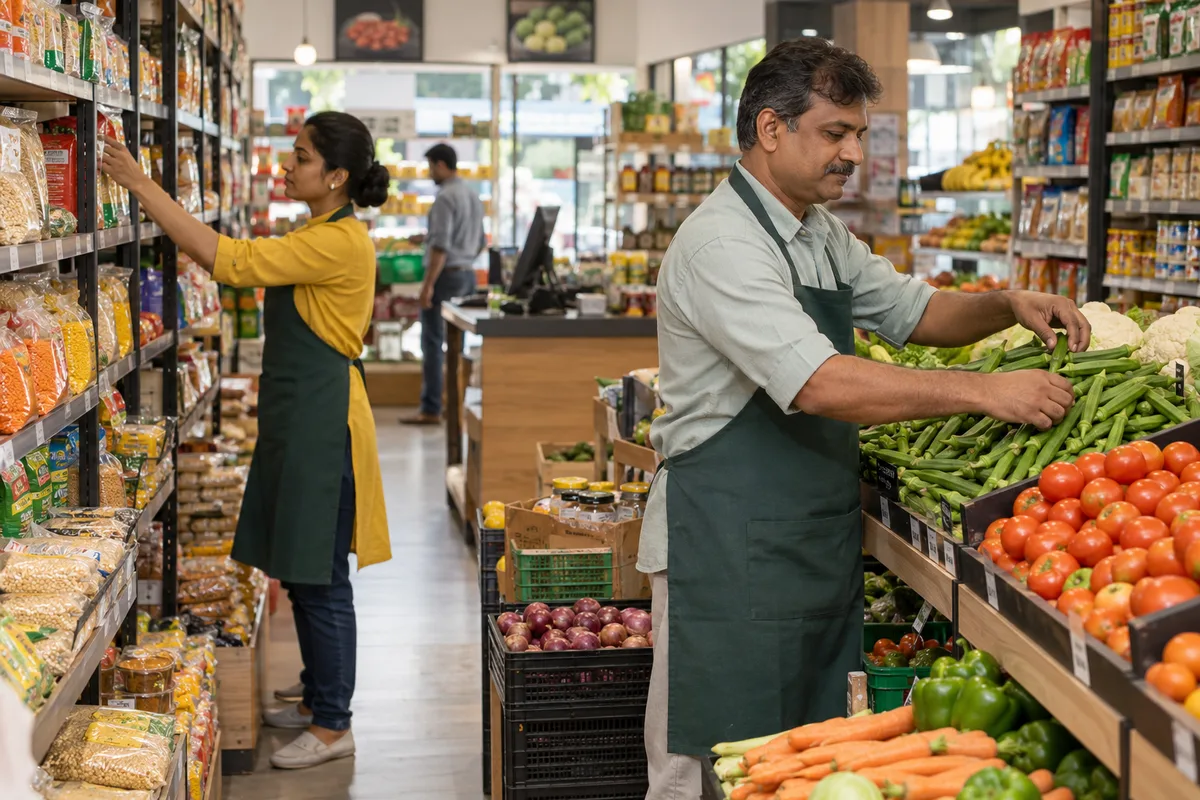
What buyer persona means
A buyer persona is a plain description of the kind of customer who actually buys from you. It includes what they search, what worries them and who else they ask before deciding. GullySales builds this from real enquiries and past sales rather than a generic template, then uses it to write every page and advert.
Also for fruit and vegetable stores
- Digital marketing for fruit and vegetable stores
- Lead generation for fruit and vegetable stores
- SEO for fruit and vegetable stores
- Local SEO for fruit and vegetable stores
- Social media marketing for fruit and vegetable stores
- Content marketing for fruit and vegetable stores
- CRM for fruit and vegetable stores
- Follow-up systems for fruit and vegetable stores
Sales and marketing for fruit and vegetable stores, the overview.
Last updated 14 Nov 2026.
For fruit and vegetable stores
Where it usually goes wrong, and what we would do.
“The morning walker and the evening commuter differ”
The first buys a few items, handles the produce and chats with the owner. The second wants it packed, priced and quick. The same counter has to serve both without confusing either.
“The household that orders online is still a household”
A working family that orders from an app during the week may walk to a trusted shop at the weekend. Treating them as lost because they are on an app misses the Sunday basket they want to choose by hand.
“The kitchen buyer is judged on reliability”
A caterer or a mess contractor is accountable to a larger customer. They buy the supplier who delivers when promised, so a late truck weighs more than a lower rate.
“The gift buyer decides on a name and a budget”
A relative visiting a hospital or a family sending pooja fruit states how much they want to spend and who it is for, and trusts the shop to build the basket. They remember the shop that did it well.
What we do
What we deliver for fruit and vegetable stores.
The work available for this need. We agree the deliverables and responsibilities for your engagement in writing.
A short set of written personas
Each one named by role, such as the walking household, the apartment family, the festival gifter and the kitchen buyer, with what they buy and what they ask for.
Result: Each persona fits on one page.
A map of how each persona finds the shop
Counter, Maps, building group, a friend, a phone call or an app, recorded for every persona.
Result: You know which door each kind of buyer uses.
The objections each persona raises
Price compared to last week, quality of the bottom layer, minimum order, delivery time, payment on credit.
Result: A reply ready for each objection.
A basket profile for each persona
The usual items, the usual quantity and the day of the week, so the shop can predict next week's purchase.
Result: A buying plan that matches who actually shops.
A check against the shop's own register
Personas set against real households in the register and corrected where the register disagrees.
Result: A persona that matches names you can point to.
How the result is measured
- Enquiry match to persona
- Conversion rate by persona
- Content aligned to persona
Recorded as a baseline before work starts, so every later report has an honest comparison.
Who is asking
Know the buyer behind each basket before you write a message.
- Early walker who shops at seven
- Wants to see what has arrived and to be served without a queue, so a fresh-list photograph and a clear counter matter most.
- Office worker ordering for the evening
- Wants a message that closes before a set hour and a delivery that arrives when someone is home to receive it.
- Kitchen buyer at a hotel or canteen
- Wants a standing order, a stated grade and a delivery on time, and will switch supplier at the first missed slot.
- Apartment association secretary
- Wants to know that deliveries are orderly at the gate and who to call when something is short, before endorsing the shop.
- Gift buyer before a festival
- Wants to see a basket, know the price band and be told the last day to order, rather than browse loose fruit.
Who it is for
This is written for these fruit and vegetable stores.
- Neighbourhood fruit and vegetable shops with a fixed counter
- Push-cart and roadside vendors who run a set route
- Stores inside apartment communities
- Exotic and imported fruit stores
- Cut fruit and salad counters
- Wholesale-and-retail shops that sell to hotels and caterers
- Farm-direct vegetable stores and organic vegetable counters
- Fruit stores that sell gift baskets and festival fruit
Before you decide
When this may not be the right fit.
- You have not noticed who shops when, so a persona would be an invented person until the counter has been watched for a while.
- Your shop serves a single canteen, and one phone call with that buyer says more than a set of personas.
Before you decide
Agree the work. Know how to judge it.
Buyer personas for fruit and vegetable stores: use these checks to prepare, choose the scope, and review what changes.
Bring the right evidence
Write the decision the research must support, such as entering a market or choosing a buyer group. Separate what you know from sales records from what the team currently assumes.
Make the scope clear
Agree which buyers to speak to, which sources to review, and what access you can provide. Include lost enquiries and people who chose another supplier, where they are willing to take part.
Check the work in use
Look for source dates, sample limitations, and evidence that disagrees with the preferred answer. A recommendation should show how it follows from the findings.
Know when to change course
Do not treat a few positive conversations as proof of demand. Test the proposed offer with an actual buying decision before committing to a wider launch.
These are discussion points, not a fixed package. GullySales confirms the deliverables, responsibilities, fee, and term in writing after reading your brief and speaking with you.
Before we start
What to have ready before the work starts.
The records, access and decisions this work needs from fruit and vegetable stores. Anything missing is noted in the written scope, with who will supply it.
- Your register of regular households
- A notebook, a spreadsheet or a phone contact list with names and what each household buys. Gaps are fine, and so is handwriting. Without it personas rest on opinion alone, and we mark each one as unchecked so nobody mistakes it for fact about your street.
- A list of kitchens you supply
- Names of hotels, caterers and canteens with their delivery times, the items they take and who in the kitchen decides. Approximate is fine. Without it the kitchen persona is a guess and the supply page later built on it will answer questions the kitchen never asks.
- Five customers willing to talk
- Choose regulars who will speak for a few minutes while they wait, and introduce us to them. If none agree, we rely on your own account and the staff's observation and mark each persona as unverified, which lowers how far the shop should act on it.
- Your view of who you lose to
- Tell us which shop, cart or app customers drift to and what they say when they go. A frank opinion is more use than a polite one. Without it the objections in each persona are written without the real alternative in view and sound generic.
- A decision on how much to share
- Decide whether staff may see the personas and whether any customer detail stays out of the document. Without a rule, we keep names and phone numbers out entirely and describe each type only by basket, route and objection.
How it works
How the buyer persona work runs
The work itself, in order. How an engagement starts, from your brief to a written scope, is set out on our method page.
- 1
Decide which buyers the shop is built for
We start with a conversation with the owner about who the shop is for: the neighbouring household, the apartment resident who orders, the kitchen or the gift buyer. You rank them by importance to the till. What exists afterwards is a short list of buyer types to study, and the rest are left out.
- 2
Open the order register and the delivery list
You give us the register, the delivery round list or the notebook of regulars, and we read what each type buys, how frequently and in what quantity. Gaps in the record are noted rather than filled with guesses. This becomes the evidence every persona must agree with, and a type the register cannot show is marked as a hunch.
- 3
Talk to five regulars at the counter
With your introduction we speak to a small number of regular customers while they wait: a morning walker, an evening commuter, a household that orders by message and a kitchen buyer. You choose whom we speak to. We ask why they come, what put them off other shops and what they never buy here.
- 4
Check the stories against the register
We compare what the buyers said with what the register shows. A person who says they come every morning but appears twice in the week is recorded as such. You see the differences. Personas are only kept where the register supports them, and the ones it contradicts are rewritten or removed.
- 5
Write the personas and their objections
We draft each persona in plain words with the basket, the route to the shop and the objection they raise, such as a fear of the squashed bottom layer. You read them for anyone you do not recognise and correct what feels wrong. The final set is short enough to pin up at the counter.
- 6
Set one action against each persona
For each persona we list one thing the shop will do differently, for example a pre-order for the evening commuter. You choose which to start with. At the review we compare the register for each type with the starting figures. No persona is treated as proven until the records show it.
Where this fits
Three pieces of sales work, in this order.
This work sits inside sales process design, at stage 0, foundation. The audit comes before it, and sales management keeps it running.
Step 1
Sales audit
Find where deals are being lost and what to fix first.
Start here if you cannot say where orders are lost.
Step 2 · you are here
Sales process design
One written way to sell, from first enquiry to repeat order.
Start here if every salesperson sells differently.
Step 3
Sales management
A target, a review routine and someone who owns the number.
Start here if the team has targets and no routine.
FAQ
Questions owners ask before they call.
Not here? More answers, or ask on WhatsApp.
How do we build personas without a research team?
Do we need separate personas for each locality?
Will a persona change our prices?
Can the same household sit in two personas?
Will you interview customers without my presence?
How many personas will the shop get?
How long is the contract?
How soon will we see results?
Who will actually do the work?
What do you need from us?
More for fruit and vegetable stores
Related work to consider.
Closest to this: strategy and research
Also for fruit and vegetable stores
Or start from the overview: sales and marketing for fruit and vegetable stores.
Your next practical step
Tell us what you are trying to grow, and we will read it before we call.
Eight short steps, mostly taps. Skip anything you would rather answer on the call.